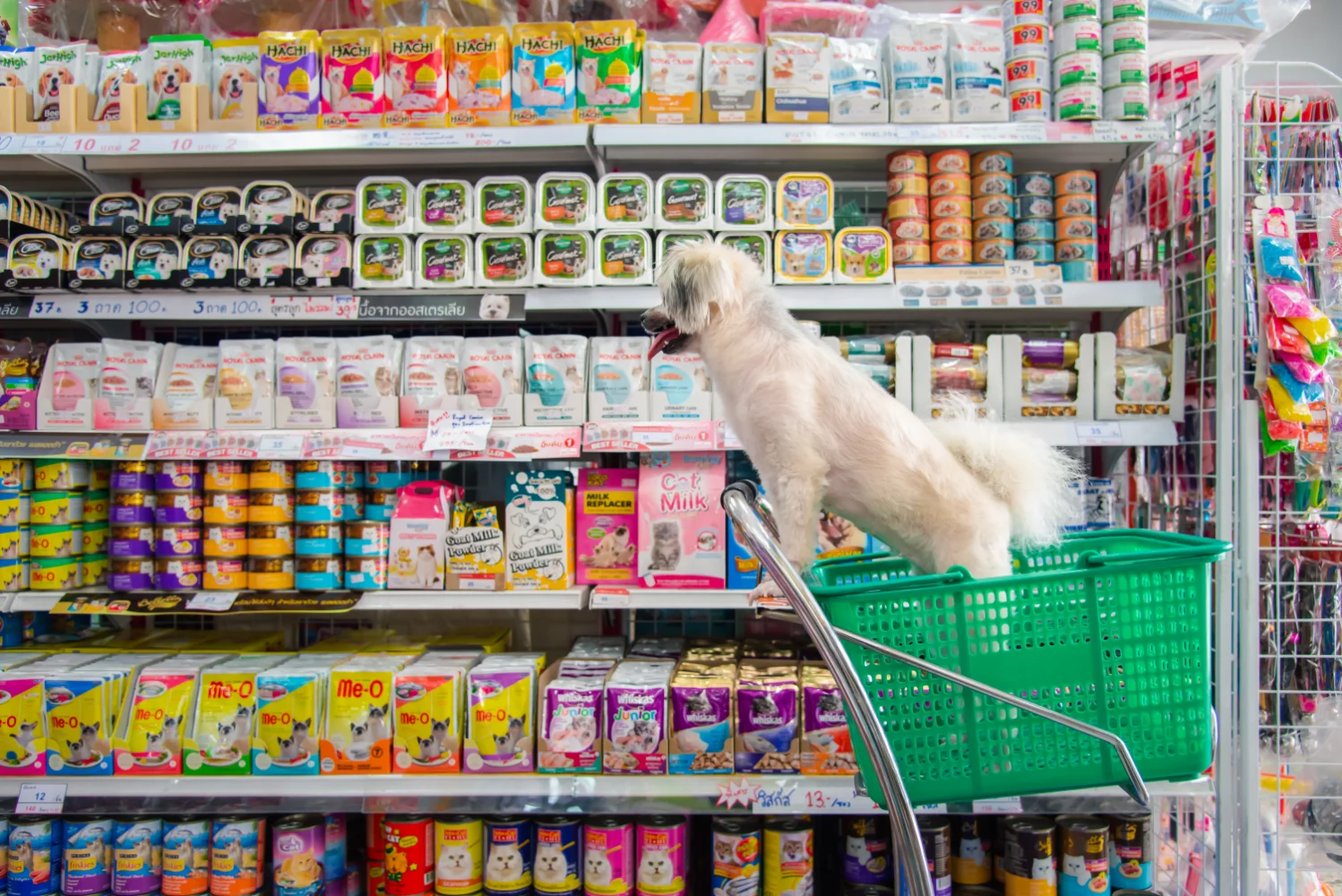
Pet food prices keep rising, but the shelf tag hides the real question: what does this food cost to feed correctly each day without cutting nutrition?
The smartest comparison is not bag price. It is cost per day after confirming the food is complete and balanced for the right life stage, then checking calories, feeding amount, and moisture-adjusted nutrient logic.

Pet food feels expensive because owners are trying to solve two problems at the same time. They want to control spending, but they also do not want to make a nutrition mistake. That tension makes every shelf decision feel risky. A cheaper bag can feel unsafe. A premium bag can feel inflated. A wet formula can look overpriced. A topper can look like a shortcut. Without a clear comparison method, even experienced buyers end up relying on instinct or packaging language.
As a flexible packaging manufacturer, we focus on how brands turn complicated nutrition and value logic into something buyers can understand quickly. We focus on front-of-pack clarity, readable calorie cues, and packaging structures that help customers compare products instead of guessing.
Get a pet food label and value audit (adequacy + calories + cost-per-day map) before confusing pack language weakens buyer trust.
Why does pet food feel so expensive now—even before owners compare formulas?
Owners are spending more, but the pack on shelf does not explain whether the price jump comes from better nutrition, premium positioning, or simple cost inflation.
Pet food feels expensive because three forces overlap: household cost pressure, premiumization, and functional add-ons. The result is a market where owners want better food but need a clearer way to define value.
Cost pressure is real, and food is often the biggest recurring pet expense
Pet food pricing does not exist in isolation. It sits inside a wider household budget problem.
Owners are already paying more for housing, utilities, and groceries. That background changes how pet food prices feel, even before a buyer looks at one label.
Recent pet-owner survey reporting shows that many owners are worried about long-term pet-care costs, and food remains one of the biggest recurring spend categories.
That matters because pet food is not a one-time purchase. It is a repeating cost that arrives every month.
The shelf tag therefore feels heavier than the same number might feel on a toy, bowl, or accessory.
This pressure also explains why owners feel frustrated when two bags look similar but one is priced much higher.
Without context, the buyer cannot tell whether the difference comes from calories, life-stage formulation, ingredients, or marketing.
Price anxiety grows when the package does not help the buyer understand what is actually being paid for.
This is why the value question has become more urgent than the premium question.
Premiumization complicates value, because owners still want “better” even when they feel squeezed
The pet food market did not move toward cheaper and simpler food just because budgets got tighter.
Premium and functional purchasing remained strong, which means owners did not stop wanting “better” food.
They simply became more sensitive to whether “better” is real.
This creates a difficult shelf environment.
Owners see terms like premium, natural, digestive support, skin support, fresh, gently cooked, or limited ingredient.
Some of these cues may reflect real formulation decisions. Some may mostly reflect positioning.
The buyer feels trapped because the safe choice seems expensive, but the affordable choice can feel risky.
This is why price alone does not explain the emotional reaction to pet food.
The deeper issue is uncertainty.
Owners need a system that separates non-negotiable nutrition from optional extras.
Once that separation is clear, the price becomes easier to judge.
Until then, every premium cue feels like either smart care or expensive hype.
| Driver of higher spend |
What owners notice |
What may actually be happening |
What to verify before paying more |
“Good value” clue |
| General cost pressure |
The same size bag feels harder to justify |
Household budgets are already tighter |
Cost per day, not just price per bag |
Clear calorie and feeding guidance |
| Premium positioning |
Higher shelf price with “better” language |
Some premium claims reflect real value, some mostly branding |
Adequacy, life stage, calories, practical use case |
Measurable benefit before story language |
| Functional add-ons |
Extra cost for digestive, skin, or wellness cues |
Added features may or may not matter for the individual pet |
Whether the pet actually needs the added feature |
Specific purpose and realistic feeding logic |
| Format differences |
Wet and topper products look expensive |
Moisture and calorie density distort shelf comparisons |
Calories supplied per day |
Fair format-adjusted comparison |
Evidence (Source + Year):
- Rover, True Cost of Pet Parenthood Report, 2025.
- APPA, 2025 Dog & Cat Report summary and premium/functional feeding findings, 2025.
Why is “bag price” the wrong comparison—and how should owners calculate cost per day instead?
A cheaper bag can cost more to feed, and an expensive bag can be cheaper per day. Shelf price hides feeding math.
The better comparison is cost per day, not cost per bag. Use calorie content and feeding amount to normalize products, then compare foods only after life stage and adequacy are confirmed.
Calories make comparison possible because feeding amount changes the real cost
Two products can look comparable on shelf and still feed very differently.
One food may have higher calorie density, which means the pet needs less volume per day.
Another may look cheaper per bag but require larger daily feeding amounts.
This is why bag price misleads.
It ignores how long the product actually lasts when fed correctly.
Calorie statements are useful because they give the buyer a common comparison unit.
When calories are shown per kilogram and per familiar unit such as a cup or can, the buyer can start translating shelf price into daily feeding cost.
This does not mean calories are the only thing that matters. It means calories are the tool that turns price into usable math.
Without calories, a buyer is comparing packages by weight and appearance.
With calories, a buyer can estimate how many units are needed each day and how long the package will last.
That step alone often changes which option looks “expensive.”
A simple cost-per-day method works best when it follows label logic in the right order
The safest comparison sequence is simple.
First, confirm the food is complete and balanced for the right life stage.
Second, find the calorie content per familiar unit, such as per cup or per can.
Third, estimate the daily amount using the feeding guidance and the pet’s needs.
Fourth, divide the package price by the number of daily feedings the package actually provides.
This gives an estimated cost per day.
This method is not a formal regulatory formula, but it follows the logic of how pet food labels are meant to help consumers compare.
It is also much safer than comparing protein percentage alone, because moisture and calorie density can change how those numbers behave in the bowl.
A low shelf price can hide a high feeding rate. A high shelf price can hide a lower-than-expected daily cost.
The goal is not perfect precision. The goal is to stop making decisions from incomplete shelf signals.
| Product |
Package price |
kcal per cup/can |
Suggested daily amount |
Estimated cost per day |
What bag price alone hides |
| Dry Food A |
$28 |
420 kcal/cup |
2 cups/day |
Moderate |
High calorie density may stretch the bag |
| Dry Food B |
$24 |
310 kcal/cup |
2.75 cups/day |
Potentially higher than it looks |
Lower shelf price may not mean lower feeding cost |
| Wet Food C |
$3.20/can |
390 kcal/can |
1.5 cans/day |
Looks high per can but may fit the pet well |
Moisture makes per-kilo comparisons misleading |
Evidence (Source + Year):
- FDA, “Complete and Balanced” Pet Food, current page.
- AAFCO, Calories, current consumer guidance page.
What nutrition should owners never sacrifice just to lower cost per day?
A food can look affordable until the pet needs the wrong nutrients, the wrong life-stage formula, or a topper to fix what the base diet lacks.
Cost per day only matters after a food passes three screens: complete and balanced status, correct life stage, and a nutrient comparison that makes sense for the moisture level of the product.
The first gate is adequacy, because the food must be able to stand as the main diet
A low cost per day means very little if the product is not intended to serve as the pet’s main complete diet.
The adequacy statement is therefore the first gate.
A food labeled complete and balanced is intended to provide the nutrients needed when used as the pet’s sole diet.
This matters because many buyers are tempted by low-cost products, toppers, or specialty add-ons that are not designed to carry full nutritional responsibility.
If the buyer starts with the wrong product type, every price calculation becomes misleading.
The first value question should never be “How cheap is this?”
The first value question should be “Can this safely function as the base diet I think it is?”
That one check removes a large amount of risk.
It also protects owners from false savings, because a cheap non-complete product often requires another product to make the feeding plan whole.
Real value begins with adequacy.
The second and third gates are life stage and moisture-aware comparison
A food can be complete and balanced and still be wrong for the pet if it is not intended for the correct life stage.
A growing puppy or kitten does not have the same needs as an adult-maintenance pet.
This is why life stage should be checked before price.
An adult formula can look like a bargain until the buyer realizes it is not the right choice for growth.
The third gate is moisture-aware comparison.
Wet and dry foods list guaranteed analysis on an as-fed basis. That means moisture content is already part of the number on the label.
If one food is very wet and one is dry, protein and fat percentages do not compare fairly until the moisture difference is accounted for.
This is where buyers often make a bad shortcut.
They compare headline percentages and assume the bigger number means better value.
A safer approach is to compare nutrition only after moisture logic is understood.
That keeps price shopping from turning into false nutrient shopping.
| Nutritional gate |
Why it matters |
What to look for on label |
What goes wrong if skipped |
Budget-friendly but safe decision rule |
| Complete and balanced |
Confirms the food can function as the main diet |
Nutritional adequacy statement |
Buyer mistakes a topper or specialty food for a full diet |
Never compare price before this box is checked |
| Life stage |
Needs differ by age and condition |
Growth, adult maintenance, all life stages, etc. |
“Cheap” food may be wrong for the pet |
Match stage first, then compare value |
| Moisture-aware nutrient reading |
Wet and dry labels do not compare directly by as-fed % |
Guaranteed analysis + moisture context |
Buyer overreads or underreads nutrient differences |
Use dry-matter logic when moisture differs sharply |
Evidence (Source + Year):
Request a shelf-price vs cost-per-day comparison template that brands can translate into clearer pet food packaging.
How should owners compare wet, dry, toppers, and “premium” foods without bad math?
Wet food looks expensive per can, toppers look affordable per pouch, and premium food looks overpriced—until the comparison method changes.
Owners should stop comparing unlike formats by shelf price alone. Compare by daily calories supplied, adequacy status, and moisture-adjusted nutrient logic; otherwise wet, dry, and add-ons are easy to misread.

Format changes the math, so shelf price and nutrient percentages are easy to misread
Wet food often looks expensive because the buyer sees a price per can.
Dry food often looks economical because the buyer sees a large bag.
Toppers often look inexpensive because the package is small and the pack role feels light.
Premium foods often look overpriced because the buyer sees a high shelf tag paired with marketing language.
All four impressions can be wrong.
Wet food carries more moisture, which affects calorie density and makes direct nutrient percentage comparison misleading.
Dry food may look efficient but can still cost more per day if the pet needs large feeding amounts.
Toppers can look cheap but may not be complete and balanced, which means they do not replace the base food at all.
Premium foods can be overpriced, but they can also provide real value when calorie density, digestibility, or product fit reduce daily use or solve a real need.
This is why good math must start with product role, calories, and adequacy before price judgments.
The word premium means very little without a specific result.
Some buyers see premium and think better ingredients, better sourcing, or better digestibility.
Others see premium and think packaging language with no nutritional proof.
Both reactions are understandable.
A safer way to evaluate premium is to ask what the extra cost actually changes.
Does it improve adequacy for a specific need?
Does it change daily feeding cost?
Does it support a useful feature such as a better life-stage fit or a clearer function for a pet with a real issue?
Or does it mostly add story language?
This question matters more now because premium buying has stayed strong even under budget pressure.
That means owners are not rejecting premium. They are demanding clearer reasons for premium.
The most useful article and the most useful label both help owners tell the difference between measurable value and emotional positioning.
| Format |
Common buyer mistake |
Better comparison metric |
When it can look cheaper than it is |
When it can be worth the higher price |
| Wet food |
Judge only by price per can |
Cost per day + moisture-aware nutrient comparison |
When multiple cans are needed per day |
When the pet benefits from the format and the quality window fits |
| Dry food |
Assume bigger bag always equals better value |
Cost per day + kcal per cup |
When calorie density is low and feeding amount is high |
When the calorie and adequacy profile match the pet well |
| Topper |
Treat it like a full diet replacement |
Role in total feeding plan |
When it still requires a complete base food underneath |
When used intentionally as an add-on, not as a shortcut |
| Premium food |
Assume all extra cost is hype |
Measurable value per day and per use case |
When the premium story is not backed by a real fit |
When the pet’s needs and feeding math justify it |
Evidence (Source + Year):
- FDA, “Complete and Balanced” Pet Food, current page.
- APPA, premium and functional feeding findings, 2025.
Which label shortcuts make “value shopping” harder—and what should owners read first?
When labels feel vague, owners either overpay for marketing language or underbuy by focusing only on price. Both outcomes feel bad because neither one feels fully safe.
A smart value scan starts with adequacy statement, life stage, calorie content, and guaranteed analysis context—not vague terms like premium, natural, or wellness. That order matters even more when many owners already distrust labels.
Label skepticism is rising, so owners need a faster screen for measurable information
When buyers stop trusting labels, they often react in one of two ways.
Some rely on brand image and pay for reassurance. Others ignore most of the label and buy by price.
Neither response solves the real problem.
Survey reporting has shown strong owner demand for more accurate and more transparent labels, while many owners still feel labels can be misleading.
This is exactly why a value-first framework helps.
It does not ask the buyer to “believe less.” It asks the buyer to read more selectively.
The buyer should focus first on the information that changes safe use and fair comparison.
That means adequacy, life stage, calories, and moisture-aware nutrient reading.
These are measurable and practical.
Only after those are checked should the buyer spend attention on descriptive claims.
A label can still tell a story, but the story should be judged after the fundamentals, not before them.
Label modernization may improve structure, but owners still need interpretation rules
Newer pet food label frameworks are moving toward more detailed and more consumer-friendly information.
Purpose statements and per-cup measures can help. However, more detail does not automatically create more understanding.
A longer label can still overwhelm the buyer if the buyer does not know what comes first.
This is why the “four fastest checks” are useful.
First, read the adequacy statement.
Second, confirm the life stage.
Third, find the calorie content.
Fourth, interpret guaranteed analysis in the context of moisture.
This order reduces confusion because it starts with safety and intended use, then moves to daily feeding math.
It also protects buyers from being distracted by emotionally strong but nutritionally vague words such as premium, natural, gourmet, or wellness.
Better labels help, but better reading order helps even more.
| Label feature |
Why owners focus on it |
Why it can mislead |
What to read before it |
Better question to ask |
| Premium / natural / wellness |
Feels like a quick quality signal |
Can be broad and non-comparative |
Adequacy statement and life stage |
What measurable value does this add? |
| Protein % |
Looks like a direct nutrition comparison |
Moisture can distort wet-vs-dry reading |
Calorie content and moisture context |
Is this comparison being made fairly? |
| Bag size |
Looks like savings |
Does not show feeding rate |
Calories and feeding amount |
How many days will this actually last? |
| Functional claim |
Suggests the food solves a problem |
May not matter for every pet |
Base adequacy and pet need |
Does my pet actually need this feature? |
Evidence (Source + Year):
- Petfood Industry, survey summary on owner label skepticism, 2025.
- dvm360, AAFCO Pet Food Label Modernization overview, 2026.
Conclusion
Pet food feels expensive because shelf price hides the real feeding cost. Buyers can protect both budget and nutrition by checking adequacy, life stage, calories, and moisture logic before marketing claims. Contact JINYI to turn that value logic into clearer packaging.
About Us
Brand: Jinyi
Slogan: From Film to Finished—Done Right.
Website: https://jinyipackage.com/
Our Mission:
JINYI is a source manufacturer for custom flexible packaging. The team aims to deliver reliable, practical, and production-ready packaging solutions so brands can reduce communication cost, keep quality stable, protect lead times, and match the right packaging structure and print result to each product.
About Us:
JINYI is a source manufacturer specializing in custom flexible packaging solutions, with over 15 years of production experience serving food, snack, pet food, and daily consumer brands.
We operate a standardized manufacturing facility equipped with multiple gravure printing lines as well as advanced HP digital printing systems, allowing us to support both stable large-volume orders and flexible short runs with consistent quality.
From material selection to finished pouches, we focus on process control, repeatability, and real-world performance. Our goal is to help brands reduce communication costs, achieve predictable quality, and ensure packaging performs reliably on shelf, in transit, and at end use.
FAQ
Why does a more expensive bag sometimes cost less per day to feed?
Because price per bag ignores calorie density and feeding amount. A food with a higher shelf price can still last longer if the pet needs fewer cups or cans per day.
What should owners check first before comparing pet food prices?
The first checks should be the nutritional adequacy statement and the life stage. A cheaper product is not a bargain if it is not complete and balanced for the pet that will eat it.
Can owners compare wet and dry foods by protein percentage on the label?
Not fairly when moisture differs a lot. Wet and dry products should be interpreted with moisture in mind, because guaranteed analysis is shown as-fed and not on the same moisture-free basis.
Are premium pet foods always overpriced?
No. Some premium products may deliver real value, but the better question is whether the extra cost changes daily feeding value, product fit, or a meaningful need for the pet.
Why do so many owners feel confused by pet food labels?
Because labels often combine useful facts with broad marketing language. Without a reading order, buyers can overfocus on shelf price or on vague quality cues instead of the information that actually changes value.
Send your target pet-food SKU examples for a buyer-friendly value-comparison packaging framework