Species names sound decisive. Coffee buying rarely is. Many buyers let one word decide too much before the real cup story even starts.
Consumers should first decide what cup attributes matter most, then read species, blend purpose, roast, process, and intended use together. Arabica, Robusta, and blends do not answer the same buying question.
This topic matters because coffee labels often compress very different product ideas into one short headline. Arabica often signals aromatic complexity and a softer market image. Robusta often signals stronger body, higher caffeine direction, and a long history of being underestimated. Arabica-Robusta blend often gets treated as a compromise or cost shortcut. Yet these reactions are usually too fast. Arabica and Robusta are species signals. A blend is a product-design signal. One tells buyers something about likely raw-material direction. The other tells buyers something about how the final cup may have been built. A better coffee decision starts when the buyer stops asking which word sounds more premium and starts asking what kind of cup experience they are actually trying to buy.
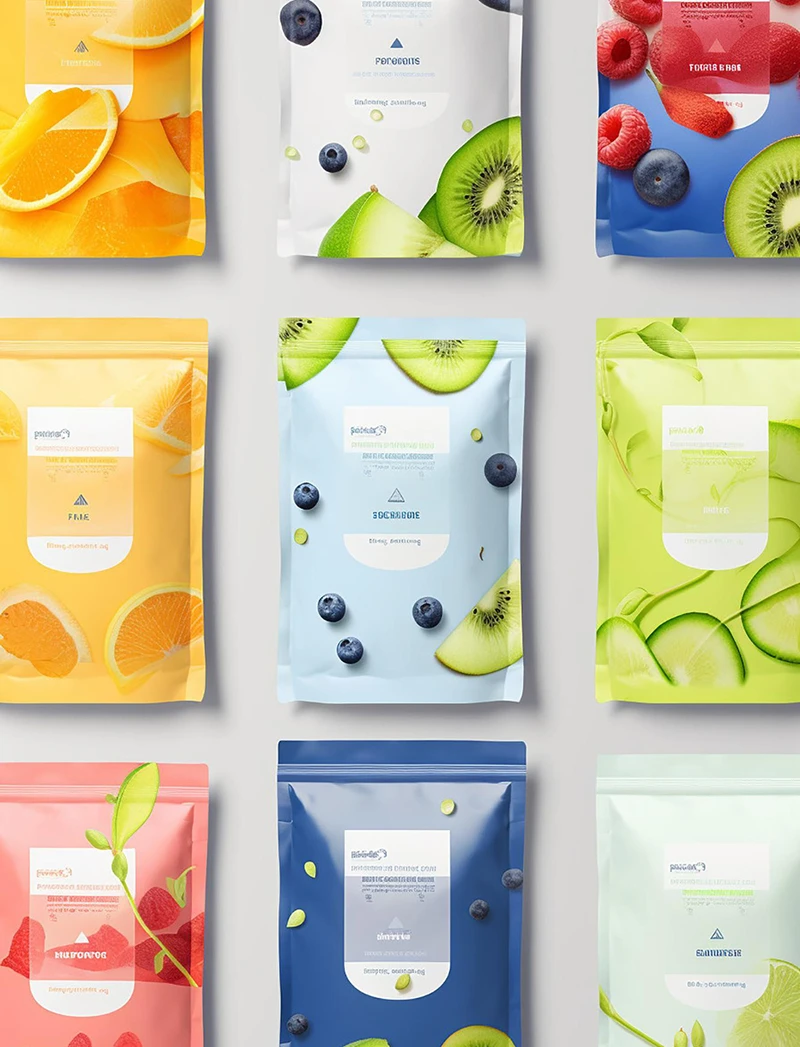
Create coffee packaging that makes species cues, blend purpose, and brew-fit easier for buyers to understand at first glance.
Do Arabica, Robusta, and Arabica-Robusta Blend Mean the Same Kind of Coffee Signal?
These words often appear close together on coffee bags. Buyers then read them as one simple premium ranking. That is where judgment usually starts to drift.
No. Arabica and Robusta are species signals. Blend is a design signal. They do not sit on the same information level, so buyers should not treat them as one direct quality ladder.
Why signal type matters before quality judgment starts
This is the first boundary that improves buying judgment. Arabica and Robusta tell buyers something about the biological starting point of the coffee. They point toward broad differences in bean chemistry and likely sensory direction. By contrast, an Arabica-Robusta blend tells buyers something about how a roaster or brand has chosen to construct the final product. These are not rival answers to one question. They are answers to different questions. A species name helps describe the likely nature of the raw coffee. A blend label helps describe a product strategy.
That distinction matters because buyers often attach the same type of meaning to all three words. They may assume Arabica equals premium, Robusta equals low grade, and blend equals compromise. That reading is too crude. A high-quality robusta can be judged within the robusta spectrum. A thoughtful blend can be judged by how well it delivers a target cup profile. A weak arabica is still possible. So the more disciplined conclusion is this: species tells buyers something about likely coffee direction, while blend tells buyers something about product design. One cannot replace the other. Once buyers separate those levels, the rest of the label becomes much easier to interpret.
| Label Signal |
What It Mainly Tells Buyers |
What It Does Not Settle Alone |
| Arabica |
A species-level clue about likely aromatic and compositional direction |
The final cup quality, roast fit, or buyer preference |
| Robusta |
A species-level clue about likely body, bitterness direction, and caffeine intensity |
Whether the coffee is low quality or unsuitable for specialty use |
| Arabica-Robusta Blend |
A design choice that combines species traits for a target cup |
That the coffee is only a cost-saving compromise |
Evidence (Source + Year):
Farah et al., coffee composition differences summarized in bioactive-compound review, 2023.
Wongsa et al., Quality and Bioactive Compounds of Blends of Arabica and Robusta Spray-Dried Coffee, 2019.
What Can Arabica and Robusta Really Tell Buyers About Flavor, Body, and Caffeine?
Species names do carry useful meaning. Buyers are right to care. The problem begins when one species word is treated like the full cup description.
Arabica and Robusta can suggest broad flavor direction. Arabica often points toward more aromatic complexity, while Robusta often points toward fuller body, stronger bitterness direction, and higher caffeine. Still, species never explains the whole cup alone.
Why chemistry helps explain direction, not destiny
Species names are not empty marketing language. They often point toward real compositional differences. Reviews on coffee chemistry report that Arabica generally contains more trigonelline and lipids, while Robusta generally contains more caffeine and chlorogenic acids. These differences matter because trigonelline and lipids are tied to aroma development and mouthfeel, while caffeine and chlorogenic acids contribute strongly to bitterness direction and perceived strength. Another flavor review notes that roasted robusta beans can contain about twice the caffeine concentration of arabica beans, helping explain why robusta is so often linked with a stronger bitter profile and heavier sensory impact.
That gives buyers a useful starting point. Arabica often points toward higher aromatic complexity, softer bitterness, and a more delicate flavor impression. Robusta often points toward more caffeine, stronger bitterness direction, heavier body, and a denser cup impression. But this remains direction, not destiny. Roast degree, post-harvest processing, freshness, brew ratio, grind size, and brew method still change what reaches the cup. A washed arabica and a natural arabica can taste very different. A carefully processed fine robusta and a low-grade commercial robusta can also taste very different.
So the most disciplined conclusion is simple: species can suggest the direction of the cup, but not the whole cup. Buyers should use Arabica and Robusta as strong opening clues, then continue reading instead of stopping there.
| Species Signal |
What It Often Suggests |
What Buyers Still Need to Check |
| Arabica |
Higher aromatic complexity and softer bitterness direction |
Roast, process, and brew context |
| Robusta |
Fuller body, stronger bitterness direction, higher caffeine tendency |
Quality level, processing quality, and intended use |
| Either species alone |
A broad compositional and flavor clue |
The final sensory result in the cup |
Evidence (Source + Year):
Makiso et al., Bioactive Compounds in Coffee and Their Role in Flavor and Health Context, 2023.
Seninde and Chambers, Coffee Flavor: A Review, 2020.
Why Is Robusta No Longer Just “Cheap Filler”?
Robusta carries a long market stereotype. That stereotype is now too blunt. The species is being judged more seriously, but it still should not be romanticized.
Robusta should no longer be judged only by its lowest commercial expression. Better processing, stronger evaluation systems, and growing fine-robusta interest are changing the species’ image, though buyers still need product-specific judgment.
Why the old robusta shortcut no longer works well
For years, many buyers treated robusta as a simple negative signal. It was often associated with instant coffee, cheaper fillers, and harsh cups. That history did not come from nowhere, but it is now incomplete. The Specialty Coffee Association’s 2024 robusta feature stresses the wide genetic diversity within Coffea canephora and highlights how much variation remains underexplored. That matters because it undercuts the idea that robusta should be judged as one flat, low-quality block. Diversity means potential. It also means buyers should be careful not to assume that every robusta is trying to do the same thing.
Reuters’ 2025 reporting on Brazil adds an important market update. Brazilian growers are investing in specialty-grade robusta production, and SCA revised its evaluation course so graders can more accurately describe and reward deserving coffees regardless of species. Reuters also reported that SCA plans to revise its flavor lexicon to include descriptors associated with fine robusta. That is a major signal. It suggests the specialty market is moving away from the idea that species alone should define specialty or non-specialty status.
Still, this does not mean buyers should now reverse the old bias and assume robusta is automatically undervalued brilliance. The better conclusion is narrower and more useful: robusta should no longer be judged only by its lowest commercial expression. Buyers still need roast, process, freshness, and intended use to judge whether a specific robusta is worth their attention.
| Old Robusta Assumption |
Why It Is Becoming Less Reliable |
Better Buyer Response |
| “Robusta means cheap filler.” |
Specialty evaluation and fine-robusta production are expanding |
Judge the specific product, not just the old stereotype |
| “Species settles quality.” |
SCA and industry reporting now push against that simplification |
Read roast, process, and use together with species |
| “All robusta tastes the same.” |
Canephora diversity and processing improvements complicate that claim |
Expect wider variation than the old image suggests |
Evidence (Source + Year):
Reuters, Brazil Robustas Push for Quality, 2025.
Why Might an Arabica-Robusta Blend Be the Smarter Choice for Some Buyers?
Blend often sounds like compromise language. In real product design, it can be a very practical answer to a very practical coffee goal.
For many buyers, blend is not a compromise. It is a design choice. An Arabica-Robusta blend can be built for fuller body, crema, espresso structure, or more stable repeatability from cup to cup.
Why blending can redesign the cup instead of simply diluting it
Blend matters because it can change the coffee materially, not just rhetorically. A 2019 Food Chemistry study on Arabica-Robusta spray-dried coffee found that changing blend ratios significantly altered caffeine, 5-caffeoylquinic acid, phenolic content, antioxidant activity, and volatile profile. That is a useful reminder that a blend is not merely a bag with two names on it. It is a reformulated product. It can be tuned. It can be structured. It can be optimized for a target result.
This is especially relevant for espresso and milk drinks. Reuters reported in 2025 that roasters are increasing robusta shares in some espresso blends not only because of cost but also because robusta can contribute crema, chocolatey notes, fuller body, and a more bitter finish that some consumers actively prefer. That makes the blend logic much easier to understand. A buyer who wants a dense, repeatable espresso or a milk drink that still keeps coffee presence may rationally prefer a blend over a single-species product. The question is not whether blend is more noble. The question is whether the blend has been built for the buyer’s actual use case.
So the fair conclusion is this: for many buyers, blend is not a compromise. It is a design choice. The better buyer asks what problem the blend is trying to solve and whether that problem matches the cup they want.
| Buyer Goal |
Why a Blend May Fit Better |
Why Single Species May Still Appeal |
| Espresso structure |
Blend can add crema, body, and designed balance |
A buyer may still want a purer species expression |
| Milk drinks |
Stronger body and bitterness direction can remain visible through milk |
Some buyers still prefer a more delicate milk-drink profile |
| Daily repeatability |
Blend can stabilize cup style and buying expectations |
Single origin may still appeal to buyers who enjoy variation |
Evidence (Source + Year):
Wongsa et al., Quality and Bioactive Compounds of Blends of Arabica and Robusta Spray-Dried Coffee, 2019.
Reuters, Brazil Robustas Push for Quality, 2025.
Build coffee packaging that explains blend purpose clearly so buyers understand why the cup was designed that way before they decide.
What Should Buyers Check First on the Label Before They Decide What Matters Most?
One species word can pull attention quickly. Better buying starts when the buyer decides what cup attribute matters first, not when the bag decides for them.
Consumers should decide what cup experience matters most, then read species, roast, process, blend purpose, and intended use together instead of letting one species name make the whole decision.
How buyers can turn species language into a better coffee framework
The best framework starts with buyer priorities. Step one is to decide whether the buyer cares most about aromatic complexity, fuller body, caffeine direction, crema, or daily consistency. Step two is to read the species claim: Arabica, Robusta, or blend. That gives a broad directional clue, but not the whole answer. Step three is to check roast level and process, because species alone never settles the cup. Step four is to ask whether the label explains the purpose of a blend. Is it built for espresso, milk drinks, or a stable daily profile? Step five is to match the coffee to actual use. Black coffee, pour-over, espresso, and milk drinks do not ask the same thing from the bean.
This sequence helps because it keeps the species word in proportion. Arabica may matter more to a buyer chasing fragrance and cup delicacy. Robusta may matter more to a buyer who prefers bitter direction, fuller body, or caffeine strength. A blend may matter more to a buyer who wants structure, crema, and repeatability. The better decision is not made by choosing the species word first and inventing the reason later. It is made by deciding what matters in the cup first and then checking whether the label actually supports that goal.
That is the more mature reading rule. Species matters. Blend purpose matters. Roast and process matter. Intended use matters. Good judgment comes from reading them together in the right order.
| Step |
What Buyers Check |
Why It Matters |
| 1 |
Cup priority |
It tells buyers what they are actually optimizing for |
| 2 |
Species claim |
It gives a broad flavor and body direction |
| 3 |
Roast and process |
They shape how species differences show up in the cup |
| 4 |
Blend purpose |
It clarifies whether the coffee was designed for balance, crema, or repeatability |
| 5 |
Actual brew use |
It prevents the right coffee for one context from being misread in another |
Evidence (Source + Year):
Specialty Coffee Association, The Roots of Robusta, 2024.
Reuters, Brazil Robustas Push for Quality, 2025.
About Us
Jinyi — From Film to Finished—Done Right.
https://jinyipackage.com/
Our Mission
We believe good packaging is not just surface design. It should be a stable solution that performs well in real conditions. JINYI aims to give brand owners reliable, practical, and production-ready flexible packaging so they can reduce communication cost while gaining clearer lead times, steadier quality, and packaging that truly fits product and channel needs.
Who We Are
JINYI specializes in Custom Flexible Packaging and brings more than 15 years of production experience to coffee, food, snack, pet food, and other consumer categories. The factory is equipped with multiple gravure printing lines and HP digital printing systems, supporting both stable large-volume production and flexible short-run projects.
As a flexible packaging manufacturer, we focus on how packaging performs during transport, shelf display, and everyday consumer use. For coffee brands, we pay close attention to freshness protection, print stability, date clarity, product hierarchy, and pack structures that help buyers understand roast, origin, blend purpose, and use fit more clearly.
FAQ
Is Arabica always better than Robusta?
No. Arabica and Robusta usually point toward different cup directions, but quality still depends on processing, roast, freshness, and intended use.
Does Robusta always mean more caffeine?
Robusta usually trends higher in caffeine than Arabica, but the final cup still depends on dose, roast, and brew method.
Why might a blend be better for espresso?
A blend can be designed for crema, fuller body, bitterness balance, and more stable daily repeatability, which often matters in espresso use.
Is fine robusta now automatically specialty coffee?
No. The market is reassessing robusta more seriously, but buyers still need to judge the specific product rather than rely on species alone.
What should buyers check first before choosing species?
They should first decide what cup attributes matter most, such as aroma complexity, body, bitterness direction, crema, or daily consistency.