Many coffee brands promise vivid flavor notes, but customers only remember what they smell and taste at home. When that gap appears, trust and repeat purchase drop fast.
This article explains aroma as an economic system: perceived value minus aroma loss and consistency costs. It outlines research-backed breakpoints and practical signals brands can verify on shelf and online (see how performance packaging reduces avoidable freshness and experience failures).

Aroma is not only a sensory detail. Aroma is a value driver and a failure risk. In a low-attention market, “flavor notes” act like a shortcut. They help buyers decide quickly. If the experience matches the promise, the shortcut builds trust. If it does not, the shortcut becomes a reason to switch brands.
Why is aroma an “economics” problem, not just a sensory problem?
A brand can write beautiful notes and still lose repeat purchase. When aroma fades or drifts, customers feel the promise was broken.
A research-led view treats aroma as an asset: perceived value (willingness to pay and repeat purchase) minus the costs of aroma loss and inconsistency across storage, transit, and messaging.
Aroma as a promise with a cost structure
In many categories, a buyer can judge quality quickly. In coffee, the real test happens after purchase. That makes the “promise” unusually important. Flavor notes compress complex sensory information into a fast decision tool. In a low-attention environment, that tool is valuable, but it is also fragile. If the product experience fails to deliver the promised aroma direction, the brand pays a cost: refunds, negative reviews, and lost repeat purchase. This is why aroma fits an economic framing. The benefit is perceived value. The cost includes aroma loss over time and inconsistency across batches and routes. Research on attention often emphasizes that the value of attention depends on focus and intent, not only time spent. That implies brands should not assume customers will read long stories to understand variation. At the same time, price pressure increases switching, but quality distrust can still filter choices. This combination makes “short, verifiable proof” more valuable than “long, persuasive copy.”
Evidence (Source + Year): McKinsey, The Attention Equation (2025). NIQ, consumer survey on price-driven switching and quality distrust (2024).
| Economic element |
What it means for aroma |
Where it shows up |
| Value |
Higher willingness to pay and repeat purchase |
“Smells amazing” + repurchase |
| Cost |
Loss from fading aroma or mismatch |
“Flat / stale / not as described” |
| Risk |
Variance across storage, transit, and batches |
Inconsistent reviews and returns |
What is “Aroma ROI,” and why can smell drive purchase more than taste?
Many buyers decide before the first sip. If the aroma moment disappoints, the brand may never get a second chance.
Studies suggest olfactory attributes can strongly shape purchase intention and how people react to labels, price, and packaging information, which makes aroma a high-leverage business variable.
Why aroma is a high-frequency decision trigger
Aroma has multiple “touchpoints” that happen before consumption. The bag is opened. The coffee is ground. The brew starts. Each moment forms a fast judgment. That matters because low-attention buyers rely on quick cues to confirm they made a good choice. Research has suggested that olfactory attributes can have a strong influence on purchase intention, and that aroma intensity can affect how consumers respond to label information and price (Barahona et al., 2020). Separate work has also linked measurable sensory characteristics of black coffee to consumer acceptance and purchase intention (Pinsuwan et al., 2022). These findings support a practical takeaway: aroma is not just a “nice to have.” Aroma is part of the conversion engine that turns a flavor description into a repeat behavior. If the aroma experience is strong and consistent, the same flavor notes become believable. If the aroma experience is weak or inconsistent, the same notes become suspicious. That is where ROI breaks: the brand keeps paying for messaging, but the sensory proof does not land.
Evidence (Source + Year): Barahona et al. (2020). Pinsuwan et al. (2022).
| Moment |
What customers evaluate |
Business impact |
| Open bag |
Aroma strength and “freshness” signal |
Trust and review tone |
| Grind |
Volatile release and intensity |
Perceived quality |
| Pre-sip |
Expectation confirmation |
Repeat intent |
Where does the system break: why do “flavor notes” fail to convert into repeat purchase?
When customers do not repurchase, the problem is often not the words. The problem is the delivery of the aroma promise.
Research suggests breakdowns cluster around freshness loss, inconsistency, language mismatch, and value pressure—each with practical signals brands can measure and fix.
Four predictable breakpoints and what to verify
Breakpoint one is freshness. Aroma is an easy-to-damage asset. Storage conditions and resealing strategies can change volatile profiles in measurable ways. Research has tracked aroma-related compound changes under different storage approaches using analytical methods (Smrke et al., 2022), and other work has reported that colder storage can slow changes in volatile profiles and influence sensory outcomes (Gantner et al., 2024). Breakpoint two is consistency. Repeat purchase needs a stable range, not occasional peak performance. If batch variation is not explained, customers interpret it as unreliability. Breakpoint three is information. Flavor description language itself changes consumer responses, which means “how notes are written” can raise or lower the risk of mismatch (Hazebroek et al., 2023). Breakpoint four is value under price pressure. Switching becomes easier, but quality distrust still filters choices (NIQ, 2024). Together, these points describe why great notes can fail: the aroma promise is not consistently delivered through time, handling, and expectations.
Evidence (Source + Year): Smrke et al. (2022). Gantner et al. (2024). Hazebroek et al. (2023). NIQ (2024).
| Breakpoint |
What breaks |
What to measure |
What customers say |
| Freshness |
Volatiles fade or oxidize |
“Flat/stale” complaint rate by age |
“No aroma” |
| Consistency |
Batch-to-batch drift |
Variance in key sensory attributes |
“Not the same anymore” |
| Information |
Notes create wrong expectations |
Mismatch keywords in reviews |
“Not as described” |
| Value |
Price feels unjustified |
Repurchase drop at price points |
“Not worth it” |
How can brands build an “aroma dashboard,” and where does packaging fit as the delivery system?
Most teams track sales, not aroma loss. When the aroma system is not measured, the same problems repeat across launches.
A practical approach links sensory promises to operational reality: define promise signals, track delivery signals, and protect the aroma interface—especially in storage and transit.
From flavor notes to a measurable system
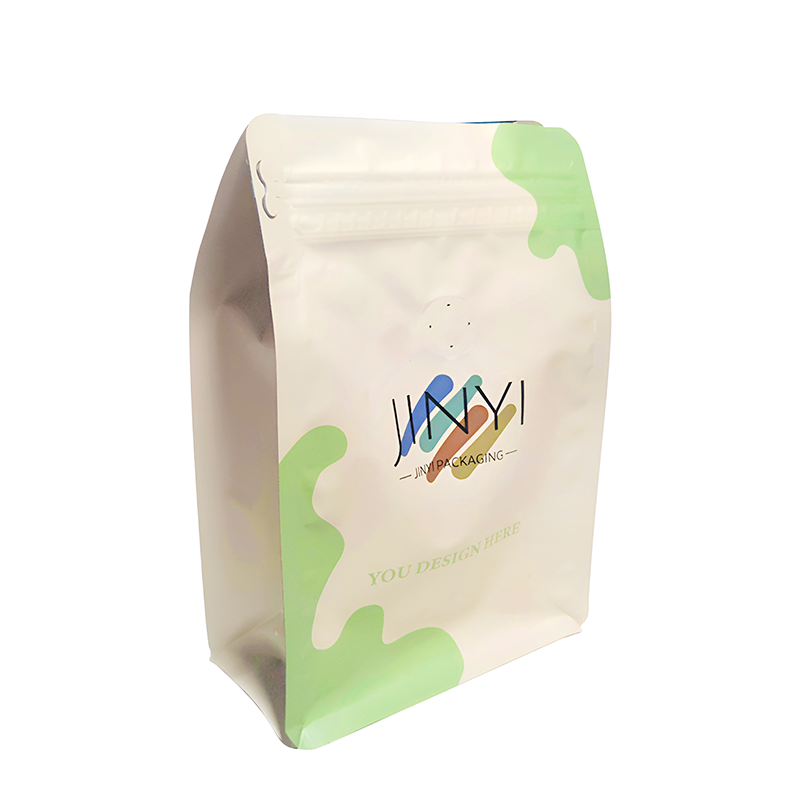
Aroma economics improves when brands treat flavor notes like a product spec. A simple dashboard can connect three layers. First is the promise layer: 3–5 primary notes plus a clear intensity direction (light/medium/bold). Second is the delivery layer: customer feedback on aroma at arrival, complaints about fast fading after opening, and consistency complaints across batches. Third is the business layer: repeat purchase rate, return rate, and review keywords like “flat,” “stale,” or “no aroma.” Research suggests aroma and label response are linked (Barahona et al., 2020), and storage conditions can measurably shift aroma profiles (Smrke et al., 2022; Gantner et al., 2024). As a flexible packaging manufacturer, we focus only on the packaging-side control points that help the aroma promise survive real routes: clear date coding and storage guidance, reliable sealing, and structures that reduce oxygen and moisture exposure and reduce confusion after delivery. Industry education also highlights freshness mechanisms and oxygen-related risks (SCA 25 Magazine, 2025). For a practical performance checklist, see how packaging choices reduce avoidable aroma loss and trust breaks.
Evidence (Source + Year): Barahona et al. (2020). Smrke et al. (2022). Gantner et al. (2024). SCA 25 Magazine (2025).
| Dashboard layer |
What to define |
What to track |
| Promise |
Main notes + intensity direction |
Claim clarity and customer understanding |
| Delivery |
Arrival aroma + after-open fading |
Complaint rate by shelf age and route |
| Business |
Repeat purchase + returns |
Repurchase by cohort and price tier |
Conclusion
Aroma drives repeat purchase when flavor notes are short, deliverable promises backed by consistency and protection. Audit breakpoints, measure delivery, and reduce avoidable aroma loss.
Talk to JINYI about protecting aroma performance in real routes
FAQ
1) Why do flavor notes sometimes hurt trust instead of helping it?
If notes are too specific or too poetic, they can create expectations the product cannot consistently deliver. Research suggests description language can change consumer response (Hazebroek et al., 2023).
2) What is the fastest indicator that aroma ROI is breaking?
A spike in “flat,” “stale,” or “no aroma” review keywords, especially when it correlates with longer storage time or slower shipping routes.
3) Does storage really change aroma enough to affect repurchase?
Research has tracked measurable changes in aroma-related compounds under different storage conditions and approaches (Smrke et al., 2022; Gantner et al., 2024).
4) How should brands write flavor notes for low-attention buyers?
Use fewer, clearer notes with an intensity direction. Pair the notes with verifiable basics like roast date and storage guidance.
5) Where does packaging influence aroma trust without becoming a sales pitch?
Packaging influences trust when it reduces avoidable aroma loss and confusion: clear coding, reliable sealing, and protection against oxygen, moisture, and transit stress.
My Role
About Us
Brand: Jinyi
Slogan: From Film to Finished—Done Right.
Website: https://jinyipackage.com/
Our Mission:
JINYI is a source manufacturer specializing in flexible packaging. Our goal is to deliver reliable, practical pouch solutions so brands reduce communication costs, receive predictable quality, and get packaging that matches real use, real routes, and real lead times.
About Us:
JINYI is a source manufacturer specializing in custom flexible packaging solutions, with over 15 years of production experience serving food, snack, pet food, and daily consumer brands.
We operate a standardized manufacturing facility equipped with multiple gravure printing lines as well as advanced HP digital printing systems, allowing us to support both stable large-volume orders and flexible short runs with consistent quality.
From material selection to finished pouches, we focus on process control, repeatability, and real-world performance. Our goal is to help brands reduce communication costs, achieve predictable quality, and ensure packaging performs reliably on shelf, in transit, and at end use.
JINYI positions itself as a one-stop manufacturer from film selection to finished pouches. We prioritize controllability and repeatability, so we manage sampling, production, and quality checks through standardized processes. For us, packaging must work on shelf, survive transit, and stay easy to use at end use.