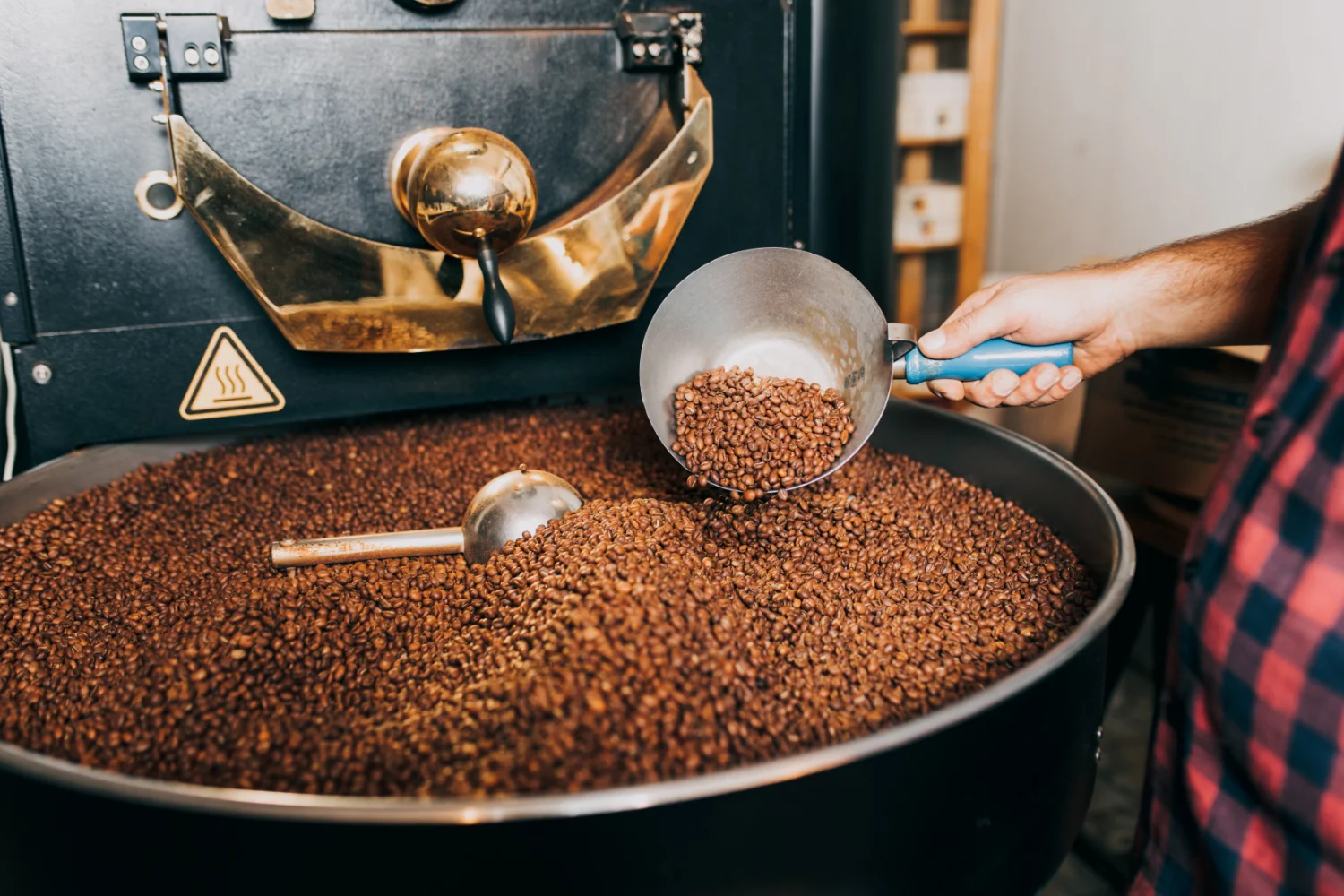
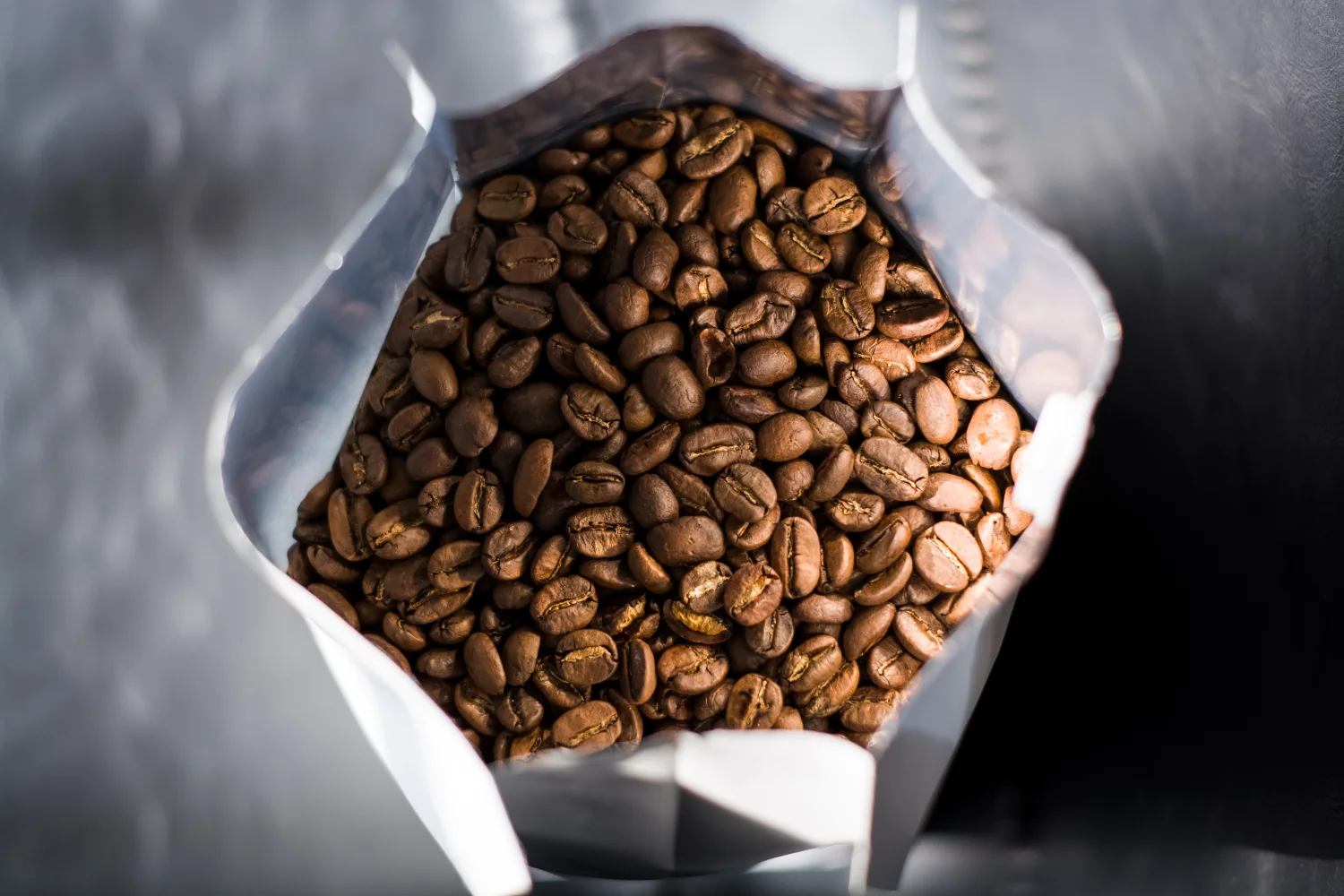
Fresh coffee can gas up your bag, stress your seals, and trigger “ballooning” complaints—even when everything looks fine at packing.
Matching a coffee package valve is a risk decision, not a default add-on. The right choice balances CO₂ pressure risk (degassing load) against oxygen exposure risk (staling) across your real channel timeline. If you want a packaging-first decision path (not marketing talk), start here: our Food Packaging solution page.

Buyers control three variables more than any valve brochure: roast level, grind size, and how long the product sits in distribution plus at-home storage. This article turns those variables into a practical matching logic and a test plan.
Why does roast level change CO₂ pressure risk even with the same coffee valve?
If the same valve and bag spec works for one roast but swells for another, the valve is not “random.” The product is changing the CO₂ load.
Roast level affects how coffee releases CO₂ after roasting, and degassing follows a time-decay curve rather than a flat rate. This makes “packed day-1” behave very differently from “packed day-7,” even inside the same coffee bags with valve. Temperature also shifts the curve, which is why some brands see swelling in summer or during warm transport legs. A buyer-friendly way to visualize this is a simple graph: degassing rate vs. time for light/medium/dark roasts, then overlay the channel timeline (roast date → pack date → ship → retail). If the high-degassing window overlaps with long dwell time or heat exposure, pressure risk increases and seal stress becomes the real failure mode. This is also where the valve choice must be framed as “how much CO₂ must vent, how fast, and for how long,” not as a generic feature. The valve protects the bag from pressure, but the system still needs strong sealing and stable handling to avoid micro-leaks under stress.
Evidence (Source + Year)
Wang & Lim (2014) report that roasting conditions measurably change CO₂ degassing behavior in coffee.
Nicoli & Savonitti (2005) discuss CO₂-related package pressurization and shelf-life pitfalls in coffee products.
How does grind size create a “ground coffee penalty” for valve coffee packaging?
Grind size changes the game because it changes surface area and how fast quality drifts under oxygen exposure.
Smaller particles typically increase surface area, and that can make coffee release gas and lose aroma faster under real storage conditions. This is where buyers often make a costly mistake: they over-focus on pressure relief and under-spec oxygen control. For whole beans, the early-life pressure window can be the primary complaint driver, so a coffee valve can meaningfully reduce ballooning and seal strain. For ground coffee, however, oxygen exposure can dominate quality perception sooner, which makes barrier performance and sealing integrity more central to “shelf life” than the valve itself. In other words, grind size can shift the priority from “pressure only” to “pressure + oxygen control.” A useful verifiable structure is a two-lane comparison: whole bean vs. ground under the same storage conditions, tracking (1) package volume/ballooning as a pressure proxy and (2) oxygen-driven deterioration proxies such as sensory staling notes or oxidation-related markers. This approach helps buyers avoid the false comfort of thinking “coffee bags with valve” automatically means long freshness.
Evidence (Source + Year)
Wang & Lim (2014) link roast-related variables to measurable CO₂ degassing patterns.
Yeretzian et al. (2012) discuss oxidation-related changes and quality drift in coffee during storage, with differences between formats and exposure conditions.
What does “shelf life” really mean for valves—and why is “packed day-1 vs day-7” a valve decision?
Shelf life is not a single number. It is a timeline with different risk peaks for pressure and staling.
The same bag and valve can be stable in one channel and fail in another because time-to-pack, warehouse dwell time, and temperature swings change both CO₂ pressure and oxidation rates. Buyers should treat valve selection as part of a channel map: roast date → packing date → fulfillment → retail/last-mile → pantry life. A simple worksheet makes this practical: list each stage’s days and likely temperatures, then ask which risk dominates at each stage. If the early timeline carries high CO₂ load, venting reliability matters most. If the later timeline is long and warm, oxygen management becomes the freshness limiter, and a valve cannot compensate for weak barrier or imperfect seals. This is also where communication matters: buyers often blame “valve failure” for staling complaints, but many staling cases are actually oxygen exposure problems. For brands that want fewer disputes, it helps to align the packaging spec with the intended shelf-life target and document the assumptions clearly. If you want a packaging-first way to frame this for buyers, this Food Packaging page summarizes how packaging decisions map to real distribution stress.

Evidence (Source + Year)
Nicoli & Savonitti (2005) describe shelf-life uncertainties and how real-world storage and packaging assumptions can break down.
Cardelli & Labuza (2001) emphasize oxygen concentration and oxidation as central drivers of coffee staling and packaging relevance.
Built-in coffee valve vs coffee degassing valve sticker: what changes for buyers?
The choice is less about marketing names and more about what happens in the valve zone under stress.
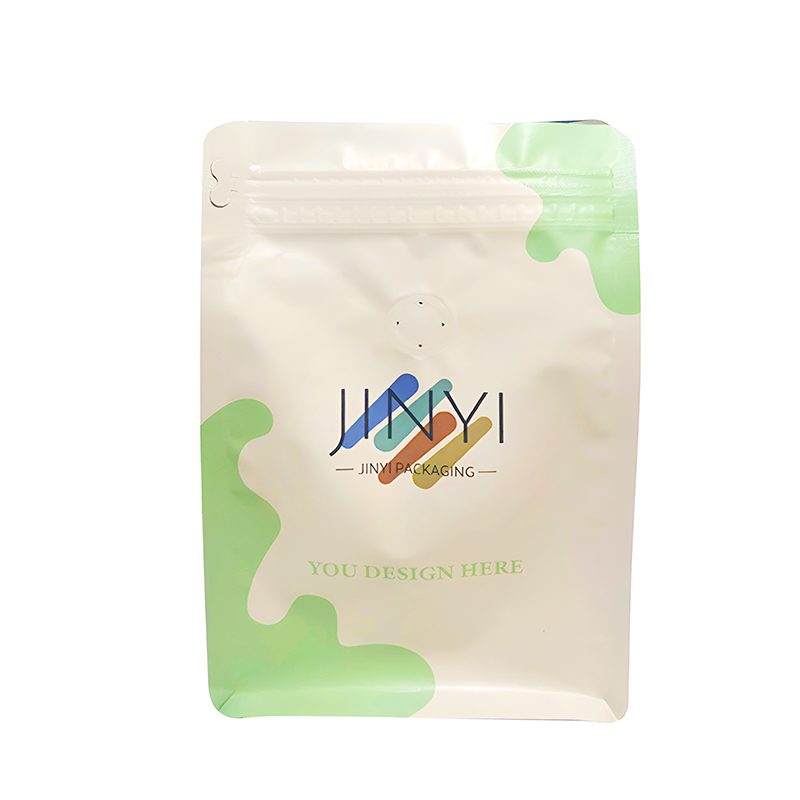
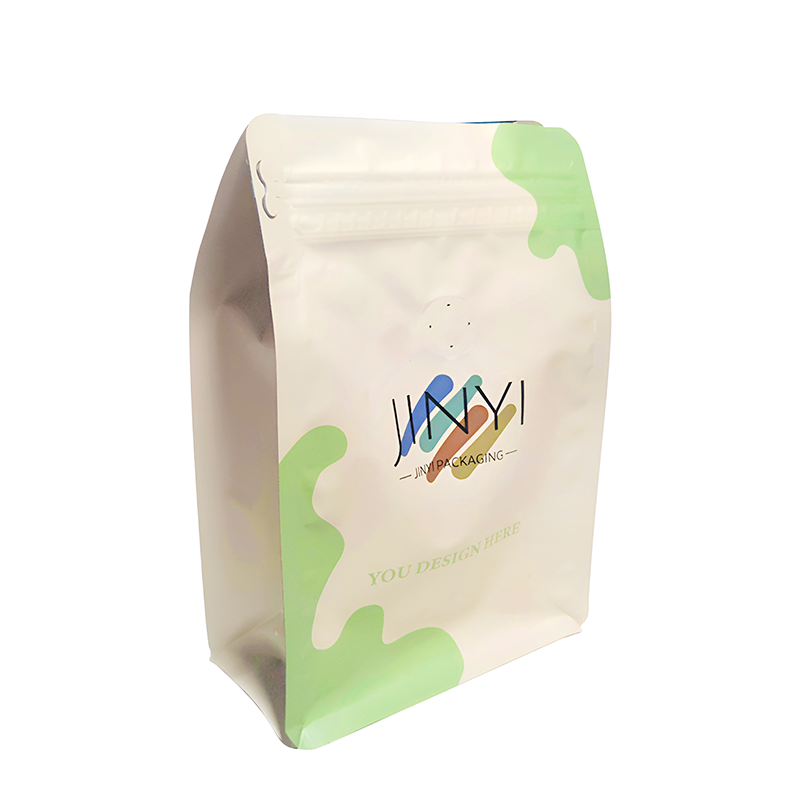
Buyers typically see two formats: an integrated one-way valve (often pre-applied) and a coffee degassing valve sticker (valve plus an adhesive patch). The performance risk is not “sticker bad” or “built-in good.” The real question is valve-zone integrity: does the patch perimeter introduce leak pathways, does the adhesive stay stable over time, and does application remain consistent across shifts and lots? A bag can pass seal tests on the side seals and bottom gusset yet fail at the valve patch perimeter under pressure cycles and temperature changes. That failure often looks like “valve coffee packaging is leaking,” but the leak path can be around the patch rather than through the valve membrane. This is why buyers should require a valve-zone test concept: run pressure trending for ballooning risk and then run focused leak checks around the valve zone after thermal cycling or aging. If the brand uses matte films, textured finishes, or special coatings, adhesive compatibility becomes even more important because surface energy affects bonding reliability.
Evidence (Source + Year)
Nicoli & Savonitti (2005) highlight how packaging assumptions can fail under real storage and handling conditions.
Nicoli et al. (2009) discuss packaging-relevant quality drift in coffee, supporting the need to validate atmosphere changes and integrity over time.
What validation closes the gap between “valve marketing” and real freshness outcomes?
Buyers need proof that the system vents CO₂ without creating new leak paths—and that freshness is still protected against oxygen.
As a flexible packaging manufacturer, we focus on closing two gaps at once: pressure complaints (ballooning, seal strain) and staling complaints (oxygen-driven aroma loss). That requires a minimum proof set that buyers can understand and suppliers can reproduce. First, a pressure/volume trend shows whether CO₂ venting is keeping the pack stable during the highest degassing window. Second, a seal integrity check must include the valve zone, because micro-leaks around the patch or valve seat can quietly drive staling disputes. Third, a headspace oxygen trend (or an agreed oxygen-control method at packing) connects “freshness” to a measurable packaging variable rather than to a promise. Buyers should also request a checklist that beats slogans: valve venting behavior under load, valve-zone leak risk, film OTR/WVTR targets aligned to shelf-life goals, packing oxygen strategy, sticker application controls (if used), and reseal reliability for at-home use. With these elements, the buyer’s decision becomes transparent: match roast level and grind size to expected shelf-life timeline, then verify the valve + barrier + seal system under realistic stress.
Evidence (Source + Year)
ISO 22000 family principles (food safety management) support documenting control points and verification logic across a food packaging supply chain (ISO framework reference).
Cardelli & Labuza (2001) and Nicoli et al. (2009) connect oxygen exposure to quality drift, supporting headspace oxygen as a meaningful verification target.
Where does it break in real life: the failure map buyers should test against?
Most disputes repeat the same patterns. A simple failure map prevents expensive guesswork.
Real-life failures usually fall into four buckets that can be tested directly. (A) The bag still balloons: the valve is blocked, underspecified, or poorly placed, so CO₂ cannot vent fast enough during the high-degassing window. (B) Coffee tastes stale “even with a valve”: the valve relieved pressure but oxygen ingress still occurred through weak barrier, micro-leaks, or poor handling. (C) The valve sticker lifts: adhesive mismatch, incorrect application window, or aging under heat/humidity creates edge lift and channel leaks. (D) Micro-leaks near the valve zone: stress concentration plus imperfect patch sealing creates a small leak that is hard to see but large enough to accelerate staling. The buyer-facing advantage of this map is speed: each complaint links to a test. Ballooning links to pressure/volume tracking. Staling links to oxygen trend plus sensory/chemical proxies. Patch lift links to peel/shear aging and thermal cycling. Valve-zone micro-leaks link to focused leak testing around the valve perimeter. This is how buyers stop arguing about “valve quality” and start controlling the real variables.
Evidence (Source + Year)
Nicoli & Savonitti (2005) discuss how pressurization and storage assumptions create shelf-life pitfalls.
Cardelli & Labuza (2001) link oxygen exposure to coffee staling mechanisms relevant to packaging choices.
Conclusion
A coffee package valve solves CO₂ pressure risk, but shelf life is still controlled by oxygen exposure, seals, and real channel time. If you want a buyer-ready spec and validation plan, talk to JINYI.
FAQ
1) Do all coffee bags need a valve?
No. A valve is mainly a CO₂ pressure tool. The need depends on degassing load, packing timing, and the channel timeline.
2) Why do coffee bags with valve still go stale?
Because staling is often dominated by oxygen exposure through barrier limits, seal integrity, or handling. A valve does not block oxygen by itself.
3) Is a coffee degassing valve sticker less reliable than a built-in valve?
It can be reliable if the valve-zone integrity is validated. The key risks are adhesive compatibility, application control, and valve-zone leak pathways.
4) Does grind size change which valve I should use?
Grind size can shift priorities. Ground coffee tends to be more sensitive to oxygen-driven drift, so the valve decision should be paired with stronger oxygen-control verification.
5) What are the three minimum proofs buyers should request?
A pressure/volume trend, a seal integrity test that includes the valve zone, and a headspace oxygen trend or an agreed oxygen-control method at packing.
About Jinyi
Brand: Jinyi
Slogan: From Film to Finished—Done Right.
Website: https://jinyipackage.com/
Our mission:
JINYI is a source manufacturer specializing in flexible packaging. We deliver reliable, usable, and scalable packaging plans so brands can reduce communication cost, stabilize quality, clarify lead time, and match structure and printing to real product needs.
About us:
JINYI is a source manufacturer specializing in custom flexible packaging solutions, with over 15 years of production experience serving food, snack, pet food, and daily consumer brands. We operate a standardized manufacturing facility equipped with multiple gravure printing lines as well as advanced HP digital printing systems, supporting both stable large-volume orders and flexible short runs with consistent quality. From material selection to finished pouches, we focus on process control, repeatability, and real-world performance.