Snacks can “fail” fast. A date can look fine, but one soggy bite can trigger distrust, refunds, and lost repeat purchase.
The trust gap happens when buyers taste staling first and only then look for an explanation—so they blame the brand, not humidity, oxygen, storage time, or open-close habits. Brands reduce this gap by separating date systems from sensory decay, and by using short, verifiable freshness signals.
Reduce freshness complaints with a packaging system view

Dates are a compliance tool. Taste is a decision tool. When those two tools disagree, buyers do not debate. They switch brands. This article maps why that happens and which evidence-led signals can narrow the gap without overloading attention.
What exactly is the “Freshness Trust Gap,” and why does it show up before a product is “expired”?
A buyer reads “best-by,” expects a crisp, aromatic snack, and then experiences soft texture or flat aroma. That mismatch becomes a trust problem.
The gap appears because dates describe a managed window under assumed conditions, while sensory quality decays under real-world exposure. When the experience crosses a personal “stale threshold,” the buyer treats it as a brand failure.
Dates vs. sensory decay are not the same system
| What the buyer sees |
What it usually represents |
Why conflict happens |
| Best-by / best if used by |
Quality guidance under standard assumptions |
Assumptions break under humidity, oxygen, heat cycles |
| Sell-by |
Retail rotation and logistics guidance |
Does not describe “open-to-eat” freshness |
| Still “in date” |
Not necessarily unsafe |
Can still be sensorially unacceptable |
Evidence (Source + Year): FDA and USDA FSIS explain date-type meanings and common consumer confusion around product dating (FDA, recent guidance pages; USDA FSIS, Food Product Dating). Katz & Labuza discussed critical water activity ranges tied to texture acceptability for low-moisture foods (Katz & Labuza, 1981).
Why are snacks especially vulnerable to blame, even more than many other packaged foods?
Snack quality is judged in seconds. The first bite and first aroma do the talking.
Snacks rely on “instant verifiability”: crunch sound, aroma impact at opening, and a clean finish are fast, decisive quality signals. When those signals fail, buyers do not run root-cause tests. They infer inconsistency.
Instant signals are stronger than hidden process variables
| Instant signal |
What buyers conclude |
Typical hidden driver |
| Crunch gets dull |
“Stale” |
Moisture uptake / aw rise |
| Aroma feels weak |
“Not fresh” |
Volatile loss + oxidation masking |
| Off-odor appears |
“Bad batch” |
Lipid oxidation by oxygen + heat + time |
Evidence (Source + Year): Research shows sound cues influence perceived crispness and freshness (Zampini & Spence, 2004). Crispness change can be tracked with mechanical and acoustic approaches in low-moisture foods (Arimi et al., 2010).

If dates are “fine,” what actually makes snacks go stale in the real world?
Staling is rarely one thing. It is usually exposure plus time, not a calendar mistake.
Most “in-date staling” comes from four forces: humidity exposure, oxygen exposure, temperature cycling, and repeated open-close behavior. These forces reshape texture and aroma before the buyer ever thinks about labeling.
Four drivers, four measurable pathways
| Driver |
What changes |
Simple measurement examples |
| Humidity |
Glass-to-rubber texture shift |
Water activity (aw), moisture, hardness/acoustics |
| Oxygen |
Oxidation + aroma masking |
PV/TBARS, key volatiles (e.g., hexanal) |
| Temperature cycling |
Faster reaction rates |
Accelerated storage comparisons |
| Open-close habits |
Exposure spikes after opening |
“Home timeline” tests at 24h/72h/7d/14d |
Evidence (Source + Year): Low-moisture foods have documented texture acceptability shifts within specific aw ranges (Katz & Labuza, 1981). Lipid oxidation mechanisms and drivers (oxygen, light, metals, temperature) are well summarized in food lipid oxidation literature (Barden & Decker, 2016). Hexanal is often used as a practical oxidation marker in snack studies (e.g., Sanches-Silva et al., 2004; Agarwal et al., 2021).
Where does repeat purchase break down—what are the four most common “trust failure” points?
When a complaint happens, it usually maps to a predictable break point.
Repeat purchase breaks when sensory change is fast, the cause is invisible, and the brand offers no short, verifiable explanation. That combination converts normal exposure risk into “brand inconsistency.”
Break points you can diagnose and act on
| Break point |
Buyer says |
Likely mechanism |
Brand action that is verifiable |
| Humidity break (lost crunch) |
“Soft / soggy / stale” |
aw rise, texture shift |
Clear reseal guidance + humidity control tests |
| Oxidation break (off-odor) |
“Rancid / oily / cardboard” |
Lipid oxidation |
Oxygen control tests + marker tracking (PV/hexanal) |
| Time break (threshold crossing) |
“It’s worse than last time” |
Accumulated chemical time |
Channel-time vs home-time validation |
| Information break (misattribution) |
“Brand got worse” |
Invisible exposure blamed on brand |
One short “boundary sentence” + batch anchor |
Evidence (Source + Year): Crispness perception is influenced by acoustic cues, making texture change a fast trust trigger (Zampini & Spence, 2004). Classic low-moisture acceptability work links texture shifts to aw behavior (Katz & Labuza, 1981). Oxidation marker and volatile approaches are widely used to describe staling trajectories (Barden & Decker, 2016; Agarwal et al., 2021).
How can brands shrink the gap without telling longer stories—and how does packaging fit (only 20%)?
In a low-attention moment, longer explanations do not win. Short proof wins.
The fastest way to reduce blame is to standardize a minimal “evidence stack”: 3-second clarity, one verifiable anchor, and one neutral boundary sentence about freshness vs dates. Packaging supports that by protecting exposure-sensitive attributes and making correct use easier.
A minimal evidence stack buyers can process fast
| Component |
What it does |
Example (short, readable) |
| 3-second info |
Sets expectation quickly |
Snack type + flavor direction + “Keep sealed after opening” |
| 1 verifiable anchor |
Enables support and confidence |
Batch/lot code + simple lookup path |
| 1 boundary sentence |
Prevents misinterpretation |
“Best-by is a quality guide; freshness after opening depends on reseal and storage.” |
Evidence (Source + Year): Instant crispness signals drive freshness judgments, so reducing exposure variability reduces complaint volatility (Zampini & Spence, 2004). Moisture-driven texture shifts and oxidation-driven off-odors are documented mechanisms behind “in-date staling” (Katz & Labuza, 1981; Barden & Decker, 2016).

See how packaging usability and barrier choices reduce staling risk
What packaging can (and cannot) control in staling risk
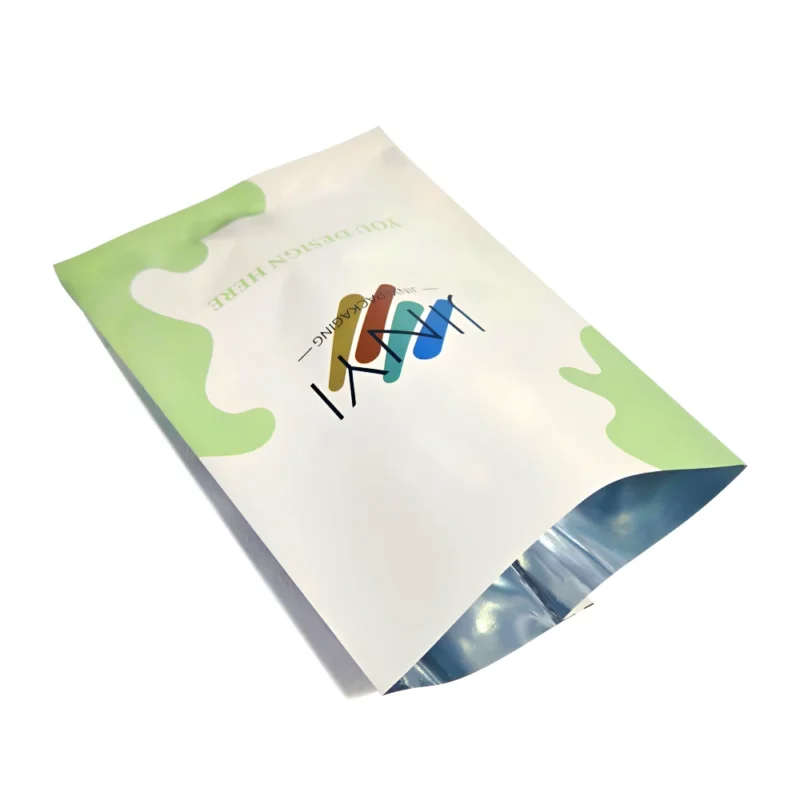
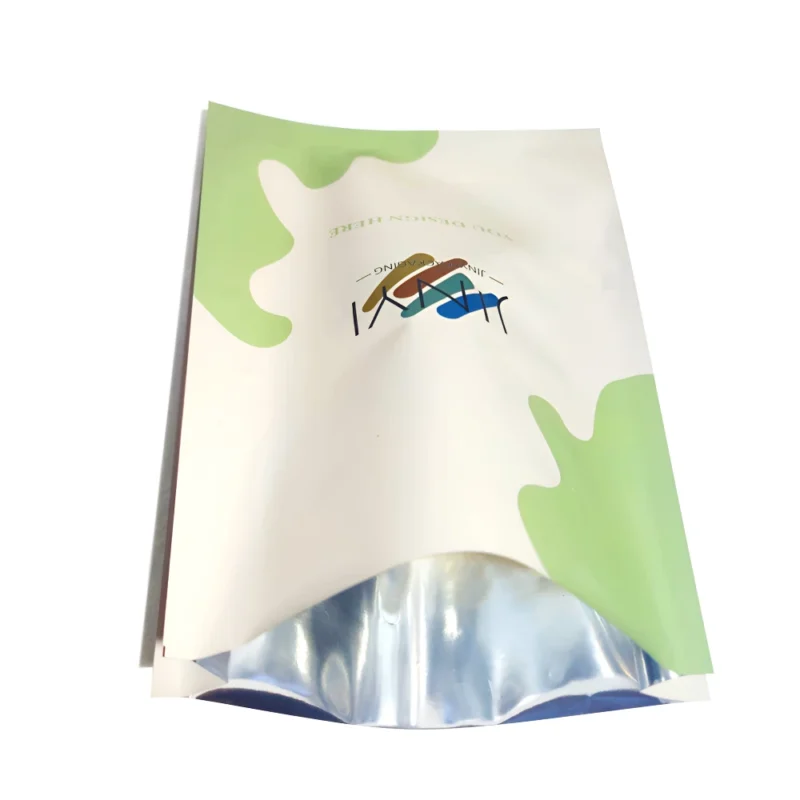
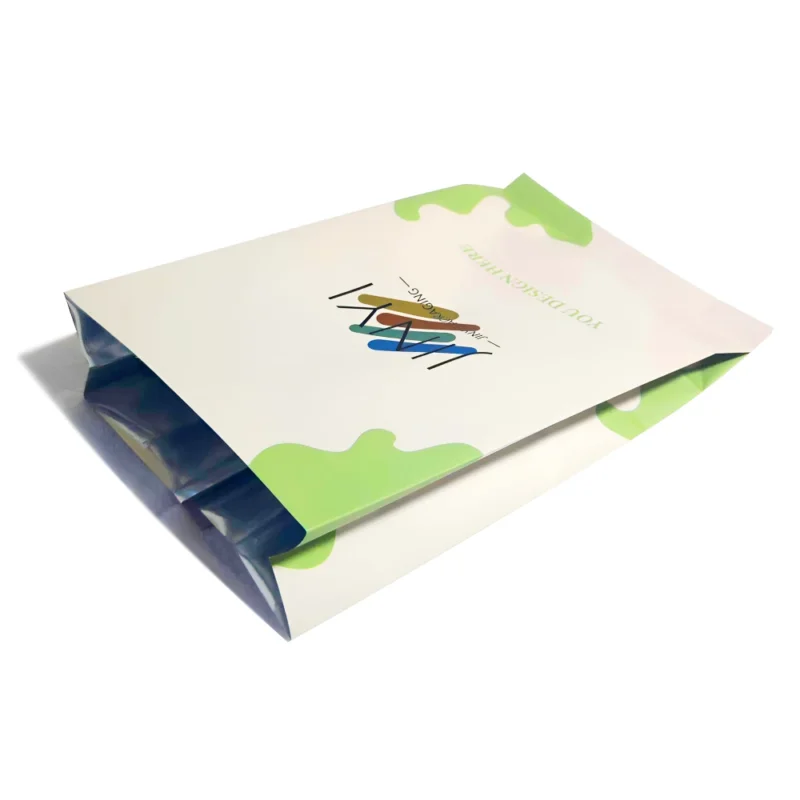
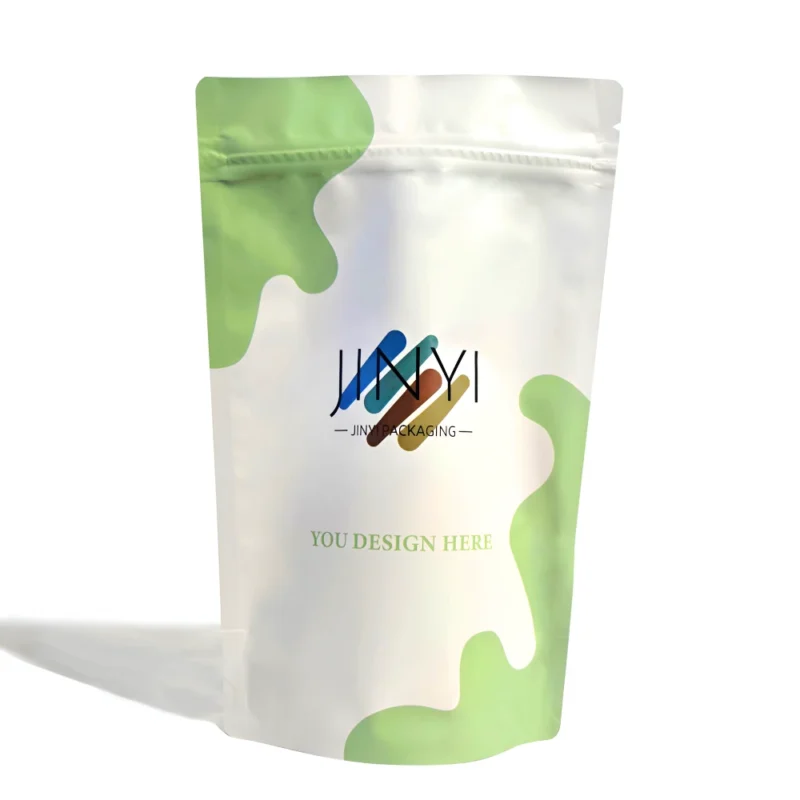
As a flexible packaging manufacturer, we focus on the parts of the freshness system that packaging can control and customers can verify. Packaging cannot rewrite recipes. Packaging can reduce exposure and reduce misuse. That means better humidity resistance, better oxygen management, and better reseal reliability so the “home timeline” becomes less chaotic. Packaging can also support clarity by giving the batch anchor and storage cues a consistent place and hierarchy, so buyers do not guess. The goal is not to claim perfect sameness. The goal is to reduce the probability that normal exposure turns into a brand-level trust crisis.
Evidence (Source + Year): Moisture-related texture behavior in low-moisture foods is closely tied to aw dynamics and acceptability thresholds (Katz & Labuza, 1981). Oxidation and volatile markers are common tools for tracking sensory decline under oxygen and temperature exposure (Barden & Decker, 2016; Agarwal et al., 2021).
Conclusion
Buyers blame brands because taste is immediate and exposure is invisible. Tighten the evidence stack and the exposure controls, and repeat purchase becomes more stable.
Talk to Jinyi about a freshness-focused packaging plan
FAQ
Is “best-by” the same as “safe to eat”?
No. “Best-by” is commonly used as a quality guide. Safety depends on product type and handling, while perceived freshness can decline earlier due to exposure.
Why do snacks go stale faster after opening, even if the date looks fine?
Opening increases humidity and oxygen exposure. Repeated open-close cycles accelerate texture change and oxidation-driven aroma loss.
What causes “cardboard” or “rancid” notes in snacks?
Those notes are often associated with lipid oxidation, which increases with oxygen exposure, heat, light, and time.
What is one “verifiable” signal that reduces freshness complaints?
A clear batch/lot anchor paired with simple storage guidance helps buyers and support teams separate exposure issues from product defects.
How can packaging reduce staling without adding heavy marketing claims?
Packaging can reduce moisture and oxygen exposure and make resealing easier. That lowers the chance that “normal storage” becomes a negative sensory surprise.
About Jinyi
Brand: Jinyi
Tagline: From Film to Finished—Done Right.
Website: https://jinyipackage.com/
Our mission:
JINYI is a source manufacturer specializing in custom flexible packaging solutions. We aim to deliver reliable, practical packaging systems that reduce communication costs, improve quality consistency, clarify lead times, and match each product’s real-world channel needs.
Who we are:
JINYI has over 15 years of production experience serving food, snack, pet food, and daily consumer brands. We operate a standardized manufacturing facility equipped with multiple gravure printing lines and advanced HP digital printing systems, supporting both stable large-volume orders and flexible short runs with consistent quality.
From material selection to finished pouches, we focus on process control, repeatability, and real-world performance. Our goal is to help brands achieve predictable quality and ensure packaging performs reliably on shelf, in transit, and at end use.