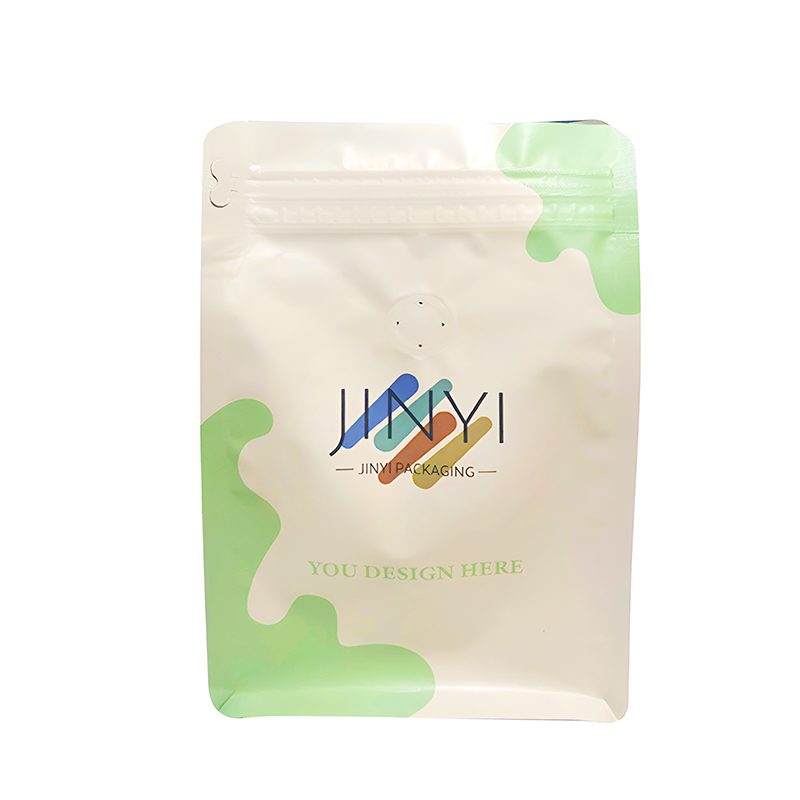
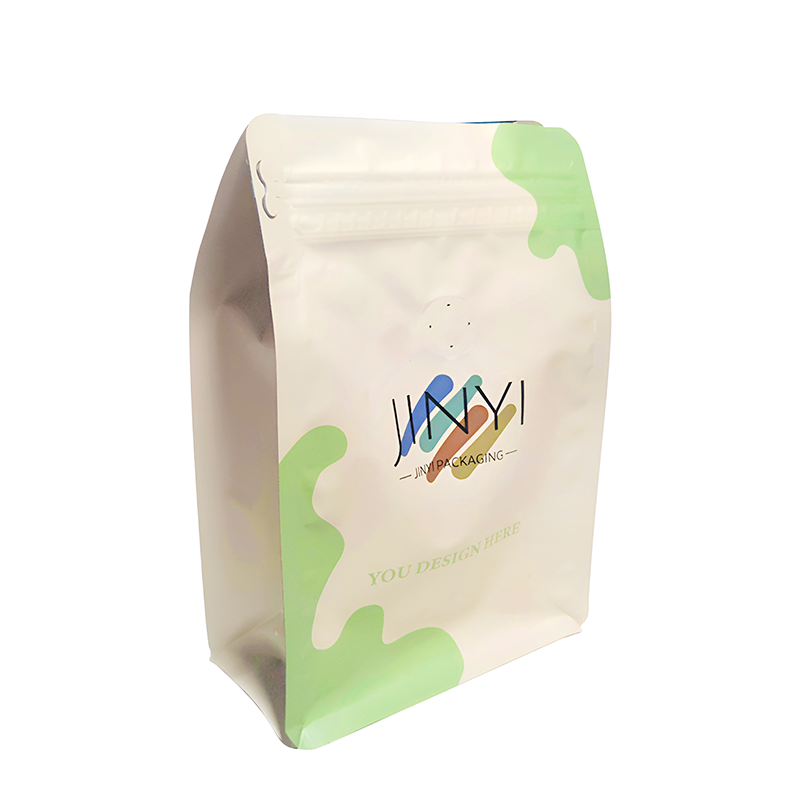
Fresh coffee can make bags swell, strain seals, and trigger shipping complaints. Buyers often fixate on a coffee valve without confirming what problem it is solving.
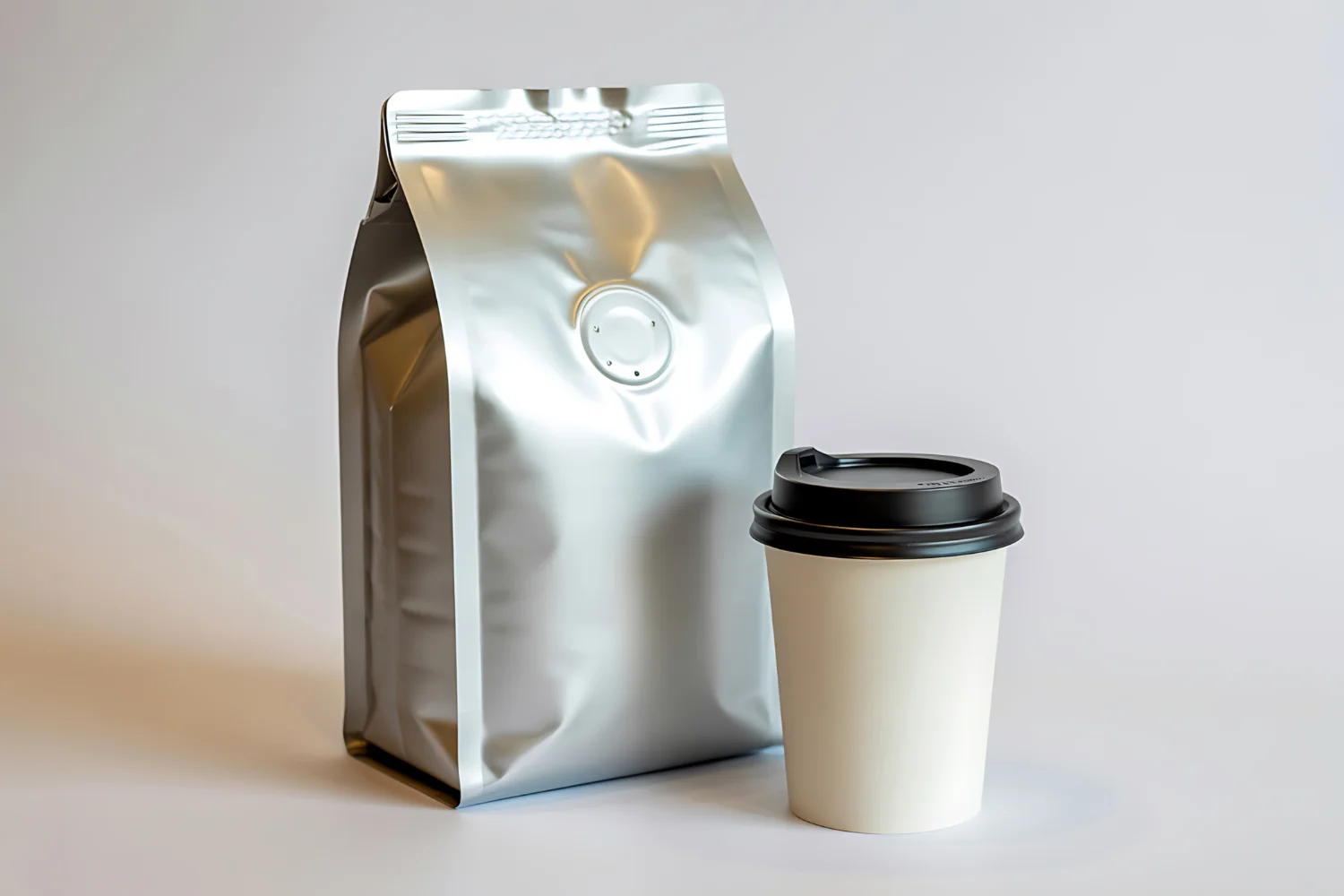
A one-way valve is a pressure-control tool: it vents post-roast CO₂ out while helping limit oxygen entry, so coffee bags with valve can ship and sit on shelf without ballooning or premature staling.
See how packaging usability and barrier choices reduce staling risk

Coffee packaging decisions work best as a system. CO₂ generation, headspace, film barrier, valve performance, and sealing quality interact. This article turns “valves” into a buyer-ready checklist, so the right coffee package valve supports fewer complaints and more predictable results.
Why does fresh coffee need a valve, and what problem does it actually solve?
Ballooning bags look like a packaging failure, but the driver is often the coffee. Post-roast CO₂ release can build pressure faster than many buyers expect.
A valve exists to vent CO₂ while keeping oxygen exposure low. The buyer question is not “Do I need a valve?” It is “How high is my CO₂ pressure risk, and how exposed is my coffee to oxygen across storage and shipping?”
Deep dive:
CO₂ pressure risk vs oxygen risk
CO₂ is a predictable outcome of roasting, and it releases over time rather than all at once. If the bag cannot vent, pressure can balloon panels, stress seals, and amplify micro-leak risk during handling. At the same time, oxygen is still the main enemy of aroma retention and perceived freshness. A valve helps with pressure, but freshness still depends on barrier performance and seal integrity. Buyers get better outcomes when they treat the valve as one part of a system rather than a “premium add-on.” A practical approach is to separate two questions: “Will pressure cause failures?” and “Will oxygen cause staling?” The right answer is often a combination of valve choice, film OTR target, and verified sealing.
| Risk |
What buyers observe |
What to verify |
| CO₂ pressure |
Bag ballooning, seal strain, carton inefficiency |
Venting behavior + pressure trend over time |
| Oxygen exposure |
Flattened aroma, faster staling even “in date” |
Film barrier targets + seal integrity + headspace plan |
Evidence (Source + Year): Roasting conditions measurably change CO₂ degassing behavior in coffee (Wang & Lim, 2014). Freshness indices for roasted coffee commonly track quality drift driven by oxygen-related pathways (Gloess et al., 2014).
What is one-way venting, and why do “days after roast” change valve behavior?
Many buyers assume degassing is constant. It is not. The same bag spec can behave differently when coffee is packed on day 1 vs day 7 after roast.
CO₂ release follows a decay curve, and storage temperature can shift the curve. This is why swelling can appear “seasonal,” even when the packaging looks unchanged.

Deep dive:
How to think in curves, not slogans
Degassing is best understood as a time-dependent process. Early after roasting, CO₂ release can be high enough to inflate a sealed bag quickly, especially when temperature rises during warehousing or transport. Later, degassing slows, and pressure risk may drop. This creates a real buyer problem: distribution time is not always aligned with the degassing curve. A coffee packed very fresh, then shipped through warm conditions, can show ballooning even if the same coffee packed later does not. For buyers, “days matter” because the valve must handle the higher-load window without becoming a weak point for oxygen ingress. A clean mental model is to overlay two timelines: (1) degassing rate vs time after roast, and (2) the time the product spends in your channel before the consumer opens it. Where those timelines overlap at high degassing, you need more reliable venting and stronger sealing around the valve zone.
| Scenario |
What changes |
Common outcome |
| Packed very fresh |
Higher CO₂ load early |
Ballooning risk increases |
| Warm logistics |
Degassing accelerates |
Swelling appears “seasonal” |
Evidence (Source + Year): Roasting conditions affect CO₂ degassing patterns, which supports time-curve thinking instead of fixed assumptions (Wang & Lim, 2014). Roasted coffee freshness assessment frameworks include indicators sensitive to storage-driven quality drift (Gloess et al., 2014).
Does a valve keep coffee fresh, or does it mainly prevent bag failures?
Valves are often marketed as freshness upgrades. That framing can backfire. Many “stale even with valve” complaints are oxygen and sealing problems, not valve problems.
A valve mainly reduces pressure build-up. Freshness is still dominated by oxygen and moisture control, plus how well the package stays sealed over time.
Deep dive:
Two-curve buyer model: pressure control vs oxygen control
Pressure control and freshness control are related but not identical. A valve for coffee bags reduces internal pressure, which helps prevent ballooning and reduces stress at seals. That lowers the chance that pressure and handling create micro-leaks that later accelerate staling. However, a valve does not “create barrier.” Coffee quality retention still depends on oxygen exposure management: film OTR targets, seal integrity across the whole pouch, and packing practices that keep headspace oxygen under control. Buyers get clearer decisions by separating Curve A (CO₂ pressure risk) from Curve B (oxygen exposure risk). If Curve A is high, you need reliable venting. If Curve B is high, you need stronger barrier and verified seals. Many brands solve Curve A and ignore Curve B, then wonder why aroma drops quickly. A valve is helpful, but it should be paired with a barrier plan and a validation plan.
| Buyer complaint |
Most likely driver |
What to test |
| “Bag ballooned” |
CO₂ pressure not vented fast enough |
Pressure trend + venting performance |
| “Stale even with valve” |
Oxygen ingress (film/seal/handling) |
OTR targets + seal integrity + headspace plan |
Evidence (Source + Year): Coffee degassing behavior varies by roasting conditions, which supports validating pressure control under realistic loads (Wang & Lim, 2014). Roasted coffee freshness indices and storage studies emphasize oxygen-linked quality drift as a central driver (Gloess et al., 2014).
Built-in valve vs coffee degassing valve sticker: what changes for buyers?
Buyers see two common formats: integrated valves and coffee degassing valve sticker patches. The format changes where failures tend to happen.
The valve zone is a special risk area. The pouch can pass tests elsewhere and still fail at the patch perimeter if adhesion or application is wrong.
Deep dive:
Why the valve zone deserves its own validation
A built-in valve and a sticker-style valve solve the same CO₂ venting problem, but they introduce different execution risks. With sticker valves, buyers should care about film surface compatibility, adhesive behavior over time, and application windows that prevent edge lift or channel leaks. With integrated valves, the focus shifts to placement, consistent installation, and how the valve interacts with pouch forming and sealing. In both cases, the most common “surprise” is that the valve area behaves differently under stress than the rest of the pouch. The valve zone can concentrate strain, and small defects can turn into leak pathways that accelerate oxygen ingress. A buyer-ready approach is to treat the valve area as its own test region and to include aging under realistic temperature swings. That is also why buyers should not accept “valve included” as a full spec. They should ask how the valve is applied, what the acceptance checks are, and how failures are detected before shipping.
| Valve format |
Typical buyer risk |
What to verify |
| Integrated valve |
Placement consistency, venting consistency |
Functional vent check + seal integrity near valve |
| Sticker valve |
Edge lift, channel leaks, adhesion drift |
Peel stability + leak detection after aging |
Evidence (Source + Year): Since CO₂ degassing loads are real and variable, valve-zone validation should be built around realistic degassing behavior (Wang & Lim, 2014). Gross-leak detection via bubble emission is a standardized way to catch package leaks that can accelerate oxygen exposure (ASTM F2096-11(2019)).
What should buyers check before approving coffee bags with valve sticker or built-in valves?
“Valve included” is not a buyer spec. A buyer spec is a list of measurable checks that protect shelf life, shipping quality, and consistency.
The most useful checklist ties each spec to a failure mode: ballooning, staling, patch lift, or micro-leaks. Buyers can then validate with a small test plan.
Deep dive:
A practical buyer checklist that beats marketing
Buyers get more reliable results when they request a small set of verifiable items rather than long brochures. First, buyers should confirm venting behavior under realistic degassing loads, including warm storage conditions that can accelerate gas release. Second, buyers should confirm seal integrity around the valve zone and across the pouch, because oxygen ingress can undermine freshness even when the valve prevents ballooning. Third, buyers should define barrier targets that match their distribution time and freshness expectations, since a valve is not a barrier. Fourth, buyers should confirm application method details for sticker valves, because adhesive mismatch and poor application windows drive edge lift and channel leaks. Finally, buyers should confirm reseal reliability if the pouch is recloseable, because consumer handling after opening can dominate real-life outcomes. This checklist turns “coffee bags with valve” into a controllable system rather than a guess.
| Buyer check |
Why it matters |
Common complaint it prevents |
| Venting performance |
Controls CO₂ pressure build-up |
Ballooning / seal strain |
| Valve-zone leak risk |
Protects against oxygen ingress at patch edges |
Stale “even with valve” |
| Barrier targets (OTR/WVTR) |
Protects aroma and slows oxidative staling |
Flat aroma / fast staling |
| Application method (sticker) |
Reduces edge lift and channel leaks |
Valve patch lifting |
Explore a coffee packaging approach that balances venting and oxygen control
Evidence (Source + Year): Post-roast degassing depends on roasting conditions, so venting checks should reflect real CO₂ loads (Wang & Lim, 2014). Packaging leaks can be detected with standardized bubble emission approaches, which helps screen high-risk batches (ASTM F2096-11(2019)).
When is a coffee package valve a must-have, and when is it optional?
Some buyers overspec valves because they sound premium. Other buyers underspec and absorb ballooning complaints. The right decision is conditional.
A valve is most valuable when CO₂ pressure risk is high and distribution sees temperature swings. It is less critical when the product and channel reduce degassing load before packing.
Deep dive:
A simple decision tree that stays buyer-safe
A valve is typically most relevant for fresh-roasted whole bean coffee packed quickly after roasting, especially when the supply chain includes warm warehousing or long-distance shipping. In these cases, CO₂ release can create pressure that deforms bags, stresses seals, and wastes carton volume. A valve can reduce these failures and make logistics more stable. A valve can be optional when pressure risk is low because the product is packed after a longer resting period, the format reduces trapped gas, or the channel time is long enough that CO₂ release is lower by the time the bag is sealed. Still, buyers should avoid using “optional” as a reason to ignore oxygen exposure. If oxygen-driven staling is the dominant complaint, barrier and sealing control become the priority. The safest buyer rule is: choose a valve to solve pressure, then choose barrier and validation to protect aroma, and verify both under realistic conditions rather than relying on a label claim.
| Buyer situation |
Valve relevance |
Main focus |
| Very fresh pack + warm logistics |
Must-have |
Venting + seal integrity |
| Low pressure complaints, aroma fades first |
Optional |
Barrier + oxygen control + sealing |
Evidence (Source + Year): Degassing behavior changes with roasting conditions, supporting conditional valve decisions rather than one-size-fits-all rules (Wang & Lim, 2014). Coffee freshness assessment work highlights storage-linked quality drift, reinforcing oxygen exposure as a major driver (Gloess et al., 2014).
How does “valve coffee packaging” fail in real life, and how do buyers map complaints to tests?
Most failures are not mysterious. They follow repeatable patterns: venting does not vent, oxygen gets in, patches lift, or leak paths form near the valve zone.
Buyers can reduce arguments by mapping each complaint to one verification test. This turns troubleshooting into a simple, shared language.
Deep dive:
A complaint-to-test map buyers can actually use
Buyers often hear “the valve is fine” or “the film is fine,” but real-life failures are usually system failures. If a bag still balloons, venting may be blocked, mis-specified, or placed poorly, or the degassing load may be higher than expected due to roasting variation and warm storage. If coffee stales even with a valve, oxygen exposure is likely too high due to barrier mismatch, seal weaknesses, or handling. If a sticker valve patch lifts, the adhesive and film surface may be incompatible, or the application window may be wrong, leading to edge lift and channel leaks. If micro-leaks appear near the valve zone, stress concentration and inconsistent sealing around the patch perimeter may be the driver. A buyer-friendly approach is to run a small validation set that includes pressure trend checks and gross-leak screening, plus an aging step that reflects temperature swings. This keeps decisions grounded and reduces repeated trial-and-error.
| Failure |
What buyers see |
What to verify |
| Valve not venting |
Ballooning persists |
Pressure trend + functional vent check |
| Oxygen ingress dominates |
Stale aroma despite valve |
Barrier targets + seal integrity screening |
| Patch lift |
Edge lift around sticker |
Adhesion aging + leak screening |
Evidence (Source + Year): CO₂ degassing varies with roast conditions, which can explain “only some lots balloon” patterns (Wang & Lim, 2014). Standardized bubble emission testing supports gross-leak screening for packages (ASTM F2096-11(2019)).
Packaging scope: what can packaging control, and what should buyers expect from a valve?
Buyers sometimes expect a valve to “guarantee freshness.” That expectation creates avoidable disputes. A valve is a pressure tool, and it should be treated as one part of a verified system.
As a flexible packaging manufacturer, we focus on what packaging can control and buyers can verify: pressure venting performance, oxygen exposure risk at the package level, and repeatable sealing around the valve zone.
Deep dive:
How packaging supports buyer clarity without over-claiming
As a flexible packaging manufacturer, we focus on the parts of the freshness system that packaging can control and buyers can verify. Packaging cannot change roast chemistry, and packaging cannot replace good packing practices. However, packaging can reduce exposure and reduce misuse. That means reliable venting for CO₂ pressure control, barrier choices that match the oxygen exposure risk in a buyer’s channel, and consistent sealing so the valve zone does not become a hidden leak pathway. Packaging can also support clarity by organizing key information in a consistent hierarchy, so buyers do not guess when issues appear. The goal is not to claim perfect sameness. The goal is to reduce the probability that normal degassing and normal logistics turn into a brand-level trust problem. When buyers use a short validation plan and a checklist, “coffee bags with valve” becomes a controllable decision, and “coffee bags with valve sticker” becomes a spec rather than a gamble.
| Packaging control point |
What it helps prevent |
How buyers verify |
| Valve performance |
Ballooning and seal strain |
Pressure trend + vent check |
| Seal integrity (incl. valve zone) |
Oxygen ingress and staling |
Leak screening + aging checks |
Evidence (Source + Year): Roasting conditions affect CO₂ degassing patterns, which supports validating packaging under realistic pressure loads (Wang & Lim, 2014). Coffee freshness indices emphasize measurable drift during storage, reinforcing the need to manage oxygen exposure (Gloess et al., 2014).
Conclusion
A valve solves CO₂ pressure, not freshness by itself. Buyers reduce complaints by specifying venting, barrier targets, and verified sealing, then validating the valve zone under realistic conditions.
Talk to us about coffee packaging with valves
FAQ
- Do coffee bags with valve keep coffee fresher than bags without a valve?
They mainly prevent pressure build-up. Freshness still depends on oxygen exposure management and seal integrity.
- What is the difference between a built-in coffee valve and a coffee degassing valve sticker?
Both vent CO₂, but sticker valves add adhesion and application-window risks at the valve zone.
- Why do some lots balloon while others do not with the same coffee package valve?
Degassing load can change with roast conditions and temperature, so pressure risk can vary across lots.
- What should buyers request from suppliers besides “valve included”?
Venting behavior, valve-zone leak risk checks, barrier targets, and a simple validation plan tied to complaints.
- Can a valve cause staling?
A valve should limit inward oxygen flow, but leaks around the valve zone or weak seals can increase oxygen ingress and accelerate staling.
About Jinyi
Brand: Jinyi
Slogan: From Film to Finished—Done Right.
Website: https://jinyipackage.com/
Our mission:
JINYI is a source manufacturer specializing in custom flexible packaging solutions. The focus is on delivering reliable, practical, and scalable packaging systems that reduce communication cost, stabilize quality, and make lead times clearer for brands.
Who we are:
JINYI is a source manufacturer specializing in custom flexible packaging solutions, with over 15 years of production experience serving food, snack, pet food, and daily consumer brands.
We operate a standardized manufacturing facility equipped with multiple gravure printing lines as well as advanced HP digital printing systems, allowing us to support both stable large-volume orders and flexible short runs with consistent quality.
From material selection to finished pouches, we focus on process control, repeatability, and real-world performance. The goal is to help brands reduce communication costs, achieve predictable quality, and ensure packaging performs reliably on shelf, in transit, and at end use.