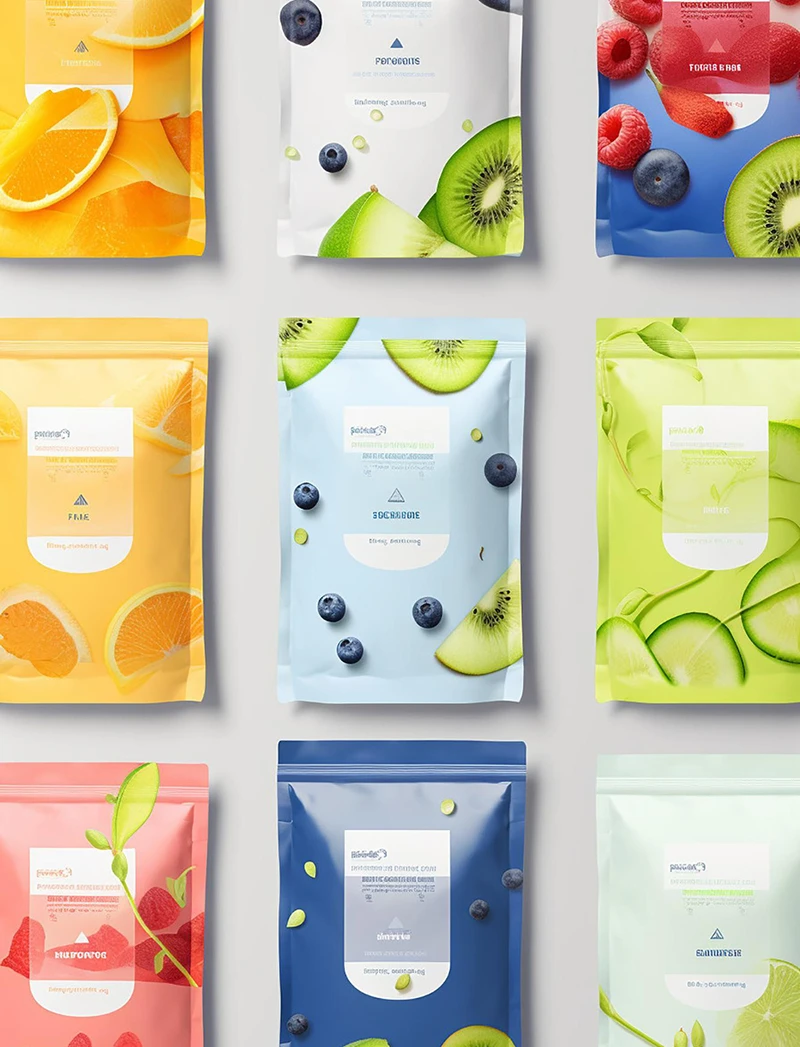
This content is for packaging education. We do not sell any regulated products.
Buyers expect a simple answer, but the first experience often feels “wrong” and turns into panic or blame.
The biggest predictor of bad first-time experiences is time-mismatch. Inhaled products can feel fast and variable. Oral products can feel delayed and long. Packaging and labeling can reduce confusion by making onset, duration, and risk signals easier to read at the moment of use.
See how packaging clarity reduces “too strong later” complaints →

Instead of treating “flower vs edible” as a product debate, this guide treats it as a timing and risk problem. The goal is to explain why first-time buyers misread the timeline, and how labels and packaging can prevent the most common trust breaks.
Are These Four Categories Really Just Two Routes: Inhalation vs Oral?
People compare formats, but timing comes from the route of administration.
In practice, flower, pre-rolls, and most vapes are usually inhaled, while edibles are usually oral. That route difference drives onset time, peak, and total duration, which is why two products with similar “THC numbers” can feel completely different in the same person.
Route-first framing also reduces “recommendation vibes.” It keeps the page educational and makes room for packaging: the most useful consumer-facing information is not a format name, but a readable timeline and a risk cue set (delayed onset, longer duration, child safety, and storage).
What the timeline typically looks like
| Route |
Onset (when effects may begin) |
Peak |
Duration |
Why beginners misread it |
| Inhalation (flower / pre-roll / many vapes) |
Minutes |
Faster peak |
Shorter overall |
Fast feedback feels “controllable,” but intensity can vary quickly |
| Oral (edibles) |
Delayed (can be much longer) |
Later peak |
Longer overall |
“Nothing happened” can turn into “too strong later” |
Evidence (Source + Year): Government of Canada consumer guidance explains that cannabis effects can begin within minutes when inhaled, while oral products can take much longer to take effect and can last longer. (Health Canada / Government of Canada, 2021)
Evidence (Source + Year): A comprehensive evidence review summarizes key health effects and risk patterns of cannabis, supporting route-dependent differences in acute experience and harms. (National Academies of Sciences, Engineering, and Medicine, 2017)
Why Does “Nothing Happened” Turn Into “Too Strong Later” for Beginners?
Beginners often interpret silence as failure, and that is where risk begins.
“No effect yet” is a subjective feeling, not a measure of dose delivered to the body. When onset is delayed, a first-time buyer may think the product is weak, defective, or mislabeled. That mental model increases the chance of regret and blame when the experience becomes stronger later. The trust story becomes simple: “The brand is inconsistent,” even when the real driver is timeline misunderstanding.
What changes the timeline in real life
| Variable |
Why it matters |
What packaging/labeling can do |
| Route |
Controls onset and duration shape |
Route-first labeling plus a simple time axis |
| Individual differences |
Tolerance, metabolism, anxiety sensitivity change perception |
Neutral risk wording and “experience varies” boundaries |
| Environment and expectations |
Set and setting influence perception and complaint tone |
Clear, calm safety cues instead of hype language |
Evidence (Source + Year): Route-dependent onset and duration differences are highlighted in public health consumer education, emphasizing delayed onset and longer duration for orally consumed products. (Health Canada / Government of Canada, 2021)
Evidence (Source + Year): Emergency department data show route differences in adverse-event patterns, with edibles disproportionately associated with acute psychiatric presentations relative to their market share. (Monte et al., Annals of Internal Medicine, 2019)
Where Do First-Time Complaints Come From: Timing, Confusion, and Household Risk?
Complaints are often signal failures, not “bad products.”
In beginner markets, the highest-friction failures tend to cluster into three buckets. First, time-mismatch complaints: “nothing happened” then “too strong,” or “lasted too long.” Second, labeling confusion: buyers cannot quickly find what matters (route cues, expected duration, warnings, and storage). Third, household risk: products that resemble snacks can increase accidental ingestion concerns, and the packaging and warnings become the first safety barrier.
A complaint-to-cause map for beginner scenarios
| Complaint phrase |
Likely mechanism |
Packaging/labeling signal that can reduce it |
| “Nothing happened” |
Delayed onset perception |
Large, readable onset window cue + route-first layout |
| “Too strong later” |
Late peak + expectation mismatch |
Peak/duration cue + calm risk framing |
| “My kid thought it was candy” |
Snack-like appearance and storage failure |
Child-resistant design + prominent warnings + storage clarity |
Evidence (Source + Year): Health Canada consumer education discusses delayed effects for some products and highlights safety considerations that relate to understanding timing and risks. (Health Canada / Government of Canada, 2021)
Evidence (Source + Year): FDA public safety communications describe risks of accidental ingestion by children from THC-containing food products that can resemble familiar snacks. (U.S. FDA, 2022)
What Should a Beginner Be Able to Read in 10 Seconds on the Label?
Most confusion is not about chemistry. It is about readability and hierarchy.
Beginners do not need a long explanation. They need a fast “label literacy” moment that prevents timeline errors and reduces household risk. A practical standard is simple: in 10 seconds, a buyer should find route type, a plain-language onset and duration cue, prominent warnings, and a verifiable anchor such as a batch identifier or a scannable reference to a test report, where required by the local market. When that information is buried or inconsistent across SKUs, the brand is forced to fight trust fires in customer support.
A label literacy checklist for timing and risk
| Must-find item |
Why it matters |
Common failure |
| Route cue (inhalation vs oral) |
Predicts onset and duration shape |
Format name replaces route clarity |
| Onset + duration cue |
Reduces time-mismatch complaints |
Small text, scattered placement |
| Clear warnings + storage |
Reduces household and child risk |
Warnings are visually “optional” |
| Verifiable anchor (batch / reference) |
Reduces “numbers are fake” distrust |
No easy way to verify |
Evidence (Source + Year): National Academies evidence synthesis supports the need for clearer public-facing communication of risks and effects, especially when evidence varies by product type and route. (NASEM, 2017)
Evidence (Source + Year): Health Canada regulatory guidance emphasizes packaging and labeling requirements that support risk communication and consumer protection. (Health Canada, 2025)
How Can Packaging and Labeling Reduce Risk Without Turning Your Site Into “Sales” Signals?
Packaging is not a promise of effects. Packaging is a risk and clarity interface.
A packaging-first education page can reduce “seller” signals by staying focused on compliance, readability, and user safety. Packaging and labeling can lower risk in three practical ways. First, usability: child-resistant solutions and reliable closures reduce accidental exposure and storage failures. Second, exposure control: designs that reduce unnecessary repeated exposure and keep warning text visible can reduce misunderstanding cycles. Third, clarity: a consistent information hierarchy can turn timing into a readable “system,” not a rumor. This is also where a brand protects trust: when buyers can quickly verify basics, they are less likely to rewrite a confusing timeline into a “brand is dishonest” narrative.
Explore packaging-first label clarity systems for regulated categories →
A simple “Packaging Clarity Scorecard” you can validate
| Score area |
What to check |
What it prevents |
| Visibility |
Warnings and timing cues are readable at first glance |
Time-mismatch complaints |
| Hierarchy |
Route and timeline appear before marketing text |
“Format name” confusion |
| Verification |
Batch/test reference is easy to locate and scan |
“Numbers are fake” distrust |
Evidence (Source + Year): Health Canada’s packaging and labeling guidance provides a framework for standardized information presentation and consumer protection in regulated cannabis categories. (Health Canada, 2025)
Evidence (Source + Year): FDA safety communications underline the risk of accidental ingestion of THC-containing foods and support strong warning and packaging cues to reduce harm. (U.S. FDA, 2022)
Conclusion
First-time complaints usually come from timing mismatch and unclear labels, not “bad brands.” If you want fewer trust breaks, you need a packaging-first clarity system that makes route, onset, duration, and warnings easy to read.
Talk to us about compliant packaging clarity
FAQ
- Does “flower vs edible” matter as much as inhalation vs oral?
Route usually drives onset and duration more directly than a format label.
- Why do some edibles feel “too strong later”?
Oral products can have delayed onset and later peaks, which can be misread early on.
- Can packaging reduce bad first-time reviews?
Packaging cannot control effects, but clearer timing cues and warnings can reduce confusion-based complaints.
- What label element reduces distrust fastest?
A consistent, readable route + onset/duration cue, plus a verifiable batch or reference anchor.
- Will writing about cannabis hurt SEO if we only do packaging education?
Clear disclaimers, compliance framing, and packaging-first structure help signal education, not sales.
About Me
Brand: Jinyi
Slogan: From Film to Finished—Done Right.
Website: https://jinyipackage.com/
Our mission:
JINYI is a source manufacturer specializing in flexible packaging. We aim to deliver reliable, practical packaging solutions so brands can reduce communication cost, get more stable quality, clearer lead time, and packaging structures and printing effects that fit real-world use.
Who we are:
JINYI is a source manufacturer specializing in custom flexible packaging solutions, with over 15 years of production experience serving food, snack, pet food, and daily consumer brands.
We operate a standardized manufacturing facility equipped with multiple gravure printing lines as well as advanced HP digital printing systems, allowing us to support both stable large-volume orders and flexible short runs with consistent quality.
From material selection to finished pouches, we focus on process control, repeatability, and real-world performance. Our goal is to help brands reduce communication costs, achieve predictable quality, and ensure packaging performs reliably on shelf, in transit, and at end use.
This content is for packaging education. We do not sell any regulated products.