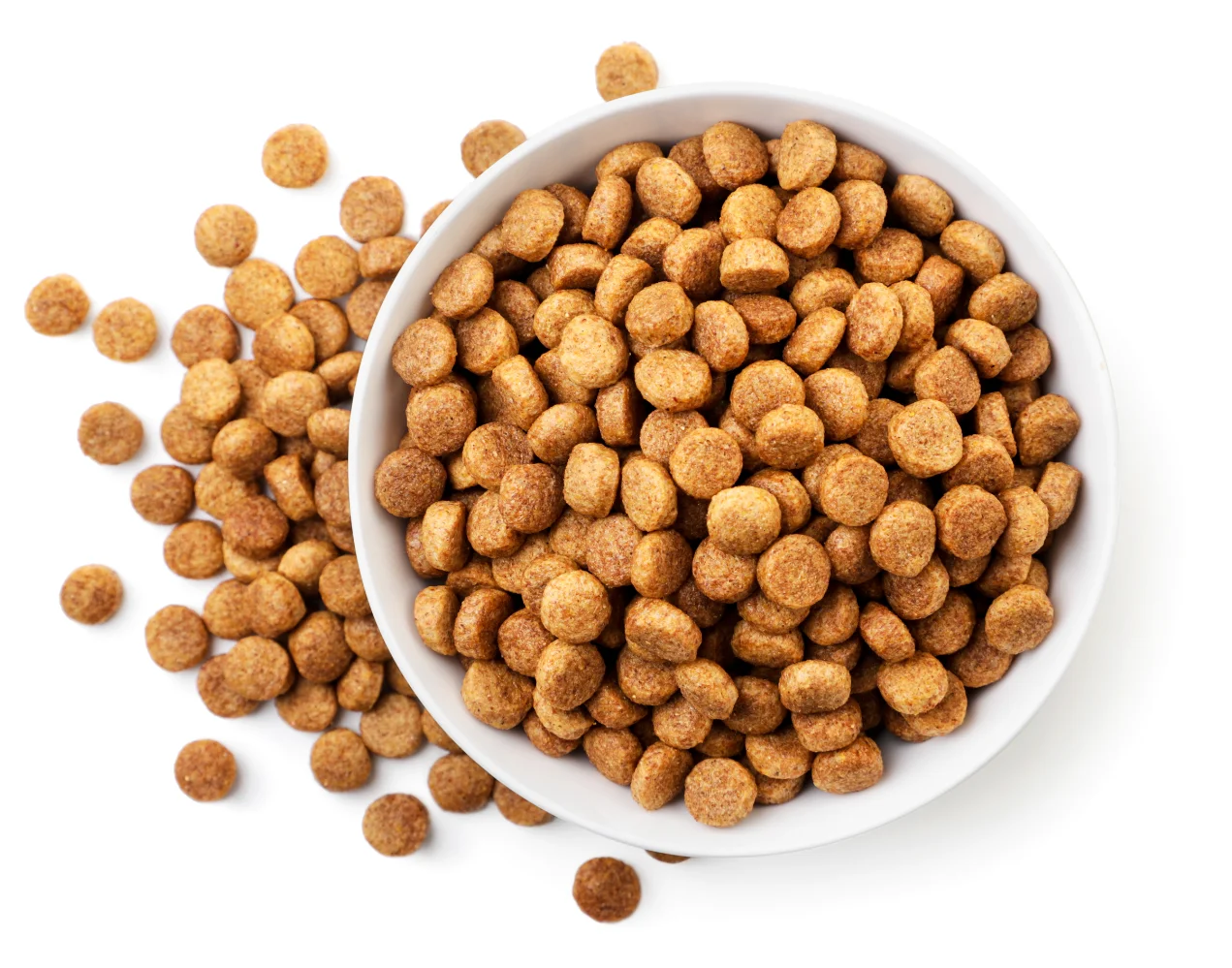
Pet owners see “grain-free” and expect fewer tummy issues. Many pets still vomit, get gas, or have soft stools, and the label looks dishonest.
“Grain-free” describes ingredients, but “sensitive stomach” describes symptoms. The right approach is symptom → hypothesis → test, because most GI complaints relate to tolerance, transitions, fat/fiber design, or non-food causes.
If your pet-food SKU needs better shelf consistency, start with the right packaging system for fats, odor, and humidity.

This article explains why the label creates confusion, what owners usually mean, and how brands can communicate more responsibly without making medical claims.
What do “grain-free” and “sensitive stomach” actually mean?
Many label debates are really definition problems. A label can be technically true and still mislead buyer expectations.
“Grain-free” is a formulation choice, while “sensitive stomach” is a consumer shortcut for several different symptom patterns.
Definitions that prevent marketing vs marketing
| Term |
What it is |
What it is not |
Common assumption |
| Grain-free |
Grain ingredients removed; carbs often replaced (legumes, tubers) |
A proven digestive solution for all pets |
“Gentler on the stomach” |
| Sensitive stomach |
Lay term for vomiting, gas, soft stool, appetite swings |
A standardized diagnosis |
“This food will fix it” |
| Adverse food reaction |
Food-driven signs (GI and/or skin) that improve with a controlled trial |
Always a grain problem |
“It is an allergy to wheat” |
Owners often shop with a single mental model: “ingredient removed = problem removed.” That model breaks because many GI signs are multi-factor. A pet can have soft stool from a fast diet change, a treat overload, a high-fat formula, a fiber mismatch, or an infection that has nothing to do with grain. The label also blurs the difference between allergy and intolerance. Allergies are not confirmed by vibes, and many “sensitive stomach” complaints do not match true food allergy patterns. That is why a responsible article must separate label meaning from symptom meaning. It should also nudge owners toward structured evaluation when signs persist.
Evidence (Source + Year):
WSAVA Global Nutrition Committee, “Guidelines on Selecting Pet Foods” (2021). :contentReference[oaicite:0]{index=0}
FEDIAF, “Nutritional Guidelines for Complete and Complementary Pet Food for Cats and Dogs” (2024). :contentReference[oaicite:1]{index=1}
What do owners usually mean by “sensitive stomach”?
Most owners do not want a debate about grains. Owners want predictable stools, stable appetite, and fewer surprise cleanups.
Those outcomes often relate more to fat level, fiber design, feeding routine, and transition speed than to grain presence.
A symptom map that leads to better decisions
| What owners say |
What it can mean |
What to control first (non-medical) |
| “Soft stool after switching foods” |
Transition mismatch, treat load, tolerance issue |
Slow transition, reduce extras, keep routine stable |
| “Gas and noisy stomach” |
Fiber type mismatch, fast eating, ingredient load changes |
Portion control, consistent feeding times, simplify variables |
| “Vomits sometimes, picky sometimes” |
Meal timing, fat level sensitivity, stale odor, stress |
Smaller meals, check freshness, reduce high-fat treats |
| “Chronic GI ± itch” |
Possible adverse food reaction (needs structured approach) |
Discuss a controlled diet trial with a veterinarian |
Owners are usually describing consistency, not ideology. They want fewer loose stools, less gas, and a pet that eats without drama. That goal is tied to how a formula behaves in real households. It is also tied to how owners feed: fast switches, too many treats, and inconsistent portions can create “sensitive stomach” narratives even when the base diet is fine. When symptoms are chronic or include skin signs, a structured diet trial may be the only reliable way to confirm a food-driven issue. A brand education piece should not diagnose. It should help owners control variables, track outcomes, and seek professional help when needed.
Evidence (Source + Year):
AAHA, “Allergic Skin Diseases Toolkit” (includes elimination diet trial client handouts) (2024). :contentReference[oaicite:2]{index=2}
AAHA, “Management of Allergic Skin Diseases in Dogs and Cats Guidelines” (2023). :contentReference[oaicite:3]{index=3}
Why did grain-free become a “digestive solution” in the market?
Many shoppers use labels to reduce uncertainty. “Grain-free” looks like a clean, simple promise.
The label often becomes a proxy for “higher quality,” even though it does not guarantee tolerance or digestibility.

Myth vs measurable inputs
| Consumer myth |
What is measurable |
What the label cannot promise |
| “Grain-free is hypoallergenic” |
Controlled ingredient exposure in a structured diet plan |
Universal symptom relief |
| “Grain-free is gentler” |
Transition plan, fat/fiber choices, consistent feeding routine |
Fewer GI signs without controlling variables |
| “Grain-free is more natural” |
Nutrient completeness and quality control |
Better outcomes for every pet |
Grain-free gained meaning beyond formulation. It became a shortcut for trust. That shortcut can backfire because the replacement ingredients, the fat level, and the fiber system can change digestion outcomes. Some owners also treat “grain-free” as a single-cause solution, which discourages them from managing the basic variables that drive stool consistency. This is where confusion turns into conflict. Owners blame the label. Brands blame the owner. The real fix is to use clearer education and more honest labeling language. Brands can say what grain-free is, and they can avoid implying what it is not. A strong education piece also reminds owners that nutrition needs are individual and that online claims are often oversimplified.
Evidence (Source + Year):
WSAVA Global Nutrition Guidelines (focus on tailored nutrition plans and misinformation risk) (accessed 2024–2025). :contentReference[oaicite:4]{index=4}
WSAVA Global Nutrition Committee update and resources context (2023). :contentReference[oaicite:5]{index=5}
How did the DCM narrative change consumer interpretation of grain-free?
Some buyers now read “grain-free” as a heart-risk signal. Other buyers read it as a premium-health signal.
That split increases confusion because the public conversation is complex, and the evidence is still being investigated.
What a responsible education piece should say
| Topic |
Safe statement |
Statement to avoid |
| Regulatory status |
Regulators continue to investigate potential factors |
“Grain-free causes DCM” |
| Evidence status |
Public updates can change as research evolves |
“The issue is fully solved” |
| Consumer guidance |
Owners should discuss persistent symptoms with a veterinarian |
Medical advice from a label claim |
The DCM discussion changed how owners interpret grain-free. Some owners now feel fear, and fear drives faster, less structured decisions. A responsible article must avoid causation claims. It should also explain that investigation updates and communications can change over time. That context matters because shoppers often treat headlines as settled science. Brands should not use DCM anxiety as a marketing tool. Brands should also avoid implying that a grain-free label equals safety, digestion, or health outcomes. The right role for a label is clarity, not diagnosis. The right role for education content is to reduce confusion and support better questions for the veterinary team when symptoms are persistent.
Evidence (Source + Year):
FDA, “Investigation into Potential Link Between Certain Diets and Canine DCM” (updated 2024). :contentReference[oaicite:6]{index=6}
AVMA, “Until more science is available, FDA will end public updates…” (2023). :contentReference[oaicite:7]{index=7}
What metrics matter more than “grain-free” for a stomach-sensitive buyer?
Most owners want a rule they can follow. The best rule is not “avoid grains,” but “reduce uncertainty and measure response.”
Simple metrics and routines often reduce GI complaints more than any single label claim.
Metrics owners can understand without medical claims
| Metric |
Why it matters |
Simple owner rule |
| Transition speed |
Fast switches can create temporary GI upset |
Change foods gradually and keep treats stable |
| Treat load |
Extras can dominate the diet and drive stool changes |
Hold extras steady during any diet change |
| Consistency of feeding routine |
Portion swings affect tolerance |
Keep schedule and portions consistent |
| Freshness and odor stability |
Rancid or stale odor can reduce acceptance |
Store correctly and watch for odor drift |
“Sensitive stomach” buyers typically want stability. The best metrics are the ones that reduce noise. A gradual transition reduces stress on the digestive system. A stable treat load prevents hidden variables. A consistent feeding routine reduces day-to-day swings. Freshness control matters because oxidation odors and moisture pickup can change how a pet accepts the food, which owners may interpret as “sensitivity.” This is also where packaging and logistics matter. As a flexible packaging manufacturer, we focus on keeping fats, aroma, and crunch stable in real storage. That stability reduces the chance that a pet rejects a food due to staling or that texture drifts in humid homes. When a brand aligns product design with the right pack barrier and seal integrity, the customer experience becomes more consistent.
Evidence (Source + Year):
WSAVA, “Guidelines on Selecting Pet Foods” (emphasis on evaluating foods and asking the right questions) (2021). :contentReference[oaicite:8]{index=8}
Robertson, G.L. Food Packaging: Principles and Practice, 3rd ed. (2013) (packaging-barrier fundamentals).
If odor drift or texture changes create “sensitivity” complaints, packaging barrier and seal integrity are the fastest fixes.
How can brands reduce confusion without making medical claims?
Brands often try to “educate” by promising outcomes. That approach increases risk and reduces trust.
Brands can reduce confusion by describing measurable product design choices and by guiding owners toward structured evaluation.
Copy choices that reduce misunderstanding
| Better approach |
What it helps owners do |
What it avoids |
| Use “tolerance” and “consistency” language |
Track response without expecting miracles |
Medical outcome promises |
| Explain what grain-free is (and is not) |
Set expectations correctly |
“Grain-free fixes GI issues” claims |
| Add a transition and tracking note |
Reduce variable noise |
Blaming owners after the fact |
| Encourage vet guidance for persistent signs |
Escalate appropriately |
Replacing medical care with label advice |
A brand can be helpful without diagnosing. The safest and most useful education is procedural. It tells owners how to transition, what to track, and when to seek professional help. It also explains that “grain-free” is not a universal digestive solution. If a brand wants to discuss adverse food reactions, it should describe the concept of a controlled diet approach and explicitly avoid making claims that a single ingredient removal will solve symptoms. This reduces confusion and reduces returns, because expectations match reality. It also protects the brand from overpromising in a sensitive category where symptoms have many causes.
Evidence (Source + Year):
WSAVA Global Nutrition Guidelines (tailored plans and owner compliance) (accessed 2024–2025). :contentReference[oaicite:9]{index=9}
AAHA resources on diet trials and evaluation tools (2023–2024). :contentReference[oaicite:10]{index=10}
What is a simple validation framework for owner education and customer success?
Brands can reduce support tickets by giving owners a simple, repeatable framework. The framework should not diagnose.
The best framework is symptom → hypothesis → test → document response, with clear escalation points for persistent issues.
A repeatable “symptom-to-test” workflow
| Step |
What to track |
Pass/fail logic |
Escalation point |
| Define the pattern |
Frequency, timing, triggers, stool notes |
Acute vs chronic becomes clear |
Chronic patterns need professional input |
| Control variables |
Transition speed, treat load, routine |
Noise decreases within days to weeks |
No change suggests a different driver |
| Test one hypothesis |
One diet approach at a time |
Response is measurable and repeatable |
Persistent signs require veterinary guidance |
| Document and re-check |
Owner notes, product batch, storage method |
Trends become visible |
Stop self-experimenting if signs worsen |
This workflow reduces confusion because it replaces belief with structure. Owners stop jumping from label to label. They control variables first, which often solves mild issues. They then test one change at a time, which prevents false conclusions. Brands can support this by providing a transition guide, a short tracking checklist, and clear language about what the label means. Brands can also help owners by making product performance consistent. Shelf consistency depends on stability: odor stability for fats and consistent texture under humidity changes. When packaging is not designed to protect aroma and texture, owners may report “sensitivity” because a pet refuses stale food or stools change after a product has absorbed humidity. A good customer-success system treats packaging, storage, and feeding routine as part of the outcome.
Evidence (Source + Year):
AAHA, “Assessing Diet Trial Results” resource (diagnostic logic for diet trials) (2023). :contentReference[oaicite:11]{index=11}
FEDIAF Nutritional Guidelines (owner guidance and nutrition context for complete diets) (2024). :contentReference[oaicite:12]{index=12}

Conclusion
Grain-free is an ingredient label, not a digestive diagnosis. Clear definitions, structured owner education, and stable product performance reduce “sensitive stomach” confusion. Contact JINYI for packaging that protects odor and texture.
Talk to JINYI about pet-food packaging consistency
About Us
Brand: Jinyi
Slogan: From Film to Finished—Done Right.
Website: https://jinyipackage.com/
About us:
JINYI is a source manufacturer specializing in custom flexible packaging solutions, with over 15 years of production experience serving food, snack, pet food, and daily consumer brands.
We operate a standardized manufacturing facility equipped with multiple gravure printing lines as well as advanced HP digital printing systems, allowing us to support both stable large-volume orders and flexible short runs with consistent quality.
From material selection to finished pouches, we focus on process control, repeatability, and real-world performance. Our goal is to help brands reduce communication costs, achieve predictable quality, and ensure packaging performs reliably on shelf, in transit, and at end use.
FAQ
- Is “grain-free” the same as “hypoallergenic”? No. Grain-free only describes certain ingredients being removed. It does not confirm which ingredient drives a pet’s symptoms.
- What do most owners mean by “sensitive stomach”? Most owners mean stool consistency, less gas, fewer vomiting episodes, and more predictable appetite.
- Why can grain-free still cause soft stool? A formula can change fat level, fiber type, and ingredient load even when grains are removed, and transitions can create temporary GI upset.
- Should brands mention DCM when discussing grain-free? Brands should avoid causation claims and use careful, factual language that reflects ongoing investigation and evolving evidence.
- How can packaging reduce “sensitive stomach” complaints? Packaging that protects aroma and texture stability can reduce pet refusal and quality drift that owners may interpret as “tolerance issues.”