JINYI shares practical packaging guidance for your decisions.
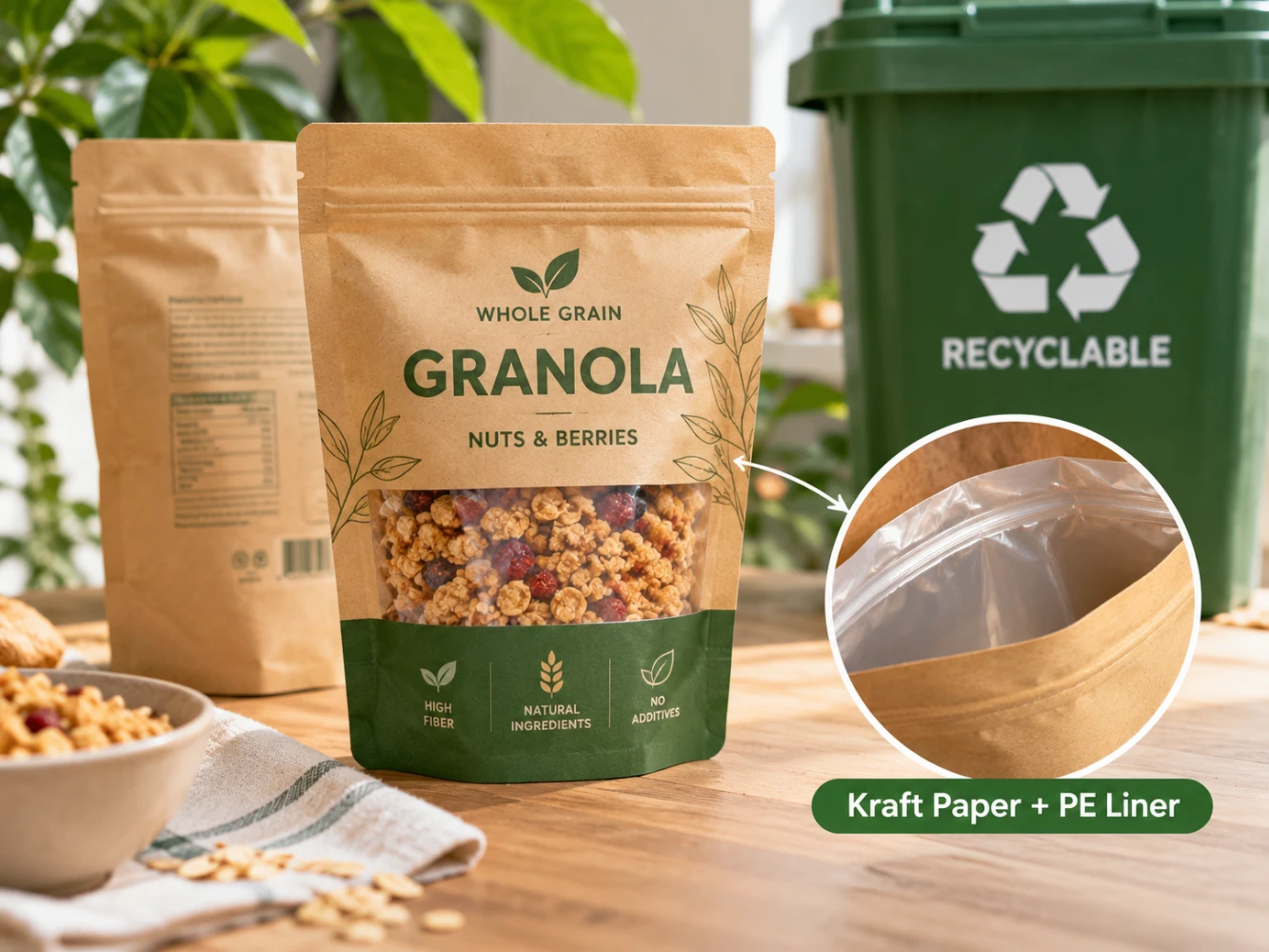
A kraft paper pouch can hold roasted coffee, granola, tea, pet treats, protein powder, or a non-food product. The same brown exterior tells me very little about its recycling route. I need to know what is behind that paper and what the finished bag has to protect.
Yes, a kraft paper pouch with a plastic liner can be recyclable, but PE inside does not settle the answer. The paper share, the way the liner is joined, valves or windows, the product residue, and the collection and paper-mill process all count. A bag also has to keep its contents in good condition; an easily repulped pouch that fails on the shelf is not a useful design.
At JINYI, I begin with the product and the sales market. Then I compare a paper/PE design with the protection needed for that application. The recyclable paper pouch for a dry retail item is not automatically the right pouch for oily nuts or freshly roasted coffee. Below, I work through those decisions and use one of our French customer’s kraft/PE bags to show what a large display window changes in production.
Judge the complete pouch. Paper outside and PE inside can be a sound starting point, but neither material name proves recyclability.
Keep paper and plastic routes separate. A paper-dominant composite belongs in a paper-based assessment; a PE-dominant all-plastic pouch calls for a different route.
Match protection to the product. Dry foods, oily snacks, roasted coffee, pet food, and powders do not ask the liner to do the same job.
Check the barrier trade-off. Metallised film can help protect coffee or oily food, but adding PET film and adhesive changes the paper-recycling assessment.
Count every component. Adhesive, window film, zipper, valve, ink, and coating may affect sorting, fibre recovery, or bag performance.
Print the claim last. Test the final construction in a relevant recycling process and check the actual collection instructions for the market.
What Does “Kraft Paper With a Plastic Liner” Actually Mean?
The phrase describes the look of a bag, not its full material structure.
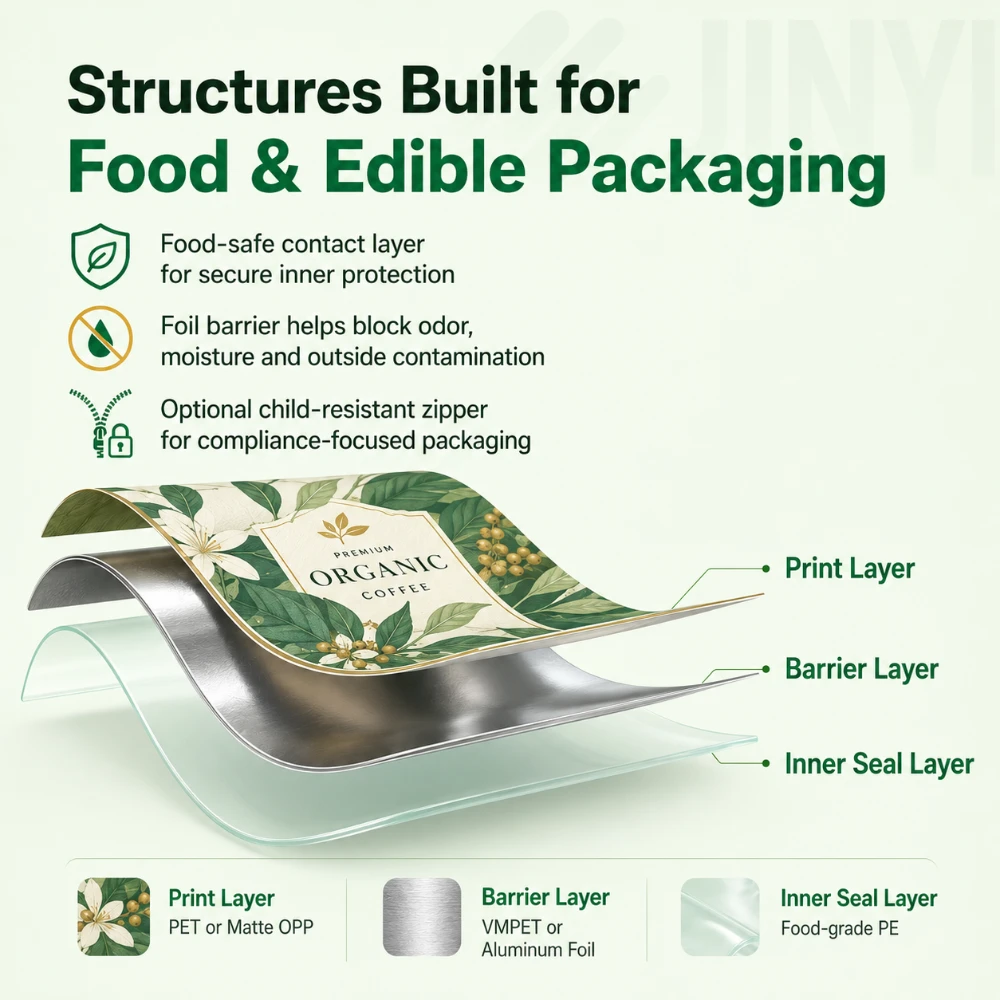
I write down every layer and joining method before I discuss recyclability. Kraft gives the outer face its print surface and paper feel. The inner layer provides a sealable surface and, depending on its design, some protection from water vapour, grease, or handling. PE is a common inner choice; PET, metallised film, aluminium foil, or additional coatings may appear in other constructions. Their jobs and recycling effects are not interchangeable.
The same paper/PE description can hide two builds
A PE layer may be extrusion-coated onto one face of the paper. Or a separate PE film may be attached with adhesive. Both give you paper on one side and PE on the other. In a mill, however, the paper has to release useful fibres while the plastic is removed. A tough film and its adhesive can behave differently from a coating, so I ask for the actual production specification, not a photo of a shiny inner surface.
Illustrative Build
Why It Is Used
What I Check
Kraft / one-sided PE coating
Sealing and basic inner protection
Paper share, coating weight, fibre release, product fit
Kraft / adhesive / PE film
A distinct film web for conversion and sealing
Film separation, adhesive behaviour, fibre yield
Kraft / adhesive / metallised PET / PE
Higher oxygen and light protection with a sealable inside
Barrier data, added PET, paper share, and paper-mill result
Kraft / aluminium-foil-containing film / PE
A different, strong barrier construction
Its own product trial and recycling route; do not treat it as VMPET
These are examples of possible structures, not a list of materials in every kraft bag. I also ask whether the PE is the whole inner film or only one part of a more complex laminate. The answer changes both the performance discussion and the recycling assessment.
Can a Kraft/PE Pouch Go Through Paper Recycling?
The first job is to identify the stream the finished bag is meant to enter.
A paper-dominant kraft/PE pouch may be designed for a suitable paper-recycling process. It does not become a PE-film recycling pouch simply because PE lines the inside. The paper must be sorted to the intended route and break down into recoverable fibre. Plastic, adhesive, and other rejects must be manageable by that process.
A useful design threshold is not a pass mark
The 4evergreen Circularity by Design Guideline, version 4, uses at least 80% paper by weight as a starting point for its conventional paper-mill design tables. A pack with less paper may need a specialised paper-recycling route. That 80% is not a certificate. A bag above it can still lose too much fibre, create stickies, sort badly, or fail another part of the assessment. I calculate the share from the finished bag’s material weights, not from how brown its front looks.
There is also a route before the mill: collection and sorting. A municipality may collect one kind of paper composite and reject another. A paper-recycling laboratory result for a defined process does not tell every customer which household bin to use. I keep the market and its collection instruction next to the test result on the approval sheet.
Food residue changes the real-world answer
A dry cereal bag and a pouch coated inside with oily sauce may have the same nominal layers but reach the waste stream in different conditions. Residue can make a paper route harder to use. For messy products, I look at whether the liner can be removed by the consumer and whether the resulting disposal instruction is actually practical. A removable liner is a different construction from a permanently bonded one; it needs a clear separation instruction, not just a recycling logo.
Engineering reference · 4evergreen, February 2026
The guideline separates conventional, flotation-deinking, and specialised paper-mill routes, and says the actual packaging assessment takes priority over general design tables. Read the paper-packaging guideline →
How Do Coatings, Laminated Films, and Barrier Layers Change the Answer?
A buyer may ask for a recyclable paper pouch and a very long shelf life in the same email. I need to see what the product requires before choosing the extra layer.
The more barrier functions we add, the more closely I check whether the finished structure still fits its proposed recycling route. PE gives a heat-sealable inside and can help with moisture and grease. Plain PE is not a universal oxygen or aroma barrier. PET may add mechanical or print performance; metallised film or foil may serve a stronger barrier target. Each addition has to earn its place in the specification and be assessed with the paper.
Coating and adhesive lamination are separate questions
The 2026 4evergreen design tables distinguish one-sided thermoplastic extrusion coating from adhesive-laminated PET, metallised PET, and PET/PE films. In the conventional paper route, the latter present more difficult fibre-recovery and adhesive questions. Two-sided plastic coating is another construction again. None of these table entries proves the result for a specific bag. I use them to decide which prototype is worth testing and which mill process is relevant.
What happens when I add a metallised film?
For roasted coffee, high-fat nuts, or another oxygen-sensitive product, a buyer may need more protection than a basic paper/PE pouch supplies. One possible build adds metallised PET film, often called VMPET, between the kraft and the PE sealant. Its very thin metal coating helps with oxygen and light protection. I compare the required oxygen and water-vapour performance with test data and a real product trial before selecting it. VMPET is a metallised plastic film; it is not the same material as a solid aluminium-foil layer.
That barrier gain changes the recycling question. The added PET film and adhesive increase the non-paper portion and can make fibre recovery harder. The 4evergreen guideline places adhesive-laminated metallised PET among structures with limited compatibility in a conventional paper mill. It does not say that every metallised paper pouch is impossible to recycle: a specialised route may give a different result, and direct metallisation on paper is a different construction from laminating VMPET film. I test and describe the finished structure rather than carry over a paper/PE recycling claim.
If a coffee buyer asks for a kraft look but the shelf-life trial calls for VMPET or foil, I can still specify a protective pack. I will not present it as the simpler paper/PE option. Conversely, I would not add metallised film to dry cereal or a non-food display bag without a measured need for it.
What Changes for Food, Coffee, Pet Food, and Powders?
This is where the material decision becomes a real packaging decision.
I set the protection target from the actual filling and storage conditions, then see whether a paper-based recyclable design can meet it. Oxygen transmission, water-vapour transmission, seal strength, grease exposure, and light protection matter in different combinations. There is no useful universal “kraft/PE shelf life.”
Application
First Performance Question
Recycling Design Check
Dry cereals, pasta, granola
Will the bag keep out moisture and hold a reliable seal?
Start with the simplest paper/PE build that passes the product trial.
Nuts and oily snacks
How much oxygen, grease, and light can the product tolerate?
Recheck added barriers and oily residue in the complete pack.
Roasted coffee
Will aroma hold, and does the pack need a degassing valve?
If VMPET or foil is added, reassess the entire bag and its paper route.
Pet treats and kibble
Will fats, rough pieces, and repeated opening stress the bag?
Include zipper, grease, and food residue in the final assessment.
Powders and supplements
Will moisture, dust in the seal, or dose format cause failure?
Check liner and closure after real filling and handling trials.
Tea and dried herbs
Does the pack hold aroma and keep out moisture?
Verify the chosen barrier before adding extra film or coating.
Beauty and personal-care refills
Is the formula compatible, and will the bag remain leak-tight?
Assess the actual contents and the complete used pack.
Non-food retail goods
Is display, cleanliness, or scuff resistance the main job?
Avoid importing an unnecessary food barrier structure.
Dry food is often the first place to simplify
For a dry cereal or pasta, I begin with target storage time, humidity, filling speed, and how the customer closes the bag after opening. A kraft/PE option may be worth trialling if its seal and moisture protection meet those conditions. For fatty nuts, I also ask about oxidation and oil contact. The same inner PE may not deliver the desired shelf life without another barrier. That is a product trial to run, not a promise to write from the material name.
Coffee needs its own barrier and valve decision
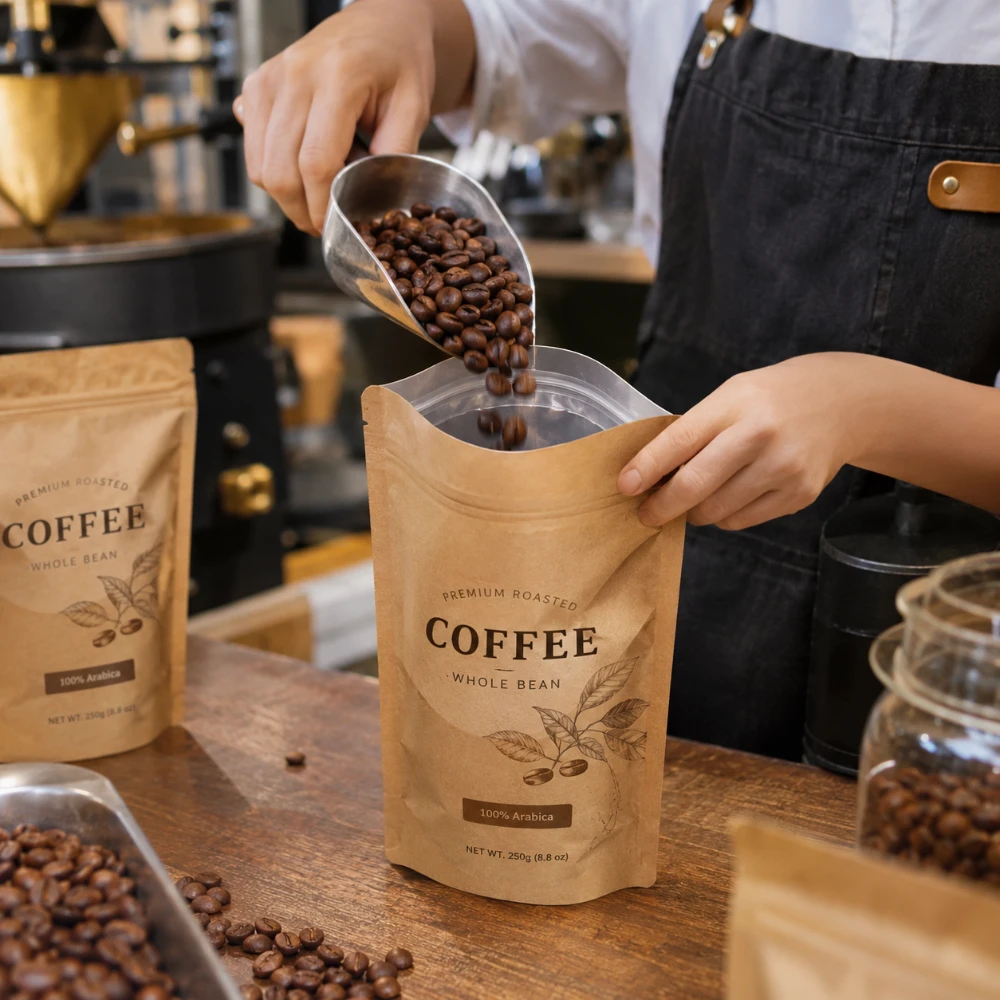
Roasted coffee loses aroma as oxygen enters. Freshly roasted beans also release gas; a valve may be part of the chosen pack. I check oxygen and moisture protection, valve placement, seal integrity, and what happens after the customer opens the bag. A peer-reviewed coffee storage study found that reclosure method changed freshness after opening. A brown paper face does not answer any of those questions. If the shelf-life target calls for a VMPET barrier, I assess that actual laminate and valve together; the recyclability of a simpler kraft/PE sample cannot be transferred to it.
Pet food and powders expose weak seals quickly
Dry pet food can be heavy, oily, and hard on the bottom seal. Powder can get into the seal area during filling, while many blends are sensitive to moisture. I check the filled bag, not just a flat film sample: drop and handling performance, gusset shape, zipper action if fitted, and the seal after the actual product has passed through the line. Food-contact documentation for the intended market is a separate approval from recyclability. A paper/PE structure has to pass both the product job and the end-of-life job.
For a plastic-film alternative when a product needs stronger barrier, our article on high-barrier mono-material PE pouches works through oxygen and water-vapour performance. That is a different recycling design from a paper-dominant kraft pouch.
Tea and dried herbs bring aroma and moisture questions of their own. A personal-care refill brings a different problem: the formulation may contact the liner for months, and a liquid bag must stay leak-tight. I check compatibility and filling conditions before recommending paper/PE. A dry retail item may need little more than a clean, durable display pack; copying a coffee barrier into it adds cost and material without fixing a real product risk.
Do Windows, Valves, and Zippers Change Recyclability?
They are small items on a drawing, but they become part of the finished pack.
Yes. I count each feature by material, weight, area, and how it is attached. A clear window removes paper from part of the face and adds film. A large window can also change how optical sorting sees the bag. A zipper adds another seal and material; a coffee valve adds a component and an opening in the film. A hang hole or tear notch can affect the seal layout and the way the bag handles.
The 2026 4evergreen guideline flags large non-paper windows as possible sorting disruptors. That is not a ban on all windows. It is a reason to measure the final window area, identify its film, and include it in sorting and repulping work. A zipper or valve can be the right choice for the product while making the recycling assessment more specific. I would rather test the feature the buyer actually needs than remove it on a sketch and discover the bag no longer works.
A French customer’s pouch makes the window question visible
We produced a kraft-outside, PE-inside pouch for a customer in France. It holds cleaned braiding hair, not food. The clear display window covers a substantial part of the front, with a hanging hole and easy-open details at the top. Here, showing the product is a useful packaging function. The engineering work is to keep the window edge secure, the pouch clean and presentable, and the paper/film balance tied to the final construction.
The photos show the bag’s form and the scale of the window. They do not supply the film weights, joining method, or recycling-test result. Those belong in the production and assessment records. I use this order as an example of a feature we have to account for, not as a material specification to copy into coffee, pet food, or snack packaging.
JINYI’s finished kraft/PE pouch for a French customer. This is a non-food application with a wide display window.The inner face provides the sealing surface; its exact construction comes from the material record.The clear window is included in the finished-pouch material and sorting assessment.
How Do I Approve the Pouch and Its Recycling Claim?
I release a defined construction, not a broad “eco” adjective.
First I prove the bag works for the product. Then I match the final production version to an appropriate recycling assessment and market instruction. Those are two approvals. Passing a seal test is not proof of recyclability; a fibre-recovery result is not proof that a nut or coffee bag protects its contents.
The order sheet is where the two approvals meet
I record the paper grade and basis weight, every plastic film or coating, adhesive, window, closure, valve, ink, dimensions, product, fill method, and target market. We check print, lamination or coating specification as supplied, slitting, and pouch-making against that defined build. The finished sample then goes through product-appropriate filling and handling checks. A separate 4evergreen recycling evaluation protocol can guide the paper-mill testing route. The actual bag and the proposed consumer instruction have to match that result.
If a buyer increases the window, adds a coffee valve, changes the laminate, or moves the product to another market, I check the claim again. That is normal change control on a packaging order. It keeps a good sample, a repeat order, and the printed recycling message describing the same construction.
Decision
Evidence I Need
Release Point
Will it protect the product?
Real filling, seal and handling checks; barrier and shelf-life trials where needed
Approve the product-specific construction
Which stream can process it?
Complete bag specification, sorting and relevant paper-mill evaluation
Identify the supported recycling route
What can the artwork say?
Evidence for the production version and local collection instruction
Approve the exact claim and disposal wording
Our broader guide to what makes a flexible pouch recyclable covers the whole-pack principle for plastic-film designs. In a kraft pouch, the paper-recovery question comes first. At JINYI, the production team can keep the material record, sample, and finished bag connected as the order moves through printing, lamination, inspection, slitting, and bag making. That practical link matters more to me than a green symbol on a mock-up.
Send us the product, target shelf life, filling method, destination market, bag format, current material specification if you have one, and any window, valve, or zipper requirement. I can then discuss a paper/PE starting design and the checks needed for your particular order.
Conclusion
A kraft paper pouch with a plastic liner can be recyclable when the complete bag works in a defined collection and paper-recycling route. The right build also depends on what goes inside: a dry retail item, a fatty snack, roasted coffee, and pet food each set a different performance target. A metallised barrier may be the right protection choice for one of them, but it changes the recycling assessment. I keep every layer and feature on the order sheet and put the claim on the final bag only when the evidence fits.
JINYI is a source factory for custom flexible packaging with 15+ years of production experience, serving food, supplement, coffee, pet food, and consumer goods brands across 70+ countries. We produce stand-up pouches, flat-bottom bags, pillow bags, and side gusset bags in PET/AL/PE, PET/VMPET/PE, and other barrier specifications — via HP Indigo digital print from 500 units and gravure printing at volume — with full material documentation included as standard with every order.
That is what From Film to Finished — Done Right means in practice.
Mark
Head of Production Management · JINYI Packaging
Mark leads production scheduling and order coordination at JINYI. With a Business Administration background and hands-on manufacturing exposure, he focuses on keeping quality, lead time, and execution stable across custom packaging orders.
Production planning On-time delivery Cross-team coordination
Can a kraft paper pouch with a PE liner be recycled?
Yes, it can be designed for an appropriate paper-recycling route. The complete pouch, its paper share, liner construction, components, collection, and mill performance decide whether a particular design qualifies.
Does 80% paper content guarantee recyclability?
No. In 4evergreen’s conventional-mill design guidance it is a starting threshold by weight, not a certification. The finished pack still needs the appropriate assessment and collection route.
Is kraft/PE enough for roasted coffee?
It depends on the target shelf life, coffee form, oxygen and moisture requirements, valve, closure, and real tests. A simple paper/PE bag should not be assumed to provide a high coffee barrier.
Does a metallised barrier make the kraft pouch non-recyclable?
It can make a conventional paper-recycling route harder to support, especially when metallised PET film and adhesive are added. That is not a universal ban: the exact construction and relevant paper-mill process must be assessed. Metallised PET film, aluminium foil, and direct metallisation on paper are different designs.
Can a paper/PE pouch work for nuts or pet food?
Sometimes, but fat, oxygen, grease, bag weight, and storage conditions must be tested. An added barrier or stronger seal may change the recycling result and needs its own assessment.
Will a window or coffee valve prevent paper recycling?
Not automatically. Their material, size, placement, and attachment become part of the complete-bag sorting and recycling assessment. A large non-paper window deserves particular attention.
Should a kraft/PE pouch go into a PE-film collection bin?
Do not decide from the PE liner alone. A paper-dominant composite and an all-PE film pouch are different recycling designs. Follow the verified instruction for the finished pack in the sales market.







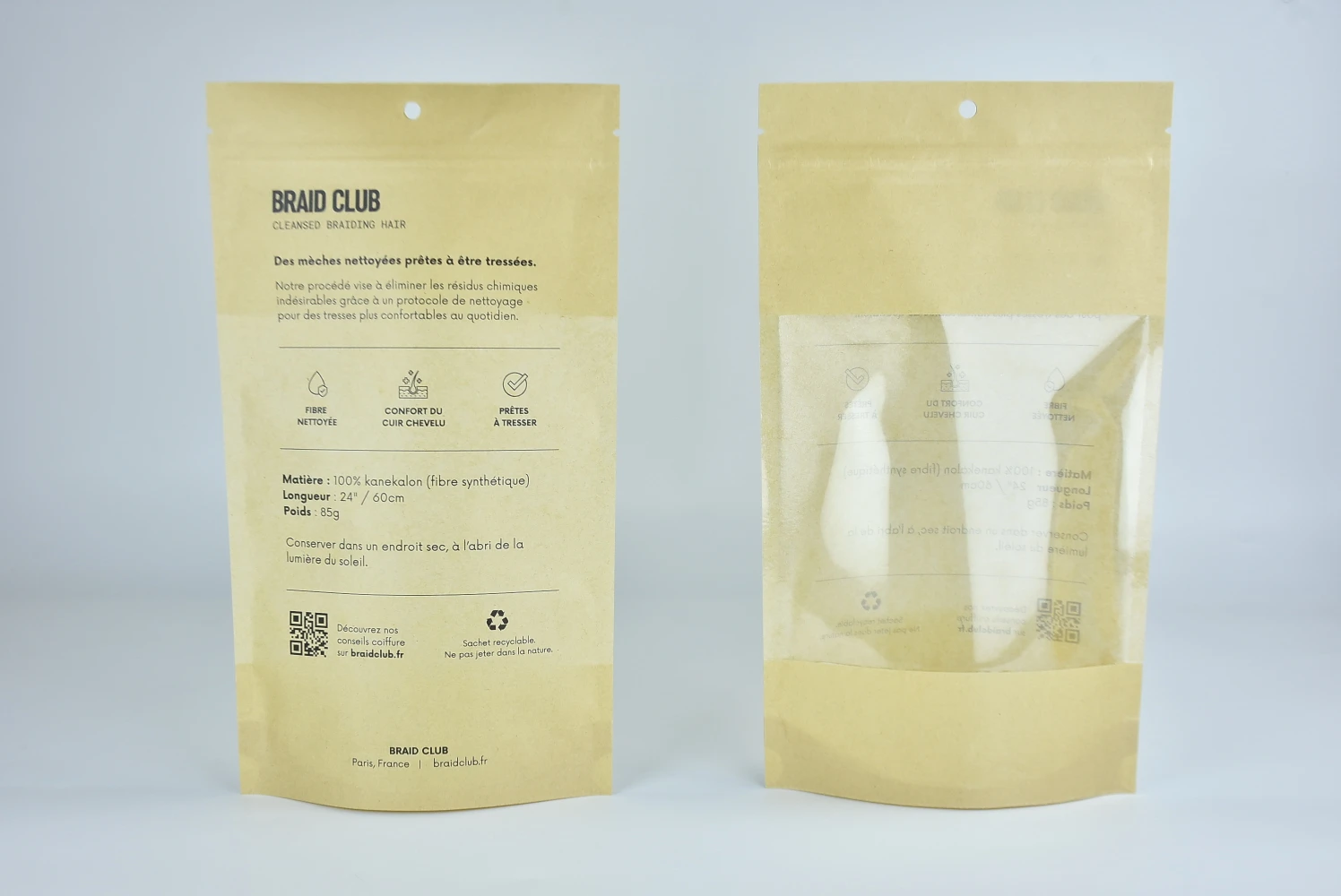 JINYI’s finished kraft/PE pouch for a French customer. This is a non-food application with a wide display window.
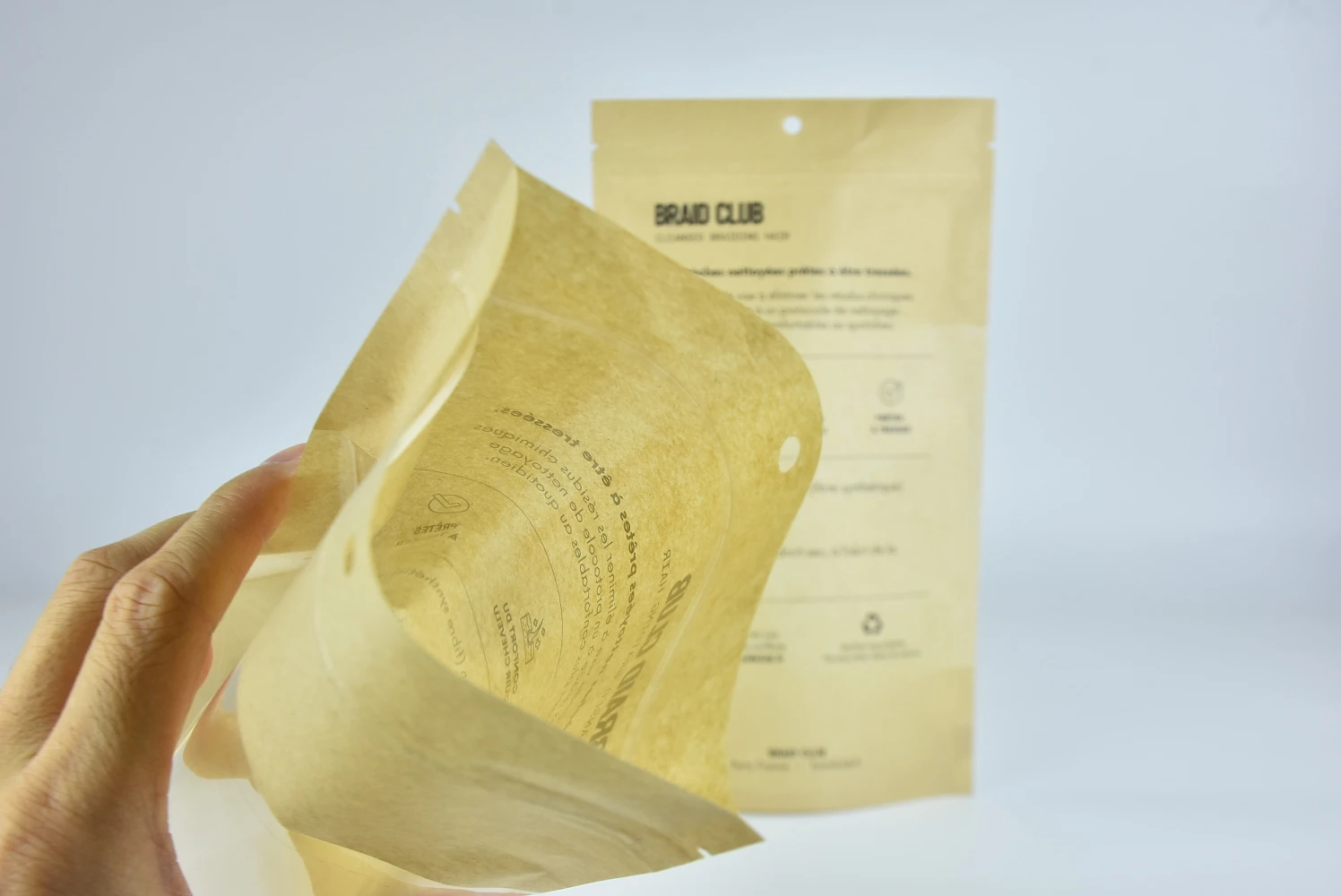 The inner face provides the sealing surface; its exact construction comes from the material record.
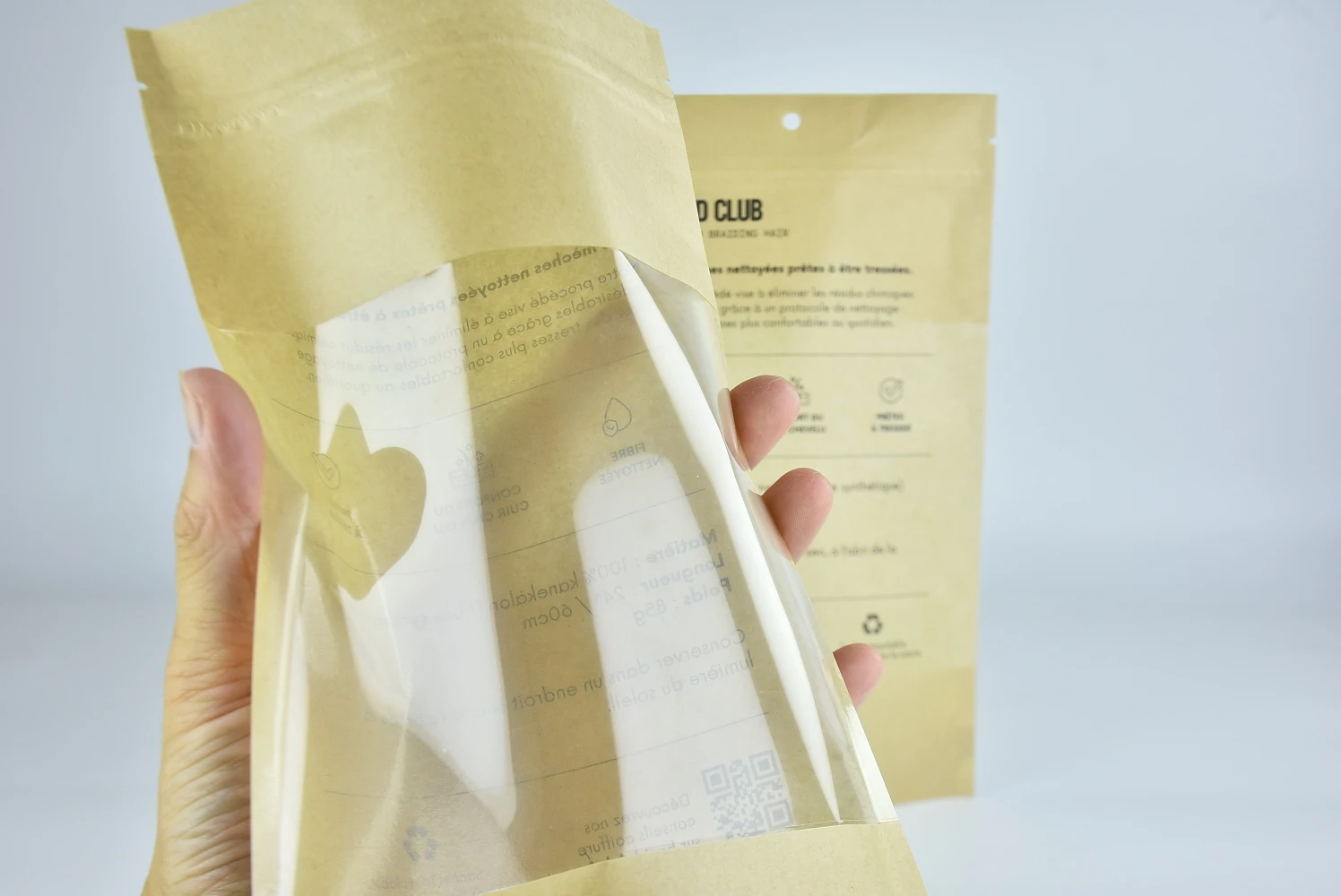 The clear window is included in the finished-pouch material and sorting assessment.