JINYI shares practical packaging guidance for your decisions.
KEY TAKEAWAYS
OEM cannabis packaging covers five primary formats — each suited to different product types and compliance environments
Child-resistant closure is a regulatory requirement in most cannabis markets, not a design option
Opaque, high-barrier film (VMPET or AL) is the standard spec for smell-proof, compliant weed packaging
Digital print MOQ starts from 500 units — suitable for new SKUs, seasonal runs, and multi-strain operations
A factory that can provide material documentation, CR certification, and dieline templates is the one worth working with long-term
We do not sell any medications; we only provide educational content regarding packaging.
If you’re sourcing OEM weed packaging, you already know what you need — you need a factory that understands cannabis compliance requirements, can produce child-resistant formats, delivers consistent barrier performance, and gives you real documentation for your product. This guide covers everything a cannabis brand, dispensary, or distributor needs to know before placing an OEM packaging order: formats, materials, child-resistant options, MOQs, lead times, and how to evaluate a factory before committing to production.
We’ve structured this as a working reference — use the section that’s most relevant to where you are in your sourcing process.
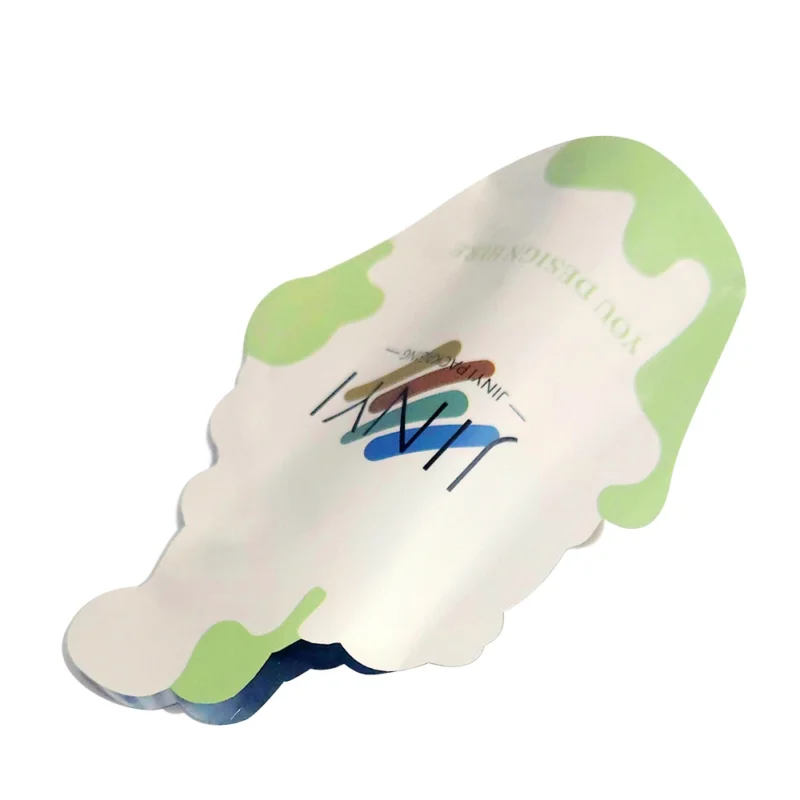
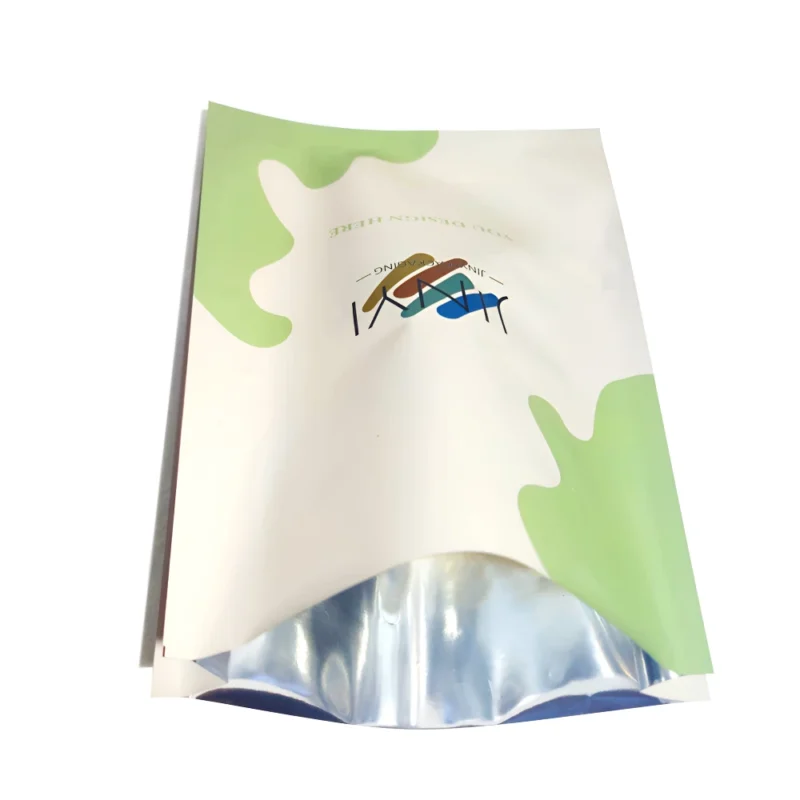
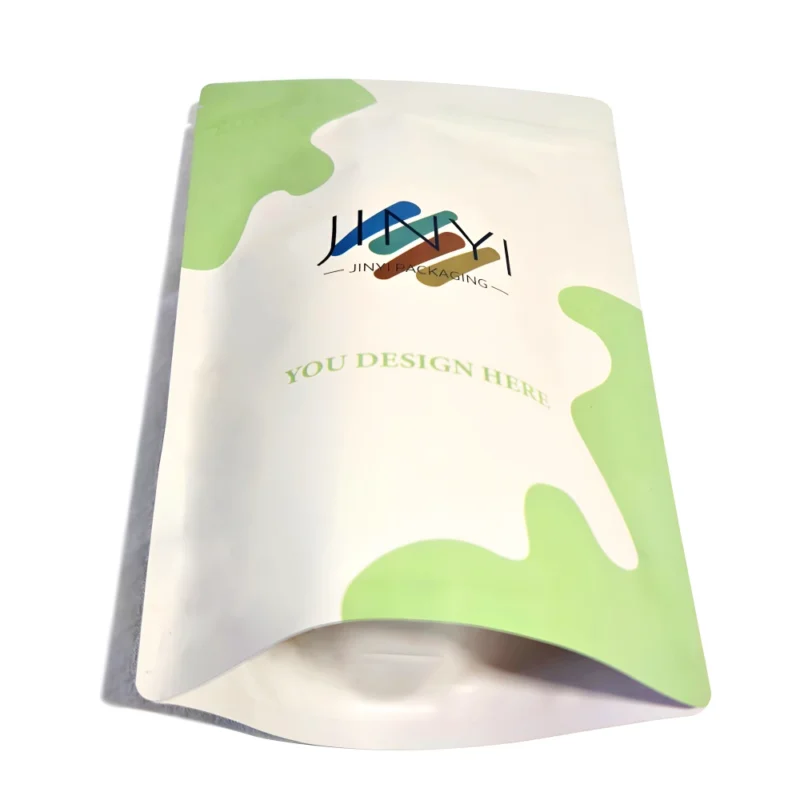
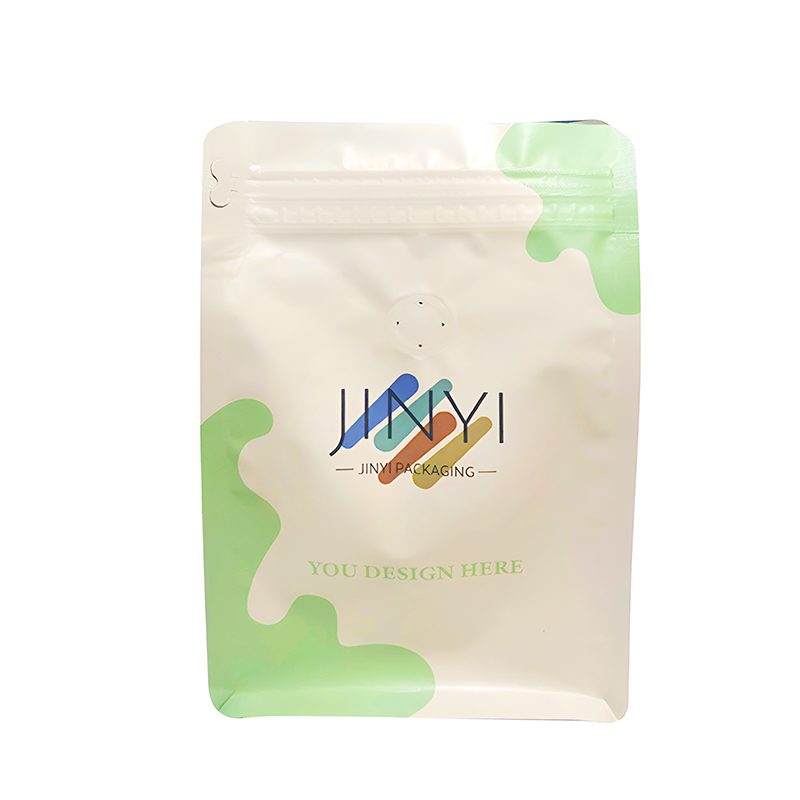
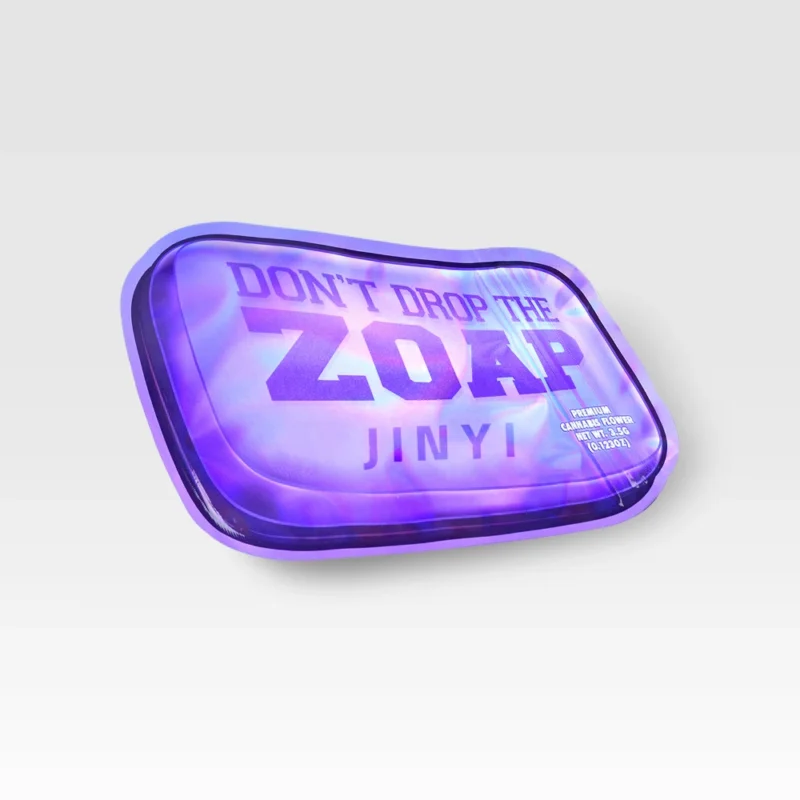
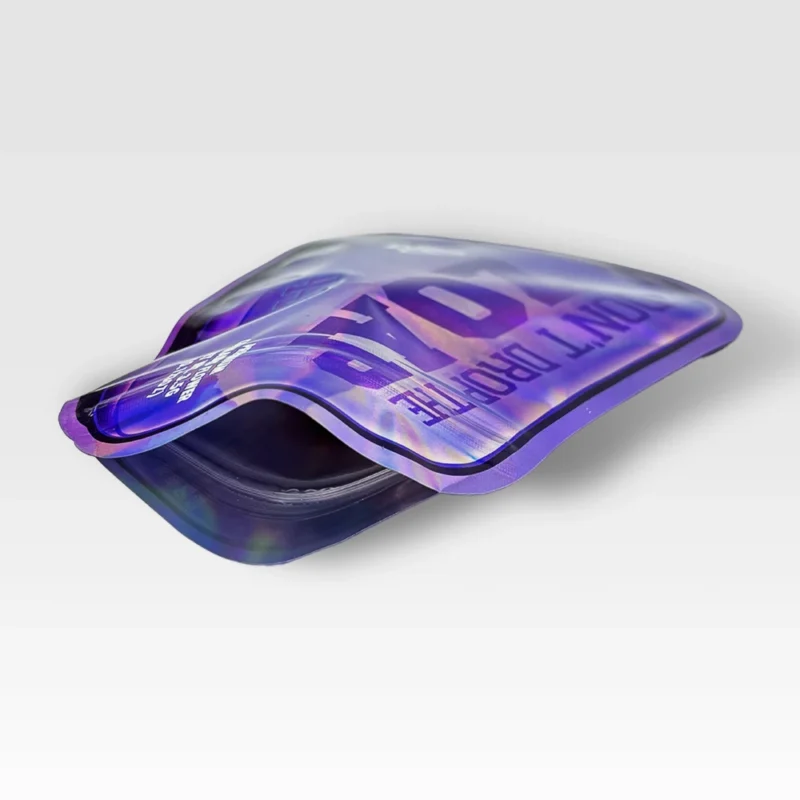
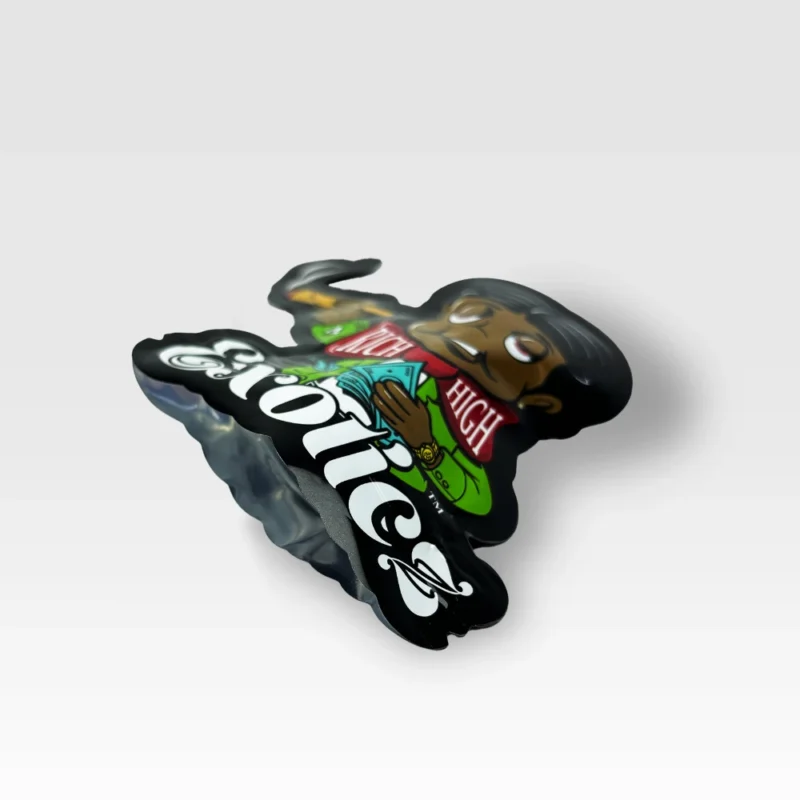
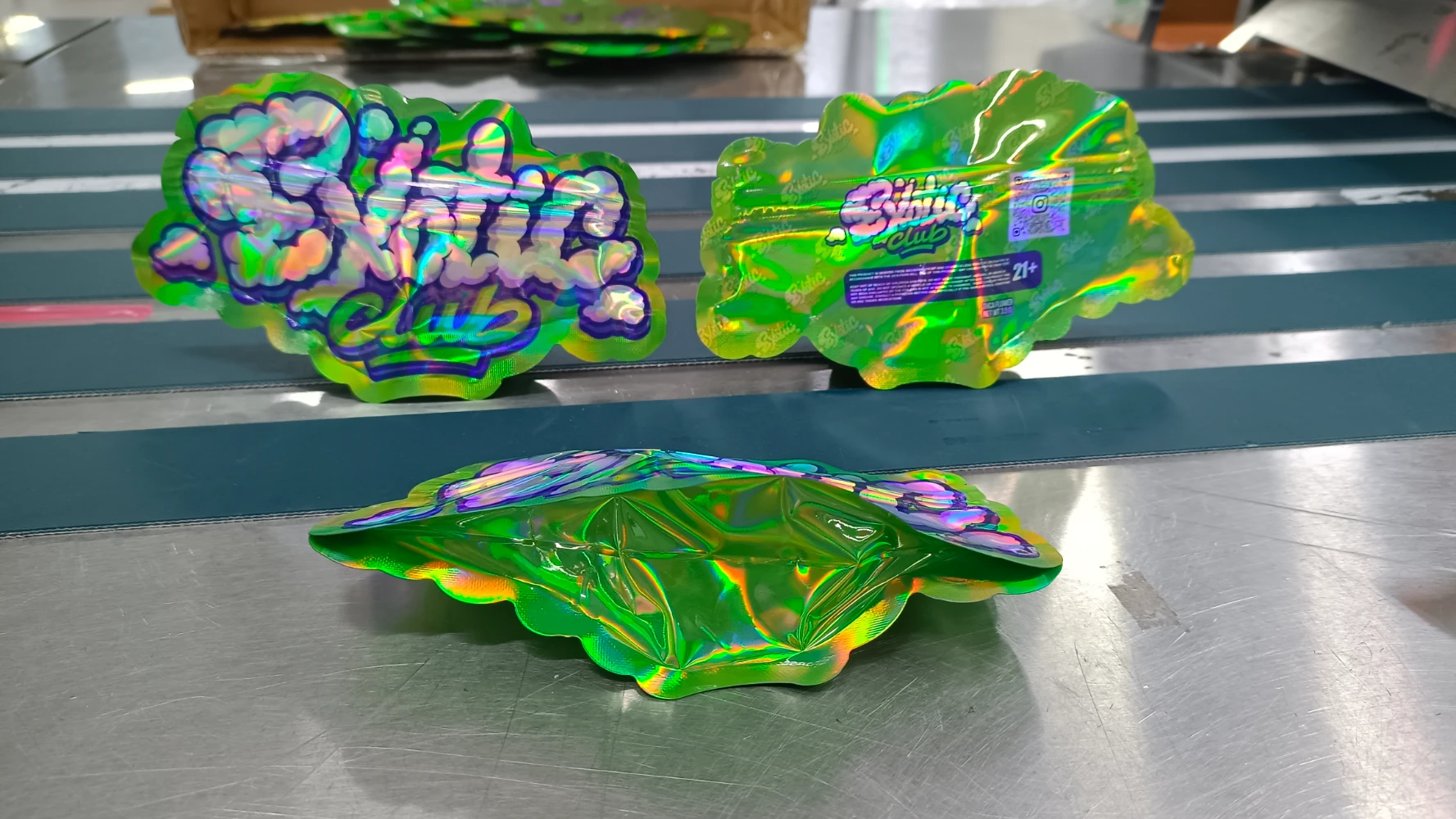
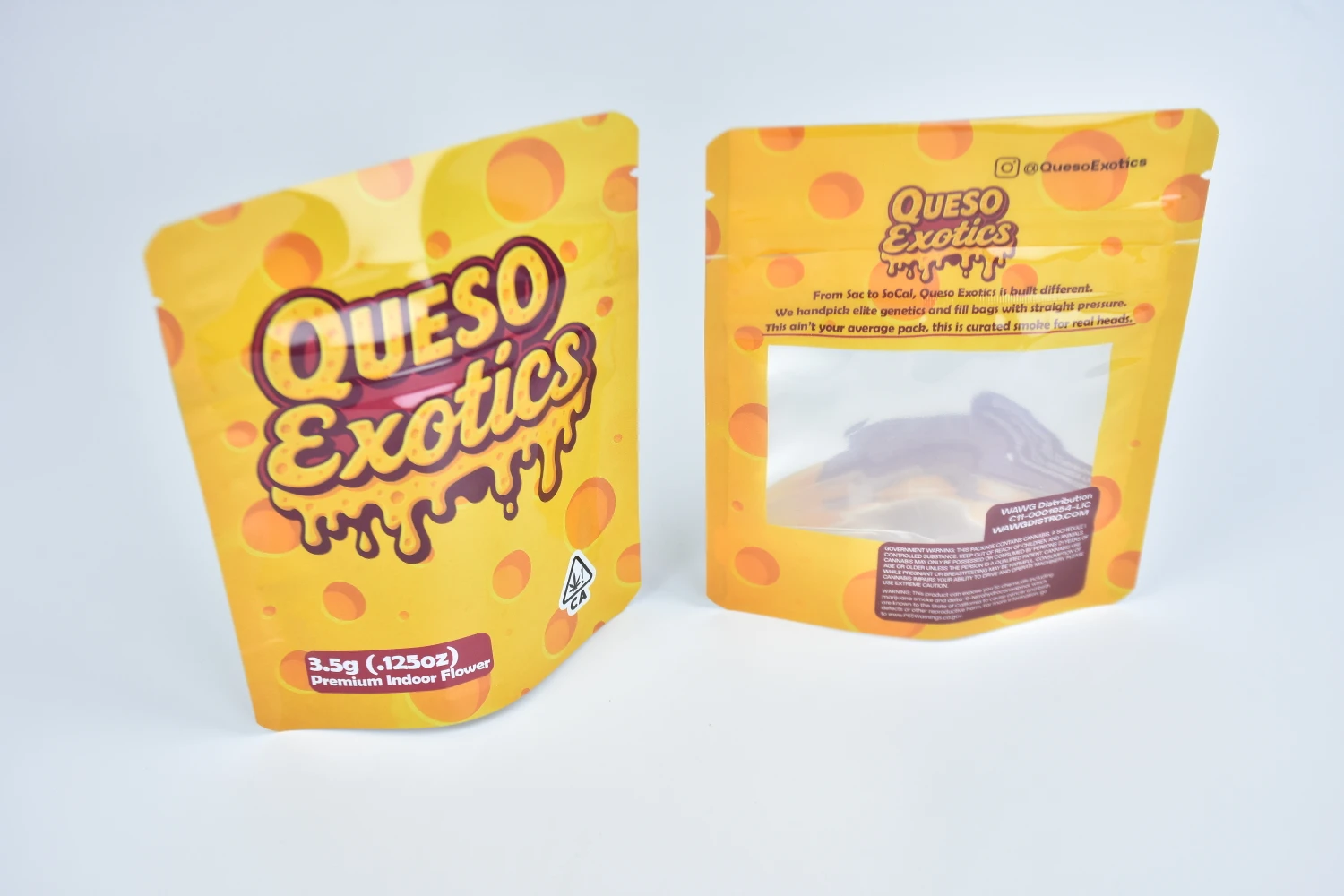
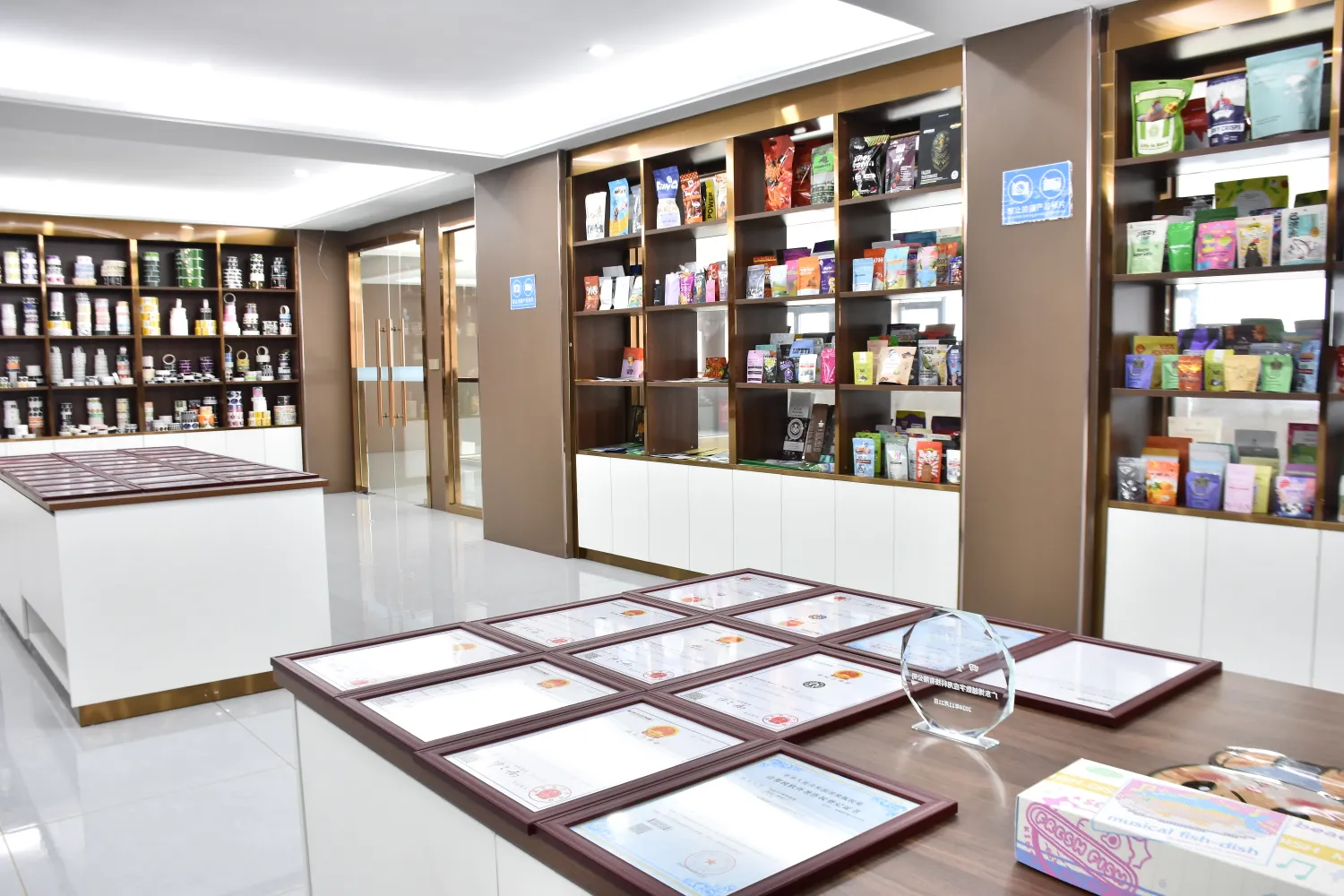
Fresh off the line — custom die-cut cannabis bags produced at JINYI’s flexible packaging facility.
Part 1: OEM Cannabis Packaging Formats — Which One Is Right for Your Product?
The format you choose determines everything downstream: the tooling required, the film structure options, the compliance space available for labelling, and the per-unit cost at your target volume. Here are the five formats most commonly used for OEM cannabis and weed packaging, with honest assessments of when each makes sense.
① Die-Cut Mylar Bag
The most widely used format in the cannabis retail market. Die-cut mylar bags are custom-shaped flexible pouches — typically rectangular with rounded corners, a hang hole, and a child-resistant resealable zipper. The mylar (biaxially oriented polyester) film delivers excellent barrier performance, opacity, and print quality. They’re the standard format for flower, edibles, and pre-packaged grams at retail.
Key features: Child-resistant zipper · Hang hole · Custom shape · Opaque barrier film · Full-surface print
② Cannabis Flat Pouch (3-Side Seal)
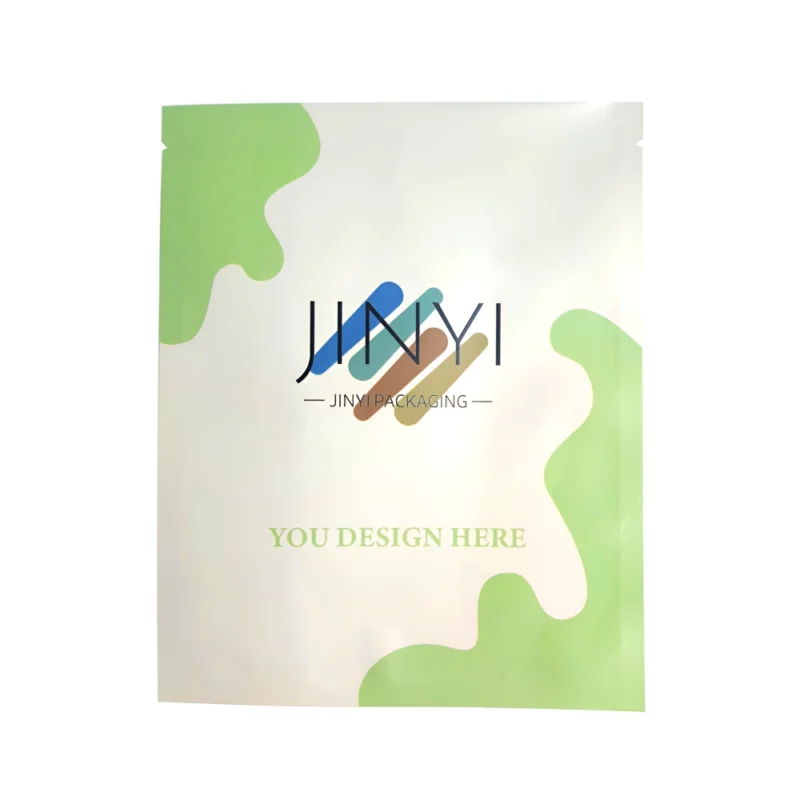
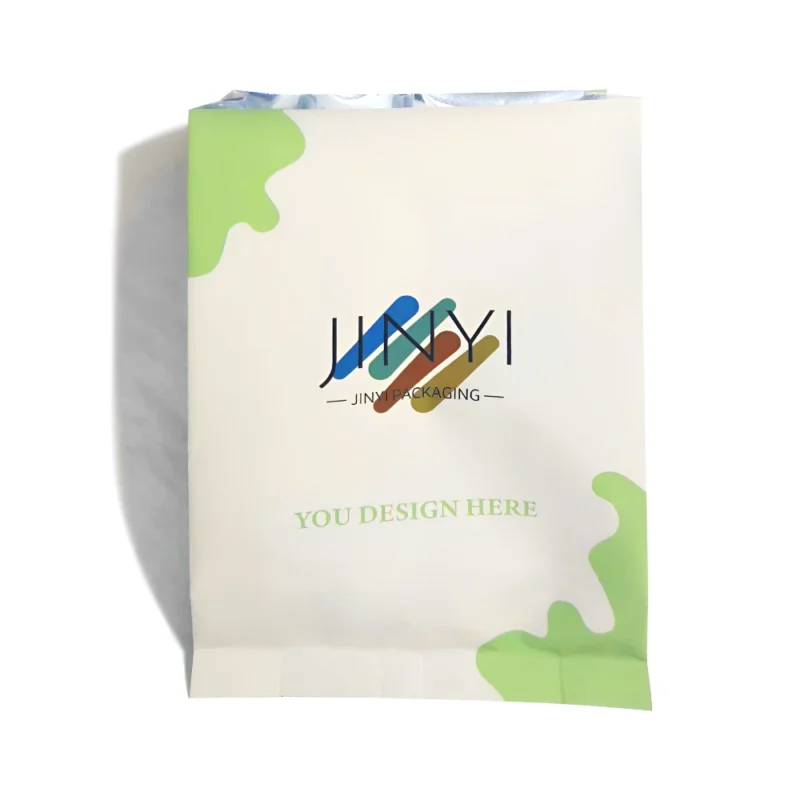
A three-side or four-side sealed flat pouch with heat seal closure. Used widely for pre-rolls, single-serve edibles, sachets, and small-format products. The flat pouch is cost-efficient — lower tooling cost than die-cut formats, minimal material waste, and easy to stack and ship. For dispensaries or brands running multiple strains or flavours at lower volumes per SKU, the flat pouch is often the most practical starting format.
Key features: Low tooling cost · Compact format · Heat seal closure · Full-surface print available
③ Stand-Up Pouch
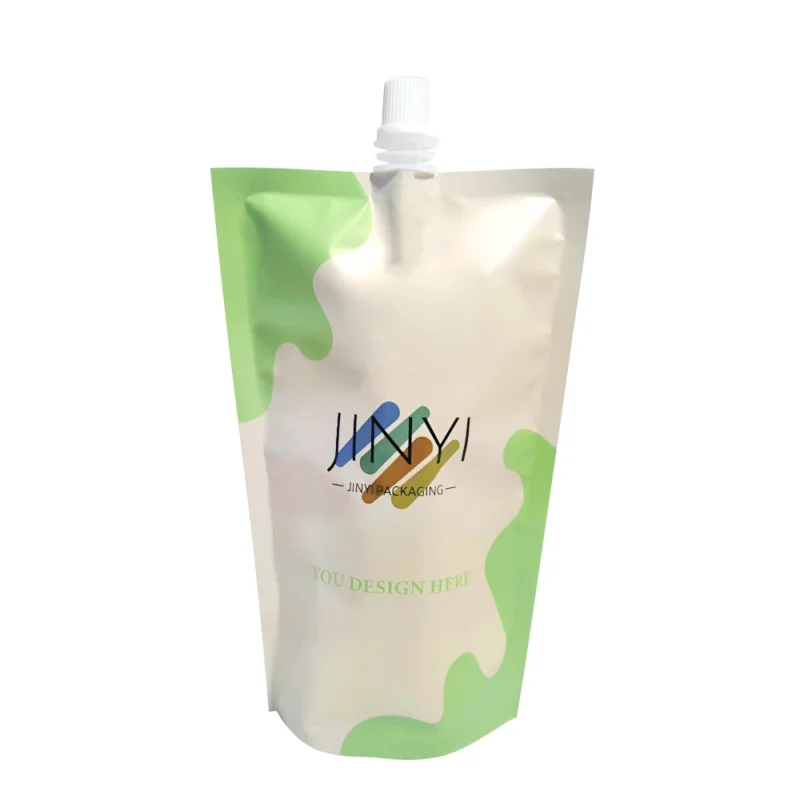
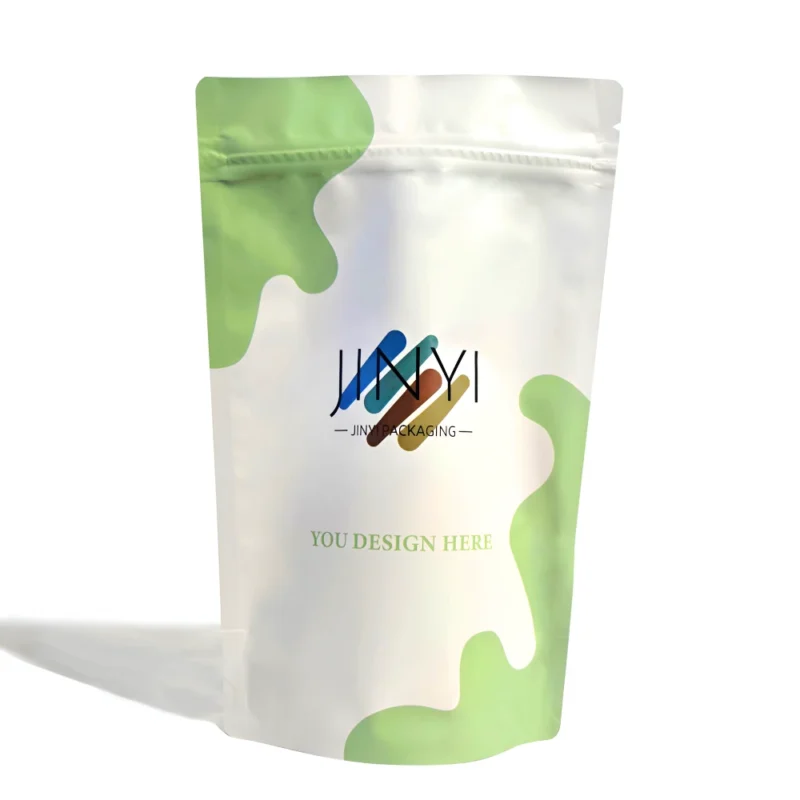
A self-standing pouch with bottom gusset, resealable zipper, and wide front panel. Used for larger quantities — half-ounce to full-ounce flower packs, bulk edibles, and concentrate products. The stand-up format provides more label space than a flat pouch, which is important in markets with extensive mandatory warning requirements. It also stands on shelf without display support.
Key features: Self-standing · Wide label space · Resealable zipper · Child-resistant option available
④ Side Gusset Bag
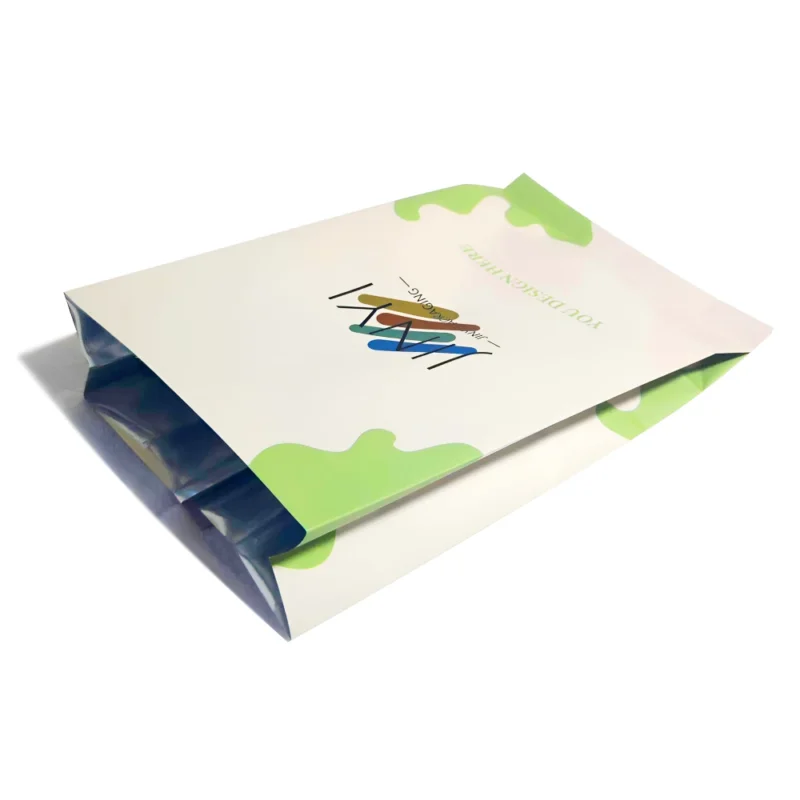
A large-format bag with expandable side panels, used primarily for bulk flower, wholesale quantities, or dispensary back-of-house storage. The side gusset format holds significantly more volume than a stand-up pouch of equivalent footprint, and its structured profile makes it easy to store and label. Less common in consumer retail but widely used in wholesale and B2B cannabis distribution.
Best for: Wholesale bulk flower · B2B distribution · Dispensary storage packs
Key features: High capacity · Structured profile · Top seal or zipper · Large label area
⑤ Roll Film (VFFS / HFFS)
Rollstock film supplied to automated vertical or horizontal form-fill-seal machines. Used by high-volume cannabis operations that run their own packaging lines. Roll film gives you the lowest per-unit cost at scale but requires capital investment in filling equipment. For brands currently operating at 50,000+ units per month, roll film is worth evaluating.
Best for: High-volume automated operations · Large-scale edible producers
For brands starting out or managing multiple strains, our cannabis flat pouches offer the lowest-barrier entry point — flexible MOQ, fast turnaround, and full compliance label space.
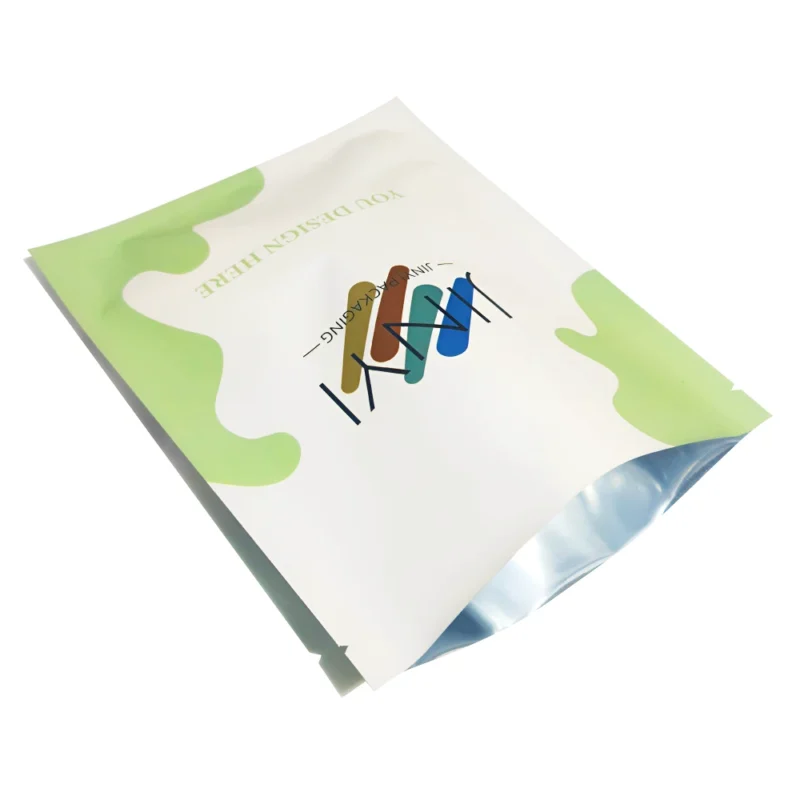
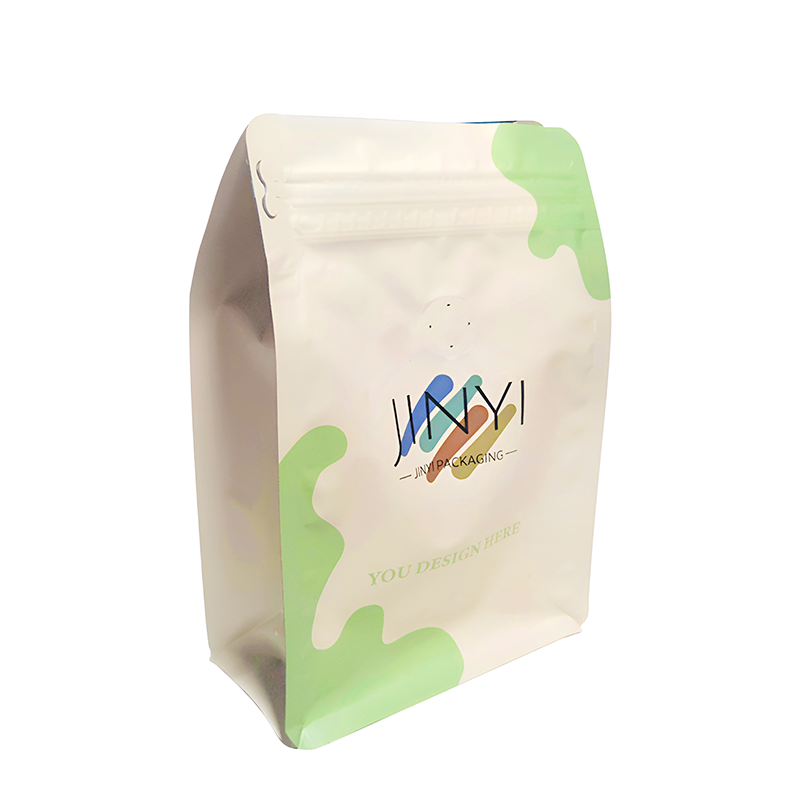
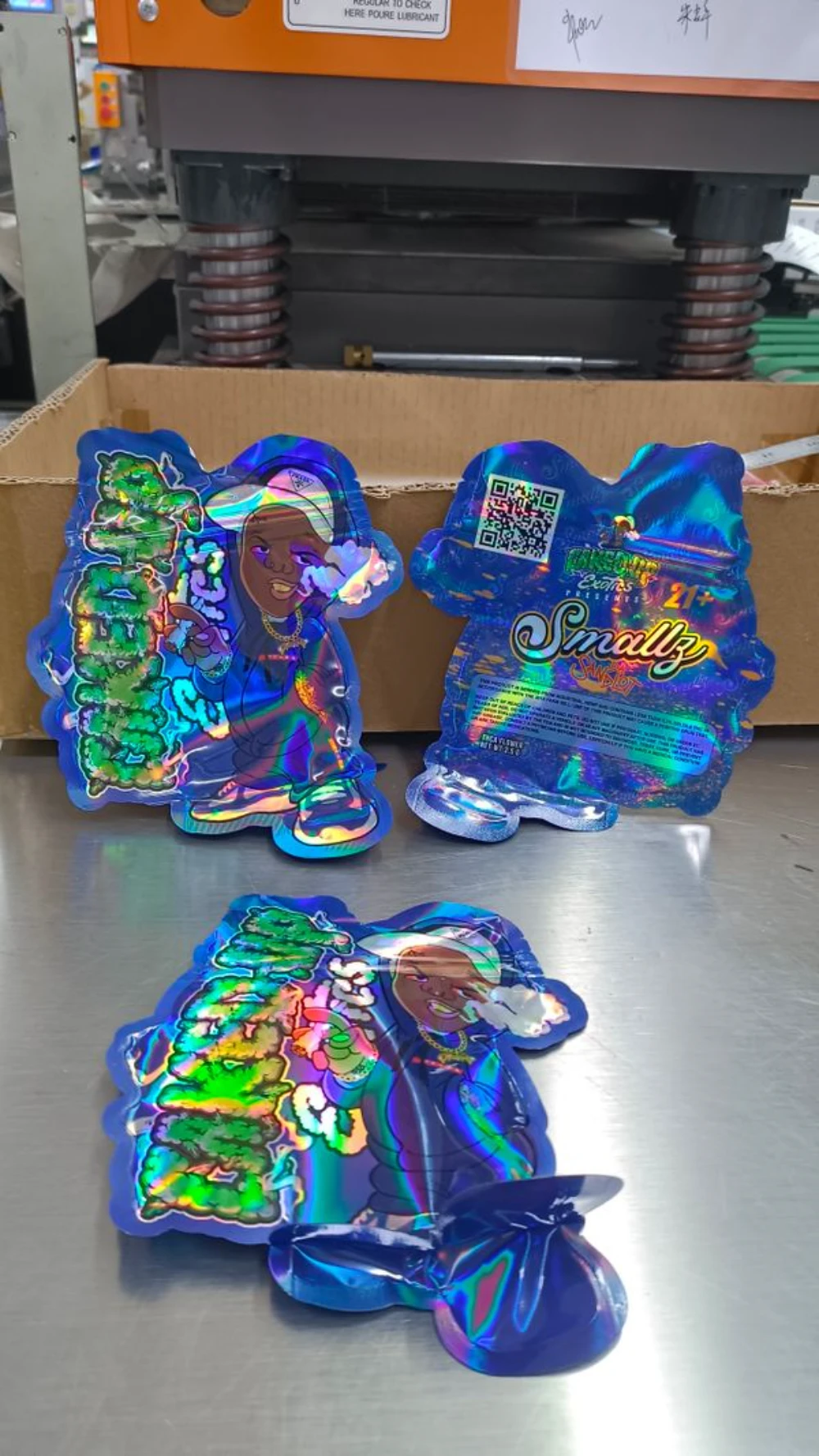
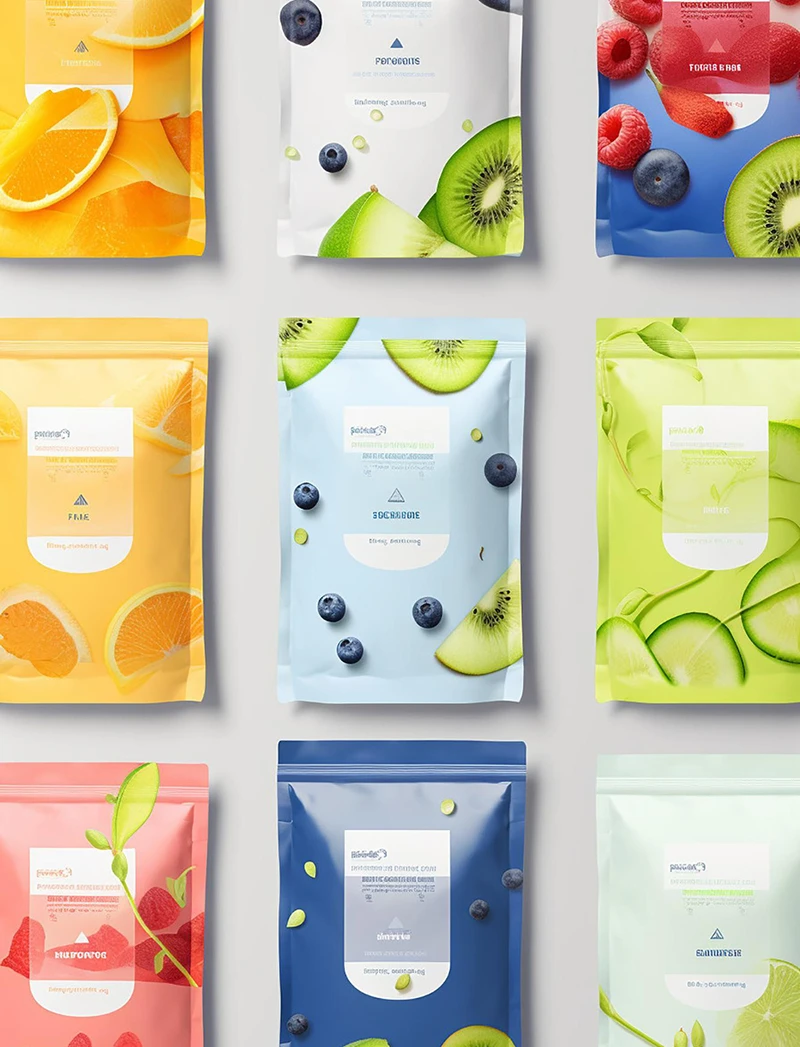
Straight from production: full-color custom cannabis pouches printed and finished at the JINYI factory.
Tip: If you’re running more than 5 strains or SKUs simultaneously, start with flat pouches or die-cut mylar bags on digital print — no plate fee, faster turnaround, and you can run each SKU at its own quantity rather than hitting a single MOQ across all variants.
Part 2: Cannabis Packaging Materials — Barrier, Opacity, and Smell-Proof Performance
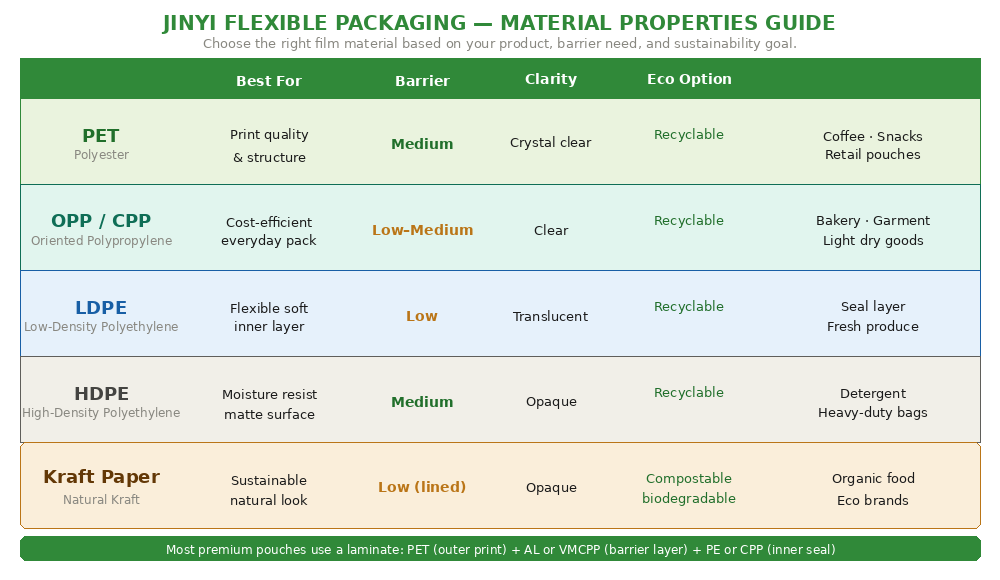
Cannabis packaging has stricter material requirements than most food or consumer goods packaging. The film must be opaque (in most regulated markets), odour-containment must be effective, and the barrier must protect the product from humidity and oxygen degradation. Here’s how the main material options stack up.
Film Structure
Barrier Level
Opacity
Best For
PET / AL / PE
Maximum
100% opaque
Flower · High-value product · Long shelf life
MOPP / VMPET / PE
High
Opaque (metallic)
Standard retail · Edibles · Mid-shelf life
PET / VMPET / PE
High
Opaque (metallic)
Printed mylar · Die-cut retail bags
Kraft / VMPET / PE
Medium-High
Opaque (kraft)
Eco-positioned brands · Organic cannabis
Soft Touch / AL / PE
Maximum
100% opaque
Premium positioning · Luxury retail
On smell-proof performance: True smell containment requires both a high-barrier film and a proper heat seal — the film alone is not enough. A PET/AL/PE bag with a poor heat seal will still allow odour to escape at the seam. When evaluating a factory for cannabis packaging, always request seal strength specifications alongside the film spec sheet.
Note: Most regulated cannabis markets require opaque packaging — consumer packaging cannot allow the product to be visible from outside. Both aluminium foil and metallised VMPET films satisfy this requirement. Clear or window panels are generally not compliant for retail cannabis packaging in regulated markets.
Part 3: Child-Resistant Cannabis Packaging — What You Actually Need to Know
Child-resistant (CR) closure is a regulatory requirement in virtually every legal cannabis market — not an optional feature. Understanding what CR actually means at the packaging level will save you from costly compliance errors after production.
CR Zipper vs CR Reseal: There are two primary CR mechanisms for flexible cannabis packaging:
CR Type
How It Works
Format
CR Zipper
Press-and-slide mechanism requiring simultaneous pressure at two points to open — difficult for young children
Die-cut mylar · Stand-up pouch
CR Exit Seal
Tear-open with a specific notch pattern that requires a two-step action — not resealable after first open
Flat pouch · Single-serve sachet
Compliance label space: Most regulated cannabis markets specify minimum label area requirements — including mandatory warnings, THC/CBD content declarations, batch numbers, and jurisdiction-specific text. Before finalising your bag dimensions, confirm what label space your market requires. Bags that are too small to accommodate mandatory text will fail compliance inspection regardless of their CR certification.
Fresh off the production line—custom OEM cannabis packaging pouches manufactured by JINYI Packaging, featuring child-resistant zipper closures.
CR certification: A child-resistant closure must pass standardised testing — typically ASTM D3475 (USA) or equivalent — to be certified. When sourcing OEM cannabis packaging, always ask the factory for their CR test certificate, not just their claim that the zipper is child-resistant. The certificate confirms the specific closure mechanism has passed testing, which is what your compliance authority will ask for.
Tip: Confirm your market’s CR requirements before sampling. CR zipper specifications vary between suppliers — a zipper that passes testing in one format may not be compliant in another jurisdiction. Specify the target market when requesting a CR zipper sample.
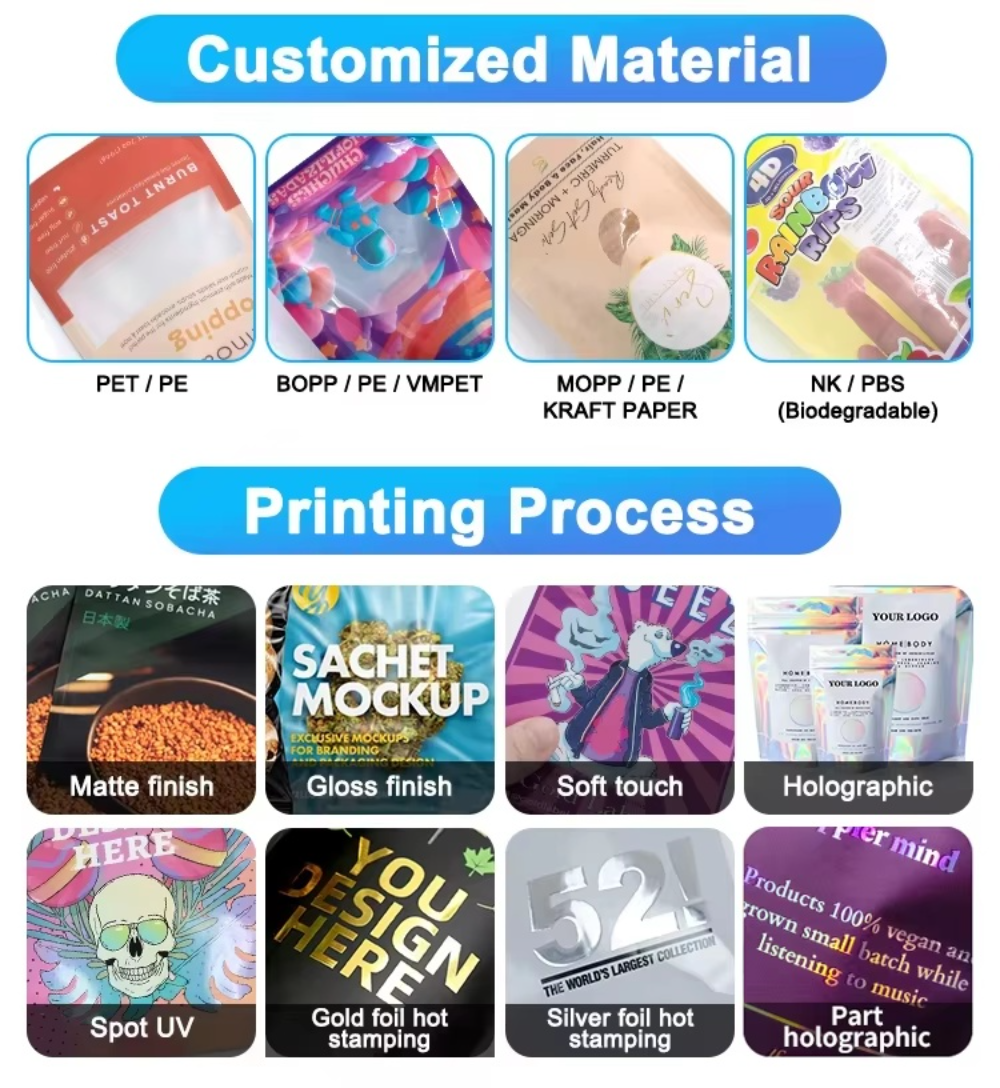
Part 4: Surface Finish and Print Options for Cannabis Packaging
Cannabis is a visually competitive retail category. The surface finish and print quality of your packaging directly affects shelf performance and brand perception — and in a market where many products look similar, it’s one of the clearest ways to differentiate.
Finish Option
Effect
Brand Positioning
Matte Lamination
Soft, non-reflective surface
Premium · Craft · Medical
Gloss Lamination
High-shine reflective surface
Bold · Mass market · Edibles
Holographic Film
Rainbow colour shift with light
Lifestyle · Limited edition · Collectible
Soft Touch Coating
Velvety tactile texture
Ultra-premium · Luxury dispensary
Hot Stamping
Gold / silver metallic accent
Premium brand detail · Logo accent
Spot Gloss UV
Selective gloss on matte base
Logo highlight · Design contrast
Tip: Matte lamination is the most common choice in premium cannabis retail because it hides fingerprints on a bag that’s handled frequently at point of sale. Holographic film is highly effective for limited-edition drops or lifestyle-positioned strains where visual differentiation is the priority.
Part 5: MOQ, Pricing and Lead Times for OEM Cannabis Packaging
Cannabis brands typically run multiple strains or SKUs simultaneously, which means MOQ flexibility matters more in this category than in most others. Here’s a realistic breakdown of what to expect at different volume levels.
Print Method
MOQ
Plate Fee
Lead Time
Unit Cost
HP Digital Print
From 500 units
None
7–12 days
Higher per unit
Gravure Print
From 3,000 units
One-time setup
15–25 days
Lower at volume
For cannabis brands managing multiple strains, digital print is almost always the right starting point — you can run each SKU at its own quantity (as low as 500 units per design) without hitting a single aggregate MOQ across your entire range. As specific strains or products establish consistent reorder volume, those SKUs can migrate to gravure for lower per-unit cost.
Sample lead time is typically 7–12 days after artwork approval for digital samples. Always request a physical sample before bulk production — verify the CR zipper function, seal strength, and colour accuracy before committing to full volume.
Part 6: How to Place an OEM Cannabis Packaging Order — Step by Step
The process is more straightforward than most first-time buyers expect. Here’s the full sequence from initial contact to delivery.
Step
What you provide
What you receive
01
Product type, format, dimensions, quantity, target market
Material recommendation + CR option + quote
02
Confirm spec and CR requirement
Dieline template for your bag dimensions
03
Submit print-ready artwork on dieline
Artwork review + confirmation
04
Approve artwork proof
Physical sample produced and shipped (7–12 days)
05
Verify sample — CR function, seal, colour
Bulk production begins on approval
06
Confirm shipping method and address
Production complete + QC report
07
—
Shipment dispatched with tracking
08
Inspect delivery
Material spec sheet + CR cert docs on request
Tip: Never skip the physical sample step for cannabis packaging. CR zipper function must be tested with your actual product fill weight — a zipper that functions correctly empty may behave differently under load. Verify at the sample stage, not after bulk production.
Part 7: Five Questions to Ask Any OEM Cannabis Packaging Factory Before You Order
Not all factories that claim to produce cannabis packaging have the capability, compliance knowledge, or documentation standards that cannabis brands actually need. These five questions will quickly separate factories that can deliver from those that will create problems after production.
① Can you provide a CR test certificate for the specific zipper on my bag?
A factory that can produce certified CR packaging will have test certificates ready to share. If they can only tell you their zipper “meets CR standards” without documentation, that’s a red flag — your compliance authority will ask for the certificate, not the claim.
② What is the OTR and MVTR of the film you’re recommending for my product?
A factory that understands cannabis packaging will be able to give you these numbers — oxygen transmission rate and moisture vapour transmission rate — for the specific film spec they’re proposing. A factory that can’t answer this question is guessing at the barrier performance of your packaging.
③ Can you provide a full material specification sheet with my order?
Material documentation is essential for compliance, retailer onboarding, and market access in many jurisdictions. A factory that produces to spec should be able to provide a spec sheet as standard. If documentation requires a special request or additional cost, factor that into your supplier evaluation.
④ Can I see samples of cannabis packaging you’ve produced for other clients?
Not necessarily with brand names — but a factory experienced in cannabis packaging will be able to show physical samples of CR zipper formats, opaque film structures, and compliance label space configurations. If they can only show generic pouch samples, their cannabis-specific experience may be limited.
⑤ What is your minimum for digital print, and can each SKU run at its own quantity?
For multi-strain cannabis operations, this is a critical question. A factory that requires a single aggregate MOQ across all your designs — rather than allowing each design to run at its own quantity — will create inventory problems for brands with more than 3–4 SKUs. Digital print should allow each design to run independently at the stated minimum.
At JINYI, we’ve been producing flexible packaging for cannabis and hemp brands across multiple markets. You can learn more about our production capabilities and compliance approach on our about page.
Ready to Source OEM Cannabis Packaging Factory-Direct?
Tell us your format, target market, quantity per SKU, and CR requirement. We’ll come back with a material recommendation, CR spec confirmation, and a quote — within 24 hours.
Digital print from 500 units per design · Gravure from 3,000 units · CR certification documentation available · Full material spec sheet with every order.
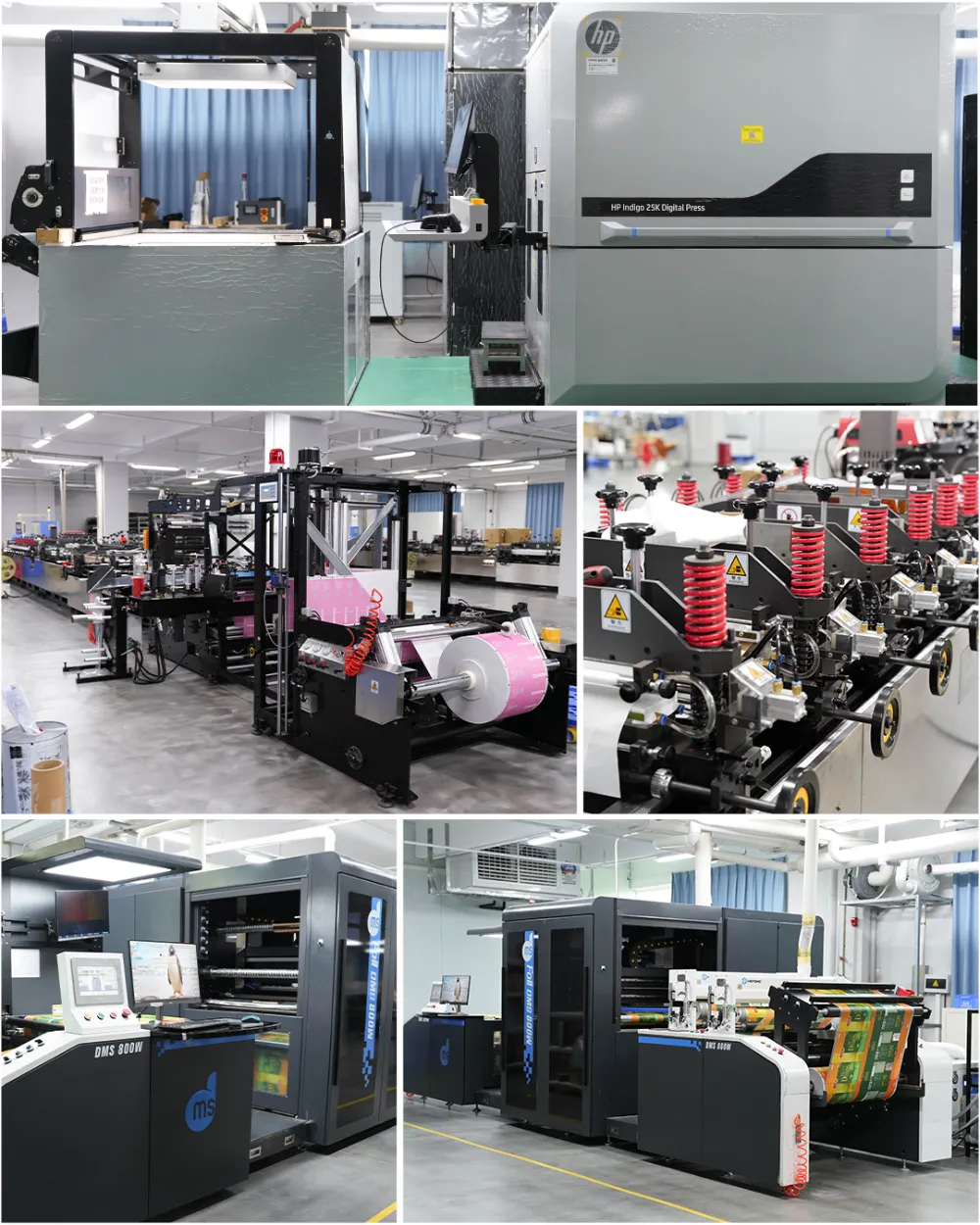
JINYI is a source factory for custom flexible packaging, with 15+ years of production experience serving food, supplement, coffee, and consumer goods brands globally. Our facility runs multiple gravure printing lines alongside HP digital print systems — supporting both large-volume consistency and small-batch flexibility from the same production floor.
From film selection to finished pouch, every client gets full visibility into material specs, production timeline, and quality control. That’s what From Film to Finished — Done Right means in practice.
Elsa
Business Development Manager · JINYI Packaging
Elsa leads business development and customer order management at JINYI. With 8 years in foreign trade across Yiwu and Dongguan, she has a sharp understanding of market demand and what buyers actually need — turning real customer insight into the right packaging decisions.
Customer needs Order management Business development
For digital print, the MOQ starts from 500 units per design — each SKU can run at its own quantity independently, which is important for multi-strain cannabis operations. For gravure printing, which offers lower per-unit cost at volume, the MOQ starts from 3,000 units per design. There is no plate fee for digital print orders.
What child-resistant options are available for cannabis pouches?
Two primary CR options are available for flexible cannabis packaging: CR zipper (a press-and-slide mechanism for resealable formats like stand-up pouches and die-cut mylar bags) and CR exit seal (a two-step tear mechanism for single-use formats like flat pouches and sachets). CR test certificates are available on request to support compliance documentation requirements.
What film materials are used for smell-proof weed packaging?
The most common smell-proof film structures for cannabis packaging are PET/AL/PE (maximum barrier, 100% opaque) and MOPP/VMPET/PE or PET/VMPET/PE (high barrier, metallic opaque finish). True smell containment requires both high-barrier film and proper heat seal integrity — the film specification alone is not sufficient without a strong, consistent seal at the bag closure.
How long does it take to get OEM cannabis packaging produced?
Sample lead time is 7–12 days after print-ready artwork approval for digital print. Bulk production lead time is 7–12 days for digital print and 15–25 days for gravure, starting after sample approval. Always allow time for the physical sample verification step — CR zipper function and seal integrity should be confirmed before committing to bulk production.
Can I run different designs at different quantities in the same order?
Yes — with digital print, each design runs independently at its own quantity, starting from 500 units per design. This is the standard approach for multi-strain cannabis operations where different SKUs sell at different volumes. There is no requirement to match quantities across designs in a digital print order.
What documentation comes with an OEM cannabis packaging order?
Every order includes a full material specification sheet covering film structure, barrier ratings, and layer composition. Child-resistant certification documentation is available on request, as is FDA food-contact compliance documentation where applicable. All documentation is issued to your specific order and is transferable for use with retailers, compliance bodies, or market access requirements.