Custom Pouches
Custom Pet Food Packaging: A Buying Guide to MOQ, Lead Times, and Choosing the Right Supplier
Getting your pet food packaging wrong doesn’t just affect how your product looks — it can compromise freshness, fail compliance checks, and delay your entire launch timeline.
For brands placing their first custom order, the process raises a lot of questions at once: What format works best for my product? What MOQ am I looking at? How do I know if a supplier is actually reliable? And how much time do I need to build into my launch plan?

This guide walks you through each of those decisions — clearly and in the right order — so you can move forward with confidence. Explore our custom pet food pouches to see what’s possible before you start.
Key Takeaways
- Pick a pouch format based on your product type first — wet food, dry kibble, and treats each have different structural needs.
- Use high-barrier materials for pet food — oxygen and moisture control directly affect shelf life and product safety.
- Evaluate suppliers on sample quality, communication speed, and production consistency — not just unit price.
- Plan for MOQs starting from 500–3,000 pieces depending on format and print method.
- Build at least 6–8 weeks into your launch timeline from artwork approval to delivery.
- Always order samples before committing to a full production run — this single step prevents the most costly mistakes.
- Think about your packaging structure early — changing materials or format after the dieline is approved adds cost and delays.
What Makes Pet Food Packaging Different from Other Categories?
Pet food packaging looks similar to food packaging on the surface — pouches, zippers, valves — but the requirements underneath are meaningfully different. Understanding these differences before you brief a supplier saves you from expensive revisions later.
The biggest difference is barrier demand. Pet food — especially wet food, raw food, and high-protein treats — is highly sensitive to oxygen and moisture. A packaging structure that works fine for dry snacks may fail completely for premium kibble or freeze-dried meals. Shelf life targets in the pet food category commonly run 12–24 months, which pushes material requirements into high-barrier territory from day one.
There’s also the question of regulatory compliance. Depending on your target market, your packaging may need to meet specific food-contact safety standards — including ink migration limits, material certifications, and labelling requirements. A reliable supplier should be able to provide documentation for these without you having to chase them.
| Category | Typical Shelf Life | Barrier Requirement | Key Packaging Need |
|---|---|---|---|
| Dry kibble | 12–18 months | Medium-High | Resealable zipper, strong puncture resistance |
| Wet / moist food | 12–24 months | Highest | Full foil barrier, heat-seal integrity |
| Freeze-dried / raw | 12–24 months | Highest | Moisture and oxygen barrier critical |
| Treats and chews | 6–12 months | Medium | Resealable zipper, branding visibility |
| Supplements / powder | 12–18 months | High | Moisture barrier, tamper-evidence |
Pouch Types for Pet Food: Which Format Fits Your Product?
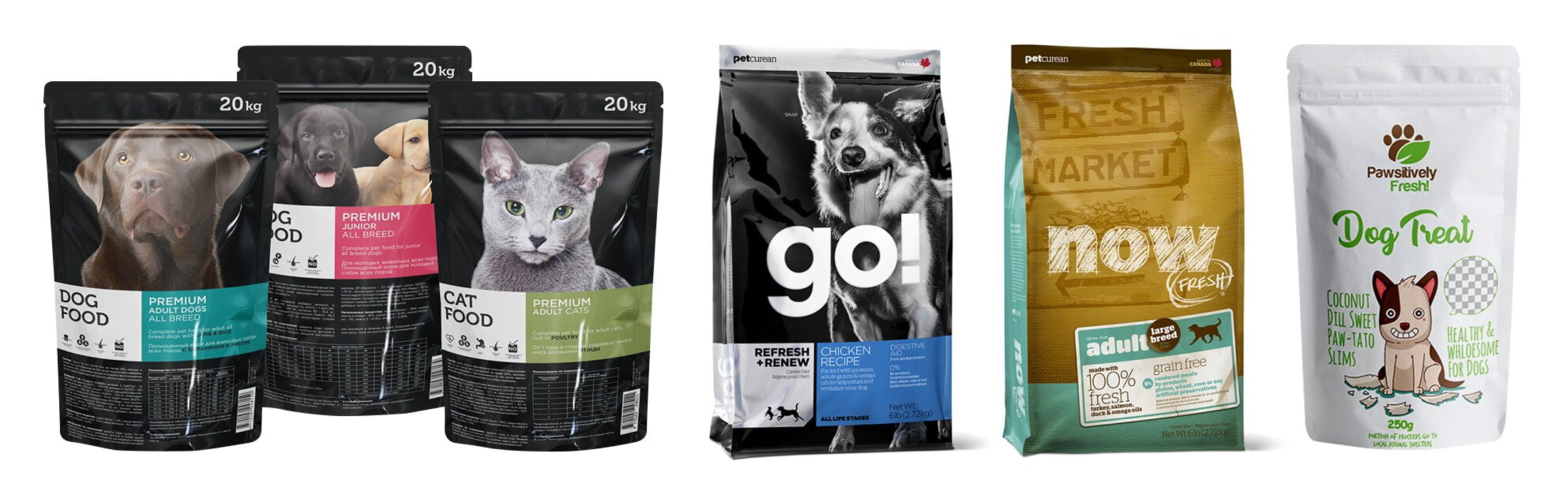
The right pouch format depends on what you’re packaging, how it’s sold, and what your brand positioning looks like on shelf. Most pet food brands work with one of four formats — and each has a specific set of strengths.

| Format | Best For | Key Advantage | Watch Out For |
|---|---|---|---|
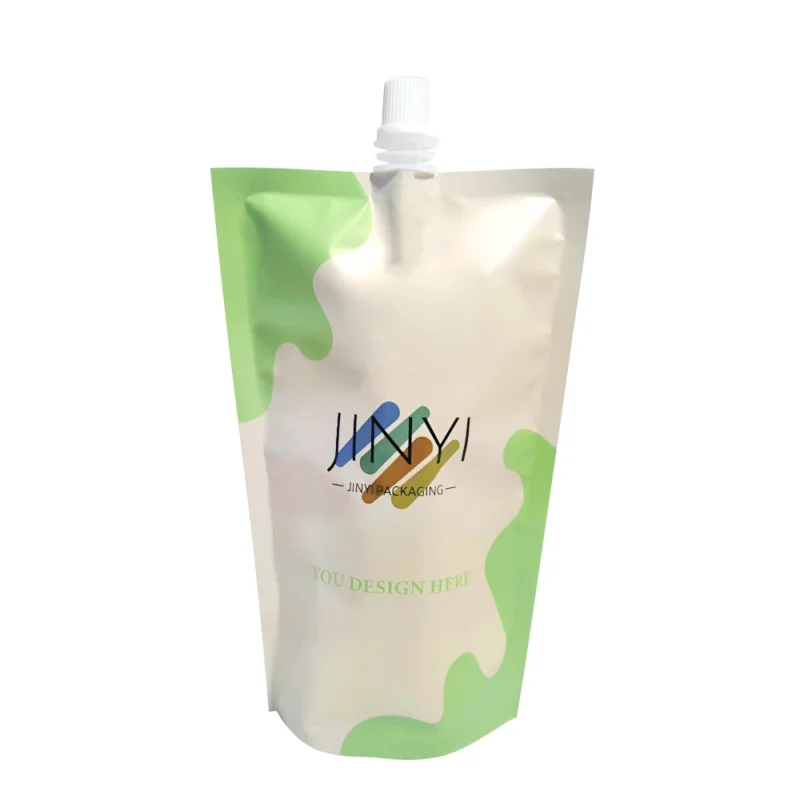
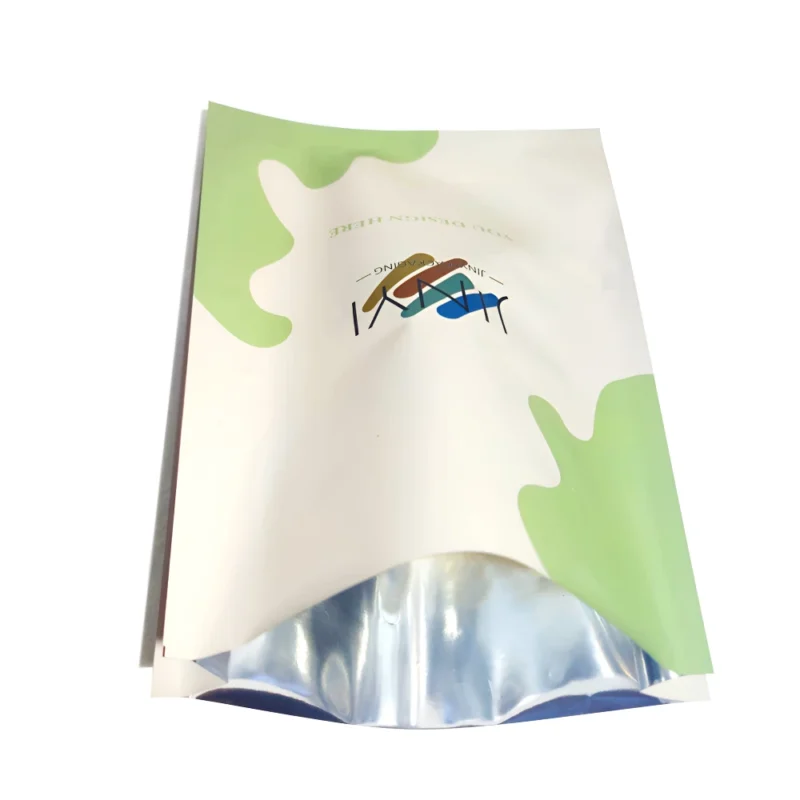
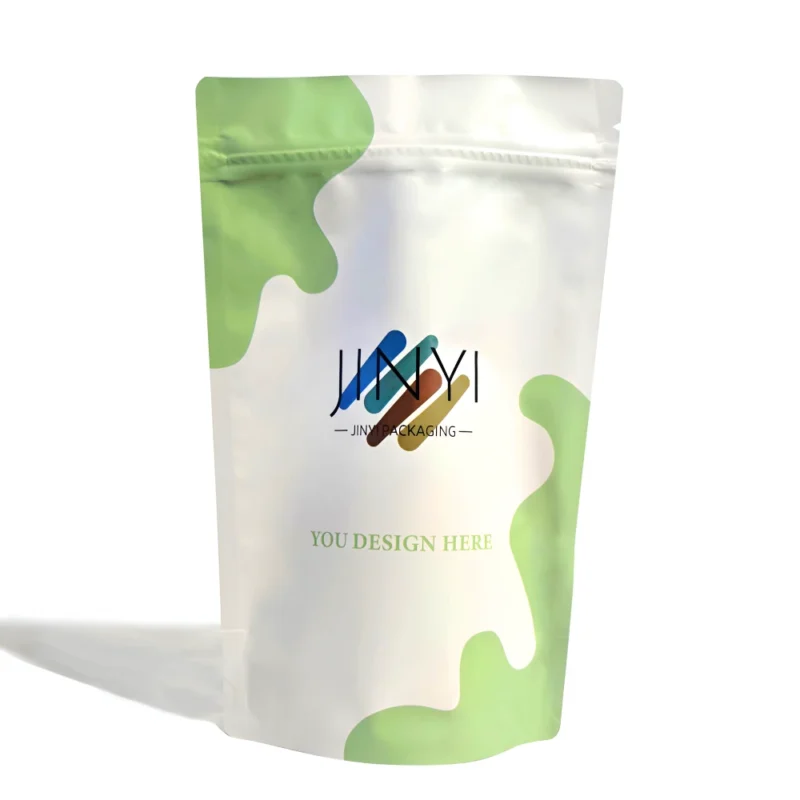
| Stand-up pouch | Dry kibble, treats, supplements | Versatile, lower MOQ, wide material options | Less stable when partially empty |
| Flat bottom bag | Premium dry food, retail shelf placement | Maximum shelf presence, wide branding area | Higher cost, higher MOQ |
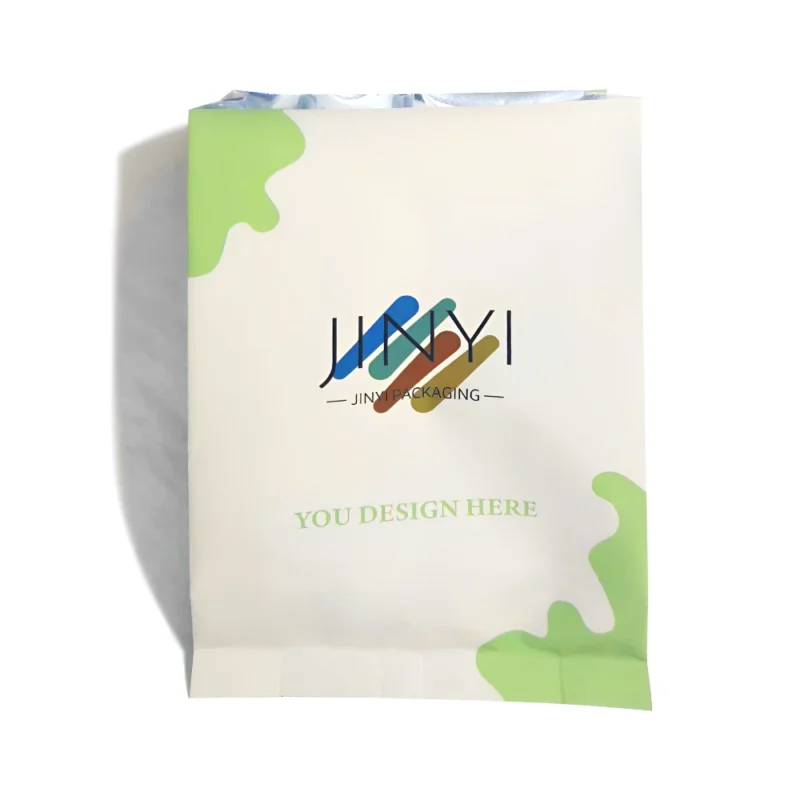
| Flat pouch / 3-seal | Wet food portions, single-serve treats | Easy to portion, compact for e-commerce | Smaller print area, no self-standing |
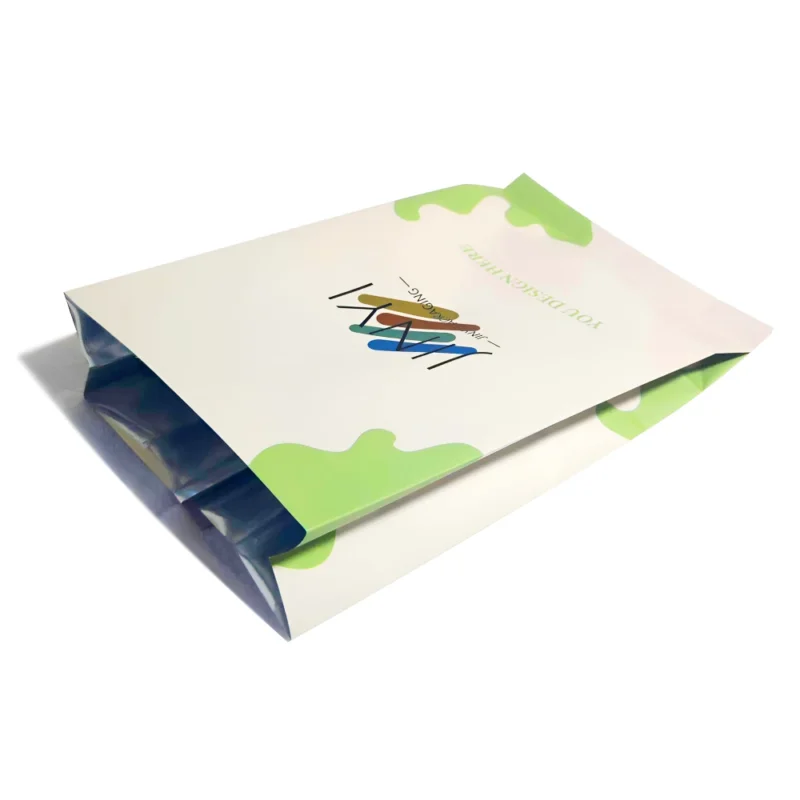
| Side gusset bag | Large-format dry food (5kg+) | High capacity, strong structure for heavy fills | Bulkier, less suited for small SKUs |
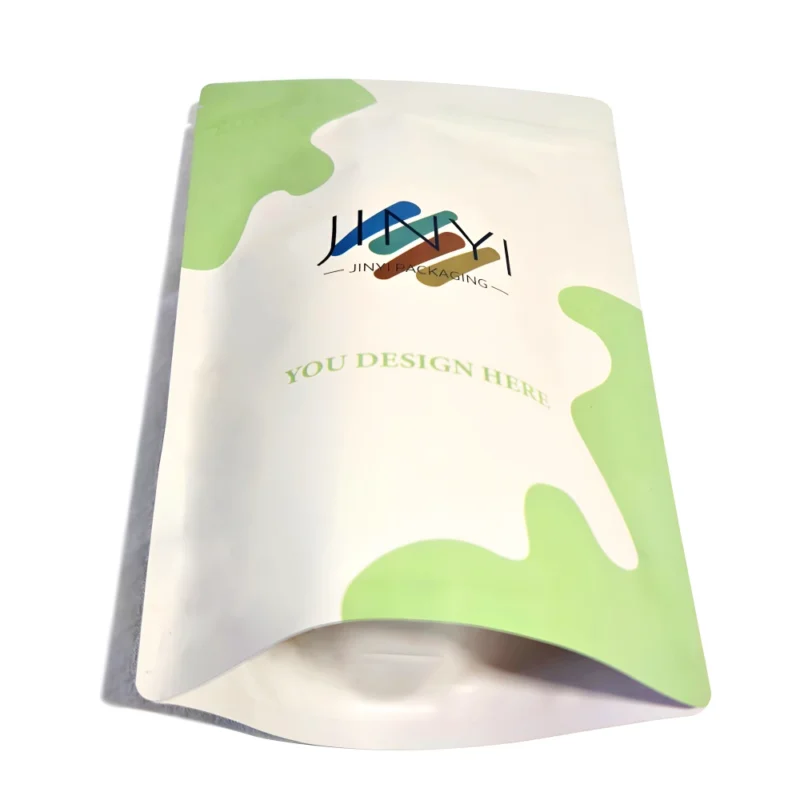
For most new pet food brands launching with dry food or treats, the stand-up pouch is the most practical starting point. It gives you flexibility on order size, a wide choice of materials and finishes, and a familiar format that retail buyers and online shoppers are both comfortable with.
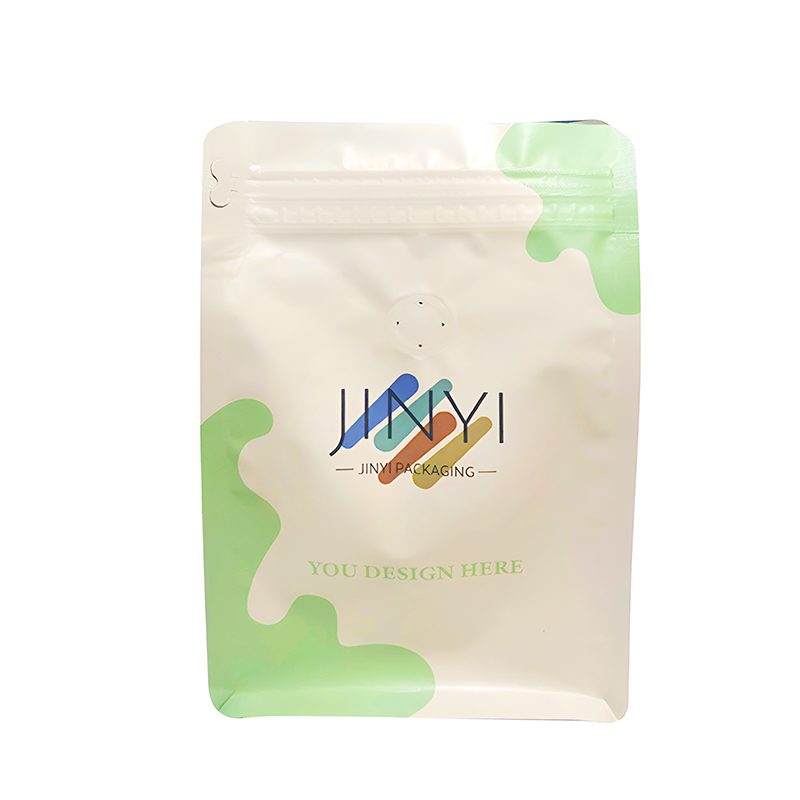
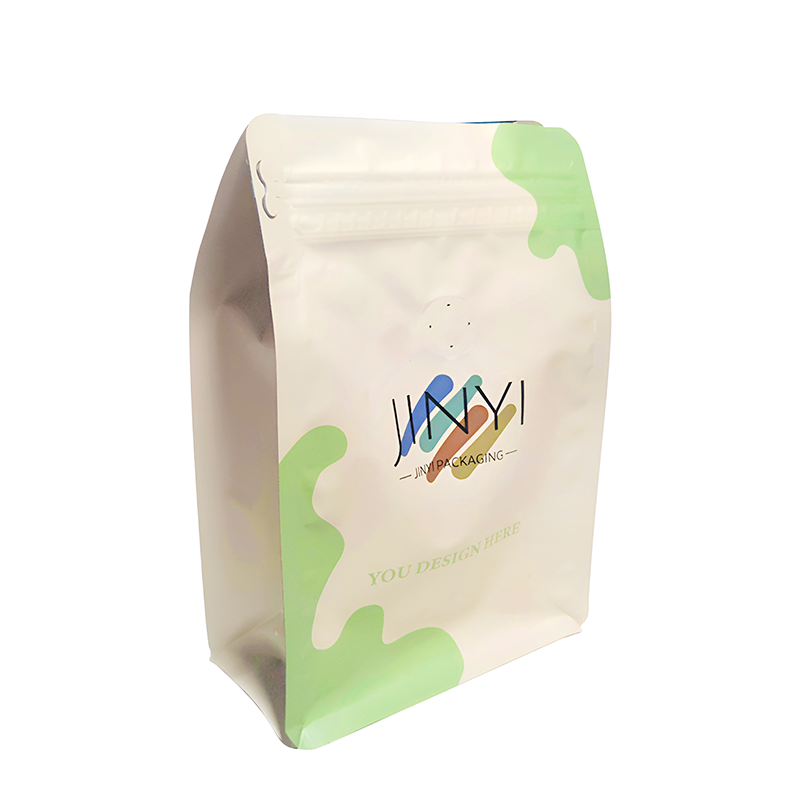
If you’re positioning your brand at a premium price point and targeting specialty retail, flat bottom bags make a stronger visual statement on shelf. The trade-off is a higher unit cost and typically a higher MOQ.
Materials and Barrier Requirements for Pet Food Packaging
Material selection is where a lot of first-time buyers make mistakes — either by under-specifying the barrier (and compromising shelf life) or over-specifying it (and paying for protection they don’t need). The right call depends on your product, your target shelf life, and your brand aesthetic.

Pet food packaging is almost always multi-layer — a combination of structural film, barrier layer, and heat-seal layer. The barrier layer is the critical variable. Here’s how the main options compare:
| Material Structure | Barrier Level | Shelf Life Target | Brand Aesthetic |
|---|---|---|---|
| Full Aluminium Foil | Highest | 18–24 months | Metallic, opaque — strong print contrast |
| VMPET (Metalized PET) | Medium-High | 12–18 months | Shiny metallic at lower cost than foil |
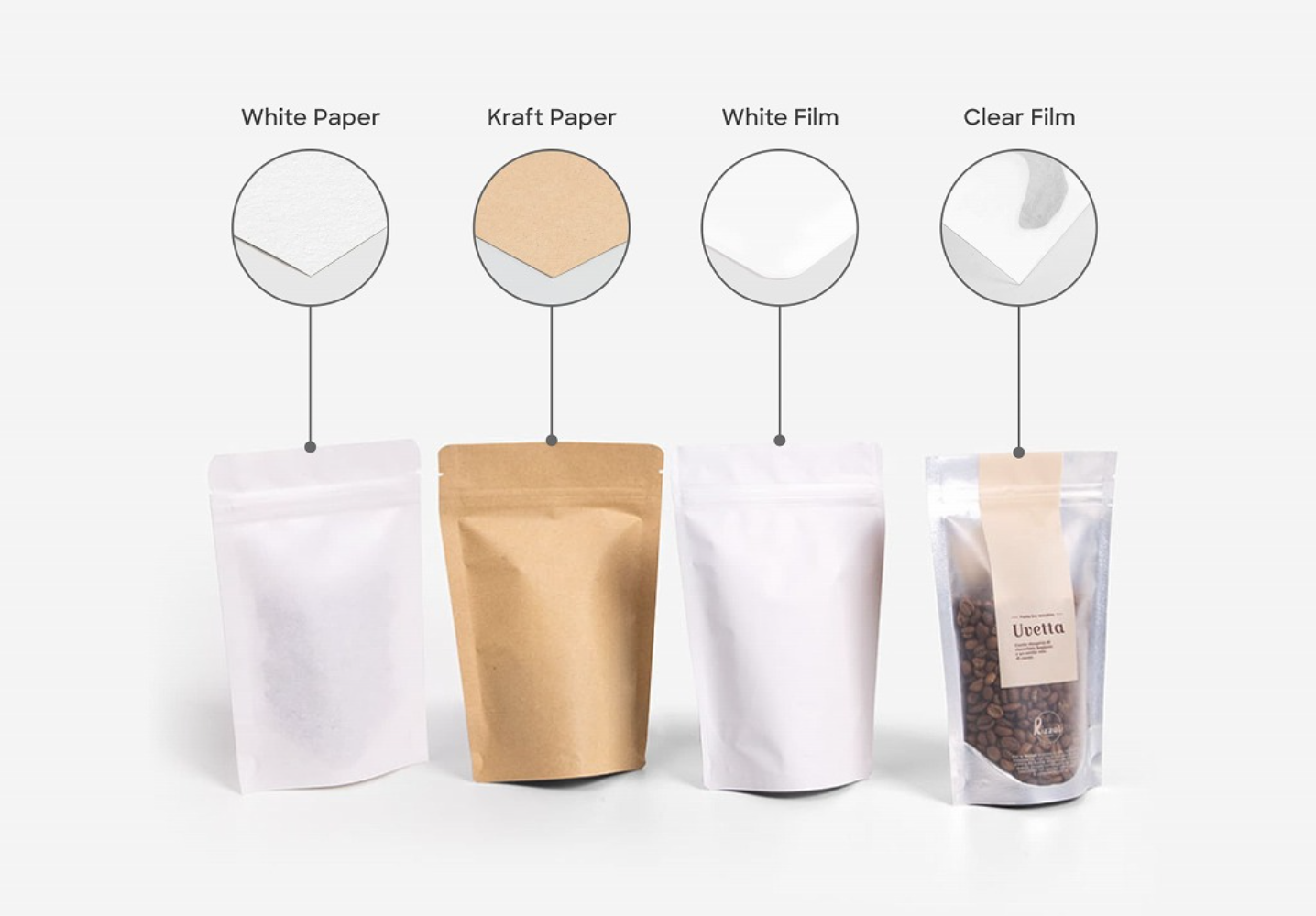
| Kraft + Foil Liner | High | 12–18 months | Natural, earthy — popular with premium and organic brands |
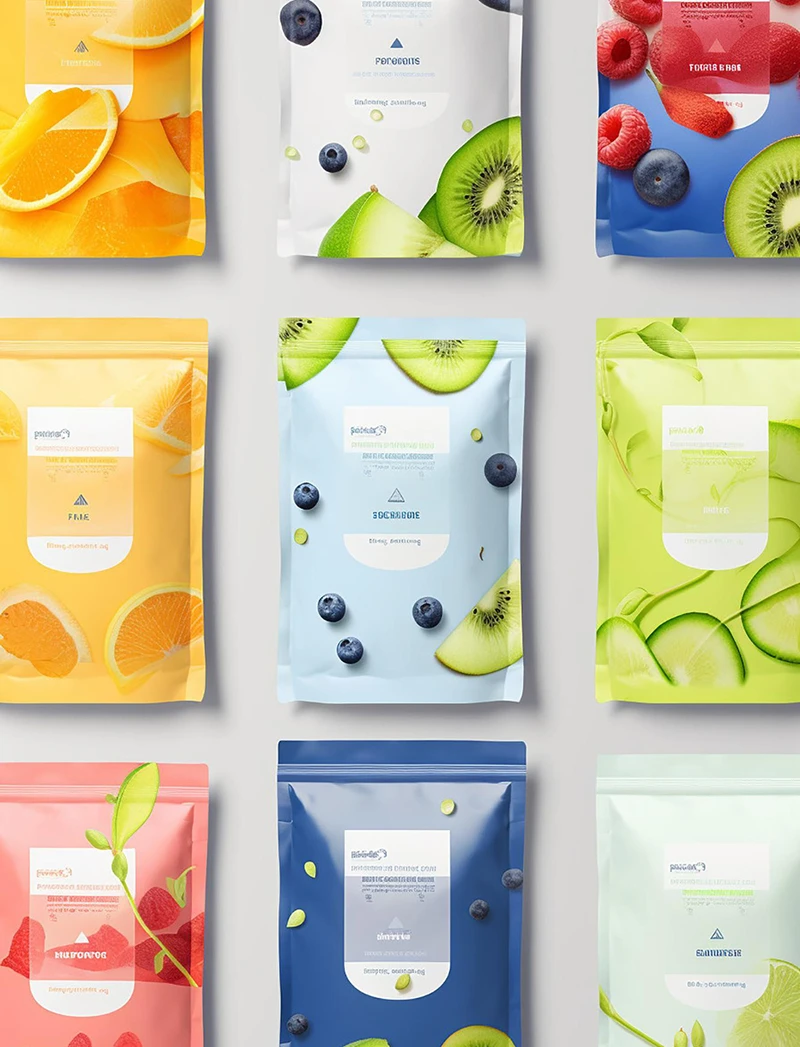
| Matte OPP / BOPP | Medium | 6–12 months | Soft-touch, clean — suits boutique and lifestyle brands |
| Clear Window + Foil | High (reduced at window) | 12 months+ | Allows product visibility — popular for treats and chews |
For most pet food categories, full aluminium foil or kraft + foil liner are the safest starting points. They give you the barrier performance you need without leaving shelf life to chance. If your product is a treat or chew with a shorter shelf life target, VMPET or matte OPP can work well — and both support high-quality printing.
One detail worth confirming early: food-contact certification. Your packaging’s inner layer needs to meet food-contact safety standards for your target market. Ask your supplier for documentation before production begins — a reputable supplier will have this ready.
How to Evaluate a Custom Packaging Supplier
Finding a supplier who quotes a low price is easy. Finding one who delivers consistent quality, communicates clearly, and keeps your production on schedule is harder — and that gap is where most first-time buyers get burned.
Here’s what to look at beyond the unit price:

| Evaluation Area | What to Ask or Check | Why It Matters |
|---|---|---|
| Sample quality | Request a printed sample with your artwork before committing | Colour accuracy and print registration reveal a lot about production capability |
| Communication speed | How quickly do they respond to a detailed enquiry? | Slow pre-sales communication usually means slow problem resolution during production |
| Certifications | Ask for ISO, food-contact, and ink migration certificates | Required for compliance in most major markets |
| Production capacity | Do they run both gravure and digital printing? | Digital printing suits small batches; gravure suits volume. You want both options available as you scale |
| References or case studies | Have they worked with pet food brands before? | Category-specific experience reduces the back-and-forth on specs |
| QC process | How do they handle colour deviation or seal defects? | You need to know their escalation process before problems happen, not after |
A good rule of thumb: if a supplier can’t provide clear answers to your material and certification questions within 24–48 hours, that’s a signal worth paying attention to. Responsiveness before the order is often the best predictor of reliability during production.
MOQ and Pricing: What to Expect on Your First Order
MOQ — minimum order quantity — is one of the first things new buyers ask about, and one of the least understood. It’s not a fixed number. It varies by format, print method, material structure, and pouch size. Here’s a realistic picture of what first-time buyers typically face:
| Format | Print Method | Typical MOQ | Best For |
|---|---|---|---|
| Stand-up pouch | Digital print | 500 – 1,000 pcs | New brands, product testing, multiple SKUs |
| Stand-up pouch | Gravure print | 3,000 – 5,000 pcs | Established brands with confirmed demand |
| Flat bottom bag | Digital or gravure | 1,000 – 3,000 pcs | Premium retail brands with higher volume |
| Flat pouch / 3-seal | Digital or gravure | 1,000 – 3,000 pcs | Single-serve or portion-pack formats |
On pricing, the biggest variable is print method. Digital printing has lower setup costs and works well for smaller runs, but the per-unit cost is higher at scale. Gravure printing has a significant plate-making cost upfront, but the per-unit cost drops sharply as volume increases. For most first orders, digital printing makes more financial sense — it keeps your upfront commitment manageable while you validate your product and packaging design.
Also worth knowing: if you have multiple SKUs with different flavours or variants but the same bag structure, some suppliers can consolidate your order to hit MOQ across the range — rather than requiring each SKU to hit MOQ individually. It’s always worth asking. Explore our range of flat pouches and stand-up options to find the format that fits your volume.
Lead Times and How to Plan Your Launch Timeline
Underestimating lead time is one of the most common — and most preventable — mistakes new brands make. The packaging production timeline is longer than most people expect, and it doesn’t include shipping time, customs clearance, or the time you’ll need to fill and label the pouches once they arrive.

Here’s a realistic breakdown of what to expect from first contact to delivery:
| Stage | Typical Duration | What Happens |
|---|---|---|
| Quotation and spec confirmation | 2 – 5 days | You share your requirements; supplier confirms specs, MOQ, and price |
| Dieline and artwork approval | 3 – 7 days | Supplier provides dieline template; your designer applies artwork; you approve the print-ready file |
| Sample production | 7 – 15 days | Physical sample produced and shipped for your review |
| Sample review and approval | 3 – 7 days | You check colour, structure, zipper, seal — approve or request revisions |
| Full production | 15 – 25 days | Mass production run completed |
| Shipping | 7 – 35 days | Depends on shipping method and destination (air vs sea) |
Adding this up: from your first conversation with a supplier to packaging arriving at your door, you’re typically looking at 6–12 weeks depending on complexity, revision rounds, and shipping method. For most brands planning a launch, 8 weeks is a safe working assumption — and 10–12 weeks is more realistic if you’re doing your first order and aren’t yet familiar with the process.
The biggest time risk in this timeline isn’t production — it’s artwork revision loops. Every round of changes on the dieline or print file adds 3–7 days. Getting your design finalised before engaging a supplier, or at minimum having a clear brand direction ready, significantly compresses your timeline.
Ready to Start Your First Pet Food Packaging Order?
Getting your packaging right from the start means fewer surprises, a faster path to launch, and a product that looks as good as it performs on shelf.
Whether you’re finalising your format, comparing materials, or ready to request a quote, our team is here to walk you through every step — clearly and without the guesswork.
About JINYI Packaging
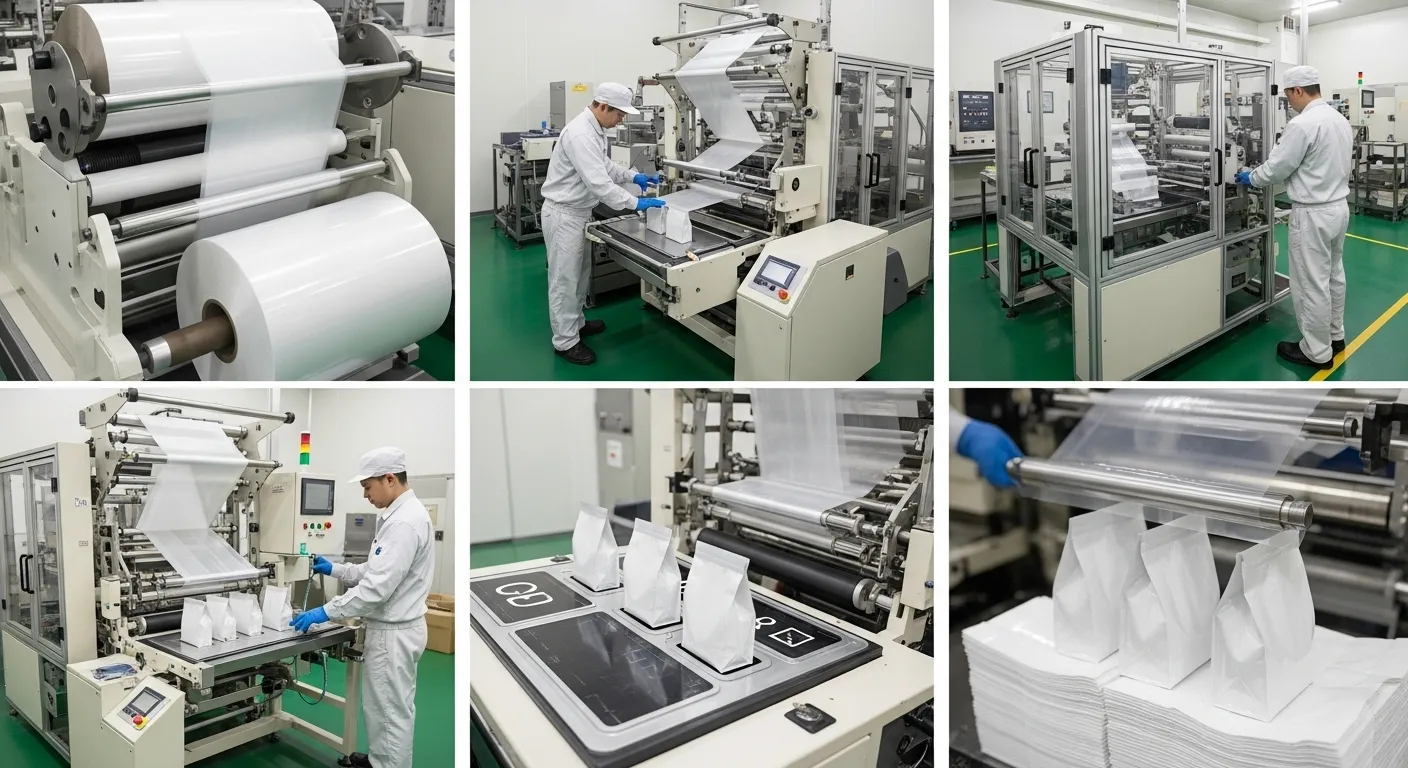
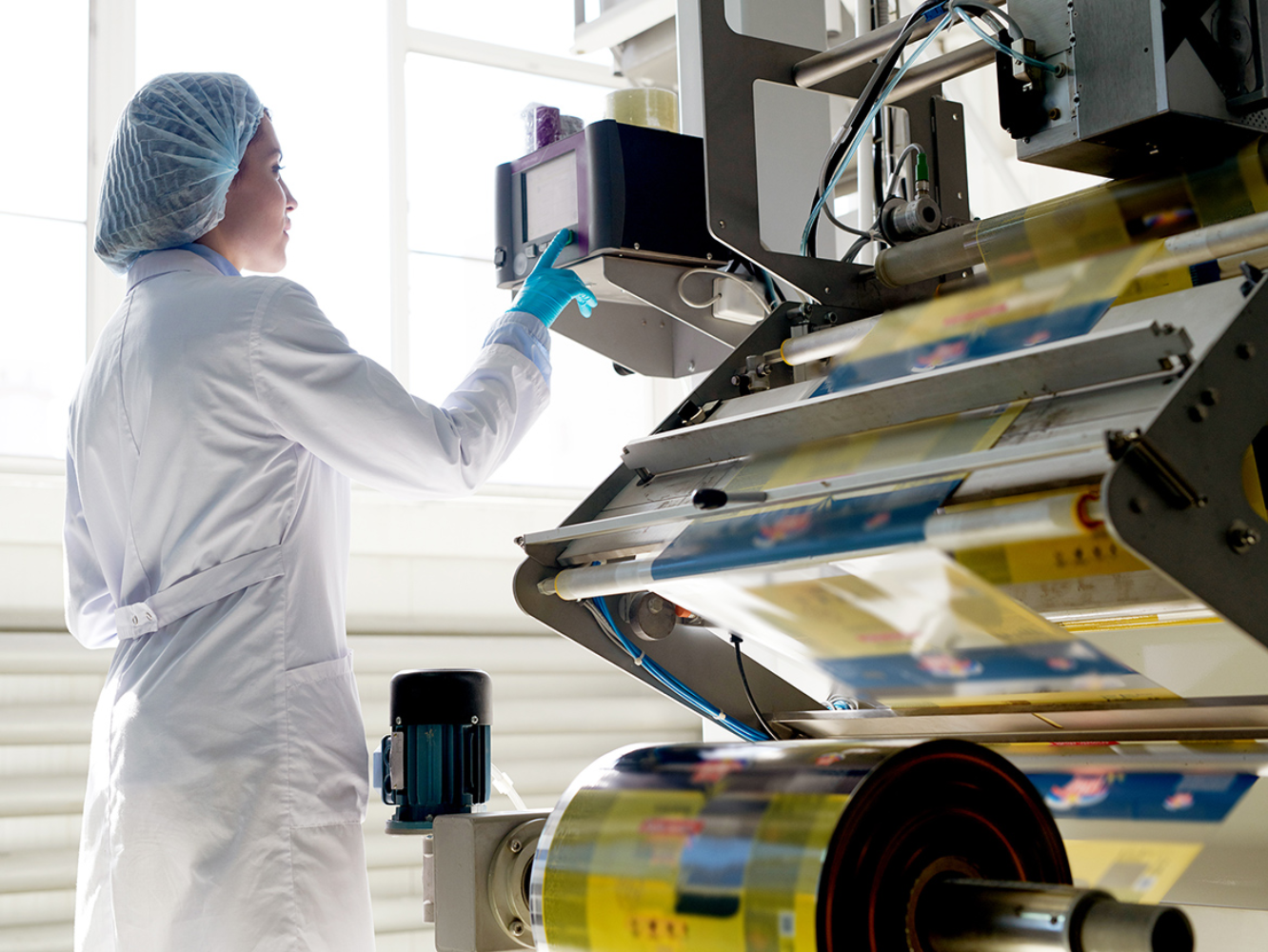
JINYI specialises in custom flexible packaging for food, snack, coffee, pet food, and consumer goods brands. With over 15 years of production experience, we support both large-volume runs and small-batch custom orders through our gravure printing lines and HP digital printing system.
From material selection to finished packaging — done right. Learn more at jinyipackage.com.

Business Development Manager · JINYI Packaging
Order management
Business development
FAQ
What is the typical MOQ for custom pet food packaging?
MOQ depends on format and print method. Digital print stand-up pouches typically start from 500–1,000 pieces, making them the most accessible option for new brands. Gravure print and more complex formats like flat bottom bags usually require 3,000 pieces or more. Contact your supplier with your full spec for a confirmed minimum.
Which pouch material is best for dry pet food?
For dry kibble with a 12–18 month shelf life target, kraft + foil liner or VMPET are both strong choices. They provide solid oxygen and moisture barrier performance while supporting high-quality printing. For premium or organic positioning, kraft + foil liner tends to align better with the brand aesthetic.
How long does custom pet food packaging take to produce?
From artwork approval, most orders complete production in 15–25 days. Adding sample review, shipping, and any revision rounds, most first-time buyers should plan for 8–12 weeks from first contact to delivery. Always build in buffer time around your product launch date.
Can I order samples before committing to full production?
Yes — and we strongly recommend it. A physical sample lets you verify colour accuracy, material feel, zipper function, and seal integrity before committing to a full run. Sample lead time is typically 7–15 days. Contact us to arrange a sample with your artwork.
What certifications should I ask a packaging supplier for?
At minimum, ask for food-contact safety certification for the inner layer material, ink migration test reports, and ISO certification. If you’re selling into regulated markets like the EU or US, your supplier should be able to provide these without hesitation. A supplier who can’t produce documentation is a risk not worth taking.
Is digital printing or gravure printing better for pet food packaging?
It depends on your volume and stage of growth. Digital printing is ideal for first orders, product testing, and multiple SKUs at low volume — lower setup cost, faster turnaround, no plate fees. Gravure printing offers superior colour consistency and lower per-unit cost at scale, making it the right choice once your demand is established and predictable.