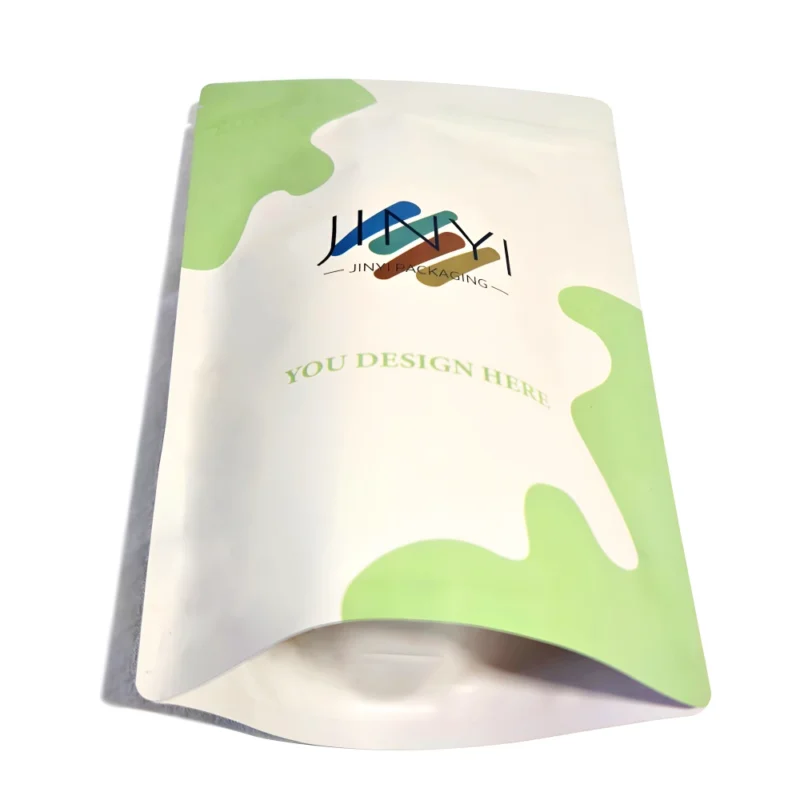
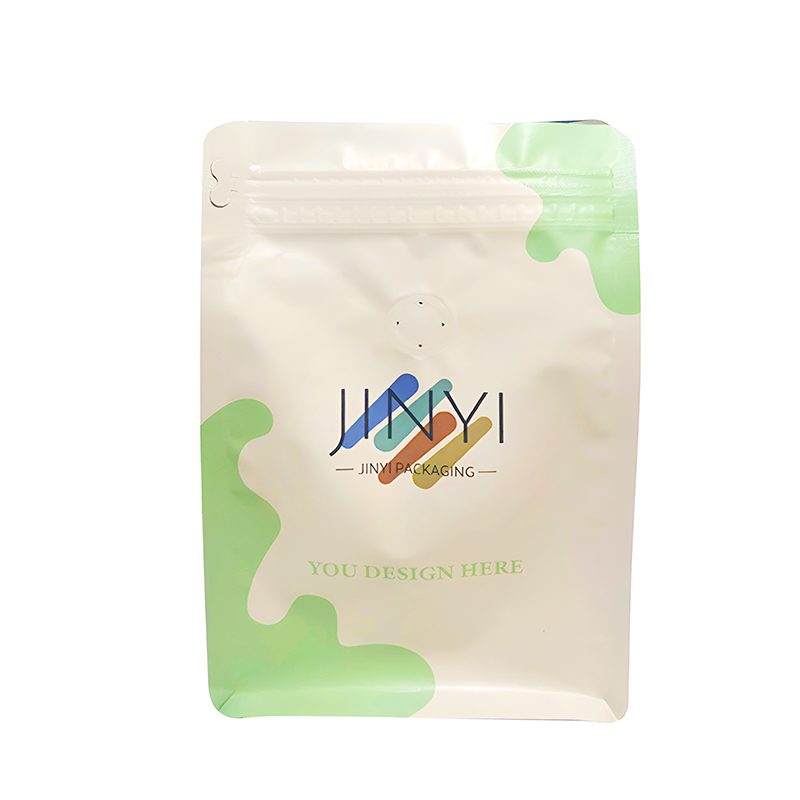
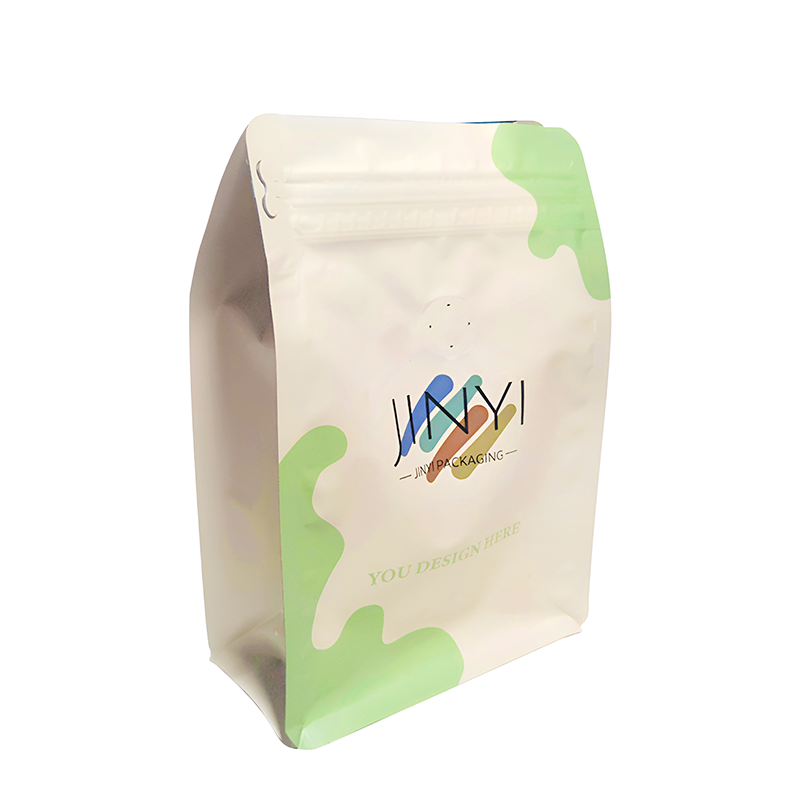
Packhelp does one thing very well: it makes ordering custom packaging feel easy. The interface is clean, the mockup tool is satisfying to use, and you can have a design approved in an afternoon. For a brand placing its first ever custom packaging order, that experience has real value.
But here’s the question nobody asks until the third or fourth reorder: what exactly are you paying for? The packaging is the same flexible pouch or mailer it would be anywhere else. The material didn’t change. The print didn’t change. What changed is who produced it — and how many hands it passed through before it reached you. This article breaks down what’s actually inside a Packhelp invoice, what a direct factory relationship looks like instead, and how to figure out which one makes sense for where your brand is right now.

What You’re Actually Paying for When You Order Through Packhelp
Packhelp is a platform business. That means its revenue comes from the margin between what a factory charges to produce your packaging and what Packhelp charges you. The factory cost is the floor. Everything above it — the design tool, the customer support team, the brand marketing, the technology infrastructure, the investor returns — gets embedded into your unit price.
This is not a criticism. It’s just how the model works. You’re paying for convenience and accessibility, and for a brand placing its first 300 units, that’s a fair trade. The platform removes the friction of sourcing — you don’t need to find a factory, verify their capabilities, request samples, or manage a production timeline. You click, you pay, boxes arrive.
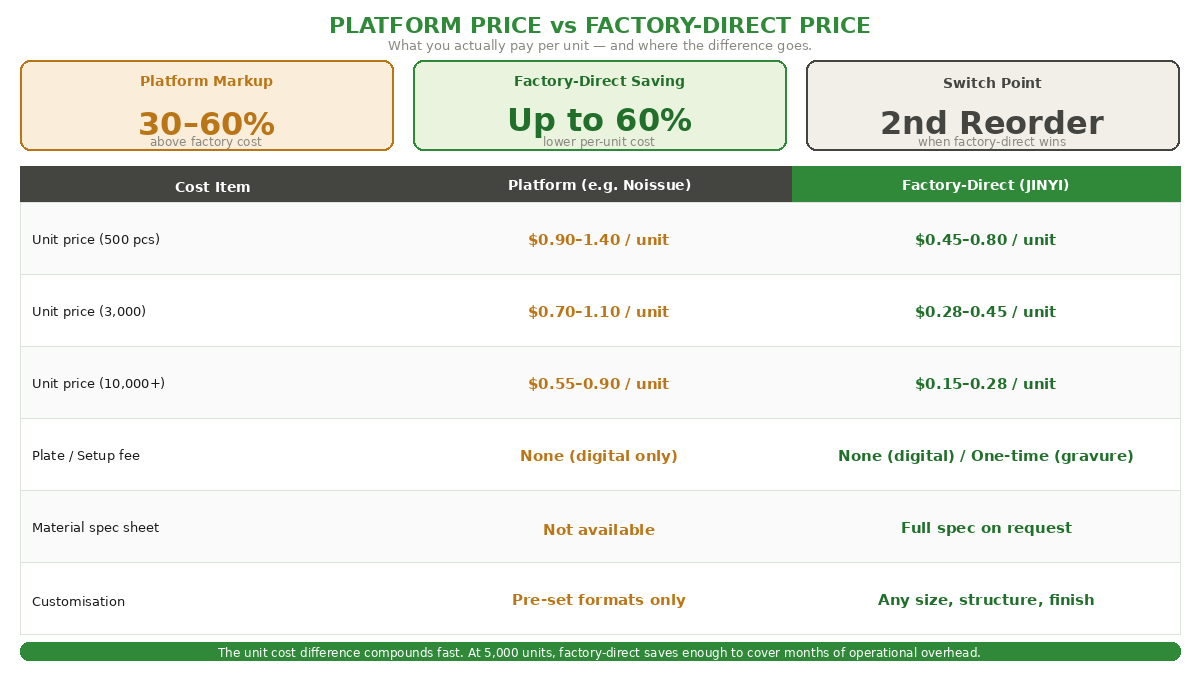
The problem is that the platform margin doesn’t go away as your volume grows. At 500 units, you’re paying above factory cost. At 3,000 units, you’re still paying above factory cost — just with a slightly better percentage discount applied. The markup is structural. It’s built into every order, regardless of size, because that’s how Packhelp sustains its business.
Note: Platform margins typically run 30–60% above factory cost depending on the product type and order volume. At 5,000 units per year, that difference in unit price can represent a significant portion of your packaging budget.
What a Direct Factory Relationship Gives You Instead
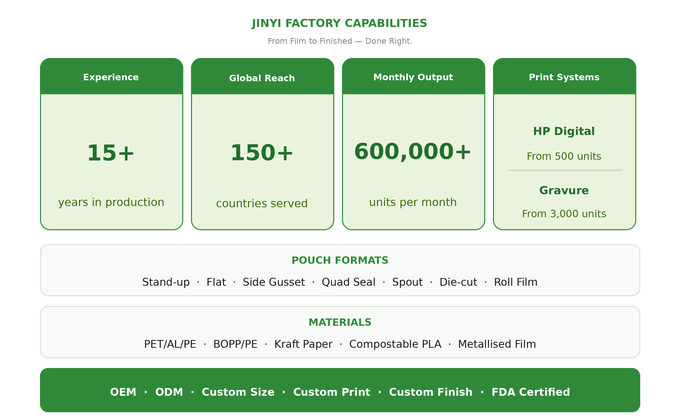
When you source directly from a factory, the margin layer disappears. You pay material cost plus production cost. That’s the full structure. There’s no platform fee, no reseller margin, no technology surcharge embedded in your invoice.
But the cost difference is only one part of it. The more important difference is what you gain access to.
| What You Need |
Packhelp |
Direct Factory (JINYI) |
| Unit price (500 pcs) |
$0.90–1.40 / unit |
$0.45–0.80 / unit |
| Unit price (3,000 pcs) |
$0.70–1.10 / unit |
$0.28–0.45 / unit |
| Film structure spec |
Not disclosed |
Full spec sheet provided |
| Custom size / structure |
Pre-set formats only |
Any size, any format |
| Sustainability cert |
Platform claim only |
TÜV / BPI / FDA docs |
| MOQ flexibility |
Fixed platform tiers |
From 500 units, digital print |
The material spec sheet is worth highlighting separately. Packhelp doesn’t tell you what film structure your pouch is made of — which barrier layer, what OTR rating, what the lamination method is. For a brand selling food, supplements, or coffee with a shelf life of twelve months or more, that information is not optional. Your retailer may ask for it. Your regulatory body may require it. A platform can’t give it to you. A factory can — and should — before you place your first bulk order.
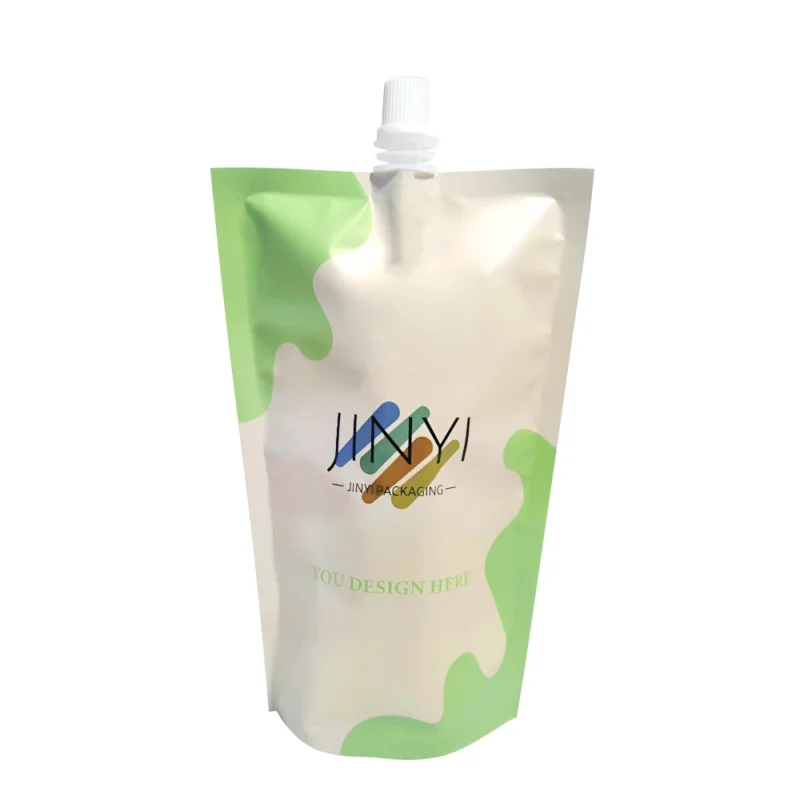
You can browse our full range of custom pouch formats to see what structural options are available factory-direct.
When Packhelp Makes Sense — and When It Doesn’t
This is not an argument that Packhelp is the wrong choice for every brand. It isn’t. There’s a specific brand stage where the platform model makes clear sense, and a different stage where it starts to cost you more than it saves.
Packhelp works well when: You’re placing your first or second order, you need the design tool to get a mockup approved quickly, you don’t yet know your reorder cadence, and the premium you’re paying buys you enough convenience to be worth it.
Packhelp stops making sense when: You’re reordering the same SKU more than twice a year, your volume is above 1,000 units per run, you need a specific film structure or certification your retailer has requested, or you’ve started calculating what the per-unit markup costs you annually.
The switch point is usually the second or third reorder. By that stage, you know what you need, your artwork is finalised, and the convenience of the platform is no longer doing the work it did on day one. That’s the moment when a direct factory conversation starts to make financial sense.
What Switching to a Direct Factory Actually Looks Like
The most common reason brands stay on platforms longer than they should is the assumption that going direct is complicated. In practice, the process is straightforward — and for brands that have already been through one or two packaging rounds, most of the hard decisions are already made.

Here’s what the process looks like at JINYI:
| Step |
What happens |
Typical timeline |
| 01 |
Share your spec |
Pouch format, dimensions, film, print, accessories, quantity |
| 02 |
Receive quote + dieline |
Within 24 hours |
| 03 |
Submit print-ready artwork |
Your timeline — we provide the template |
| 04 |
Sample produced and shipped |
7–12 days after artwork approval |
| 05 |
Approve sample → bulk production |
15–25 days (gravure) / 7–12 days (digital) |
If your artwork is already finalised from a previous Packhelp order, the process is even faster. You provide the spec, we provide a dieline for your designer to adapt, and you’re into sampling within days.

The other thing worth knowing: you don’t need to switch everything at once. Many brands run a parallel first order — same spec as their current platform order, placed direct — to compare quality and cost before committing fully. That’s a sensible way to de-risk the switch. You can learn more about how we work and who we’ve worked with on our about page.
Ready to See What Factory-Direct Actually Costs?
Tell us your current pouch spec — format, size, quantity, and what you’re paying now. We’ll come back with a factory-direct quote, a full material spec sheet, and a sample timeline.
No commitment required. Most brands are surprised by the difference.
Get a Factory-Direct Quote →