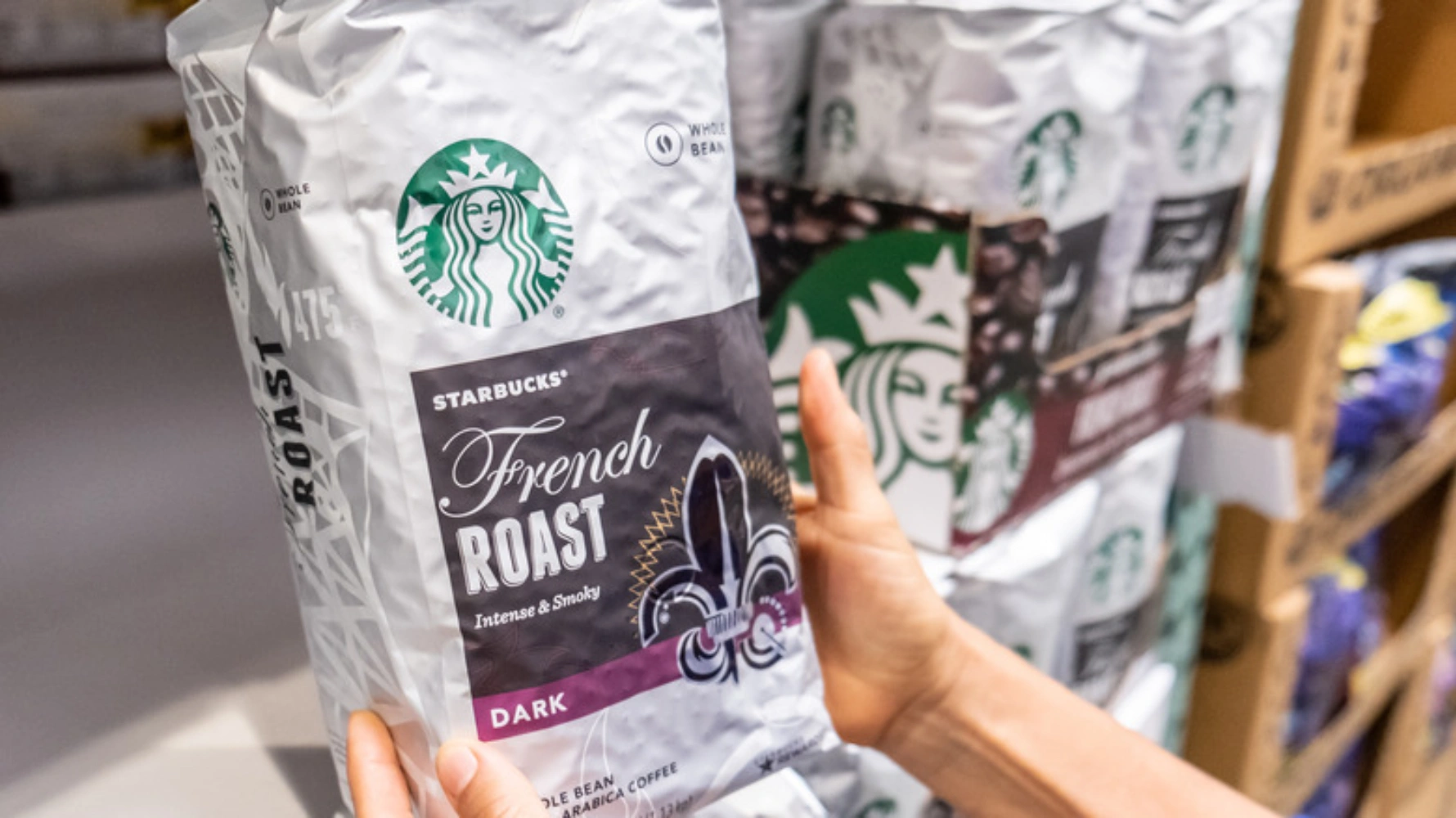
Starbucks sells coffee in more countries than most brands will ever operate in. Their retail packaging — the bags you pick up in a grocery store or their own cafés — isn’t just branding. It’s an engineered system built to keep coffee fresh across long supply chains, varied climates, and extended shelf windows. For any brand thinking seriously about coffee packaging, it’s worth understanding exactly what structure Starbucks uses and why.
This breakdown covers the bag format, film structure, surface finish, valve specification, and sustainability direction — from a manufacturer’s perspective, not a marketing one.

What Bag Format Does Starbucks Use?
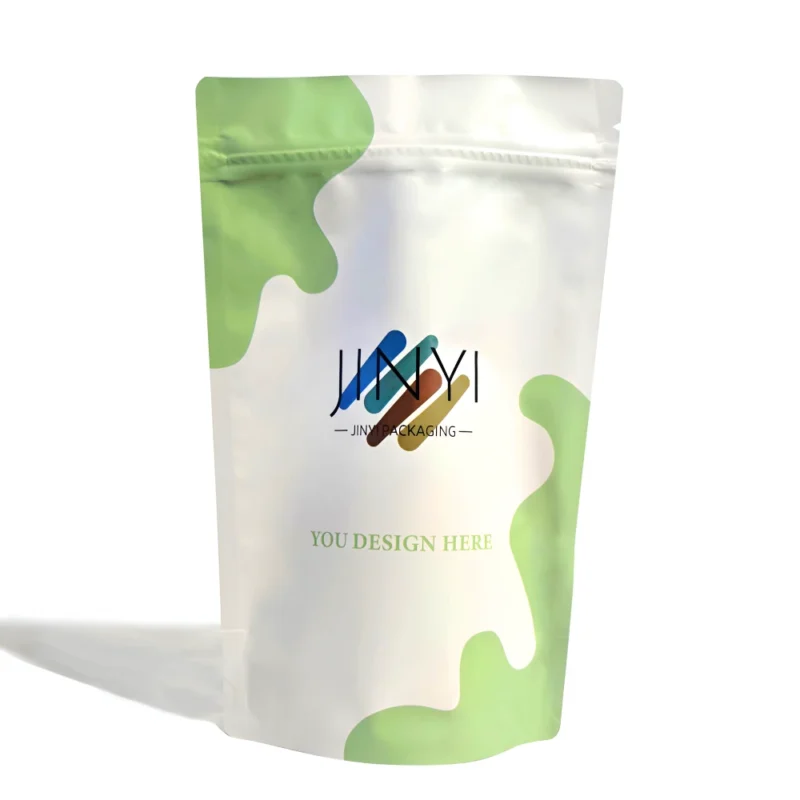
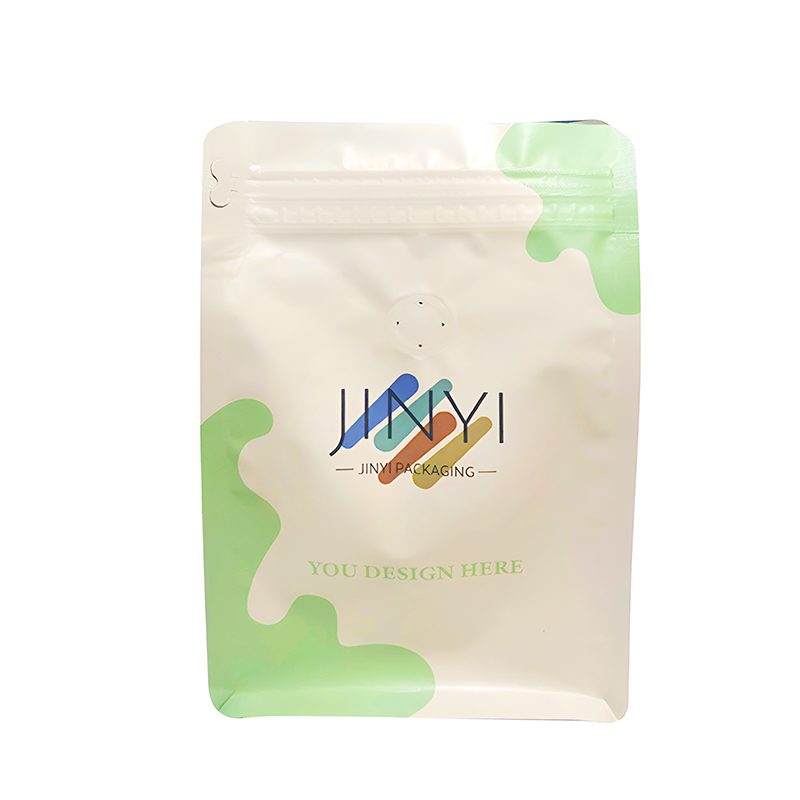
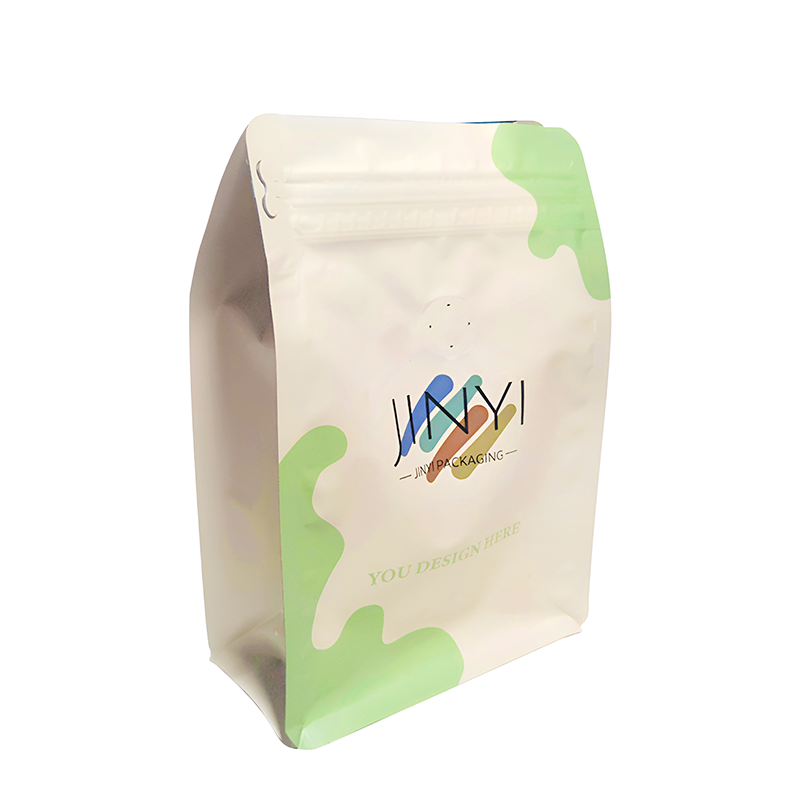
Starbucks’ primary retail coffee format is the flat bottom bag — also called a box pouch or quad seal bag. It’s the format you see on supermarket shelves: a bag that stands upright on its own, has four sealed corner edges, and presents a wide, flat front panel for print and branding.
The flat bottom format is chosen for three practical reasons. First, it maximises shelf presence — the wide front panel gives the brand significantly more print real estate than a standard stand-up pouch. Second, it stands upright without a support structure, which is important for retail display. Third, the box-like shape stacks and ships efficiently, reducing freight cost per unit at scale.
For their Reserve and seasonal lines, Starbucks uses the same flat bottom structure but with more elaborate surface treatments — copper foil accents, specialty inks, and premium matte finishes that distinguish premium SKUs from everyday retail lines.
Note: Flat bottom bags require more complex tooling than standard stand-up pouches, but the cost difference is manageable at volume. For brands starting out, digital print on a standard stand-up pouch achieves a similar shelf effect at lower MOQ.
What Film Structure Is the Bag Made Of?
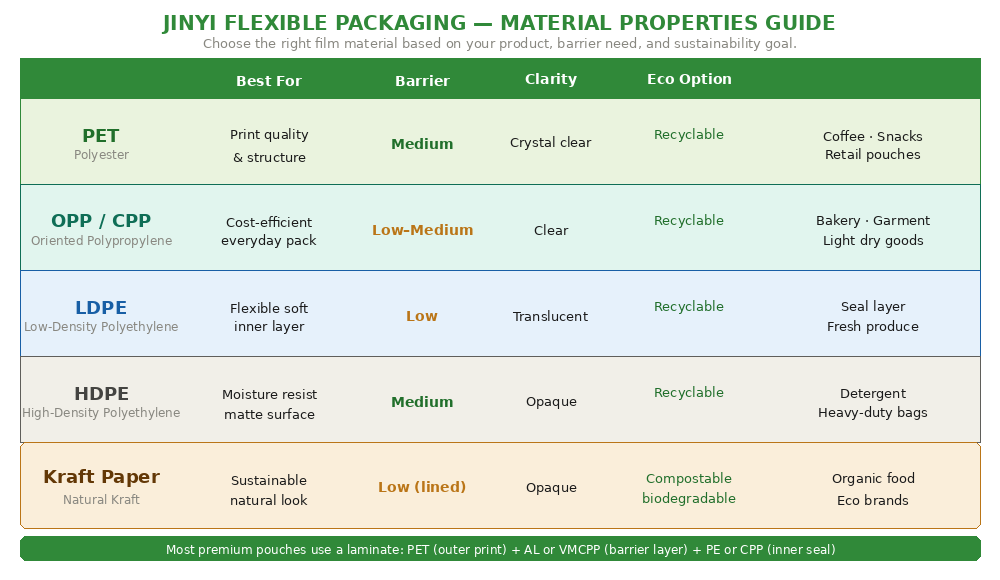
The film structure Starbucks uses for its core retail coffee line is a standard high-barrier laminate: PET / AL / PE.
| Layer |
Material |
Function |
| Outer |
PET (Polyester) |
Print surface · structural strength · scratch resistance |
| Middle |
AL (Aluminium Foil) |
Maximum oxygen · moisture · light barrier |
| Inner |
PE (Polyethylene) |
Heat seal layer · food-contact safe · product protection |
The aluminium foil barrier layer is the critical component. It delivers near-zero oxygen transmission rate (OTR ~0.01 cc/m²/day) and near-zero moisture vapour transmission rate (MVTR ~0.01 g/m²/day) — the two primary causes of coffee going stale. This film structure supports a shelf life of 12–18 months for ground coffee and 18–24 months for whole bean, which is what Starbucks needs for global retail distribution.
The PET outer layer is what allows for the high-fidelity print quality Starbucks is known for — the illustrated artwork, precise Pantone color matching, and fine detail on each SKU’s design are all produced on this layer before lamination.
The One-Way Degassing Valve
Every Starbucks retail coffee bag includes a one-way degassing valve — the small circular disc you’ll find on the front or back of the bag. This is a non-negotiable component for freshly roasted coffee.
Freshly roasted coffee releases CO₂ for days after roasting. Without a degassing valve, that gas has nowhere to go — the bag either inflates and ruptures, or the coffee has to be rested before packaging, losing freshness in the process. The one-way valve allows CO₂ to escape while preventing oxygen from entering. This lets Starbucks package coffee within hours of roasting, which is a significant freshness advantage in a competitive retail market.
Tip: If your coffee is freshly roasted and you’re sourcing bags without a degassing valve, you either need to rest the coffee for 5–7 days before sealing, or accept a shorter effective shelf life. For most specialty roasters, a valve is not optional.
Surface Finish and Print Treatment
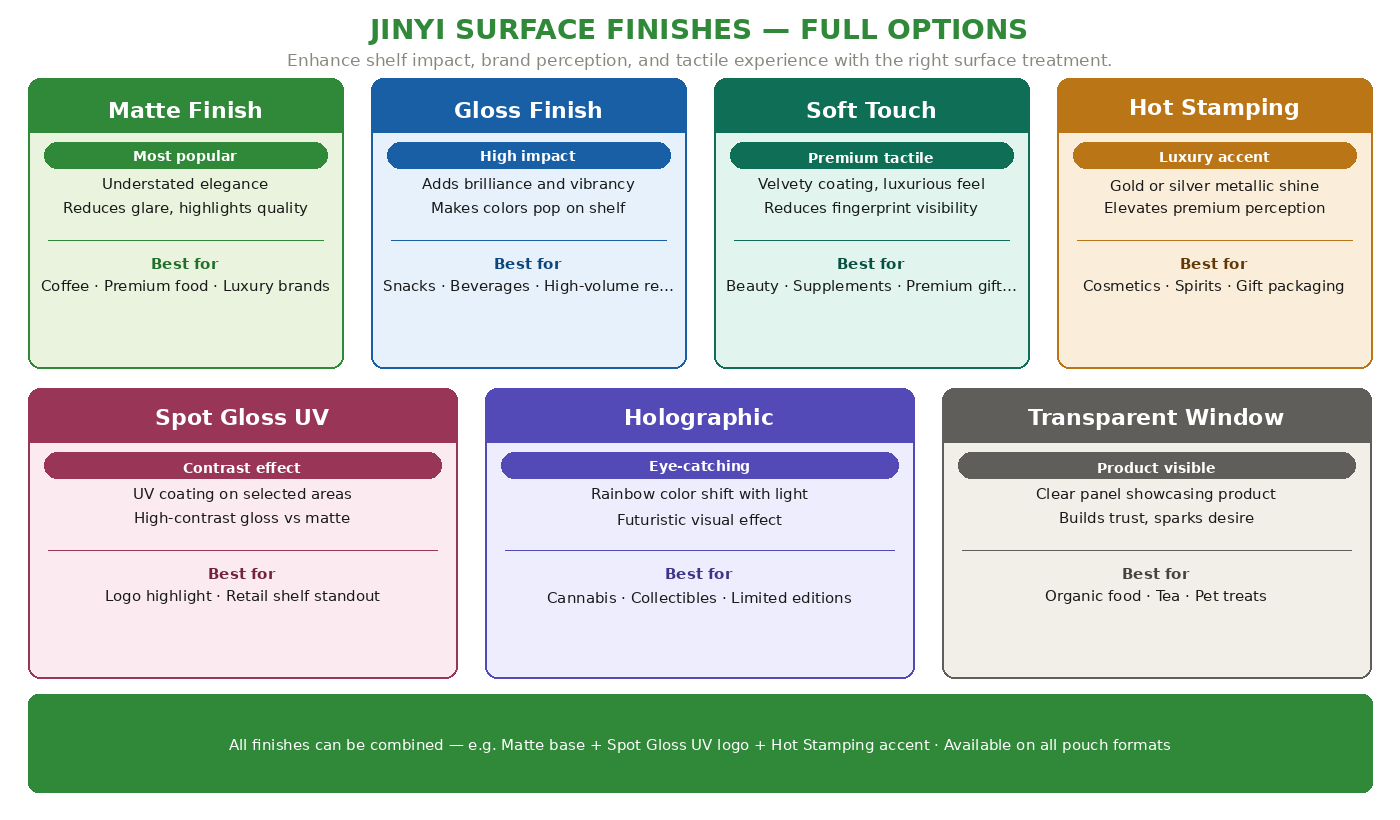
Starbucks’ core retail line uses a matte lamination finish across the full bag surface. Matte reduces glare under retail lighting, creates a premium tactile feel, and helps the printed artwork read clearly without reflective distortion. It also hides fingerprints and minor surface contact, which matters for bags that sit on shelf for extended periods.

For their Reserve line — the higher-end single-origin and limited-edition coffees — Starbucks adds hot stamping in copper foil on the top band of the bag. This references the copper equipment used in their Reserve Roastery locations and creates an immediate visual distinction between everyday and premium SKUs in the same range.
The combination of matte base with selective metallic accent is one of the most effective surface finish strategies in retail coffee packaging — it signals premium without requiring a complete packaging redesign for each tier.
Starbucks’ Sustainability Direction for Packaging
Starbucks has set 2030 targets for their customer-facing packaging: sourced from 50% recycled materials, and designed to be reusable, recyclable, or compostable. For their retail coffee bags, this creates a structural tension — the PET/AL/PE laminate that delivers maximum freshness protection is also the structure most difficult to recycle, because separating the aluminium layer from the plastic layers is technically complex.

The industry direction for brands with similar sustainability requirements is moving toward two alternatives: metallised film (VMPET) in place of aluminium foil — lower barrier but more recyclable — or compostable PLA-based laminates for brands where shelf life requirements are shorter and sustainability is a primary brand claim.
For most independent coffee brands, the practical decision is: if your product needs 12+ months shelf life and broad retail distribution, stick with PET/AL/PE and be transparent about the trade-off. If your distribution is direct-to-consumer with faster turnover, VMPET or kraft-lined compostable options are worth exploring.
How to Source the Same Packaging Structure Factory-Direct
The flat bottom bag in PET/AL/PE with a one-way degassing valve and matte lamination is a standard production spec. You don’t need Starbucks’ volume to access it — and you don’t need to go through a platform to source it.
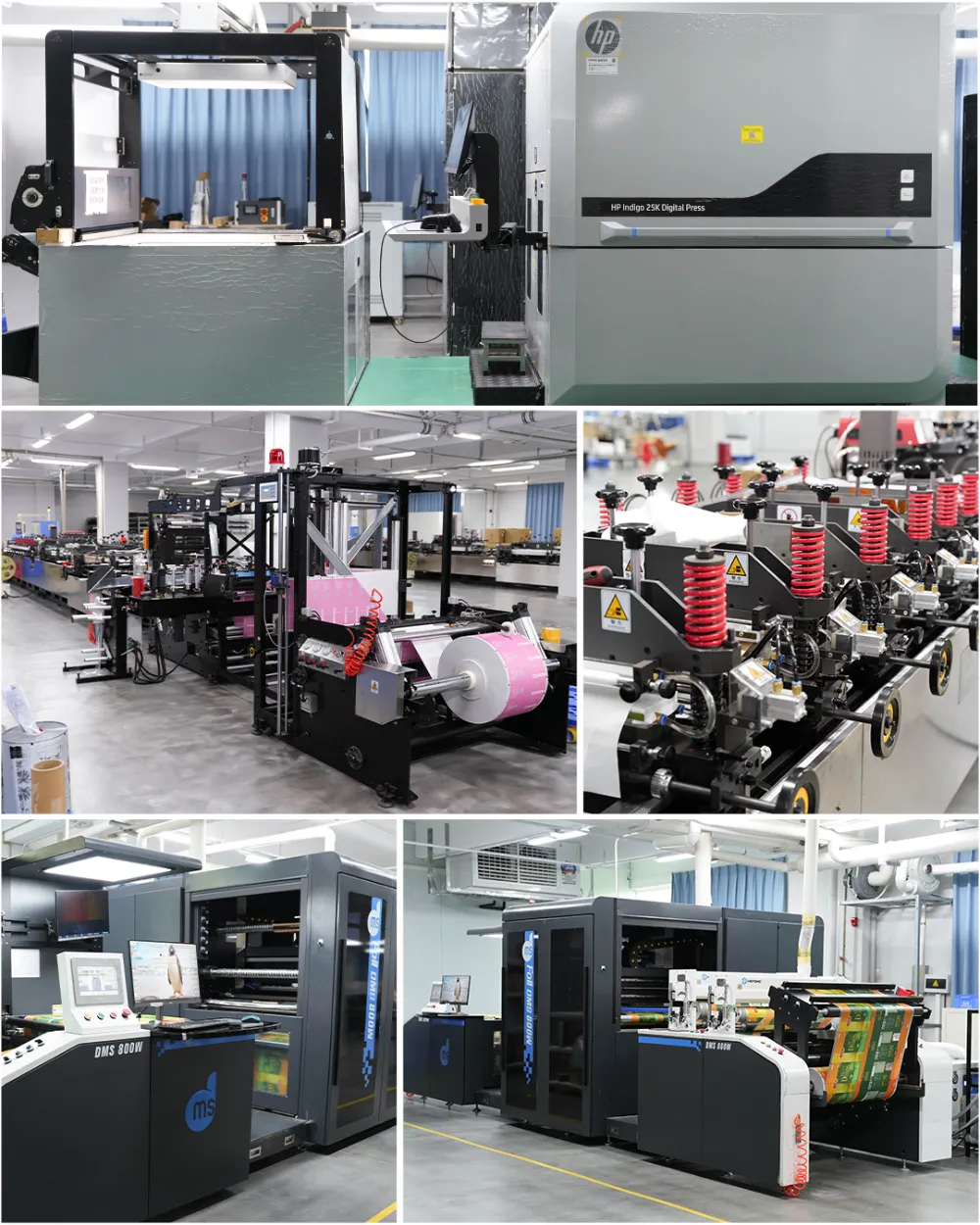
At JINYI, the same structure is available from 500 units via HP digital print — no plate fee, full material spec sheet provided, degassing valve included as standard. For brands reordering at volume, gravure printing brings the per-unit cost down significantly while maintaining the same film structure and finish quality. Every order comes with a complete material specification document you can share with buyers, retailers, or compliance teams.
If you want to see how another coffee brand approached the same decision — structure, valve, finish, and sourcing — our breakdown of Death Wish Coffee’s packaging covers a comparable real-world spec in detail.

Get the Same Structure for Your Coffee Brand
Tell us your bag size, target shelf life, and print requirements. We’ll come back with a full spec recommendation, material documentation, and a quote — within 24 hours.
Flat bottom bags, stand-up pouches, side gusset bags — all available factory-direct from 500 units.
Get a Quote for Your Coffee Pouch →