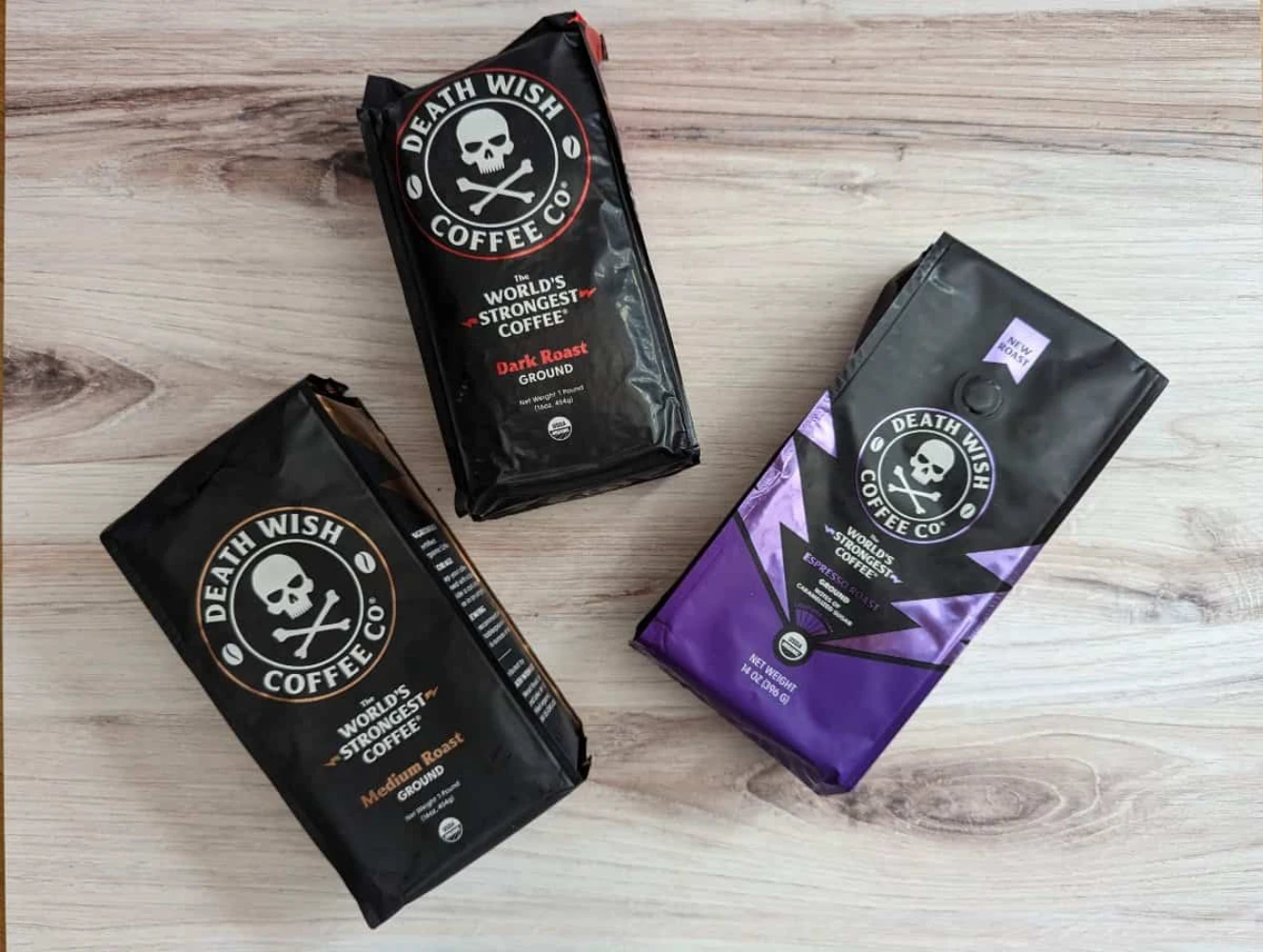
If you’ve ever picked up a bag of Death Wish Coffee, you already know the packaging works. It stops you. The all-black matte finish, the skull and crossbones, the contrast — it’s one of the most recognisable coffee bags on the market. But what’s actually behind that look? As a flexible packaging manufacturer, I reverse-engineer popular brand packaging so you can understand what it takes to produce something similar — and what it would cost you to source it factory-direct. If you’re building a coffee brand and want to explore your options, our coffee packaging solutions are a good place to start.

The Bag Structure: Stand-Up Pouch with a Flat Bottom
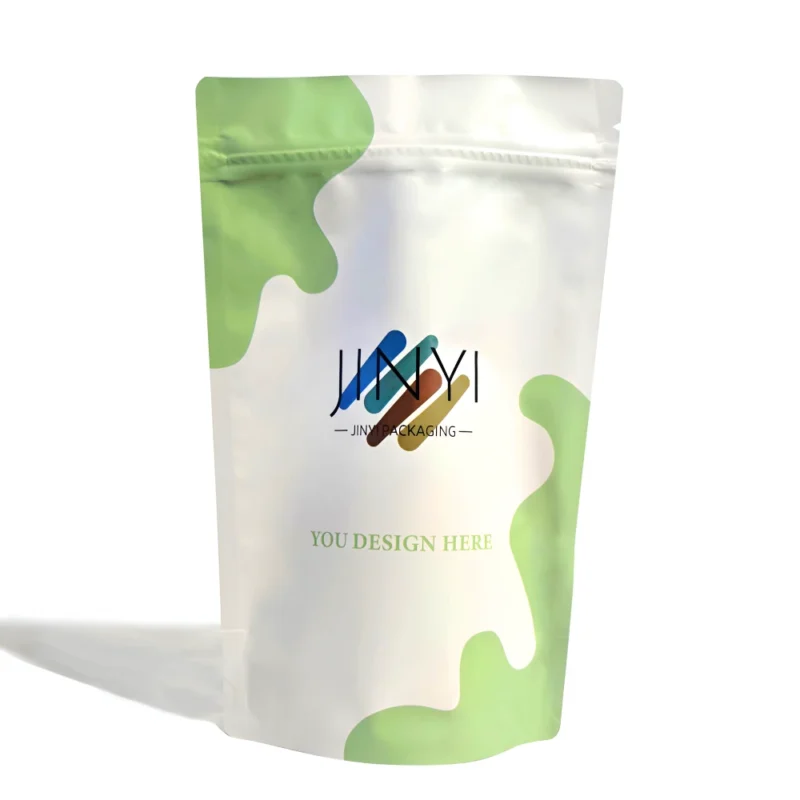
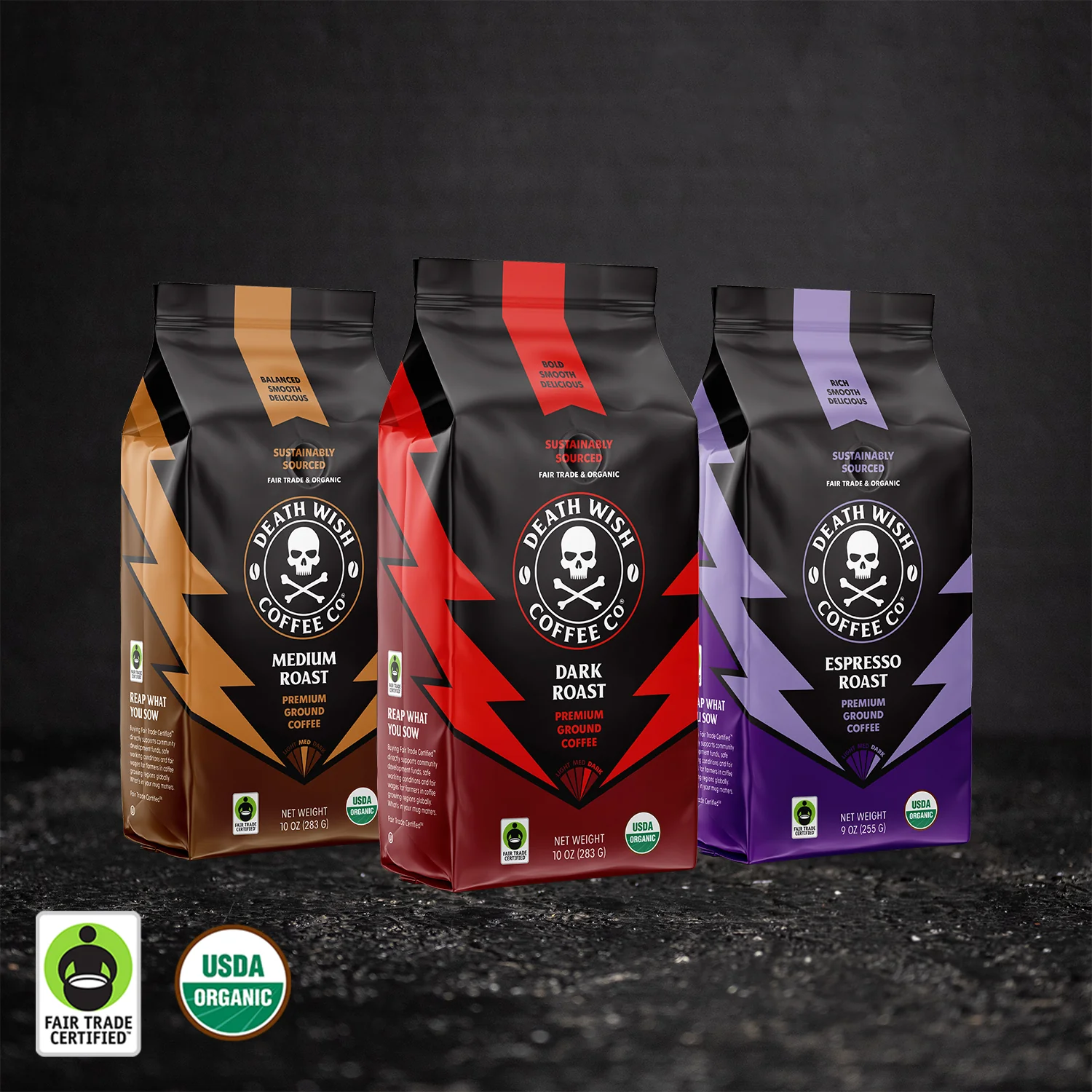
Death Wish Coffee uses a flat-bottom stand-up pouch — also called a quad seal bag — across its main product line. This is the format with four sealed edges and a flat rectangular base, which lets the bag stand upright on shelf without support. It’s one of the most premium-looking structures in the coffee category, and it’s become the default choice for specialty and direct-to-consumer coffee brands that want a strong shelf presence.
The flat bottom creates more surface area than a traditional stand-up pouch, which gives the brand more room for print — exactly what Death Wish needs for its bold graphic identity. The bag also features a resealable zipper at the top for consumer convenience, and a one-way degassing valve on the front panel — a functional necessity for freshly roasted coffee, which releases CO₂ after roasting and needs to off-gas without letting oxygen in.

| Structural Feature |
Death Wish Coffee |
| Pouch Format |
Flat-bottom stand-up pouch (quad seal) |
| Closure |
Resealable zipper at top |
| Valve |
One-way degassing valve (front panel) |
| Available Sizes |
Multiple — from single-serve to 5 lb bulk bags |
| Shelf Position |
Freestanding — no additional support needed |
Tip: The flat-bottom format costs more than a standard stand-up pouch due to its more complex sealing structure — but it pays back in shelf impact and brand perception. For premium coffee brands, it’s almost always worth the premium.
The Film Structure: What’s Actually Inside That Black Bag
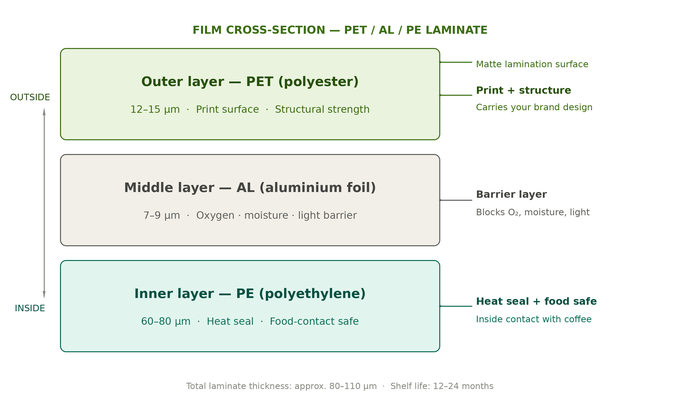
From the outside, Death Wish Coffee’s bag looks deceptively simple — flat black, matte finish, clean print. But the film behind that finish is a multi-layer laminate engineered specifically for coffee’s barrier requirements. Coffee is one of the most demanding products to package: it needs protection from oxygen, moisture, and light, while also needing to off-gas CO₂ after roasting.

Based on the bag’s performance requirements and visual characteristics, the film structure is almost certainly a PET / AL / PE laminate — the industry standard for premium coffee packaging. The outer PET layer carries the print and provides structural strength. The middle aluminium foil layer delivers near-total barrier protection against oxygen, moisture, and light. The inner PE layer handles heat sealing and is food-contact safe.
| Film Layer |
Material |
Function |
| Outer layer |
PET (polyester) |
Print surface, structural strength, matte finish |
| Middle layer |
AL (aluminium foil) |
Oxygen, moisture, and light barrier |
| Inner layer |
PE (polyethylene) |
Heat seal layer, food-contact safe |
Note: The aluminium foil layer is what gives the bag its opacity and maximum barrier performance. If your coffee has a shelf life of 12 months or more, or if you’re selling into retail, this is the structure you need — not a metallised film substitute.
The Print & Surface Finish: Why It Looks the Way It Does
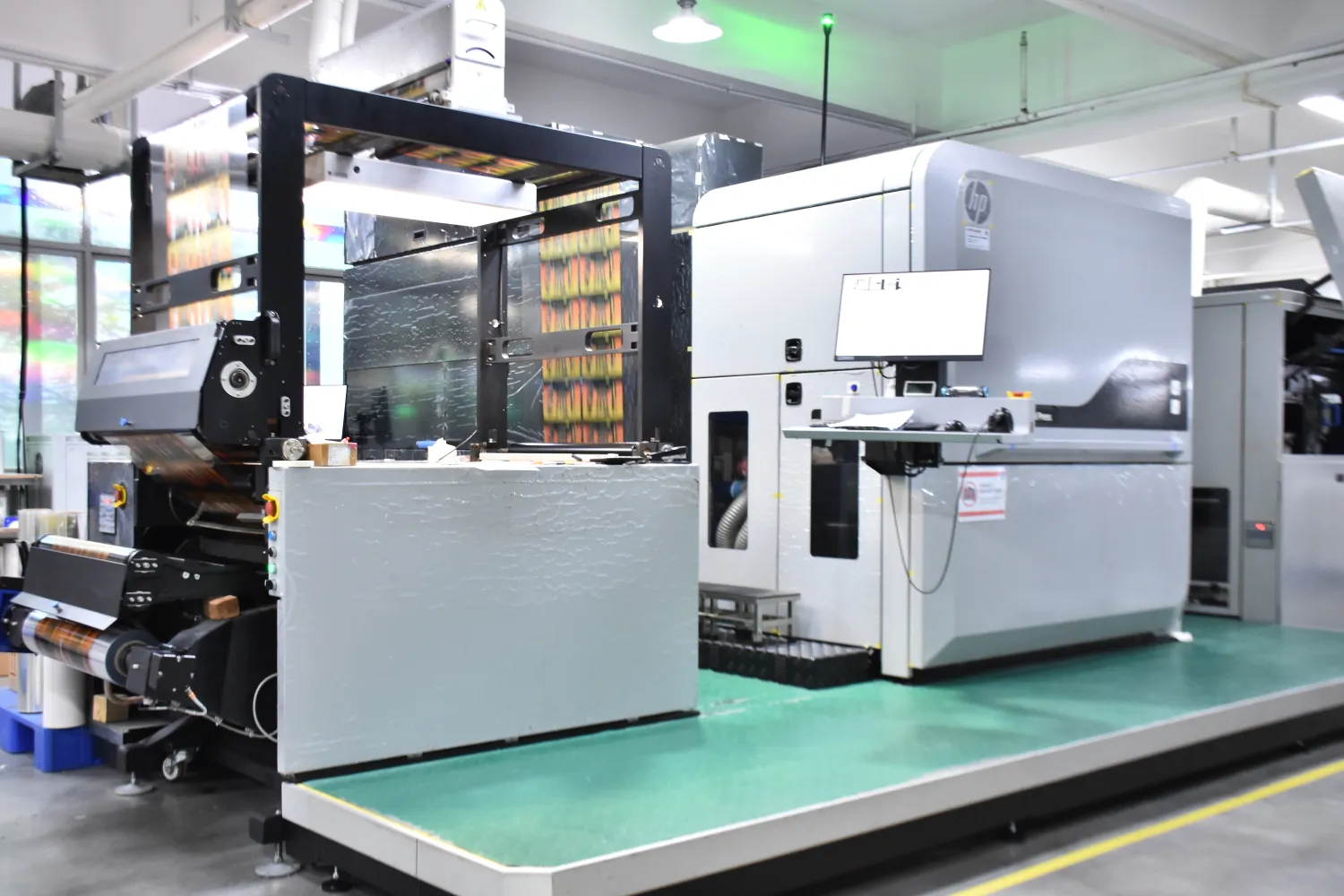
The signature look of Death Wish Coffee’s bag — that deep, flat black with sharp white contrast — is achieved through a combination of matte finish lamination and high-quality digital printing. Death Wish actually has a well-documented relationship with Roastar, a US-based coffee packaging supplier that uses HP Indigo 20000 digital presses to produce their bags.

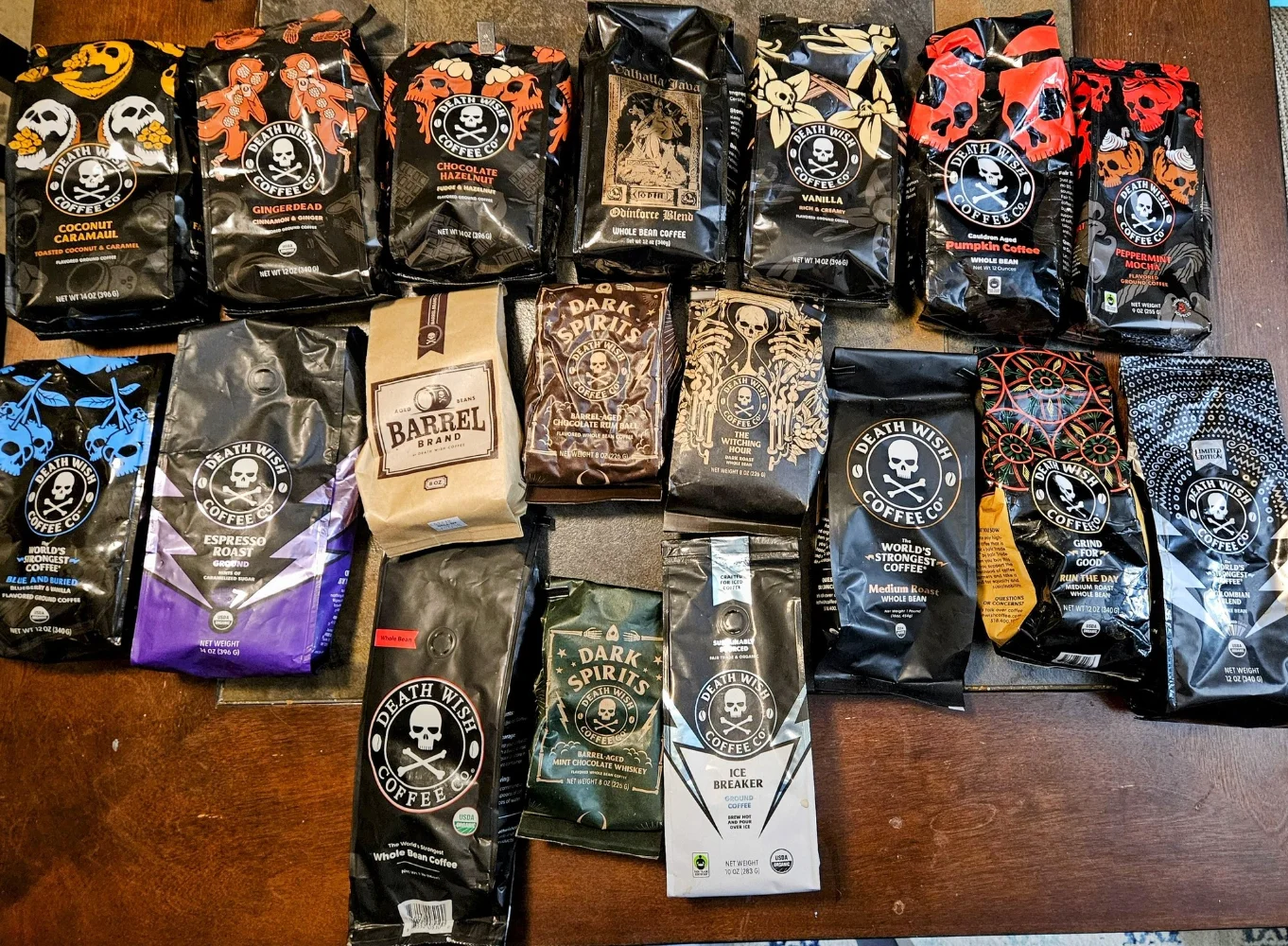
Digital printing is what allows Death Wish to run seasonal designs, limited editions, and new SKUs at short notice — sometimes with a turnaround of three to four weeks. Their order volumes have grown from 1,000–2,000 bags per run to over 200,000 bags, and digital printing has scaled with them because it doesn’t require the plate setup costs of gravure. The matte lamination on the outer surface is applied after printing and is what gives the bag its tactile, non-reflective finish — a deliberate premium signal in a category where most bags are glossy.
| Print Element |
Detail |
| Print Method |
HP Indigo digital press — no plate cost, fast turnaround |
| Surface Finish |
Full matte lamination — tactile, non-reflective |
| Colour Profile |
Deep black base with white and metallic silver accents |
| Design Flexibility |
Seasonal and limited-edition runs without plate charges |
Tip: Matte finish costs slightly more than gloss but signals premium positioning immediately. In a retail environment where most coffee bags are glossy, a matte bag stands out — which is exactly what Death Wish figured out early.
What Does It Actually Cost to Produce a Bag Like This?
Death Wish Coffee sells a 1 lb bag for around $14–16 at retail. The packaging itself — a flat-bottom stand-up pouch in PET/AL/PE with matte finish, degassing valve, and zipper — is a fraction of that retail price. At factory-direct pricing, here’s a realistic cost estimate based on current production benchmarks:
| Order Volume |
Print Method |
Estimated Unit Cost |
| 500–2,000 units |
Digital (HP) |
$0.45–0.80 per bag |
| 3,000–10,000 units |
Digital or Gravure |
$0.28–0.45 per bag |
| 10,000+ units |
Gravure |
$0.15–0.28 per bag |
* Estimates based on PET/AL/PE flat-bottom stand-up pouch with matte finish, zipper, and degassing valve. Actual pricing varies by exact spec, size, and supplier.
Note: The packaging cost on a $15 retail bag of coffee is typically under $0.50 at scale. The brand premium — the logo, the story, the skull — is what drives the price, not the pouch itself. Which means there’s no reason your packaging can’t look just as premium.
How to Source a Similar Pouch for Your Coffee Brand
If you want a bag that delivers the same structural and visual performance as Death Wish Coffee’s packaging, here’s exactly what to specify when you contact a factory. Getting these details right upfront saves multiple rounds of back-and-forth and gets you to a sample faster.
| Specification |
What to Request |
| Pouch Type |
Flat-bottom stand-up pouch (quad seal) |
| Film Structure |
PET / AL / PE — specify food-contact grade |
| Surface Finish |
Matte lamination (not gloss) |
| Accessories |
One-way degassing valve + resealable zipper |
| Print Method |
Digital (HP) for runs under 5,000 / Gravure for 5,000+ |
| MOQ |
From 500 units (digital) at JINYI — no plate cost |
Ready to get a quote for your coffee packaging? Our stand-up pouches cover all the structures above — flat bottom, side gusset, and standard stand-up — with full spec sheets and sample availability.

Want Packaging That Performs Like Death Wish?
The structure behind Death Wish Coffee’s iconic bag — flat-bottom quad seal, PET/AL/PE film, matte finish, valve, and zipper — is available factory-direct from JINYI, starting from 500 units with no plate charges on digital runs.
Tell us your bag size, target shelf life, and print vision — we’ll come back with a spec recommendation and quote, usually within 24 hours.
Get a Quote for Your Coffee Pouch →
About JINYI
JINYI is a source factory for custom flexible packaging, with 15+ years of production experience serving coffee, food, supplement, and consumer goods brands globally. Our facility runs multiple gravure printing lines alongside HP digital print systems — supporting both large-volume consistency and small-batch flexibility from the same production floor.
From film selection to finished pouch, every client gets full visibility into material specs, production timeline, and quality control. That’s what From Film to Finished — Done Right means in practice.