EcoEnclose has built something genuinely valuable: a platform that makes sustainable packaging easy to order. Their materials are researched, their ethos is serious, and for a brand that needs to move fast on its first eco-friendly order, they remove a lot of friction. That matters.
But there’s a structural limitation that becomes more visible as your brand scales — and it’s not about price. It’s about documentation. When a retailer asks for your packaging’s compostability certification, or a wholesale buyer wants to see your film’s recycled content percentage, EcoEnclose’s sustainability story stays with EcoEnclose. It doesn’t transfer to your product.
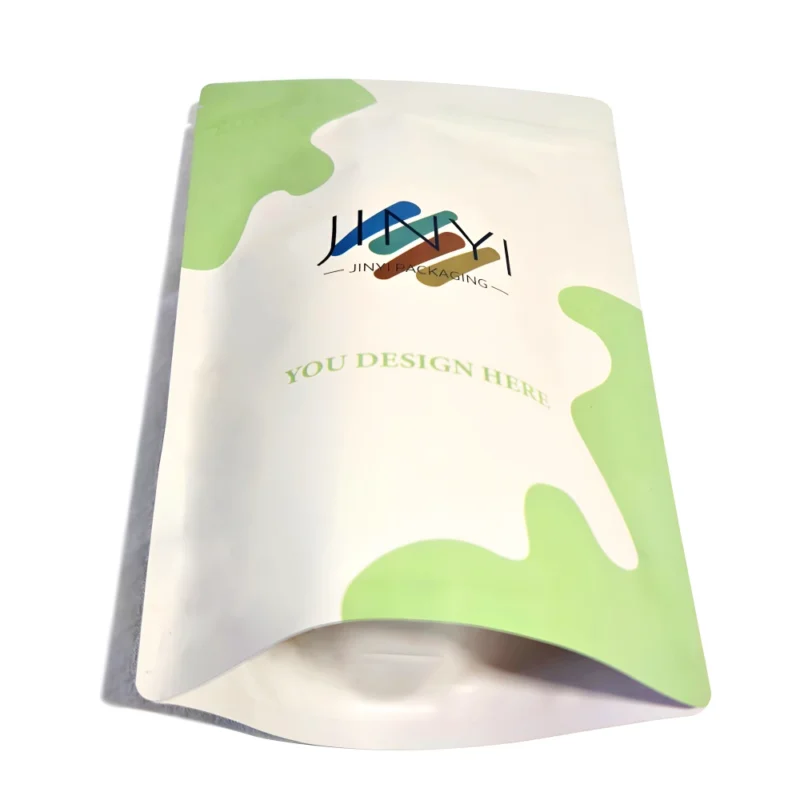
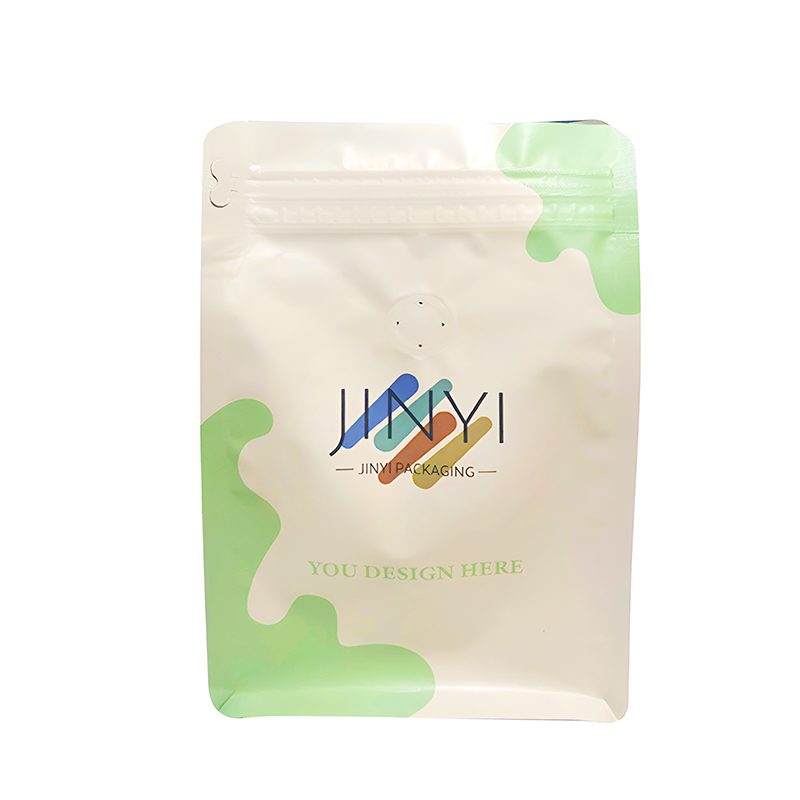
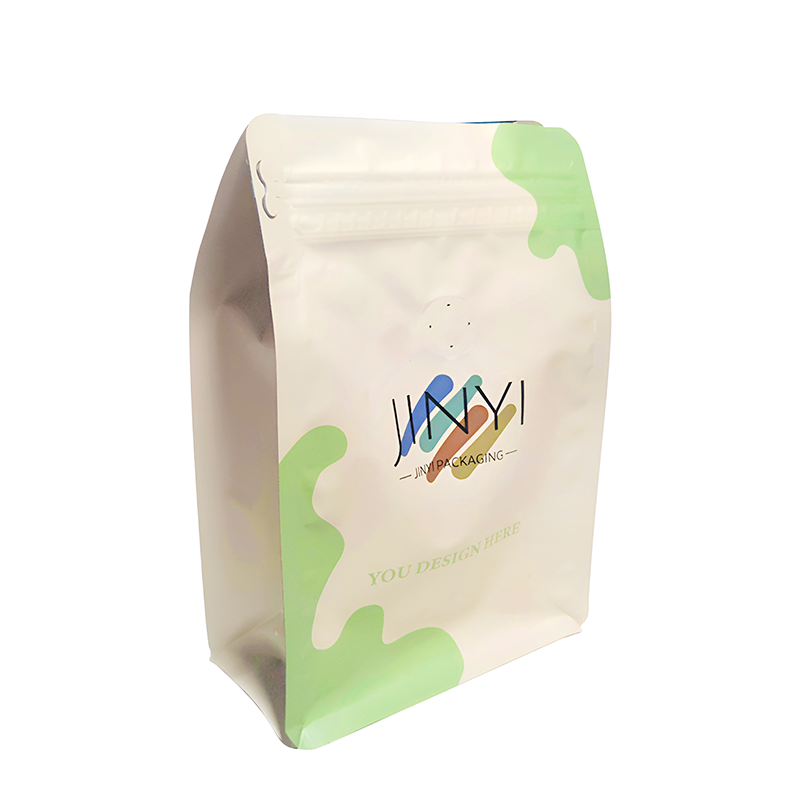
This breakdown covers what EcoEnclose does well, where the platform model creates real limitations for growing brands, and what factory-direct sourcing gives you that a platform structurally cannot. If you’re evaluating sustainable packaging options for flexible pouches — stand-up bags, flat-bottom pouches, compostable mailers — this is the comparison you need to read before committing to either route.

What EcoEnclose Does Well
Before getting into the limitations, it’s worth being clear about why EcoEnclose has built such a strong reputation in the DTC packaging space.
Their material research is genuinely rigorous. They publish detailed sustainability scorecards, life cycle data, and tradeoff analyses for every product — a level of transparency that most packaging suppliers, platform or factory, don’t come close to. Their focus on post-consumer recycled (PCR) content, compostable formats, and circular material innovation is real, not just marketing.
They also serve a specific need extremely well: brands that are just starting to build a sustainable packaging programme and need guidance, low minimums, and a reliable supply of vetted eco materials. For that use case, EcoEnclose is a strong choice.
Note: This comparison focuses specifically on flexible pouch packaging — stand-up pouches, flat-bottom bags, compostable pouches, and similar formats. EcoEnclose’s core strength is in mailers and shipping packaging; their flexible pouch offering is more limited than their broader catalogue.
The Documentation Problem — Platform Sustainability vs Your Sustainability
Here is the core structural limitation of sourcing sustainable packaging through any platform: the certifications and sustainability claims belong to the platform, not to you.

When EcoEnclose tells you a pouch is made from 78% post-consumer recycled content, that’s accurate — for their supply chain. But if a retailer, investor, or compliance body asks you to substantiate your own packaging’s sustainability credentials, you can’t point to EcoEnclose’s EcoReport. You need documentation issued to your order, for your specific film specification, from the manufacturer.
This gap becomes critical in several situations that are increasingly common for growing brands:
| Situation |
EcoEnclose |
Direct Factory |
| Retailer requests compostability cert |
Platform’s claim only |
TÜV / BPI cert issued to your order |
| Buyer asks for PCR content documentation |
EcoEnclose’s supplier data |
Your film’s PCR spec sheet |
| FDA food contact compliance needed |
Not available per order |
FDA food-contact cert on request |
| EPR compliance documentation |
Limited traceability |
Full material traceability |
| FSC certification for paper components |
Platform-level only |
FSC cert transferable to your brand |
As Extended Producer Responsibility (EPR) legislation expands across US states and internationally, having your own packaging documentation is moving from “nice to have” to “required.” A platform’s sustainability report won’t satisfy an EPR compliance filing.
Sustainable Material Options — What’s Actually Available Factory-Direct
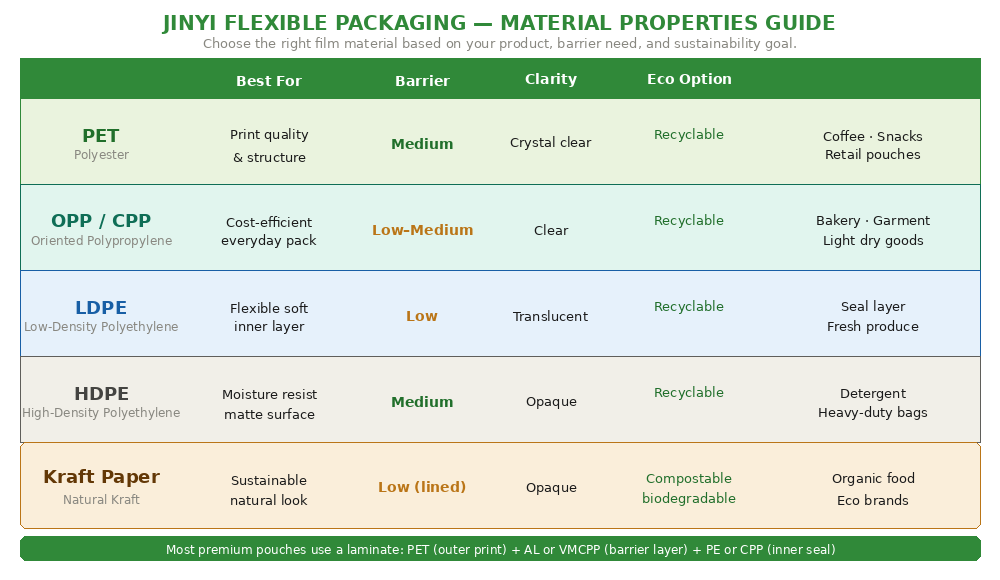
One of the most important shifts in sustainable packaging thinking in 2025 is what some call “material agnosticism” — choosing the most appropriate material based on your specific product, supply chain, and sustainability goals, rather than defaulting to the most extreme option. A factory-direct relationship gives you the flexibility to make that choice with full information.

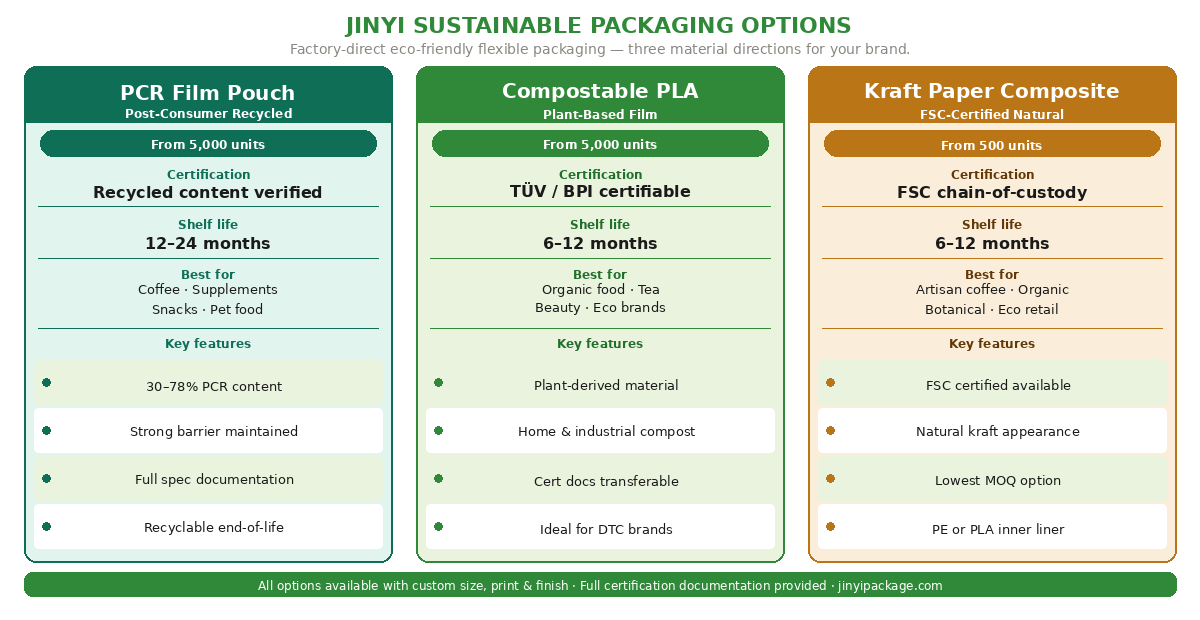
Here are the three primary sustainable directions for flexible pouch packaging, with honest tradeoffs for each:
① Compostable PLA-Based Laminate
Polylactic acid (PLA) films are plant-derived and certifiably compostable under industrial or home composting conditions. They’re the right choice when your brand’s core identity is environmental, your distribution is direct-to-consumer, and your product’s shelf life is 6 months or under.
Works well for: Organic food brands, loose-leaf tea, fresh herb sachets, beauty and personal care with fast turnover.
Honest limitation: Lower barrier performance than aluminium foil laminates. Not suitable for products that need 12+ months shelf life or high oxygen sensitivity.
② Post-Consumer Recycled (PCR) Film
PCR flexible pouches incorporate a percentage of post-consumer recycled plastic content — typically 30–78% depending on the application. They maintain strong barrier properties and are available in stand-up, flat-bottom, and side gusset formats. This is the most practical sustainable option for brands that need barrier performance alongside environmental credentials.
Works well for: Coffee, supplements, pet food, snacks — any product that needs real freshness protection alongside a sustainability story.
Honest limitation: Recycled content percentages vary by batch. Ask your factory for documentation of the specific PCR percentage in your film spec before ordering.
③ Kraft Paper Composite
Kraft paper outer layer with a PE or PLA inner liner. FSC-certified kraft is available, giving brands a certifiable natural-look packaging with a clear chain of custody. The visual impact of kraft paper is strong for organic, artisan, and eco-positioning brands — it communicates sustainability before anyone reads the label.
Works well for: Organic food, artisan coffee, botanical supplements, eco-conscious pet brands.
Honest limitation: Lower moisture barrier than full plastic laminates. Best suited for dry products in moderate humidity environments.
Tip: The right sustainable material for your product is the one that meets your shelf life requirements first, then optimises for environmental credentials second. A compostable bag that fails to protect your product doesn’t serve your brand or your customer.
Price Comparison — What Sustainable Packaging Actually Costs Factory-Direct
Sustainable materials do cost more than standard laminates — that’s true regardless of whether you source through a platform or a factory. The difference is in the margin layer that sits on top of material cost when you go through a platform.
| Material |
Platform (est.) |
Factory-Direct (JINYI) |
MOQ |
| PCR stand-up pouch |
$1.20–1.80/unit |
$0.60–1.00/unit |
500 units |
| Compostable PLA pouch |
$1.50–2.20/unit |
$0.80–1.30/unit |
500 units |
| Kraft paper composite |
$1.00–1.60/unit |
$0.50–0.90/unit |
500 units |
The gap is consistent across material types: factory-direct pricing runs roughly 40–50% lower than platform pricing for equivalent sustainable materials. At 3,000 units per year — a modest volume for a growing brand — that difference compounds into a meaningful budget line.

Note: Sustainable materials add 20–40% to base film cost compared to standard laminates. This premium exists whether you source through a platform or a factory — the difference is the additional platform margin on top.
Which Brands Should Consider Switching — A Decision Framework
The right time to move from a platform to a factory depends on where your brand is, not just how big it is. Use these questions to identify your switch point.
| Question |
If yes → consider switching |
| Has a retailer or buyer asked for packaging certification documents? |
Platform can’t provide these |
| Are you reordering the same sustainable SKU more than twice a year? |
Platform margin compounds fast |
| Does your sustainability claim appear on your product label or website? |
You need documentation to back it |
| Do you need a specific PCR percentage or compostability standard? |
Factory can spec exactly to requirement |
| Are you entering retail channels where EPR compliance matters? |
Platform documentation won’t suffice |
If you answered yes to even one of these, the switch is worth a conversation. If you answered yes to three or more, staying on a platform is actively working against your brand’s sustainability credibility.
For a broader comparison of what platform sourcing costs versus factory-direct across packaging types, our breakdown of Packhelp vs direct factory pricing covers the structural cost difference in detail.
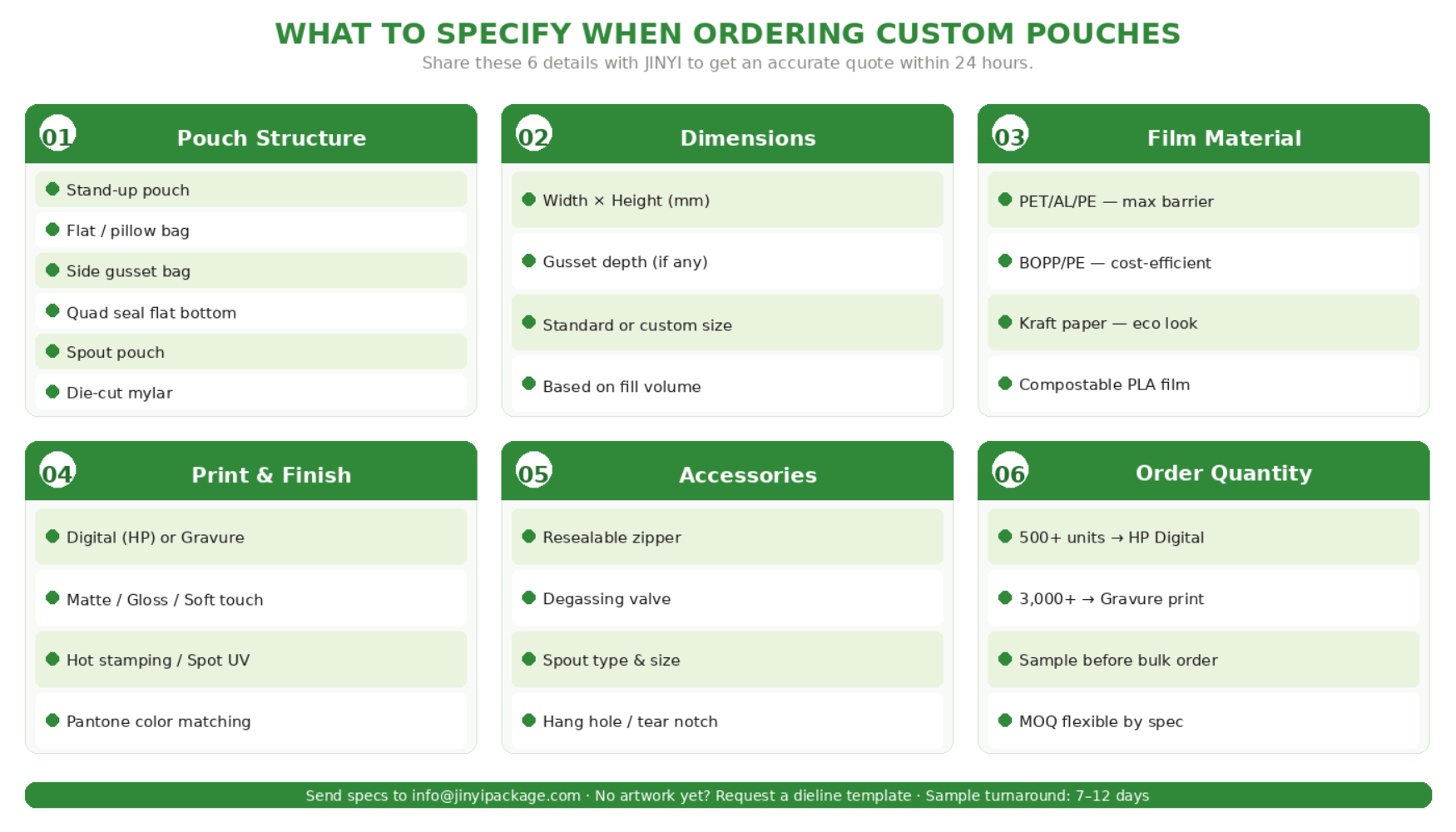
How to Source Sustainable Flexible Packaging Factory-Direct
The process is more straightforward than most brands expect — especially if you’ve already been through one or two platform orders and know what you need.
| Step |
What you provide |
What you receive |
| 01 |
Product type, shelf life, sustainability goal |
Material recommendation + spec sheet |
| 02 |
Bag format, dimensions, quantity |
Quote + dieline within 24 hours |
| 03 |
Print-ready artwork |
Sample in 7–12 days |
| 04 |
Sample approval |
Bulk production + certification docs |
| 05 |
— |
Shareable documentation for retailers |
Every order from JINYI includes a complete material specification document covering film structure, PCR content percentage (where applicable), and applicable certifications. This documentation is yours — issued to your order, shareable with your retail partners, compliance teams, and customers.
You can browse our full range of sustainable and standard custom pouch formats to understand what’s available factory-direct — including compostable, PCR, and kraft paper options.
Get Sustainable Packaging That Comes With Real Documentation
Tell us your product, your shelf life requirement, and your sustainability goal. We’ll recommend the right material, provide a full spec sheet, and come back with a quote within 24 hours.
Compostable PLA · PCR film · FSC-certified kraft · All from 500 units, factory-direct.