JINYI shares practical packaging guidance for your decisions.
Love Ella’s Kitchen’s pouches? Copying the look can still leave you with the wrong pack. I’ll help you borrow the useful ideas before committing your budget.
Baby food brands should learn from Ella’s Kitchen’s packaging choices, then match their own pouch to the recipe, filling process, serving method, artwork, and order budget. At JINYI, we help you turn those decisions into a practical brief, compare suitable options, and agree approvals before production.
I’m Elsa from JINYI Packaging. If you are planning your first baby food pouch, you do not need to arrive with every film abbreviation memorized. Tell me what goes inside, how you will fill it, and what you want your customers to experience. We can work through the packaging decisions together. Ella’s Kitchen gives us a useful brand example; your product still gets the final say. I’m using its UK-facing official information for the brand facts in this guide.
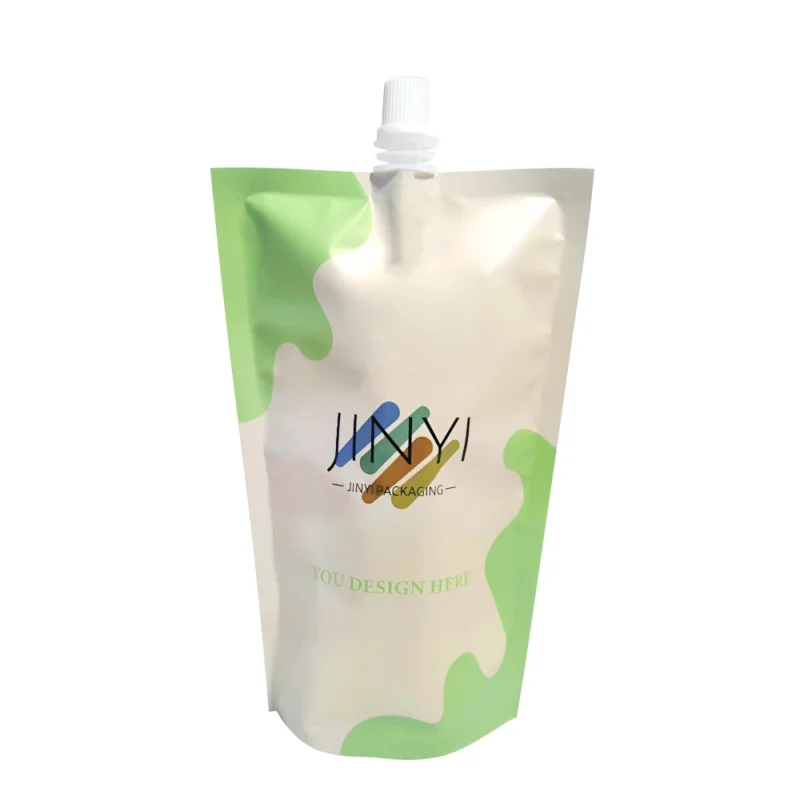
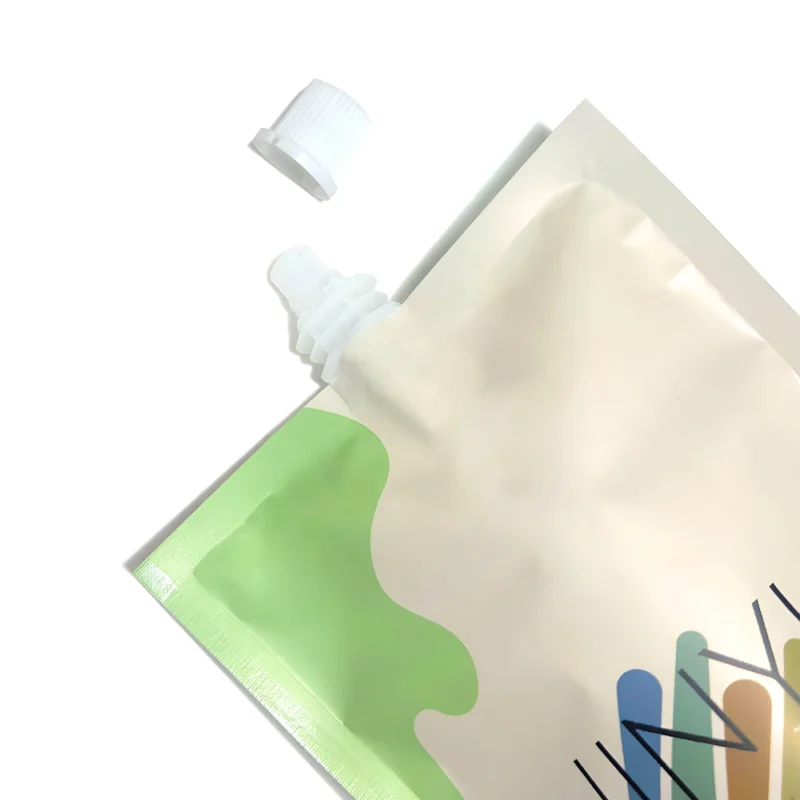
Have a recipe and a rough idea of the pack? Explore our custom liquid spout pouches, then tell me which details you already know and which you would like us to help you decide.
Borrow the buying logic, not just the look. Choose a format around your food, customers, and serving method.
Share your filling process early. We need the actual filling, treatment, cooling, and storage conditions before comparing materials.
Keep brand facts separate from your specification. Ella’s Kitchen’s public packaging description does not identify every layer of every pouch.
Compare complete material structures. Include the food-contact layer, spout, cap, and process requirements.
Test your real fill. An empty pouch and a capacity label cannot replace a filled sample.
Choose a closure for the intended use. Cap appearance alone cannot confirm suitability for children or your serving method.
Check recycling claims for your market. The complete pack and its available collection route matter.
Organize artwork by SKU. Keep wording, barcodes, languages, and file versions under control.
Plan the first order around cash and demand. Compare printing, quantity per flavor, setup costs, and reorders together.
Finish approvals before production. Agree the specification, samples, trial results, artwork, and order terms in writing.
What Packaging Formats Does Ella’s Kitchen Use Across Its Product Range?
A pouch can look perfect in a brand photo and still be wrong for your recipe. Let’s check the serving experience before copying the format.
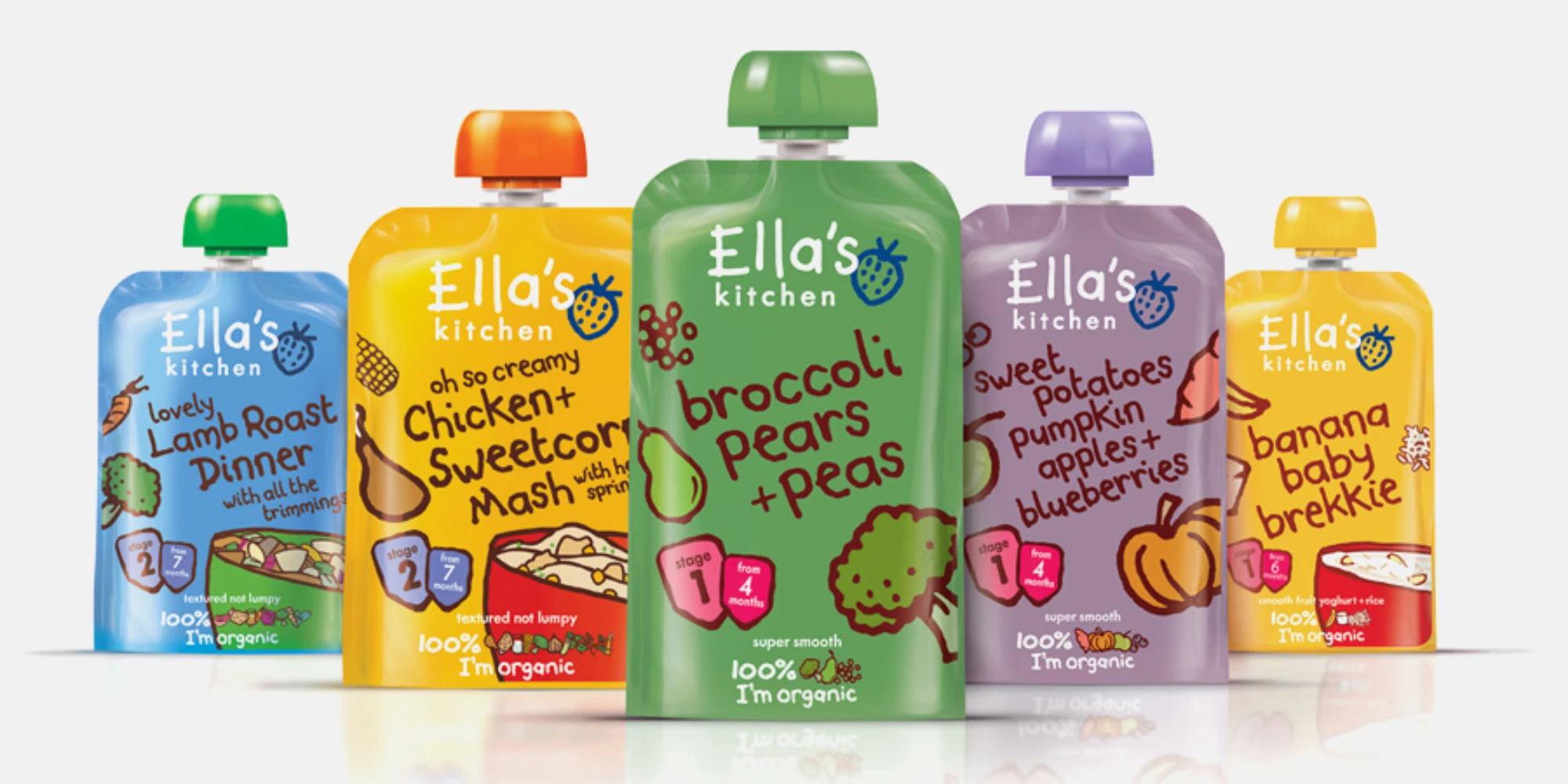
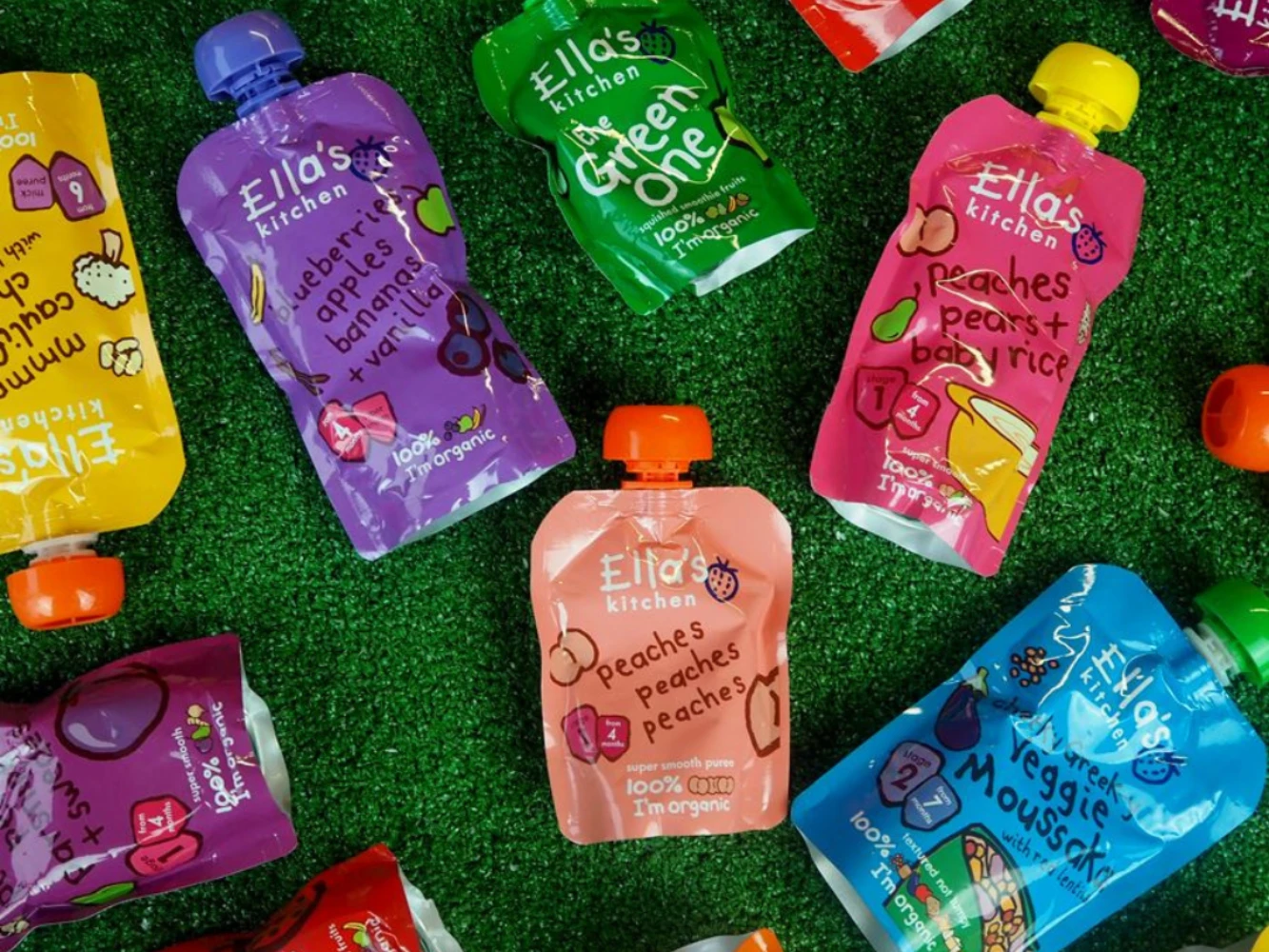
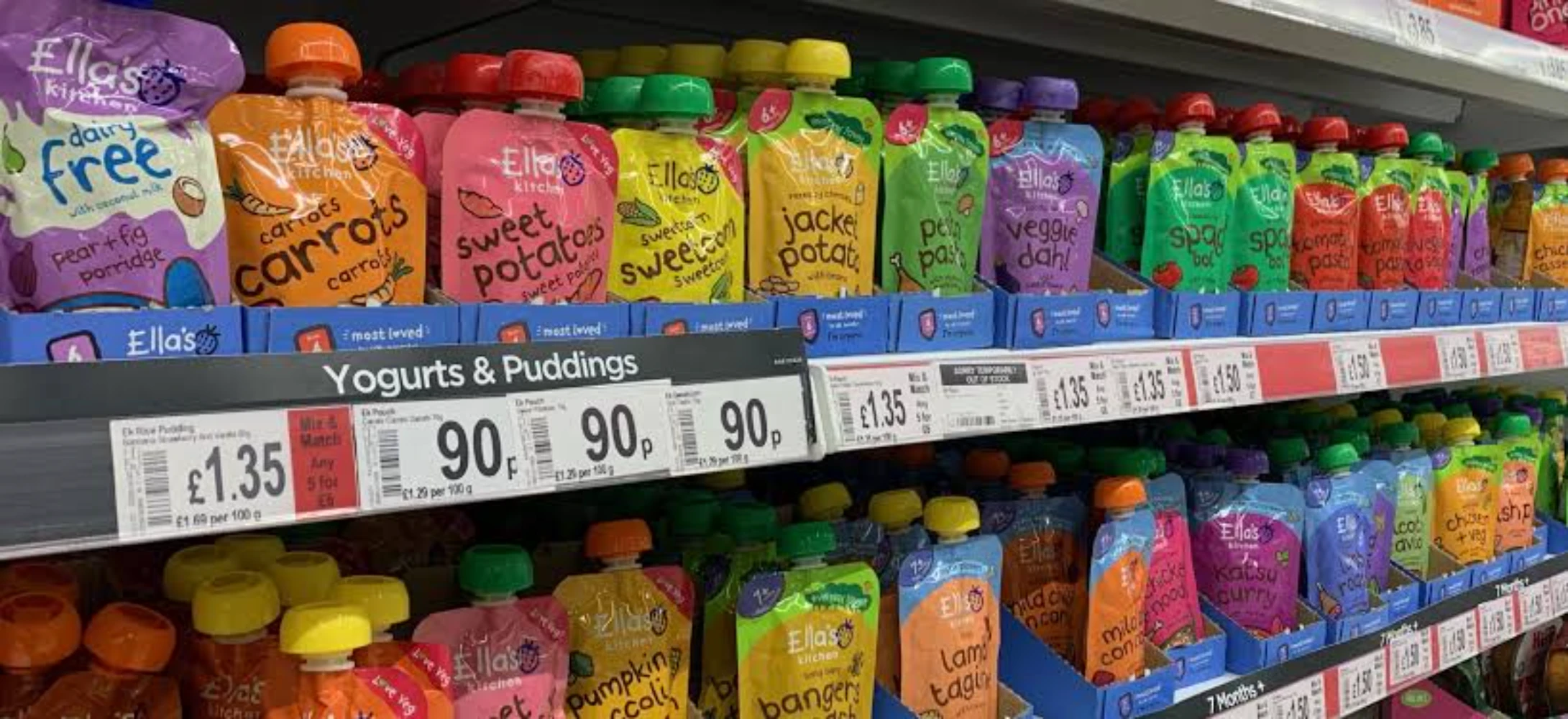
Ella’s Kitchen’s packaging FAQ covers pouches, snack wrappers, pots, trays, and cardboard packaging. For your range, I recommend choosing the format by product texture, portion, serving method, and channel. We can then focus on the pouch features that genuinely help your customers.
Let your product choose the pack
A familiar brand is a useful reference when you are explaining the look and feel you want. It is less useful as a complete shopping list. Ella’s Kitchen has foods for different product stages, and its packaging information covers more than spouted pouches. First, tell me which part appeals to you: the convenient portion, the bright shelf presence, the easy dispensing, or the way the range stays recognizable. Those answers help us choose what to carry into your own project.
Next, let’s map your products. A smooth puree, a textured meal, and a dry snack may belong to the same brand, but they do not automatically need the same pack. Write down the portion, who opens it, how the food is served, and where it is sold. At JINYI, we can use that brief to discuss a suitable pouch format and identify any details that need a filling trial. You do not have to order an unusual shape just because a big brand uses one.
For a spoon-served meal, a pot might already give your customer useful access. For a smooth food, a spout may offer convenient dispensing. The choice should make everyday use easier. Our GoGo squeeZ packaging analysis offers another brand example if you want to compare the ideas. My advice is to borrow a helpful feature, then let your own recipe and customer habits decide whether it earns a place in the final pack.
Format to consider
Question I would ask you
What we need to confirm
Spouted pouch
Will controlled dispensing make serving easier?
Recipe flow, serving method, fitment, filling route, and portion
Meal pot or tray
Does the customer need spoon access or a specific heating method?
Opening, handling, storage, and product-specific instructions
Snack wrapper
Is this a dry snack rather than a pourable food?
Portion, protection, opening, and shelf presentation
Outer carton or multipack
How will the individual packs travel and be displayed?
Unit count, carton fit, identification, and retail layout
How Should Your Recipe and Filling Process Shape the Pouch Specification?
Two similar-looking recipes can need different packs. Share the filling process with me early, so we avoid choosing a pouch that your equipment cannot use.
I start with your recipe, texture, filling method, treatment conditions, storage, and shelf-life target. We use those details to compare packaging candidates. Hot filling, pasteurization, and retort processing require different assessments, and the pouch body, spout, and cap must suit the process together.
Send me the process, even if the design is still a sketch
Before we talk about finishes or cap colors, let’s talk about the food. Is it smooth or does it contain particles? Does your food producer plan chilled storage or an ambient shelf? Does the recipe contain dairy or meat? These questions are not an exam. They help us narrow the packaging discussion before you spend time comparing options that do not fit. Your food producer establishes the food process; we use that process to review the pack.
Please share the actual filling and treatment conditions, not just the words ‘heat resistant.’ We need the relevant temperature, holding time, cooling method, and handling requirements from your filling team. I also want to know whether your machine fills through the spout or an open pouch edge. That one detail can affect the pouch opening, fitment, and order specification. If the machine information is incomplete, I’ll flag that gap before an attractive sample makes the decision for us.
Ella’s Kitchen publishes different heating instructions for different products. Those consumer directions are not a factory processing specification for your recipe. We should keep the two separate. If you already have an established filling process, My first recommendation is packaging that fits it. Changing equipment or treatment just to copy another brand’s pack can create extra work for your food team. A clear process brief gives our discussion a useful starting point and makes the next sample trial more focused.
My buying advice: Send us the filling team’s process brief before approving the material. We can review the packaging questions together and agree what the trial needs to establish.
Which Material Structures Should You Compare Before Choosing a Baby Food Pouch?
‘High barrier’ sounds comforting, but it does not tell you the layers. Let’s make that label into a useful comparison.
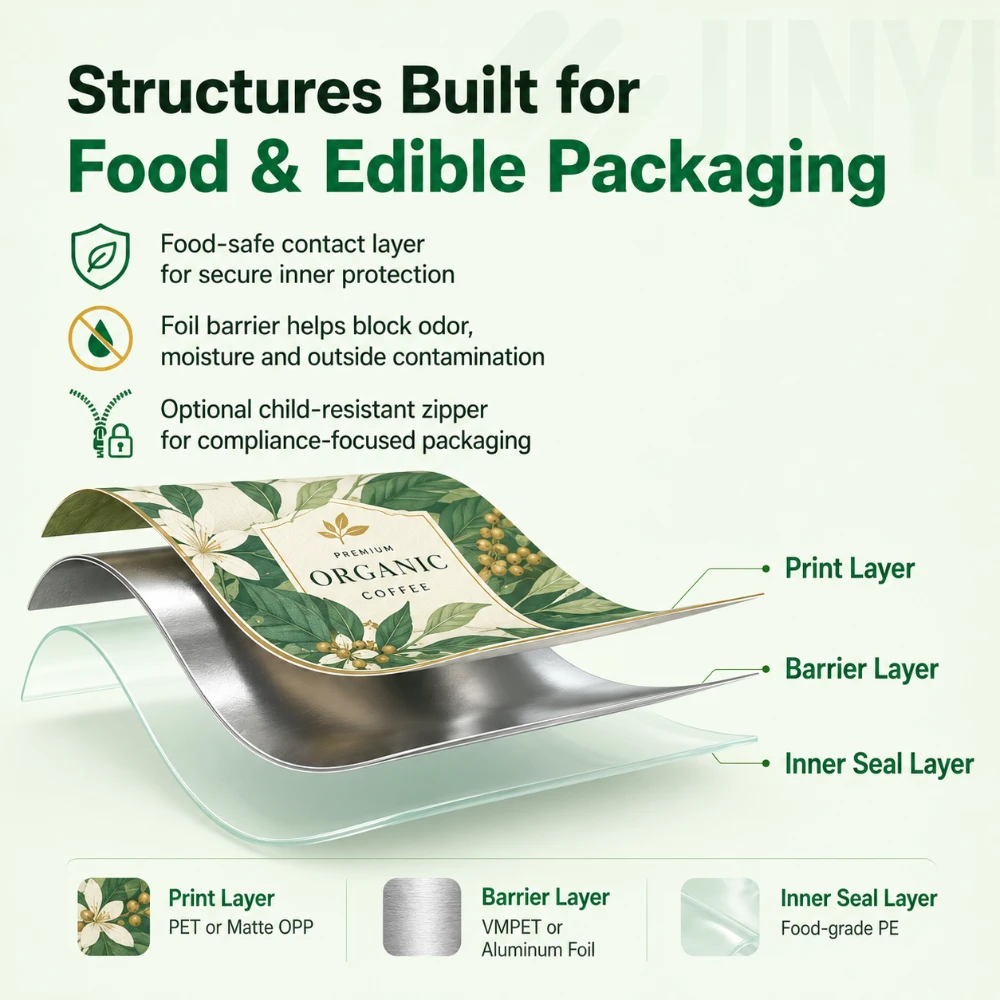
We should compare complete structures against your filling process, protection needs, and handling conditions. Conventional candidates include PET/AL/PE, PET/AL/NY/PE, and retort-specific PET/AL/NY/RCPP. Mono-material options need their own assessment. These are routes to discuss for your project, not confirmed Ella’s Kitchen specifications.
Choose the structure that earns its place in your budget
Ella’s Kitchen describes multilayer plastic pouches, many containing aluminum, alongside newer mono-material packs. Its public FAQ does not name the complete layer sequence for every product. That gives us a useful direction, but it does not let me label a particular laminate as the brand’s exact recipe. For your order, let’s keep the comparison practical: what each proposed structure does for your food, what it costs, and which conditions it must meet.
PET/AL/PE is a conventional foil-based candidate we can discuss for suitable applications. PET/AL/NY/PE adds a nylon layer when the proposed construction needs additional toughness. If your food producer specifies retort processing, a candidate such as PET/AL/NY/RCPP needs a separate review of the complete heat-resistant assembly. RCPP is retort-grade cast polypropylene; it is not simply another name for PE. None of these layer sequences, by itself, approves a finished pouch for your recipe. Film grades, thicknesses, adhesives, fitments, and the actual trial still decide whether the option belongs on your shortlist.
For a mono-material route, I’ll ask our team to review the proposed construction and its processing limits before discussing a recycling statement. A PE or PP label alone is not enough. We need to understand the barrier system, sealing behavior, and compatible spout and cap. You do not need to become a materials specialist to manage that conversation. We can put the suitable options side by side, explain the trade-offs, and keep any unresolved points visible before you approve the pack.
Structure to discuss
Why we would consider it
What we need to check for your order
PET/AL/PE
A conventional foil-based laminate for suitable liquid or puree applications
Actual filling and treatment conditions, film grades, seals, and fitment compatibility
PET/AL/NY/PE
A foil laminate with a nylon layer for additional toughness where needed
Whether the extra layer is useful, plus filled-pack handling and process trials
PET/AL/NY/RCPP
A candidate for a specifically defined retort application
Retort-grade components, full treatment cycle, adhesive, seals, spout, and cap
Application-specific mono-material PE or PP
A route to assess when performance and recycling goals can work together
Full construction, barrier, thermal limits, complete-pack trials, and disposal route
My buying advice: If a simpler structure passes the agreed trials, extra layers do not earn a place just by making the quotation sound more impressive. Let’s spend the budget where your product actually needs it.
How Do You Choose the Right Fill Size, Spout, and Cap for Your Customers?
A neat empty sample can behave differently once filled. Let’s check your real portion and serving method before locking the size or closure.
We should choose the pouch size, spout, and cap together, then trial them with your actual product and filling equipment. I also ask who opens the pack and how food is served. A large cap or familiar shape cannot establish suitability on its own.
Judge the pack with food inside, not just on a desk
Tell me your target net fill first. A weight in grams does not directly tell us the volume, and a flat pouch outline does not show how the filled pack will stand. We can discuss a starting size, then use a filled trial to check headspace, appearance, grip, and carton fit. If your recipe or portion changes between flavors, let’s check whether one size still works across the range. Sharing a pack size is useful only when the products actually fit it.
The spout deserves the same attention. We need your filling team’s information about product flow, particles, nozzle dimensions, and handling. I also ask about the intended serving method: does an adult squeeze the food onto a spoon, empty it into a bowl, or use it another way? A spout should support that experience. Its presence does not automatically make direct-from-pouch use appropriate. We should keep the approved use clear on the brief so we do not let the shape write the instructions.
For the cap, we should review opening, closing, and the evidence relevant to your intended customers and market. A bigger cap may look reassuring, but looks are not a safety certificate. We should also distinguish tamper evidence from other closure requirements. My first choice is a suitable standard fitment when it meets your trials. Custom shapes or molds can be useful, but they bring tooling, minimum quantities, and more decisions. Your launch already has plenty of decisions; a cap should not add drama without doing a useful job.
Factory Take: If the standard pouch and fitment meet your filling and use requirements, my recommendation is to keep them. We can reserve custom tooling for a feature that makes a clear difference to your customers.
What Should Buyers Learn from Ella’s Kitchen’s Recyclable Packaging Changes?
A recycling message can look easy to borrow. If it does not fit your complete pack and market, it can leave your customers with misleading instructions.
Ella’s Kitchen’s transition is a useful brand example, not a universal recycling claim. For your project, we need to assess the complete pouch, spout, cap, performance requirements, and local collection route. We can agree the wording once those details are clear.
Let’s make the recycling promise match the pack
The brand’s packaging update discusses new recyclable pouches and clear spouts across named products. Its FAQ also contains earlier rollout targets. That shows the direction of the change; it does not establish one identical structure across the range. A pack transition can happen in stages. When you are reviewing a brand example, the current product and its instructions matter more than a percentage planned several years earlier.
For your order, Tell me where you will sell the finished product before we discuss the artwork claim. A material that fits one collection system may need different instructions elsewhere. We should review the body, spout, cap, and any other components together, with the relevant assessment for the destination. Recycled content, reduced material use, and recyclability are different benefits. We can compare them clearly, without squeezing three promises into one green symbol.
The commercial question matters too. You need a pack that protects the food through the agreed process and distribution route. We can compare a suitable mono-material candidate with a conventional option using the same trial brief, and I’ll explain what the change means for performance, price, and ordering. Our guide to what makes a flexible pouch recyclable covers the material questions in more detail. You can use it as background while I help you keep the project focused on an option your product and customers can actually use.
Factory Take: If the recyclable candidate has the right performance and disposal evidence, we can take it forward for approval. If a key point is unresolved, the artwork claim should wait until we have a clear answer.
Balancing product protection, customer use, and sustainability? Explore our industry packaging solutions, then share your priorities with us. We can work through the trade-offs without treating every ‘upgrade’ as essential.
How Can You Build Clear Packaging Design Across Flavors and Product Stages?
Bright colors attract attention, but confusing variants can still frustrate shoppers. Let’s organize the range before sending several almost-identical files to print.
Keep a consistent brand layout while making flavor, portion, product stage, texture, and instructions easy to distinguish. Borrow the brand’s range logic while keeping your own graphics distinctive. We should agree the SKU list, wording, barcodes, languages, and file versions before printing.
Make the range easy to shop and easy to reorder
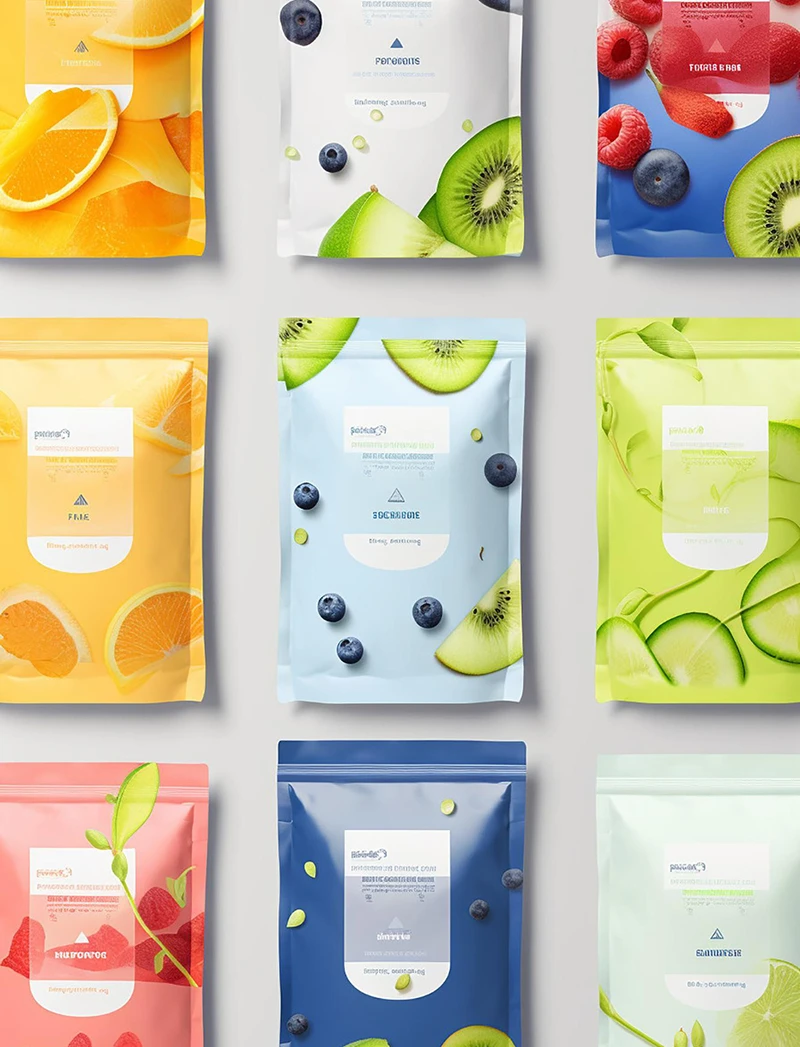
A parent choosing between several recipes should not need to study every pouch like a puzzle. For your range, My recommendation is to keep the brand position and practical information consistent, then make the changing details easy to find. Flavor names, ingredient images, net content, and stage information need enough separation. Color can help, but it should not do all the work. Let’s review the design at a realistic shelf size as well as on the large screen where it was created.
Ella’s Kitchen’s official update provides a useful ordering lesson: it announced a change from 4 months+ to 6 months+ labels beginning in January 2026. That is a specific brand change, not a labeling rule for every baby food company. For your project, the responsible product and market team needs to approve the wording. From my side, I want us to know whether those files are final before you invest in a large quantity of printed packaging.
We should keep one approved record for each SKU, including the artwork version, language, barcode, pouch size, and approval date. If your designer changes a file, please tell us which version it replaces. A filename such as ‘final-final-new’ may feel familiar, but it is not much of a production instruction. Clear versions make it easier for us to match the right design to the right quantity and carry the same information into a reorder. Your own brand should stay distinctive while the range remains easy for customers to navigate.
Keep consistent
Manage by SKU
What we should agree before printing
Brand position and information layout
Recipe name, variant color, and ingredient imagery
Approved artwork file and version
Placement of practical information
Net content, product instructions, and required wording
Product and destination-market approval
Pouch and print specifications where suitable
Barcode and product identifiers
Proof readability, layout, and matching order quantity
How Should a Smaller Brand Plan MOQ, Printing, and Its First Order?
The lowest pouch price can become an expensive pile of slow-moving stock. Let’s check your sales plan before choosing a larger first order.
I plan the comparison around quantity per flavor, total budget, expected sales, artwork stability, and reorders. At JINYI, we can compare suitable printing routes on the same pack specification and explain the setup, component, and tooling conditions that affect the quotation.
Let’s compare the money committed, not just the unit price
You do not need to buy like Ella’s Kitchen to learn from its packaging. A launch with several recipes may have very different demand for each flavor. Before we divide the quantity, tell me which products you expect to sell fastest and which are still being tested. How much cash are you comfortable keeping in printed stock? That belongs in the conversation too. A lower unit price is helpful only when the quantity fits your business; the quietest flavor should not take over the storeroom.
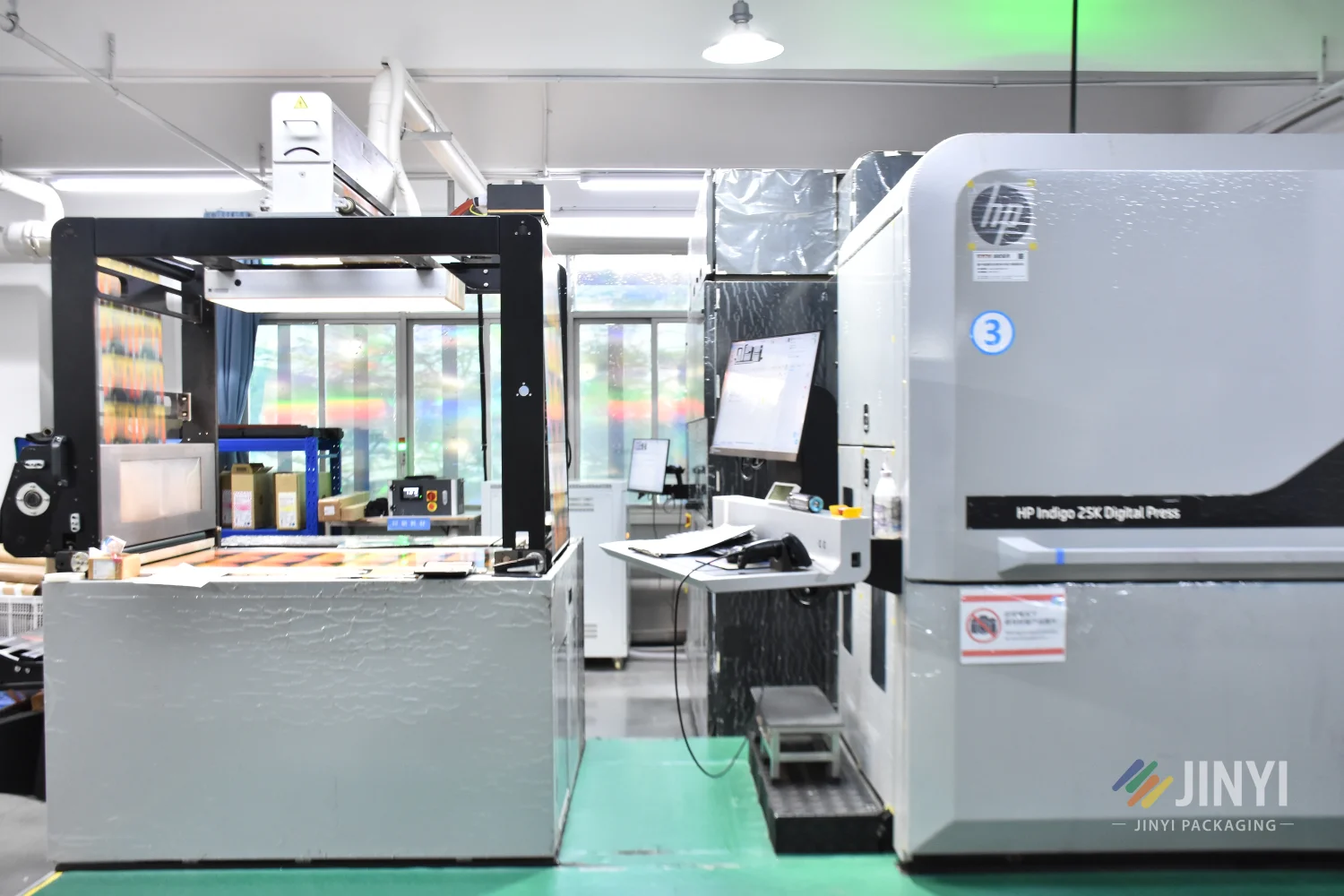
Once the specification is clear, ask us to compare digital and gravure printing where both are suitable. We can explain setup charges, quantities per design, color requirements, and the effect of likely artwork changes. Digital printing may be worth comparing when flexibility matters. Gravure may be worth comparing when stable designs and repeat volume support the setup. I’ll review your complete order and reorder plan before recommending either. We also need to confirm that the proposed printing route fits the required materials and processing conditions.
HP Indigo 25K at JINYI — consistent colour output across all press systems via ESKO Automation Engine
Standard and custom components can bring different ordering conditions. A special spout color or newly tooled cap may create a minimum separate from the printed pouch quantity. We should make those conditions visible in the quotation and check whether compatible variants can share components. I also want the lead-time starting point to be clear: payment, artwork approval, material readiness, or the event agreed for your order. For a first launch, my recommendation is to keep decorative extras where they support the product or brand, then revisit them once demand becomes clearer.
My buying advice: Ask us for a comparison that shows quantity per SKU, setup or tooling, pouch cost, packing, freight, and reorder conditions. I can help you see the total commitment behind each option.
What Samples, Documents, and Tests Should You Approve Before Ordering?
An attractive sample can answer the design question while leaving performance unresolved. Let’s agree what each approval means before we move toward production.
We should agree the written pack specification, artwork, relevant material documents, filled-pack trials, and order terms before production. I will help you distinguish reference samples, size checks, and print proofs, so an approval of appearance does not quietly become approval of everything else.
Finish the important decisions while they are still easy to change
Tell me what you want the sample to establish. An existing sample can help you compare a format or finish, but it may not have your proposed material and closure. A size sample helps with layout and handling. A print proof helps us confirm the design. None of those, alone, establishes how your food performs after filling and treatment. We should write down the purpose of each sample and agree which questions still need a representative trial.
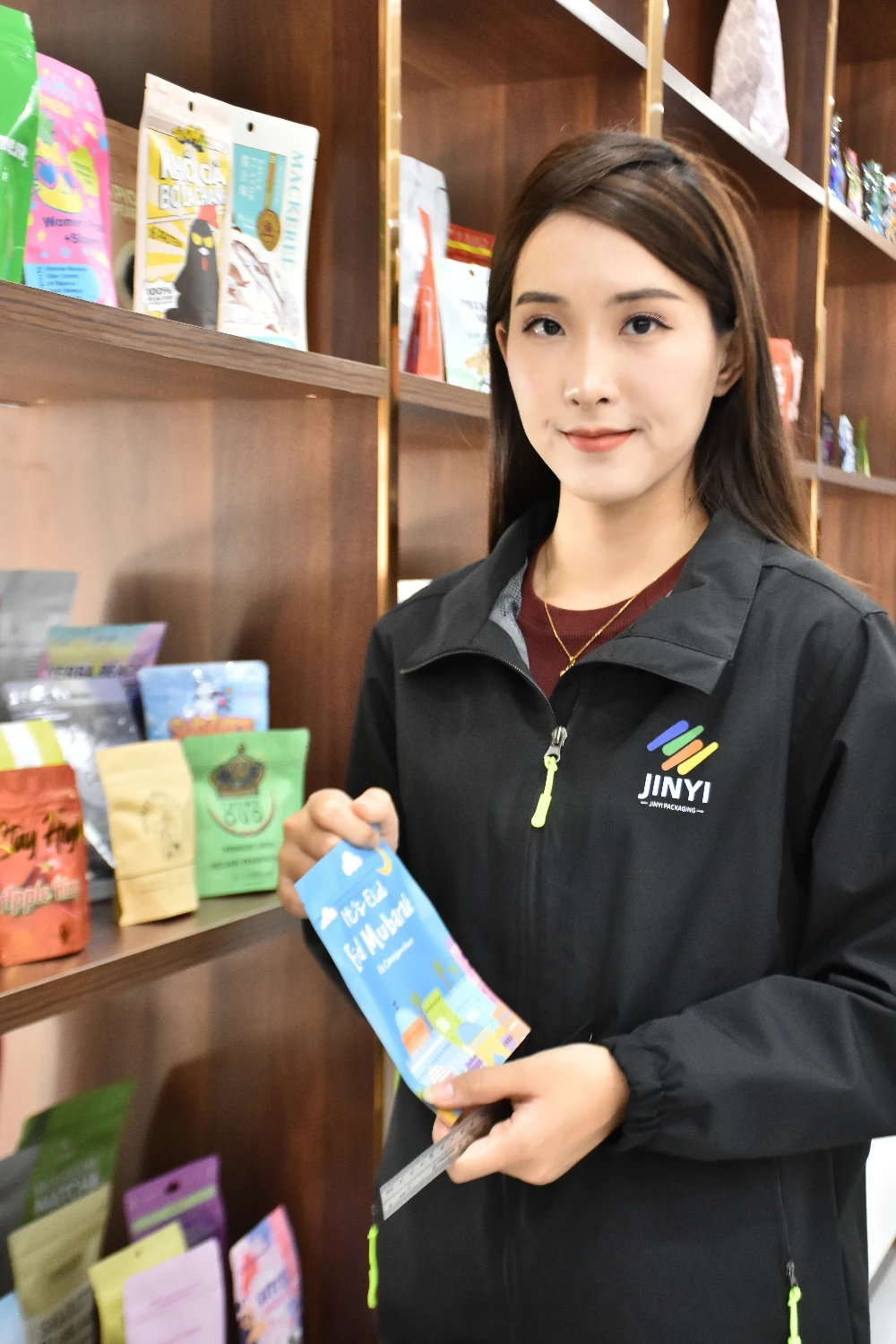
Elsa, JINYI’s Business Development Manager — reviewing custom packaging specifications and matching client requirements to the right production solution
Your filling team and our packaging team should work from the same trial brief. Depending on the project, that may cover machine handling, seals, closure, dispensing, treatment, and transport. Your food producer validates the food’s shelf life; we help review the packaging evidence relevant to the proposed pack. We should also agree which material and component documents are needed for your market, and confirm their actual scope before you rely on them. A document is useful when it matches the proposed construction and intended use.
Before the order moves forward, I want the dimensions, structure, fitment, artwork version, quantities, packing, and acceptance criteria written down together. Sample charges and approval stages should be clear too. We cannot plan on finishing one printed pouch, stopping for approval, and then continuing the order: once printing begins, the run proceeds through the agreed production workflow. Our guide to how custom stand-up pouches are made helps you understand the sequence. If you need a practical order checklist alongside it, our custom spout pouch buying guide brings the main decisions together.
Approval item
What we should put on record
Why it helps you
Pack specification
Dimensions, structure, fitment, and agreed tolerances
You know exactly which pack the order covers
Artwork
Approved proof, SKU, and file version
We print the agreed design against the right quantity
Filled-pack trial
Method, process conditions, results, and acceptance criteria
You assess the candidate under relevant conditions
Supporting documents
Records covering the proposed materials and intended use
Your team can check the actual scope of the information
Order and reorder terms
Packing, delivery, inspection, and change procedure
We share the same expectations for production and future orders
Evidence: I checked Ella’s Kitchen’s packaging FAQ, product and packaging updates, and product-use guidance on 8 October 2026. Brand examples refer to its UK-facing information. The material comparison is for your project discussion and does not identify the brand’s undisclosed layer specifications.
Conclusion
Borrow Ella’s Kitchen’s useful ideas, then choose for your own product. I’ll help you turn the recipe, customer experience, and budget into a clear packaging brief.
JINYI is a source factory for custom flexible packaging with 15+ years of production experience, serving food, supplement, coffee, pet food, and consumer goods brands across 70+ countries. We produce stand-up pouches, flat-bottom bags, pillow bags, and side gusset bags in PET/AL/PE, PET/VMPET/PE, and other barrier specifications — via HP Indigo digital print from 500 units and gravure printing at volume — with full material documentation included as standard with every order.
That is what From Film to Finished — Done Right means in practice.
Elsa
Business Development Manager · JINYI Packaging
Elsa leads business development and customer order management at JINYI. With 8 years in foreign trade across Yiwu and Dongguan, she has a sharp understanding of market demand and what buyers actually need — turning real customer insight into the right packaging decisions.
Customer needs Order management Business development
Are all Ella’s Kitchen products packed in spouted pouches?
No. Its packaging FAQ also covers snack wrappers, pots, trays, and cardboard packaging. Let’s compare the format relevant to your product, rather than assume the entire range uses one type of pouch.
Can JINYI make a pouch with the same material as Ella’s Kitchen?
We can discuss a suitable structure for your product, but an identical laminate needs a verified specification. The brand’s public FAQ does not disclose every layer of every SKU. Send us your process and performance needs so we can compare the right candidates.
Can I use one pouch for both fruit puree and a meal containing meat?
Let’s review both recipes and processes before assuming that. The same-looking pouch may not suit different treatment and storage conditions. We can compare the requirements with your food producer and agree the trial for the complete pack.
Does a larger cap automatically make a baby food pouch safe?
No. Size and appearance do not establish suitability. We should review the closure against the intended users, serving method, destination, and relevant supporting evidence.
Can I copy Ella’s Kitchen’s recycling instructions?
We should check your own pack and market before using that wording. We need the complete pouch, spout, cap, and relevant collection route to support the wording. A brand’s packaging transition is a useful example, not an approval for another pack.
What should I send Elsa for a baby food pouch quotation?
Send me your recipe description, filling and treatment conditions, net fill, target market, shelf-life target, quantity per flavor, and artwork status. Tell me which decisions are settled and where you need help. We can build a clearer brief from there.