JINYI shares practical packaging guidance for your decisions.
Choosing the wrong spout pouch can increase leakage risk, slow your filling process, and make you pay for features your product does not need.
Before ordering custom spout pouches, confirm your product, fill volume, filling process, spout system, pouch format, barrier, printing plan, validation tests, and final commercial terms. These nine decisions shape performance, cost, and reorder consistency.
A quotation can look complete while still leaving important choices open. I use the following nine decisions to turn a general request into a specification that a packaging supplier can actually evaluate.
Start with the product and filling process, not with a material name copied from another pouch.
Test the target fill volume with the real product before approving the finished pouch size.
Match the spout diameter, position, and cap to viscosity, particles, filling equipment, and consumer use.
Choose only the barrier and structural strength that the product and distribution route require.
Plan printing around total volume, SKU count, artwork changes, and reorder expectations.
Approve one written specification and a relevant sample before authorizing mass production.
1. What Will the Spout Pouch Hold?
Your product determines the pouch specification. Its viscosity, ingredients, particle size, sensitivity, and expected shelf life affect the spout, sealant layer, barrier, and testing plan.
Many buying requests begin with a capacity and an image. That is not enough. A thin juice, an oily sauce, a puree with particles, a concentrated detergent, and an industrial liquid can all use a spout pouch, but they do not create the same demands. Thin liquids move quickly and can expose weak seals during handling. Thick products need a dispensing path that does not frustrate the user. Oils, fragrances, acids, alcohols, surfactants, and other active ingredients may also interact differently with the inner film and fitment.
Build a product brief before asking for a structure
Tell your supplier whether the product is food or non-food, its approximate viscosity, whether it contains solid pieces, its oil or alcohol content, its acidity where relevant, and the target shelf life. You should also disclose storage temperature and whether the filled pouch will face light, oxygen, moisture, freezing, or rough distribution. If the formula is confidential, you can provide a technical data sheet or the properties that matter for compatibility instead of sharing the full recipe.
Product behavior
Buying concern
What to confirm
Thin beverage
Flow control and leak resistance
Spout bore, cap seal, filling speed
Puree or thick sauce
Slow dispensing or blockage
Viscosity, particles, opening size
Oil-based product
Inner-layer compatibility
Formula details and compatibility test
Detergent or chemical
Chemical resistance and safe handling
Safety data, use conditions, transport needs
Tip: Send a small quantity of the actual product for compatibility and fill testing whenever the formula creates uncertainty. A photo cannot show how a liquid behaves inside the pouch.
2. What Fill Volume and Finished Pouch Size Do You Actually Need?
Choose the finished size through a real-product fill test. Nominal volume alone cannot account for product density, headspace, gusset shape, spout displacement, and the way the pouch must stand or pack.
A 500 ml request does not mean that every pouch described as 500 ml will work. Two products with the same liquid volume may have different weights and flow behavior. A thick puree may not settle into the bottom gusset as easily as water. A product that foams during filling may need more headspace. The pouch also needs enough unfilled space for clean filling and reliable sealing around the spout area.
Size the pouch for filling, display, and shipping together
Start with target net contents, but also consider shelf dimensions, carton orientation, case count, and the consumer’s grip. A pouch that looks attractive on a screen may be too tall for the shelf or too wide for the carton. A narrow pouch may also tip after opening, while a very wide pouch can be difficult to squeeze. If the product is sold through e-commerce, include compression and movement inside the shipping carton in your review.
Sizing input
Why it matters
Approval method
Net volume and weight
Sets the basic capacity target
Fill by weight and check volume
Required headspace
Supports filling and closure performance
Run on the intended filling method
Shelf and carton limits
Affects display and logistics
Make a physical packing trial
Consumer handling
Affects grip, pouring, and stability
Test with representative users
Treat published size charts as a starting reference, not a capacity guarantee. Ask for blank samples in one or two candidate sizes, fill them with the real product, close them as intended, and let them settle before approving the dieline.
3. How Will the Pouch Be Filled and Processed?
Your filling and post-fill process must be defined before material and fitment approval. Manual filling, automatic filling, hot filling, pasteurization, freezing, and retort processing require different evaluations.
This is one of the most expensive details to discover late. A pouch may hold the product successfully during a desk test but still fail to run on your filling line. The fill nozzle must fit the spout opening. The cap or temporary closure must match the sequence used by the equipment. The pouch must also be presented to the machine in a usable orientation, whether it is loaded by hand, held in a fixture, or supplied on a rail system.
Share the complete temperature and process profile
Do not describe a process only as “hot fill.” Provide the filling temperature, exposure time, cooling method, and any later heat treatment. If the product will be pasteurized or retorted after filling, say so at the start. The film, inner sealant, adhesive, spout, and cap must be evaluated as one package. A structure suitable for ambient filling should not be assumed suitable for a more demanding thermal process.
4. Which Spout Position, Diameter, and Cap Should You Choose?
Choose the fitment as a complete dispensing system. Spout position affects pouring and filling, diameter affects flow, and the cap affects resealing, tamper evidence, safety, and user convenience.
Buyers sometimes select a spout by appearance because the options look similar in a product photo. Small differences can matter. A top-center spout creates a familiar pouring direction and balanced shelf appearance. A corner spout can make squeezing and controlled dispensing easier for sauces or refill products. The right position also depends on how the pouch enters the filling line and how much printable space your artwork needs.
Match the opening to both the product and the equipment
A wider bore can help thick products and products with small particles, but it may increase fitment cost and change the consumer’s pouring control. A narrow opening may suit a thin liquid but restrict a puree. Your filler’s nozzle and capping system create another limit, so ask for a dimensioned fitment drawing rather than approving a spout by a general name. For caps, decide whether you need a basic screw cap, one-handed dispensing, tamper evidence, or a safety feature required by the product and market.
Decision
Usually favors
Check before approval
Top-center spout
Balanced display and direct pouring
Filling orientation and headspace
Corner spout
Squeezing and controlled dispensing
Hand position and artwork area
Smaller bore
Thin, controlled-flow products
Nozzle fit and fill speed
Larger bore
Thick products or particles
Pour control, cap size, cost
Note: Ask your supplier to identify the fitment by drawing or part specification. “Small spout” or “large cap” is not precise enough for a repeat order.
5. Which Pouch Format and Handling Features Does Your Product Need?
Select the pouch format around shelf behavior, carrying weight, dispensing, storage, and transport. A standard stand-up pouch is not automatically the best shape for every volume or channel.
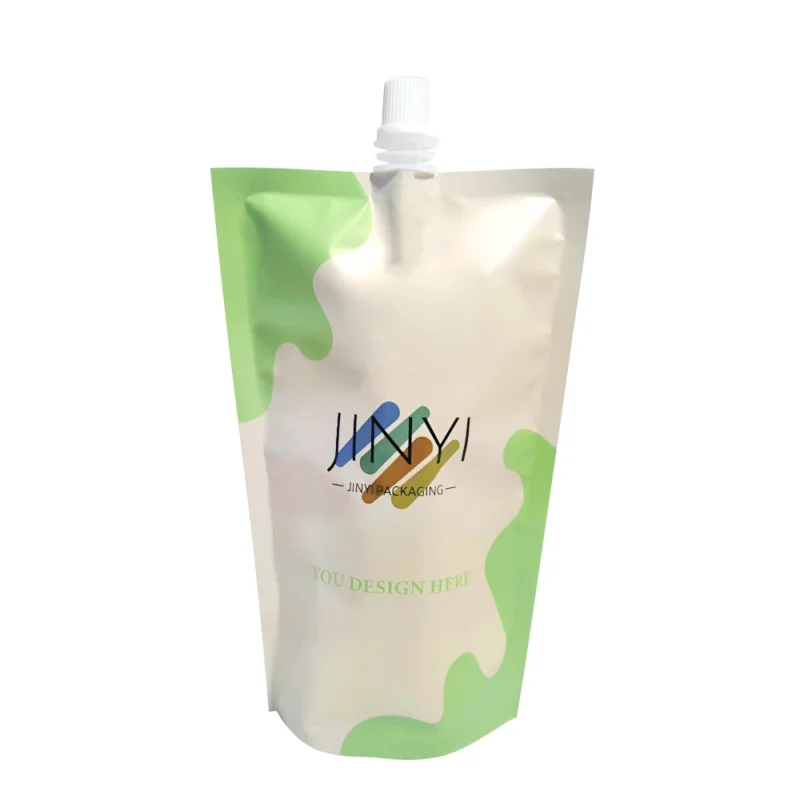
For many retail products, a stand-up spout pouch offers strong front-facing display and convenient use. Larger refill products may need a wider base, stronger handling area, or a handle. Single-use products may work in a flat or shaped format. A custom shape can help brand recognition, but it can reduce usable print area, complicate filling, change carton efficiency, and require a dedicated die.
Judge features by the full customer journey
Think about how the empty pouches arrive at your facility, how operators hold them, how the filled units stand, and how consumers pour from them. A handle can improve control for a heavy pack, but its location must work with the pouch shape and load. Rounded corners can improve handling, while a transparent window can show the product but may not suit products that need light protection. These choices are connected, so they should be reviewed on one physical sample rather than approved separately.
Format or feature
Potential benefit
Trade-off to review
Stand-up format
Shelf presence and stability
Bottom shape after filling
Flat or single-use format
Compact pack and portion control
Limited standing performance
Handle
Better control for heavier packs
Stress concentration and artwork space
Custom shape or window
Differentiation and product visibility
Die cost, barrier, and packing efficiency
For e-commerce or export distribution, include the secondary carton in the decision. The pouch and carton must work together. A strong pouch can still be damaged if the case leaves too much movement, places pressure on the caps, or allows sharp fitments to rub against neighboring packs.
6. Which Material Structure and Barrier Level Are Enough?
The right structure gives your product enough protection and mechanical strength without adding layers that do not solve a defined risk. Barrier, toughness, sealing, process resistance, and sustainability must be considered together.
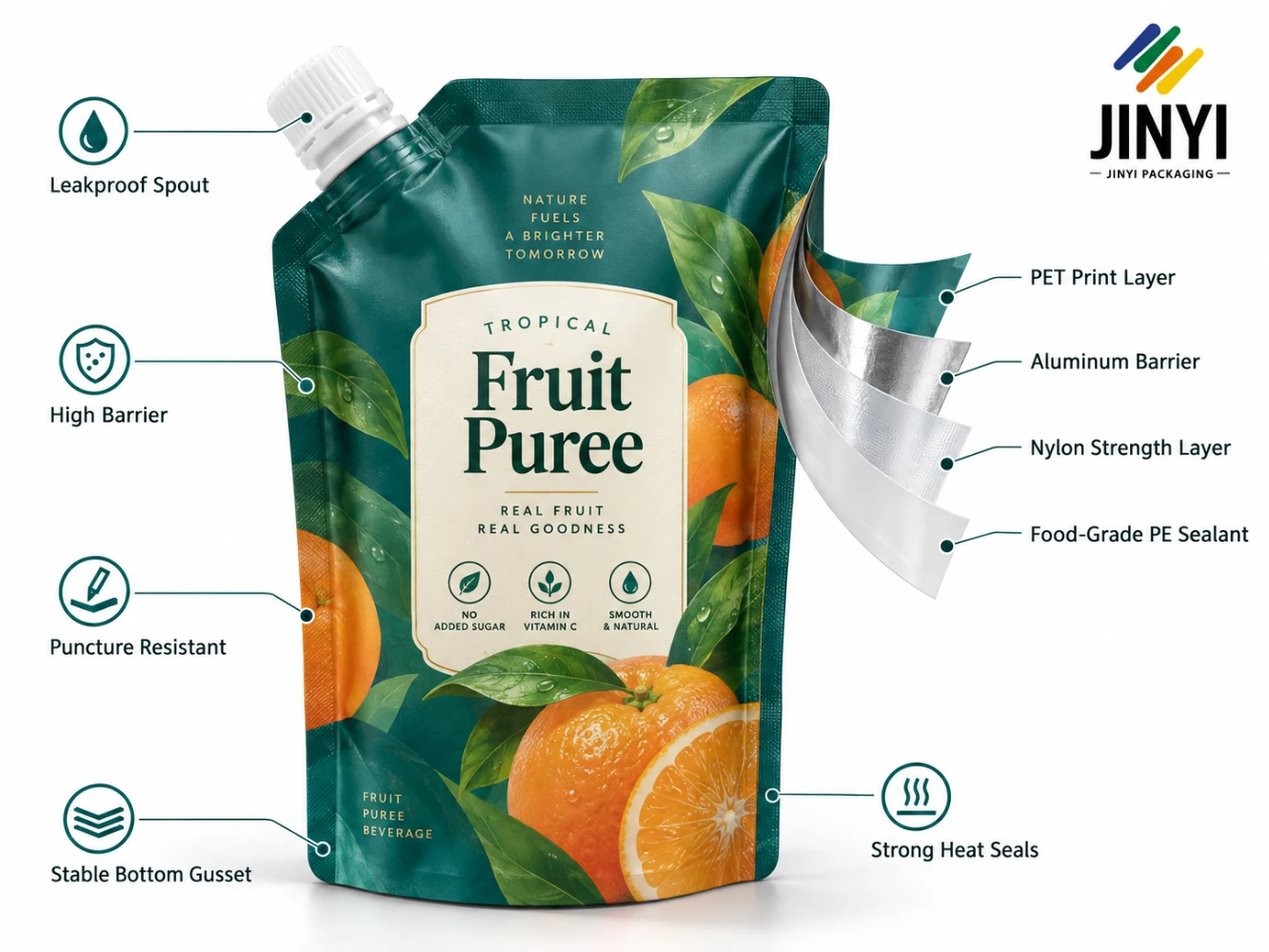
A material name is not a complete performance specification. For many ambient-filled liquid spout pouches, PET/NY/PE is a more representative starting structure than PET/PE because the NY, also called PA, adds toughness and puncture resistance. PET/PE or PA/PE may still suit smaller or less demanding applications. When the product needs stronger protection from light or oxygen, VMPET or aluminum foil must be identified inside a complete laminate rather than listed as a stand-alone material option.
Compare complete structures for the actual filling process
Start with the failure you are trying to prevent. Does oxygen change flavor, color, or active ingredients? Does light damage the product? Could flexing, product weight, or a sharp particle create pinholes? Then match the whole laminate to the filling temperature and distribution route. Standard PE sealant structures should not be carried over automatically to retort processing, where a validated RCPP-based structure and compatible spout system may be required. The structures below are practical starting points for discussion, not universal specifications.
Application condition
Representative starting structure
What must still be validated
Ambient fill, ordinary liquid
PET/NY/PE
Product compatibility, pouch weight, drop performance, and seal strength
Smaller pack with lower barrier demand
PET/PE or PA/PE
Whether the simpler structure provides enough toughness and shelf life
Higher light and oxygen barrier
PET/VMPET/PE or PET/VMPET/NY/PE
Required barrier level, flex resistance, and expected shelf life
Opaque high-barrier application
PET/AL/PE or PET/AL/NY/PE
Foil flex-crack risk, product weight, handling, and actual barrier need
Retort processing
PET/NY/RCPP or PET/AL/NY/RCPP
Exact temperature, time, pressure, adhesive, fitment, and completed-pack validation
Recyclable mono-PE direction
MDOPE/PE or BOPE/PE
Barrier, heat resistance, PE fitment compatibility, and local recycling acceptance
Tip: Ask for the complete layer order, thickness of each layer, total thickness, adhesive system, inner contact layer, and fitment material in writing. “Food grade,” “high barrier,” or “recyclable” alone does not define the pouch you are buying.
7. How Should You Plan Printing, Finishes, and SKU Quantities?
Choose the printing route from total volume, quantity per design, artwork stability, color expectations, and reorder plan. The lowest quoted unit price may not be the lowest total launch cost.
A project with one design and a stable high volume creates a different cost structure from a launch with ten flavors and frequent artwork changes. Digital printing can reduce setup barriers for smaller runs and multiple SKUs because it does not use gravure cylinders. Gravure printing can become more cost-effective at scale and offers a strong route for repeat volume, but cylinder costs, color setup, and minimum quantities must be included in your comparison.
Separate essential finishes from optional decoration
Matte, gloss, spot effects, metallic appearance, windows, and special shapes can support positioning, but each choice can affect price, lead time, structure, or minimum order quantity. Start with the shelf message your buyer must notice. Then select the smallest set of finishes that delivers it. You should also confirm whether color approval will use a digital proof, a physical print sample, a Pantone reference, or agreed tolerances on the production method.
Order situation
Route to evaluate
Cost often missed
Small launch with several SKUs
Digital printing
Different quantities by design
Stable repeat order at scale
Gravure printing
Cylinders and future artwork changes
Premium shelf presentation
Selected finish combination
Extra process, waste, and lead time
Frequent regulatory updates
Flexible artwork planning
Obsolete inventory
When comparing an online short-run service with a direct custom packaging supplier, compare the complete scope: fitment options, structure choices, color control, sample path, shipping, and reorder support. The article Sticker Mule Custom Pouches vs Direct Factory explains how the buying model changes as a packaging program grows.
Ask for pricing by SKU and by total order, and identify all one-time charges. This gives you a realistic launch budget and makes later quotations easier to compare.
8. What Samples and Tests Should You Approve Before Mass Production?
Approve samples that answer the project’s real risks. A digital artwork proof checks layout, but it cannot prove capacity, product compatibility, seal strength, dispensing, drop performance, or filling-line fit.
Use sampling in stages. A stock or blank pouch can help you check general size, hand feel, filling, pouring, and carton packing. A custom prototype can help you review the shape and artwork, although its material or construction may differ from mass production. A production-material sample is more useful for functional validation, but it may require tooling, printing setup, or a larger trial quantity. Ask what each sample represents before using it for approval.
Write a test plan based on actual distribution
Fill samples with the real product and close them using the intended method. Check for leakage in normal and inverted positions, observe them over time, and test dispensing after repeated opening and closing. For heavier pouches or e-commerce distribution, add controlled drop, compression, vibration, and carton tests appropriate to the route. Products with challenging formulas or shelf-life goals may need compatibility, migration, barrier, or stability testing through qualified parties.
Approval item
What it can confirm
What it cannot confirm alone
Digital artwork proof
Text, layout, dieline position
Final color and pouch performance
Blank physical sample
Size, fill behavior, basic handling
Final print and exact custom structure
Printed prototype
Visual direction and shape
Mass-production consistency unless matched
Functional filled trial
Filling, leakage, dispensing, handling
Long-term shelf life without a suitable study
The manufacturing overview in How Custom Stand-Up Pouches Are Made can help you understand where artwork, printing, lamination, curing, pouch making, and inspection fit into the approval process.
Tip: Record the sample code, material, fitment, dimensions, test conditions, and result. “Sample approved” is only useful when both sides know exactly which sample was approved.
9. What Must Be Confirmed Before You Place the Final Order?
Your purchase order should point to one complete, approved specification. Confirm the pouch, fitment, artwork, quantity, tolerances, quality plan, packing, schedule, shipping scope, and change-control process before production.
Most avoidable disputes begin with a detail that remained verbal or appeared differently across the quotation, artwork, sample, and purchase order. Create one final specification sheet. It should identify finished dimensions, gusset, material structure, total thickness, spout and cap, print method, finish, artwork version, quantity by SKU, and any special feature. It should also state the approved sample or test report where applicable.
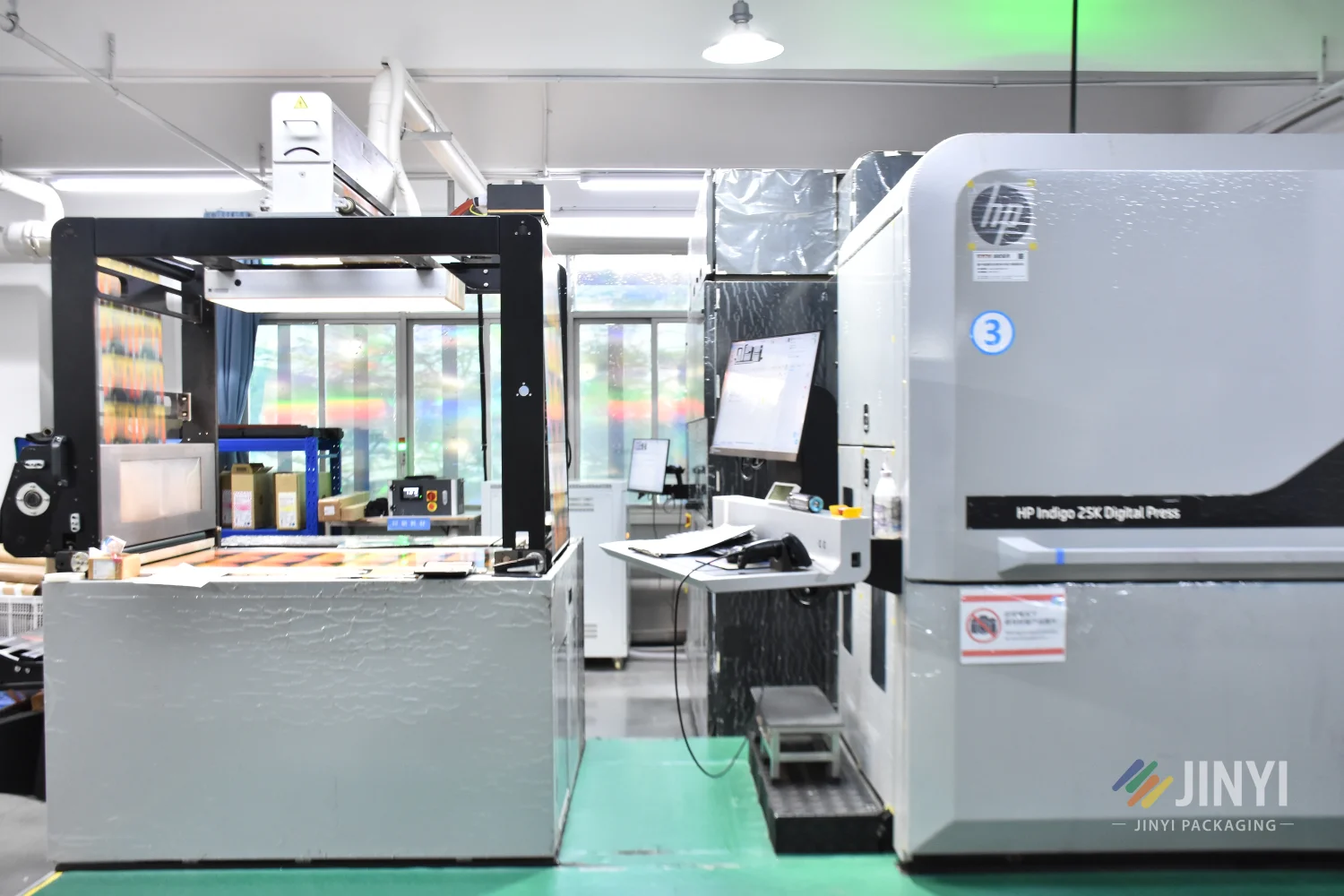
HP Indigo 25K at JINYI — consistent colour output across all press systems via ESKO Automation Engine
Confirm commercial terms with the same care as technical details
Ask what the quoted price includes, how quantity tolerances are handled, when production time starts, and which approval triggers manufacturing. Confirm carton packing, shipping marks, trade term, freight scope, and destination requirements. You should also agree on the process for changes after approval because even a small artwork or fitment change can affect cost and schedule.
Final checkpoint
Required record
Risk if missing
Pouch and fitment
Final specification and drawing
Wrong size, material, or closure
Artwork and color
Versioned proof and references
Wrong file or unexpected color
Quantity and schedule
SKU breakdown and approved timeline
Stock imbalance or launch delay
Packing and shipping
Carton plan, marks, term, destination
Damage or unexpected logistics cost
Your communication route also matters. A broker may simplify coordination, while direct supplier communication may give you closer access to specifications and production decisions. The guide The Bag Broker vs Direct Factory explains the trade-offs so you can choose the model that fits your team.
Before paying a deposit, read the final quotation, proof, and purchase order side by side. If one document uses a different specification, ask for a corrected version. This short review protects both the buyer and the supplier.
Conclusion
A reliable custom spout pouch order starts with nine connected decisions, one tested sample, and one written specification that both sides approve before production.
JINYI focuses on custom flexible packaging for food, snacks, pet food, beverages, household products, and other consumer brands. With more than 15 years of packaging experience, our team helps buyers connect product needs with practical pouch structures, printing routes, order quantities, and delivery plans.
We support gravure and digital printing options for both scalable production and flexible custom runs. From film selection to finished packaging, we focus on how the pouch performs during filling, shipping, shelf display, and consumer use. Learn more about JINYI Packaging →
Elsa
Business Development Manager · JINYI Packaging
Elsa leads business development and customer order management at JINYI. With 8 years in foreign trade across Yiwu and Dongguan, she has a sharp understanding of market demand and what buyers actually need — turning real customer insight into the right packaging decisions.
Customer needs Order management Business development
What information do I need for a custom spout pouch quotation?
Provide the product type, fill volume, estimated pouch size, filling and temperature process, spout preference, material or barrier needs, quantity by SKU, artwork status, destination, and target date. If some details are open, identify them so the supplier can propose options instead of making assumptions.
Can one spout pouch structure work for food, detergent, and industrial liquids?
You should not assume that one structure works for all three. The inner film and fitment must be compatible with the specific product, while barrier, strength, process, and regulatory needs can also differ. Evaluate each formula and use case separately.
How do I choose the right spout diameter?
Match the opening to product viscosity, particle size, desired dispensing rate, filling nozzle, and capping equipment. A larger opening may help thick products, but it can change pouring control and cost. Test the complete fitment with the real product.
Should I use digital or gravure printing?
Digital printing is often worth evaluating for smaller launches, several SKUs, or artwork that may change. Gravure is often worth evaluating for stable, repeat high volumes. Compare total setup, unit, finish, color, inventory, and reorder costs rather than only the unit price.
Are recyclable spout pouches available?
Mono-material pouch directions may be available for suitable products, but the film, barrier, spout, and cap must be reviewed as a complete package. Actual recyclability also depends on design details and the collection and recycling system in the target market, so avoid making a broad claim without checking local requirements.
What should I test before approving mass production?
At minimum, confirm real-product fill volume, filling-line fit, closure, leakage, dispensing, and carton packing. Add drop, compression, thermal, compatibility, barrier, or shelf-life testing when the product and distribution risks require them. Record exactly which sample and conditions were approved.