JINYI shares practical packaging guidance for your decisions.
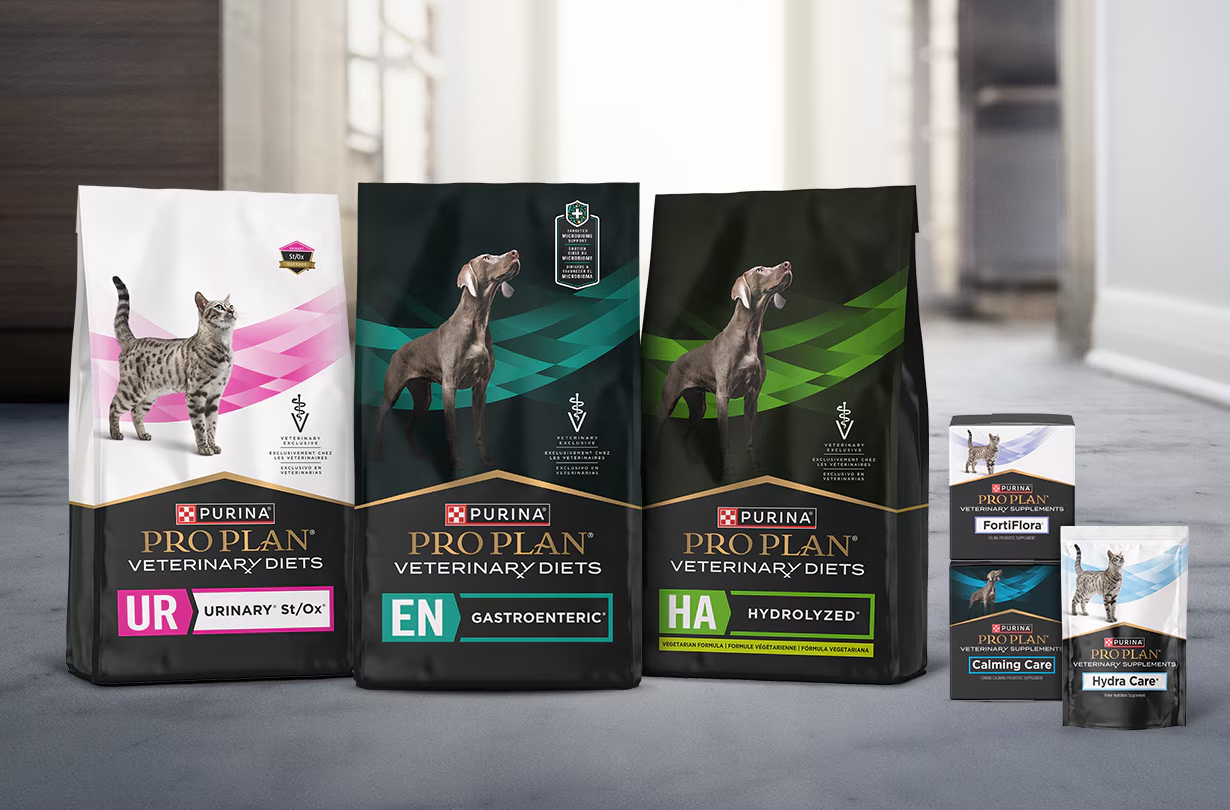
Purina Pro Plan is one of the most recognised pet food brands in the world — backed by Nestlé, distributed across every major retail channel, and trusted by veterinarians and competitive animal handlers alike. With over 175 formulas spanning dog and cat nutrition across every life stage, Pro Plan manages one of the most complex packaging portfolios in the consumer pet food industry. Their packaging decisions are not arbitrary. Every format, every bag size, every film structure choice reflects a deliberate calculation about shelf performance, barrier requirements, distribution logistics, and brand communication. For any brand building or scaling a pet food product line, understanding how Purina Pro Plan approaches packaging is one of the most practical reference points available. This breakdown covers their full dog and cat food bag portfolio — format by format, from small retail pouches to large bulk bags — and what those choices mean for brands sourcing pet food packaging of their own.
What Makes Purina Pro Plan’s Packaging Strategy Different
Most pet food brands at launch choose one bag format and apply it across their entire product line. It is the most practical approach at small volume — one tooling setup, one film specification, one supplier relationship. Purina Pro Plan operates at the opposite end of that spectrum. Their packaging portfolio spans multiple bag formats, multiple film structures, and multiple size ranges — differentiated by product category, SKU weight, retail channel, and now sustainability requirements.
This is not complexity for its own sake. Every format decision in Pro Plan’s portfolio solves a specific problem: a 3.5 lb retail bag needs to stand upright on a grocery shelf and invite a first-time buyer to pick it up; a 47 lb bag needs to stack efficiently on a pallet, resist puncture during transit, and still carry enough print area for nutritional compliance labelling. The same bag format cannot optimise for both. Understanding why Purina Pro Plan uses different formats at different weight points gives pet food brands a practical decision framework for their own packaging brief — regardless of whether they are launching at 500 units or scaling to tens of thousands.
Pro Plan’s packaging also reflects a brand-wide shift toward sustainability that is reshaping what “standard” pet food packaging looks like. Their Veterinary Diets line has already transitioned to a recyclable mono-material structure, and that transition is expanding across additional product lines. For brands entering or scaling in the pet food space, understanding where the category is heading — not just where it is today — is an equally important part of the packaging brief.
Note: Purina Pro Plan is a Nestlé brand, manufactured at facilities in the USA. Their packaging specifications reflect the requirements of large-scale retail distribution — grocery chains, pet specialty stores, mass market, and e-commerce. The formats they use are not proprietary; they are the same flexible packaging formats available to any pet food brand sourcing factory-direct.
Dog Food Bag Formats — From Small Retail to Large Bulk
Purina Pro Plan’s dog food dry range covers a wide weight spectrum — from 3.5 lb introductory sizes up to 47 lb bulk bags. Across that range, the packaging format shifts three times, each transition driven by a specific combination of shelf requirements, logistics constraints, and consumer usage patterns.
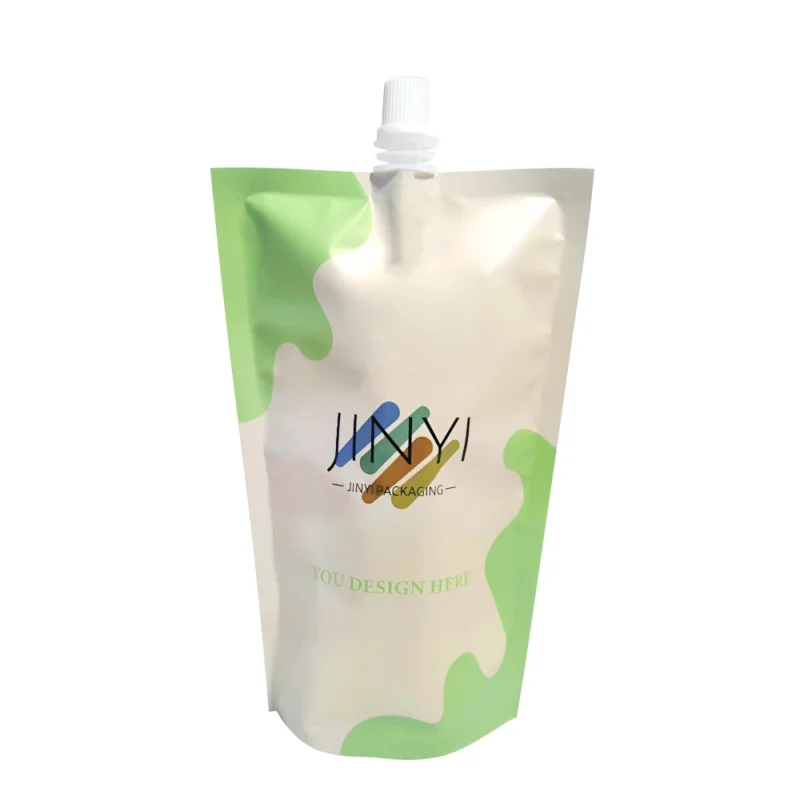
At the smaller end — 3.5 lb to 6 lb — Pro Plan uses a stand-up pouch (Doypack) format. The bottom gusset expands when filled, allowing the bag to stand upright on shelf without support. At these weights, the stand-up pouch is the right format: it provides maximum front-panel visibility for branding and nutritional information, stands independently in any retail environment, and ships flat — reducing logistics costs on smaller initial orders. This is the format most first-time buyers encounter, and it is the format that makes a first impression at the point of purchase.
In the mid-range — 15 lb to 18 lb — the format transitions to a flat-bottom bag (also called a box-bottom or quad-seal bag). The flat base provides a significantly more stable shelf footprint than a stand-up pouch at these weights, and the four printable panels — front, back, and two sides — give the brand substantially more surface area for nutritional compliance labelling, ingredient disclosure, and feeding guidelines. At 15 lb and above, a stand-up pouch begins to lose stability when partially filled; the flat-bottom format maintains its structure through the full consumption cycle.
At the high end — 30 lb to 47 lb — Pro Plan moves to a side gusset bag or large-format quad-seal structure. At these weights, the primary requirements shift from retail shelf aesthetics to logistics performance: the bag must handle the mechanical stress of filling at high speed, stack efficiently in distribution cartons, and resist puncture during pallet transport. Side gusset bags achieve this through a construction that distributes fill weight across both sides of the bag rather than concentrating it at the bottom seal — which is why this format dominates the large-volume commercial pet food category.
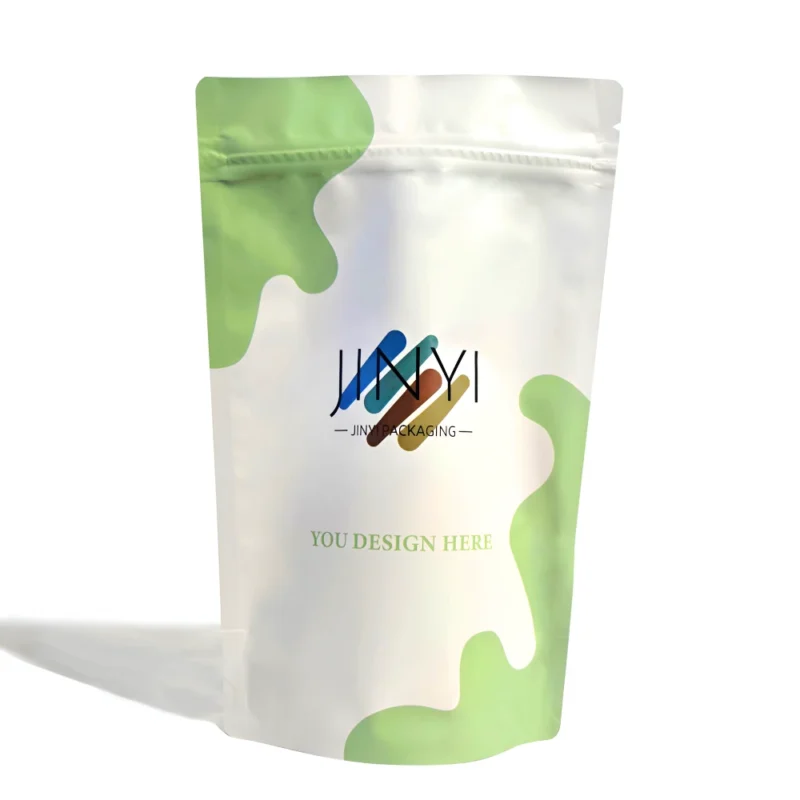
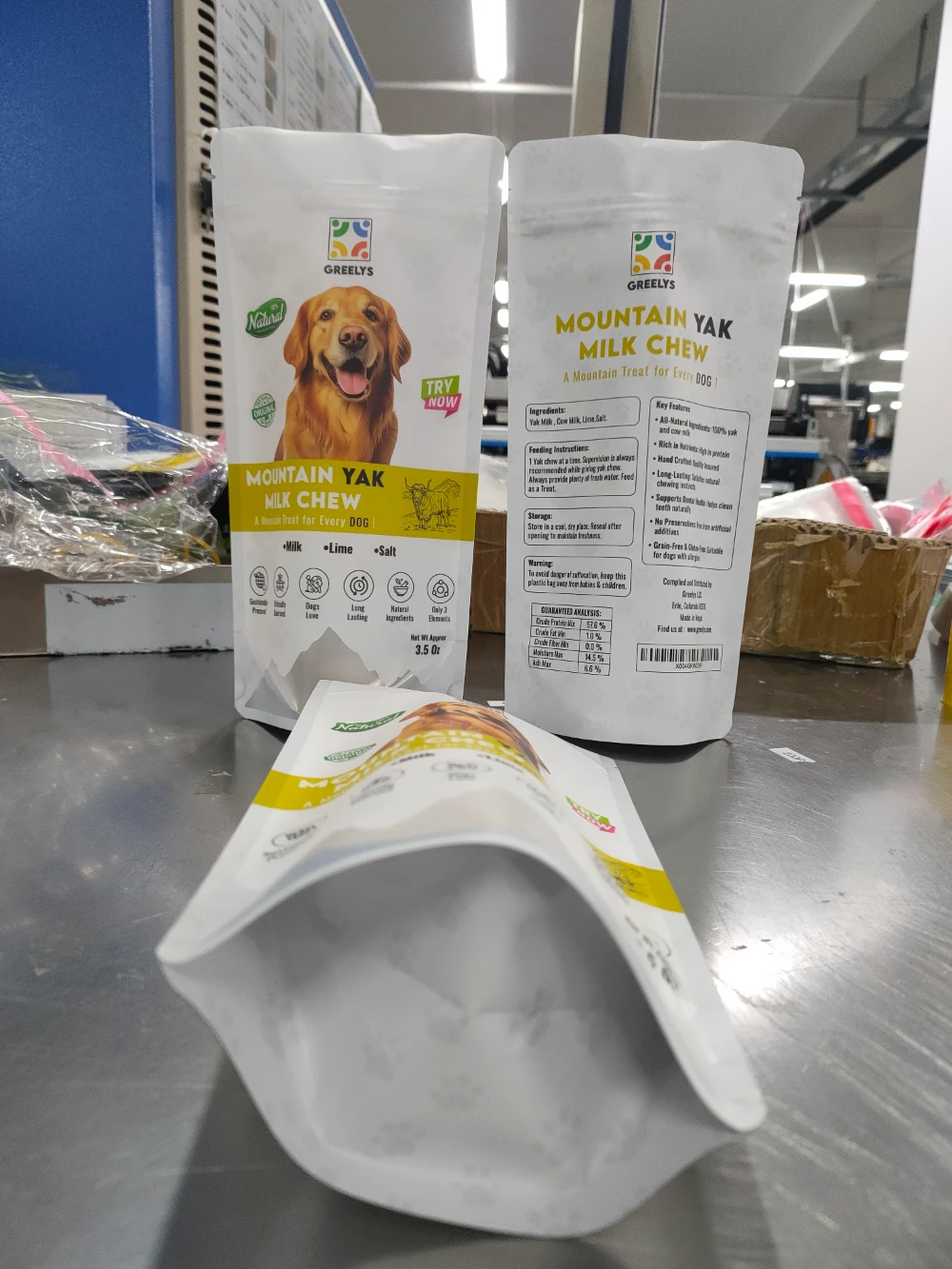
Custom pet food stand-up pouch produced at JINYI factory — white matte finish with full-colour artwork and resealable zipper
SKU Weight
Bag Format
Primary Advantage
Retail Channel
3.5 lb – 6 lb
Stand-up pouch
Shelf presence, first impression, low logistics cost
Grocery, pet specialty, DTC
15 lb – 18 lb
Flat-bottom bag
Shelf stability, large print area, premium appearance
Pet specialty, grocery, club stores
30 lb – 47 lb
Side gusset / large quad-seal
Logistics efficiency, puncture resistance, high fill volume
Mass retail, club stores, Amazon
Tip: If you are launching a pet food brand and choosing between a stand-up pouch and a flat-bottom bag for your primary SKU, the decision point is typically around 1kg to 1.5kg fill weight. Below that, stand-up pouches provide the right balance of shelf presence and cost. Above it, a flat-bottom bag’s stability and print area justify the small additional unit cost.
Cat Food Bag Formats — A More Concentrated Range
Purina Pro Plan’s cat food dry range follows a similar format logic but operates within a tighter weight range — primarily 3.5 lb, 7 lb, and 16 lb SKUs. Cat food consumption volumes are generally lower than dog food on a per-household basis, which means the ultra-large bag formats common in the dog food range are less prevalent. The 3.5 lb and 7 lb SKUs use stand-up pouches; the 16 lb bags transition to a larger format structure with greater stability and a wider front panel.
The cat food line also includes wet food formats — single-serve pouches and multi-pack trays — which operate under entirely different packaging requirements. Wet cat food pouches are retort pouches: they must withstand the high-temperature sterilisation process used to achieve ambient shelf stability. The film structure for retort applications includes a nylon layer for heat resistance and puncture performance that is not required in dry food packaging. This guide focuses on the dry food bag formats, which have the most direct overlap with custom flexible packaging production.
Product Line
Dog Food
Cat Food
Small retail SKU
3.5 lb – 6 lb stand-up pouch
3.5 lb – 7 lb stand-up pouch
Mid-range retail SKU
15 lb – 18 lb flat-bottom bag
16 lb larger format bag
Large / bulk SKU
30 lb – 47 lb side gusset / quad-seal
Less common — max typically 16 lb
Wet food format
Cans / retort pouches
Single-serve retort pouches / trays
Note: Cat food brands launching their first SKU should note that the stand-up pouch format performs well across the full 500g to 3kg weight range that covers most retail cat food portion sizes. The format is familiar to cat owners, photographs well for DTC and e-commerce channels, and allows brand differentiation through finish, colour, and print density without requiring a premium format investment at launch.
Film Structure — What’s Actually Inside the Bag
The film structure of a pet food bag determines its barrier performance — how effectively it protects the contents from oxygen, moisture, and the aromatic compounds that degrade dry kibble quality over its shelf life. Pet food is a demanding packaging application. Kibble contains fats and oils that oxidise on exposure to oxygen, shortening shelf life and producing rancidity. Moisture ingress causes clumping and microbial risk. The aroma compounds responsible for palatability — the reason dogs and cats are attracted to the food — are volatile and dissipate through insufficiently barrier films, reducing product appeal before the bag is even opened.
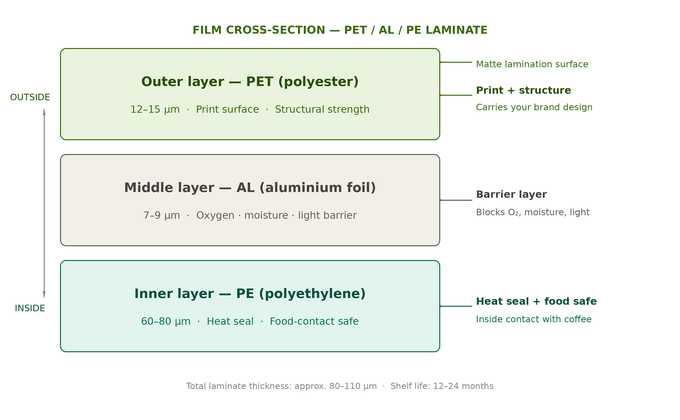
Purina Pro Plan’s dry food bags use a multi-layer laminate structure with a metallised film barrier layer — most commonly a PET / VMPET / PE construction. The outer PET layer provides the print substrate and structural rigidity. The middle VMPET (vacuum-metallised polyester) layer provides the barrier performance — blocking oxygen, moisture, and light at a level sufficient for the 12 to 18 month shelf life that retail pet food requires. The inner PE layer provides the heat-seal capability and food-contact surface.
The choice of VMPET rather than aluminium foil (AL) for pet food is a deliberate cost-versus-performance calculation. Aluminium foil delivers near-zero OTR — approximately 0.01 cc/m²/day — and is the right choice for products where oxygen sensitivity is extreme, such as freshly roasted coffee or ceremonial-grade matcha. For dry kibble, VMPET’s OTR of 0.5 to 1.5 cc/m²/day is sufficient to maintain product quality through a standard retail shelf life cycle, while reducing material cost and improving the bag’s recyclability profile compared to foil-containing laminates.
Film Structure
OTR
Shelf Life (Dry Kibble)
Best For
PET / VMPET / PE
0.5–1.5 cc/m²/day
12–18 months
Standard retail dry kibble — most pet food brands
PET / AL / PE
~0.01 cc/m²/day
18–24 months
High-fat freeze-dried, raw-coated, or sensitive formulas
Mono-material PE
2–5 cc/m²/day
12 months (standard conditions)
Sustainable / recyclable formats — Purina’s new direction
NY / PE (retort)
20–40 cc/m²/day
12–24 months (sterilised)
Wet food pouches requiring retort sterilisation
For large-format bags at 30 lb and above, the inner PE layer is typically specified at a higher gauge — thicker film — to improve puncture resistance during high-speed filling and pallet transport. A 47 lb bag of kibble exerts significant downward pressure on the bottom seal when stacked; the inner layer specification at that weight range is as much about mechanical performance as it is about food-contact safety.
Tip: If your pet food formula is high in fat content — raw-coated kibble, freeze-dried toppers, or high-meat recipes — consider specifying PET/AL/PE rather than VMPET for your primary bag. The higher fat content accelerates oxidation, and the additional barrier performance of aluminium foil is worth the modest cost premium when the alternative is a shorter effective shelf life and potential rancidity complaints.
The Sustainability Shift — Purina Pro Plan’s Recyclable Packaging Initiative
One of the most significant recent developments in Purina Pro Plan’s packaging strategy is their transition to recyclable mono-material structures — and it has direct implications for any pet food brand thinking about where the category is heading over the next five years.
In 2023, Purina’s Pro Plan Veterinary Diets line introduced a new recyclable packaging format developed in collaboration with ProAmpac — the QUADFLEX® Recyclable. This is a five-panel quad-seal bag constructed from a mono-material polyethylene (PE) laminate, pre-qualified for in-store drop-off polyethylene recycling streams. The innovation addresses one of the core challenges of sustainable flexible packaging: most multi-layer laminates (PET/VMPET/PE, PET/AL/PE) cannot be recycled because their layers are made from incompatible materials that cannot be separated at recycling facilities. Mono-material PE structures use a single polymer type throughout all layers, allowing the whole bag to be processed in PE recycling streams.
The technical challenge of mono-material pet food packaging is achieving sufficient barrier performance with a single-polymer structure. Standard PE film has an OTR of 2 to 5 cc/m²/day — adequate for a 12-month shelf life under standard storage conditions, but lower than the barrier performance of VMPET or aluminium foil laminates. ProAmpac’s QUADFLEX® Recyclable addresses this through advanced film engineering — achieving a barrier performance that, according to ProAmpac’s director of global sustainability innovation, “rivals its conventional predecessor” while maintaining the grease resistance and dimpling resistance required for pet food applications. The collaboration won the 2023 AmeriStar Award from the Institute of Packaging Professionals — the industry’s most recognised packaging innovation award.
Factor
Standard Multi-Layer Laminate
Mono-Material PE (Recyclable)
Barrier performance
High — VMPET or AL core layer
Good — advanced PE engineering
Recyclability
Generally not recyclable
Recyclable in PE streams — store drop-off
Unit cost
Lower at standard volumes
Currently slight premium — closing gap
Brand positioning
Standard — no sustainability signal
Sustainability credentials — How2Recycle label
Retail acceptance
Universal
Growing — major retailers prioritising sustainable SKUs
Note: The direction Purina Pro Plan is moving is the direction the category is moving. Major retail chains in the US and EU are increasingly requiring sustainability documentation from pet food suppliers — and in some markets, recyclable packaging is becoming a condition of shelf placement rather than a differentiator. If your pet food brand has a 3 to 5 year horizon, building recyclability into your packaging brief now is a strategic decision, not just an ethical one.
What Purina Pro Plan’s Packaging Tells Pet Food Brands — And How to Source the Same Structure Factory-Direct
The packaging formats Purina Pro Plan uses across their dog and cat food range — stand-up pouches, flat-bottom bags, side gusset bags — are not proprietary structures. They are the standard production formats of the flexible packaging industry, available to any brand regardless of volume. What Purina’s portfolio demonstrates is not that large brands have access to better packaging. It is that the packaging decision framework they use — matching format to weight, barrier spec to product sensitivity, and sustainability structure to long-term brand positioning — is the same framework that should inform every pet food packaging brief, whether you are ordering 500 units or 500,000.
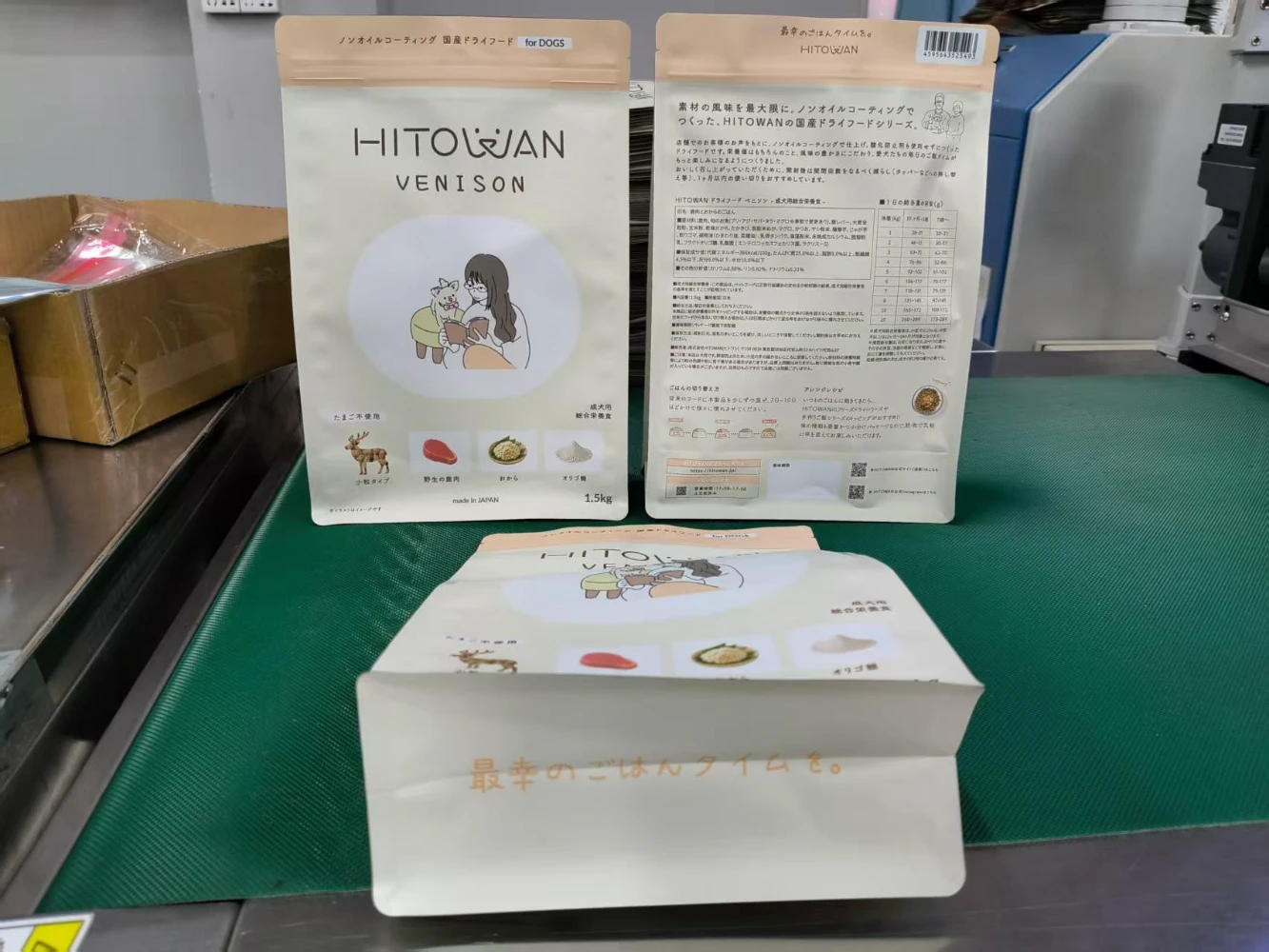
HITOWAN Venison flavour flat-bottom pouches produced at JINYI — structured base format for premium Japanese pet food retail display
At JINYI, the full range of pet food packaging formats is available factory-direct — stand-up pouches, flat-bottom bags, and side gusset bags in PET/VMPET/PE or PET/AL/PE structures, from 500 units via HP digital print with no plate fee. Every order includes a full material specification document covering film layer breakdown, OTR and MVTR values, and food-contact certifications — the same documentation that retail buyers and pet food compliance teams require. For brands building toward retail distribution, having this documentation ready from your first production run is not optional; it is what separates a brand that can enter retail from one that cannot.
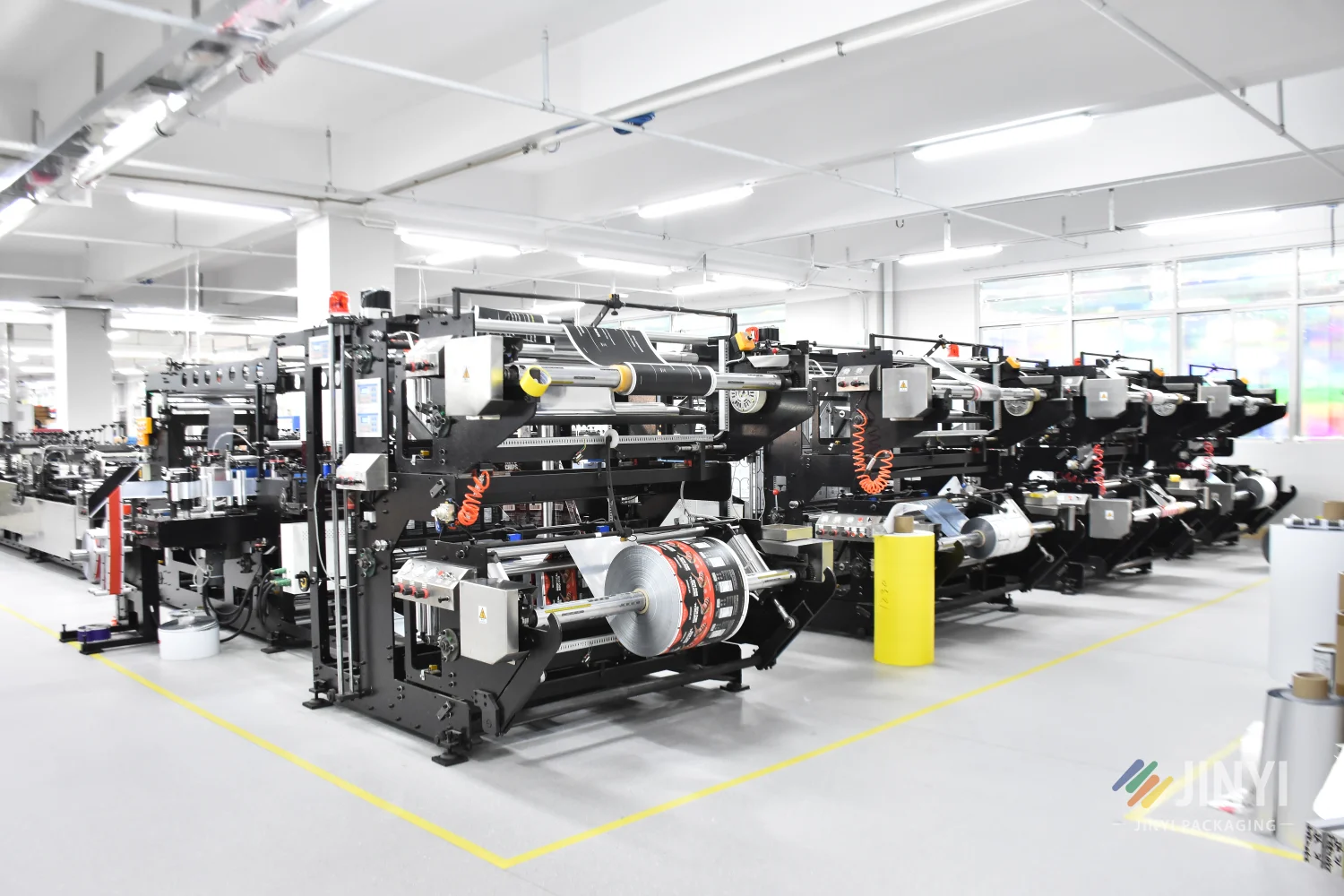
Understanding the full flexible packaging manufacturing process — from film selection through printing, lamination, bag making, and quality control — is the best way to make informed sourcing decisions for your pet food brand. Our complete guide to how custom stand-up pouches are made covers every production stage in detail, with the specific equipment, standards, and quality controls applied at each step.
JINYI bag-making line — forming, sealing, and cutting custom stand-up pouches with validated seal parameters for every run
Spec
Platform / Intermediary
JINYI Direct Factory
MOQ
1,000–3,000 units typical
From 500 units (digital print)
Plate / setup fee
Often included in unit price
None for digital print
Material spec document
Rarely provided as standard
Included with every order
Format options
Limited by platform catalogue
Stand-up pouch, flat-bottom, side gusset, quad-seal
Scale path
Platform pricing, limited flexibility
Digital → gravure at volume, unit cost drops
For pet food brands looking for a complete overview of packaging options by product type, our pet food packaging solutions page covers the full range of formats, materials, and configurations available for dog food, cat food, treats, and supplements.
Get a Factory-Direct Quote for Your Pet Food Packaging
Tell us your bag format, fill weight, target shelf life, and quantity. We will come back within 24 hours with a full specification recommendation, material documentation, and factory-direct pricing — no intermediary, no hidden fees.
JINYI is a source factory for custom flexible packaging with 15+ years of production experience, serving food, supplement, coffee, pet food, and consumer goods brands across 150+ countries. We produce stand-up pouches, flat-bottom bags, side gusset bags, and custom formats in a full range of barrier specifications — from standard VMPET laminates to high-barrier aluminium foil structures — via HP Indigo digital print from 500 units and gravure printing at volume.
Every client receives full material specification documentation with their order as standard. That is what From Film to Finished — Done Right means in practice.
Elsa
Business Development Manager · JINYI Packaging
Elsa leads business development and customer order management at JINYI. With 8 years in foreign trade across Yiwu and Dongguan, she has a sharp understanding of market demand and what buyers actually need — turning real customer insight into the right packaging decisions.
Customer needs Order management Business development
What bag format does Purina Pro Plan use for large dog food bags?
Purina Pro Plan uses side gusset bags or large-format quad-seal bags for their high-volume dog food SKUs at 30 lb to 47 lb. These formats distribute the fill weight across the sides of the bag, improving mechanical performance during high-speed filling and pallet transport. For smaller retail SKUs at 3.5 lb to 6 lb, Pro Plan uses stand-up pouches; mid-range SKUs at 15 lb to 18 lb use flat-bottom bags.
What film material is used in Purina Pro Plan dog food bags?
Purina Pro Plan dry food bags use a multi-layer laminate with a metallised film barrier layer — primarily a PET/VMPET/PE structure. The outer PET layer provides the print surface; the middle VMPET layer provides barrier performance against oxygen, moisture, and light; and the inner PE layer provides heat sealing and food-contact safety. This structure delivers an OTR of 0.5 to 1.5 cc/m²/day — sufficient for the 12 to 18 month shelf life that retail pet food requires.
Is Purina Pro Plan packaging recyclable?
Purina Pro Plan is actively transitioning toward recyclable packaging. Their Veterinary Diets line has already introduced the QUADFLEX® Recyclable format — a mono-material polyethylene bag pre-qualified for in-store drop-off recycling streams, developed in collaboration with ProAmpac and awarded the 2023 AmeriStar Award by the Institute of Packaging Professionals. Their broader product lines are transitioning on a phased basis as sustainable film technology matures and becomes more cost-competitive.
What is the difference between a stand-up pouch and a flat-bottom bag for pet food?
A stand-up pouch has a bottom gusset that expands when filled, allowing the bag to stand upright. It is the most cost-effective format for smaller retail weights (up to around 1.5 kg) and provides good shelf presence and brand visibility. A flat-bottom bag has a structured flat base, providing greater stability on shelf at higher fill weights, a wider footprint, and four printable panels for branding and compliance labelling. It is the preferred format for mid-range retail SKUs from 1.5 kg to 5 kg. Both formats are available factory-direct from JINYI from 500 units.
Can I get the same pet food packaging as Purina Pro Plan factory-direct with low MOQ?
Yes. The stand-up pouches, flat-bottom bags, and side gusset bags that Purina Pro Plan uses are standard flexible packaging formats, available factory-direct from JINYI from 500 units via HP digital print with no plate fee. Full material specification documentation — OTR, MVTR, film layer breakdown, and food-contact certifications — is included with every order as standard. For brands scaling to higher volumes, the same factory transitions to gravure printing at lower per-unit cost without changing the film specification or supplier relationship.