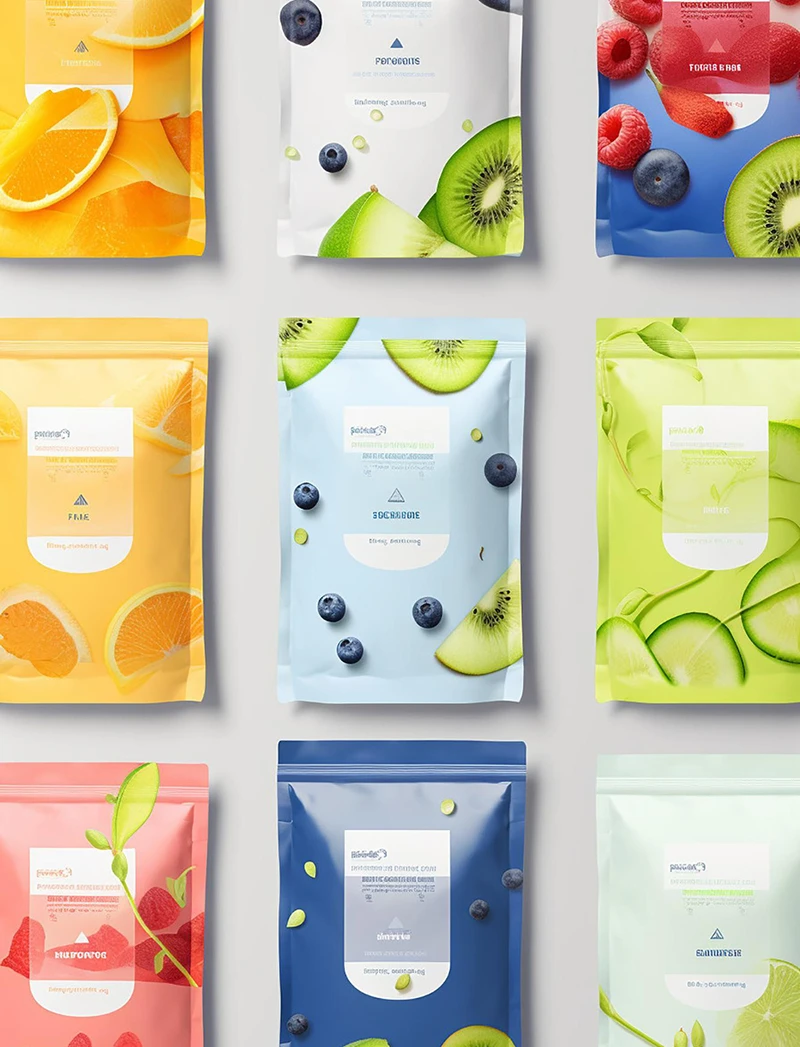
JINYI shares practical packaging guidance for your decisions.
A single pouch on a shelf competes for attention. A coordinated set — matching pouches, display box, consistent finish across every surface — commands it. Supermarket shelves are where the majority of packaged consumer goods are sold, and they are also where the competition for visual attention is most intense: a shopper makes a purchase decision in under 3 seconds at the point of sale, and a matched packaging set with strong shelf impact is one of the few tools a brand controls entirely. For brands selling through supermarkets, dispensaries, specialty stores, or countertop displays, the packaging set is not an add-on to the product. It is the product experience, from the moment a buyer sees it across the aisle to the moment a consumer picks it up and opens it.
This guide covers everything that goes into ordering a custom retail packaging set: how display box structures work, which pouch formats pair best with which box types, how surface finish combinations like matte lamination and spot UV create shelf impact, why printing method matters when you are running multiple SKUs, and how to order the whole set as a matched, coordinated production run. For a deeper look at how flexible pouches are built from the film up, our complete guide to how custom stand-up pouches are made covers the production process end to end.
What Is a Retail Display Packaging Set — and Why Brands Order Them Together
A retail display packaging set is a coordinated production order that combines individual product pouches with a display box designed to hold, present, and sell them together. The pouch and the box share the same brand artwork, the same surface finish, and the same print production run — which means every visual element across both pieces is consistent in colour (ΔE ≤1.5 under digital print), finish, and quality from day one.
The reason brands order them together rather than separately comes down to three things. First, visual consistency: when the pouch and box are produced in the same run with the same colour profile, the brand reads as intentional and complete on shelf. When they are ordered separately from different suppliers or at different times, colour deviation and finish mismatches are almost inevitable — a ΔE variance of just 2.0 between two surfaces is visible to the naked eye under standard retail lighting. Second, logistics efficiency: a matched set arrives ready to display — the retailer opens the shipping box, places the display unit on the counter or supermarket shelf, and the product is immediately presentable. Third, retail buy-in: a brand that arrives with a purpose-built display unit is a brand that a retailer can place without additional merchandising effort. In supermarket environments where category buyers evaluate hundreds of brands, arriving with a retail-ready matched set is a meaningful competitive advantage when pitching for shelf placement.
Note: Ordering pouches and display boxes as a matched set does not necessarily mean ordering them in the same quantities. A common configuration is one display box per ten to twenty pouches — the box is the permanent fixture, the pouches are the replenishable stock. Confirm your sell-through rate with your retail partner before setting your box-to-pouch ratio.
Display Box Structures: Self-Standing Background Box vs Clear Window Box
Not all display boxes work the same way. The two formats most commonly used with custom pouches are the self-standing background display box and the clear window box — and they serve fundamentally different retail functions.
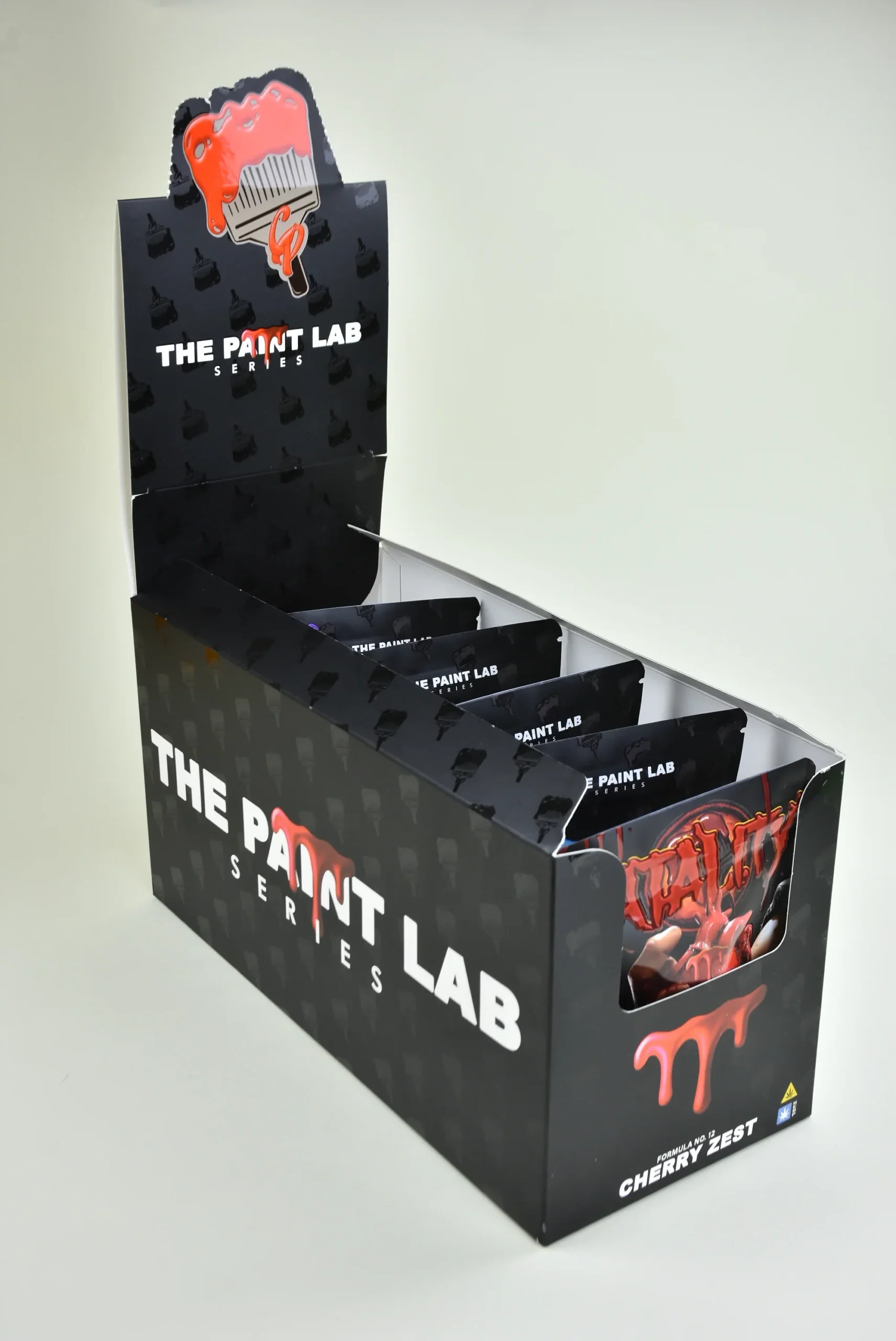
Display box open and assembled — die-cut back panel creates a branded retail backdrop.
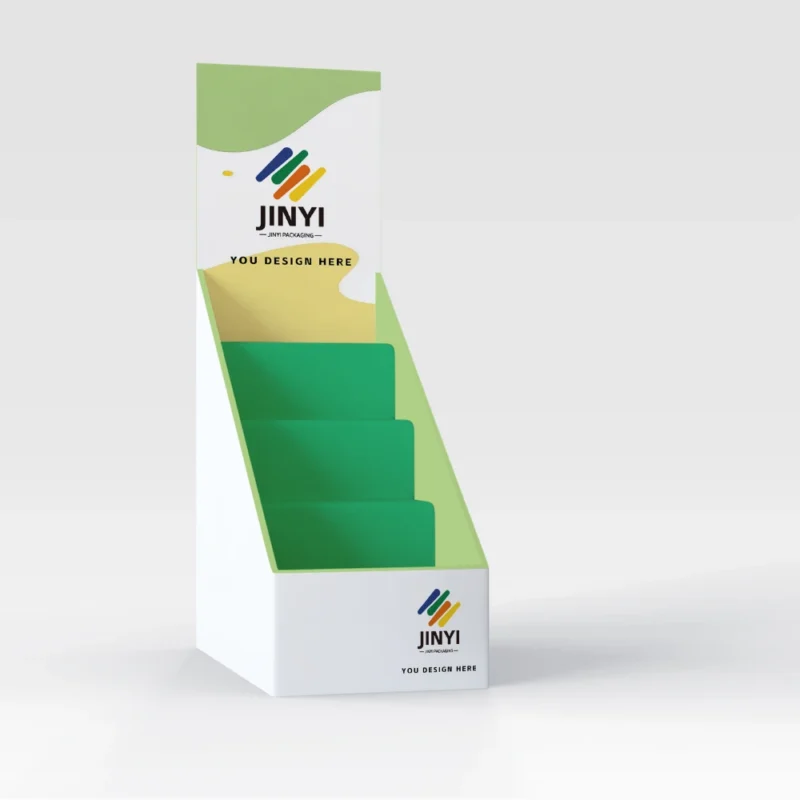
The self-standing background display box is an open-front counter display with a structural back panel that folds up to create a vertical backdrop behind the products. Constructed from 300–400gsm coated board with a full-colour printed outer surface, the tray holds the pouches in a forward-facing orientation while the back panel carries the brand’s primary visual — logo, artwork, campaign imagery. When executed well, the result is a complete branded retail environment in a single compact unit. The back panel can be die-cut to a custom shape — a character silhouette, a brand symbol, an architectural form — with a die-cut tolerance of ±0.5mm for precise outline reproduction. This format works best for brands where the pouch itself is a strong visual object, because the product is the display.
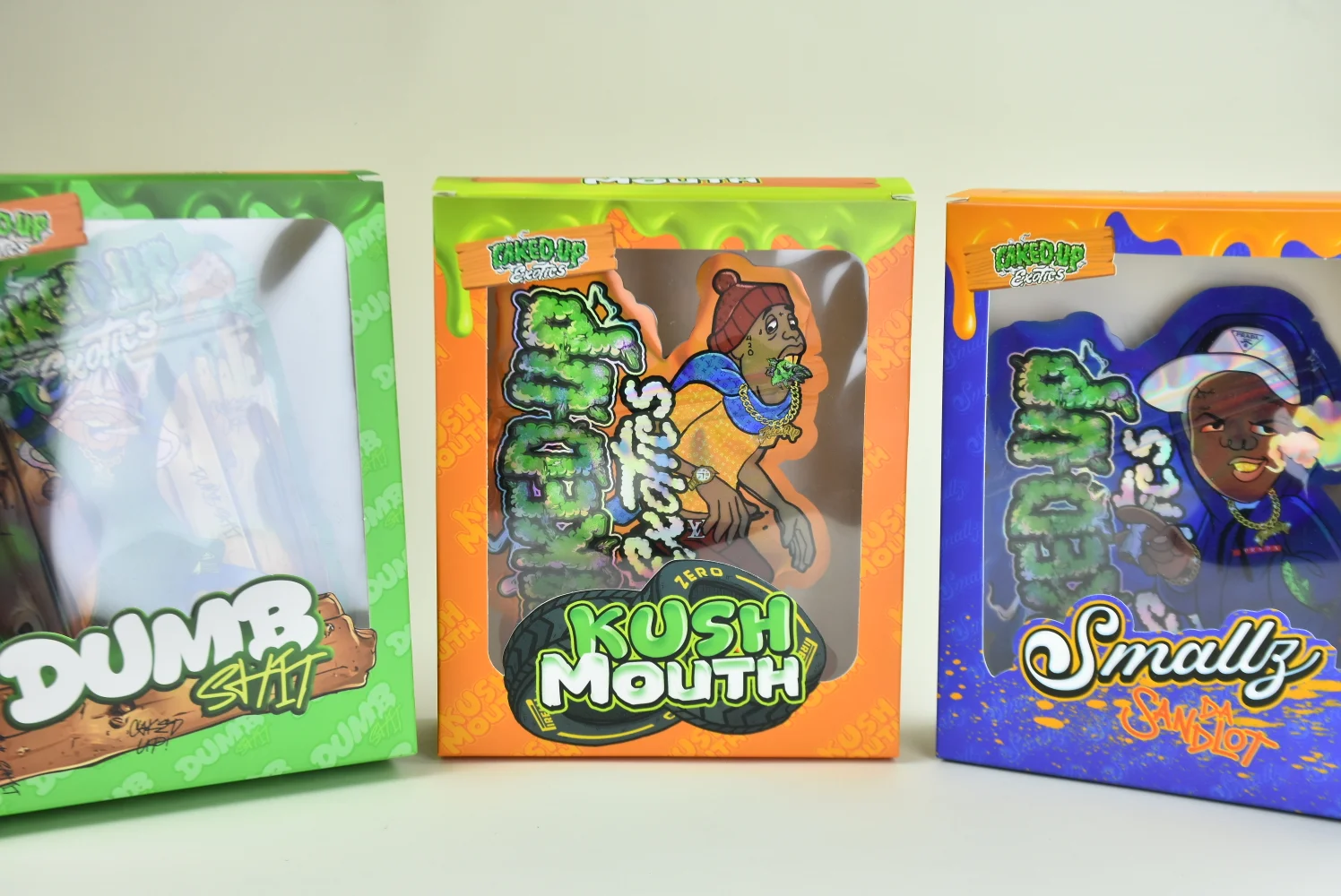
Three SKU variants in clear window boxes — the holographic pouch is fully visible through the panel.
The clear window box is an enclosed box with a transparent PET or PP window panel — typically 0.3–0.5mm thickness — that allows the product inside to be seen without opening the box. The pouch — particularly a die-cut shaped pouch with distinctive artwork or a holographic finish — is visible through the window, making the packaging itself part of the visual merchandising. This format is particularly effective when the pouch design is the hero: the window frames the product like a display case, creating a collectible, premium, or gift-like feel that commands a higher price point in both retail and e-commerce channels.
Structure
How It Works
Best For
Self-standing background box
Open-front tray with die-cut back panel (±0.5mm tolerance) that folds up to create a branded vertical backdrop; 300–400gsm coated board
Enclosed box with 0.3–0.5mm transparent PET/PP window panel — product visible without opening
Premium single SKU, collectible packaging, gift positioning, e-commerce hero shots
Tip: The self-standing background box works best when you have multiple SKUs to display simultaneously — the open tray allows a full range to be visible at once, making it easy for the consumer to compare variants and choose. The clear window box works best when you have one hero product or one variant per box, and the product design itself is the reason to buy.
Pouch Formats for Retail Sets: Standard Stand-Up, Die-Cut, and Shaped Pouches
The pouch format you choose for a retail set is not independent of the display box decision — the two need to work together structurally and visually. A die-cut shaped pouch in a self-standing display tray reads very differently to a standard stand-up pouch in a clear window box, and the combination you choose sends a clear signal about your brand’s positioning before anyone reads the label.
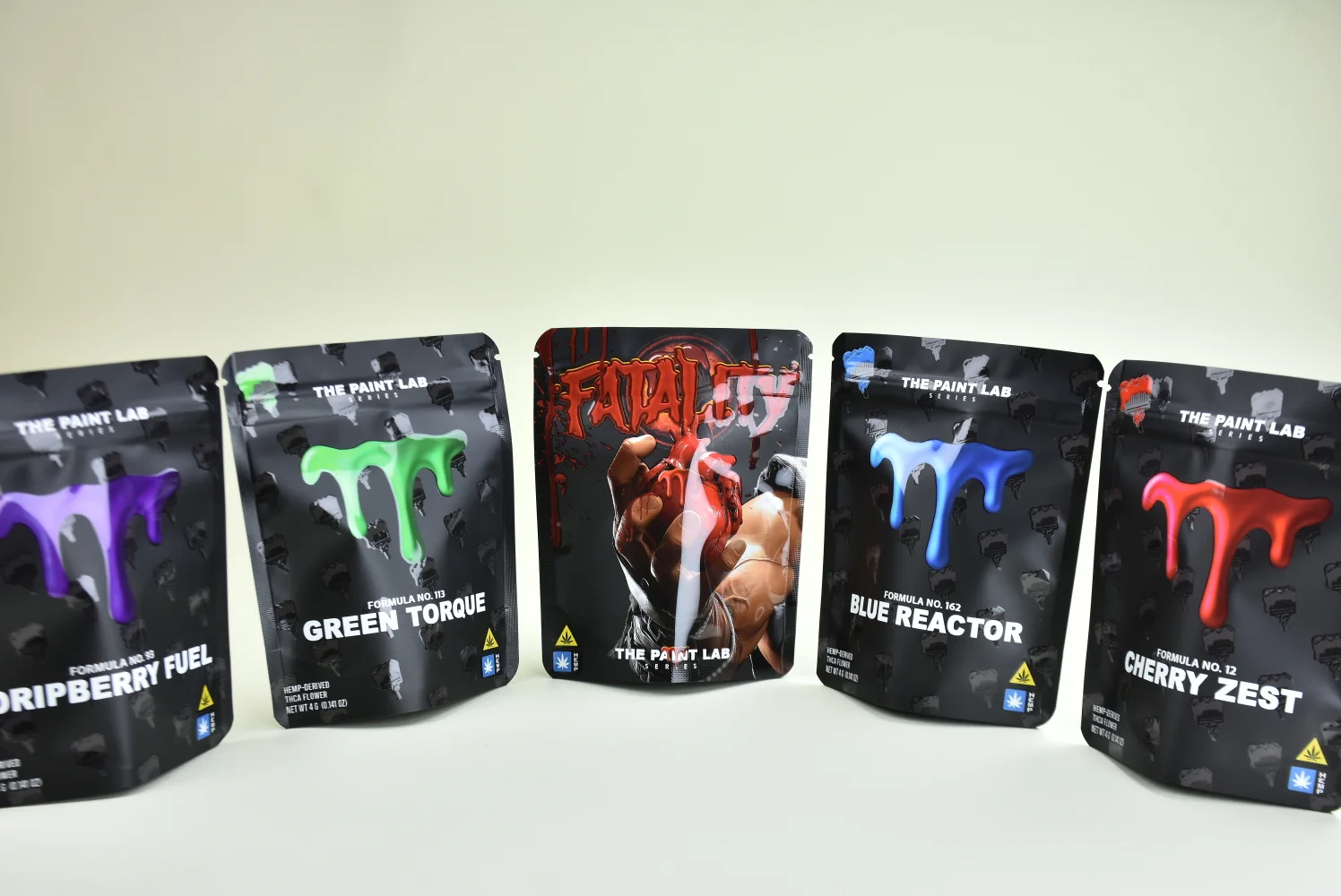
Multiple variants side by side — consistent matte finish across the full range.
The standard stand-up pouch is the most widely used format in retail packaging sets. It stands upright in the display tray, provides a full-bleed front panel for brand artwork, and is available across the widest range of sizes, materials, and finish options. For multi-SKU sets where several variants need to be displayed together, the stand-up pouch is the practical default: consistent dimensions across the range make for clean, orderly counter display, and the format is immediately familiar to retail buyers and consumers alike.
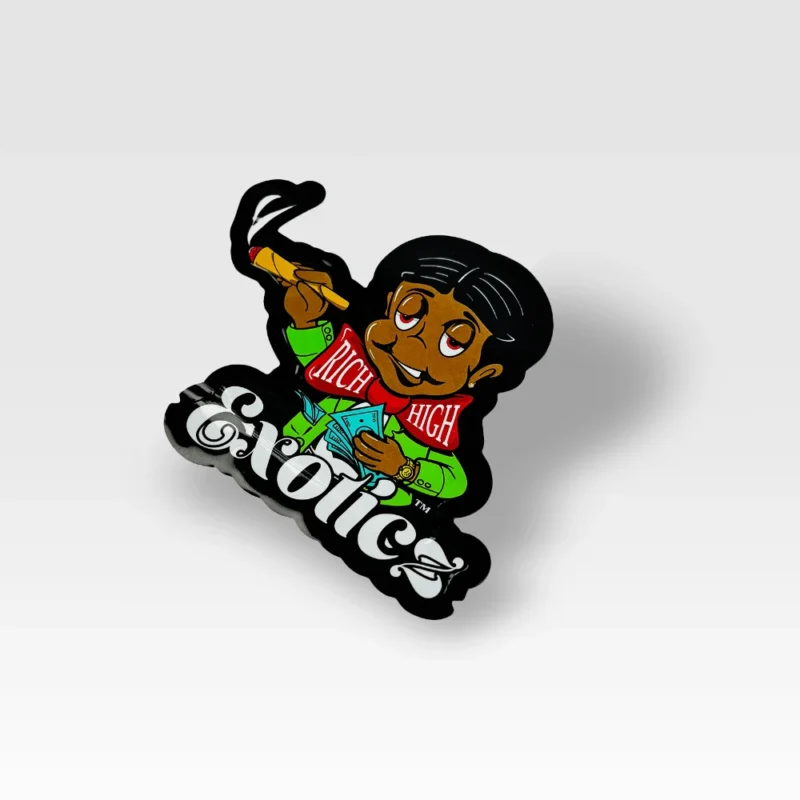
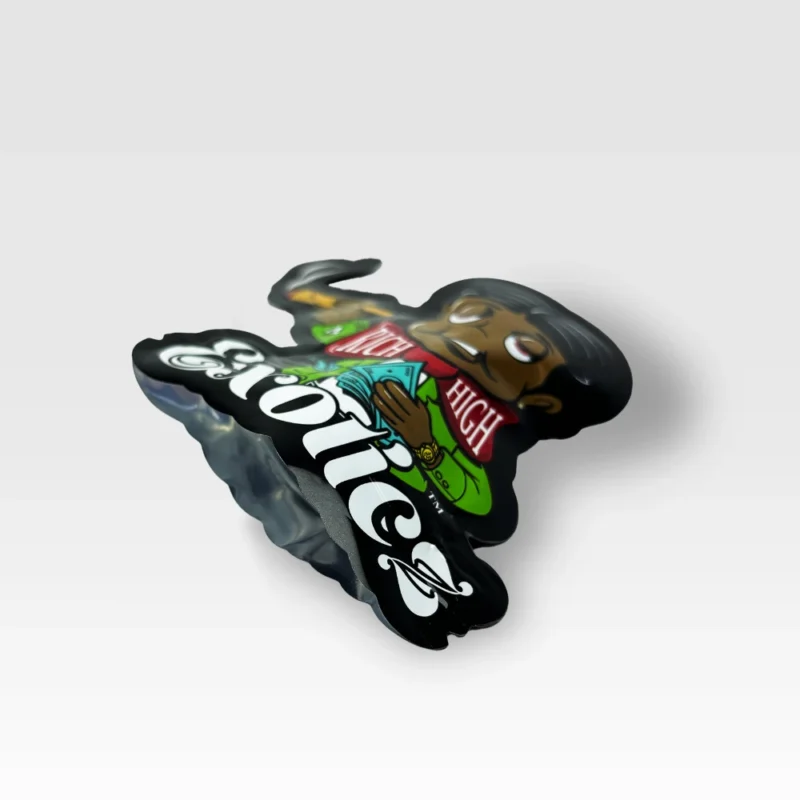
The die-cut shaped pouch is the format that makes a packaging set impossible to ignore. Instead of the standard rectangular profile, the bag is cut to follow the outline of the artwork — a character, a logo shape, an organic form — so that the silhouette of the packaging itself becomes part of the brand identity. When a die-cut pouch is placed in a clear window box, the shaped outline is framed like artwork. When it is placed in a self-standing display tray, the irregular silhouettes of multiple variants create a visually dynamic display that reads as distinctive from across the room. The trade-off is a higher production cost and slightly longer lead time compared to a standard stand-up pouch — but for brands where shelf differentiation is the primary objective, the investment is almost always justified.
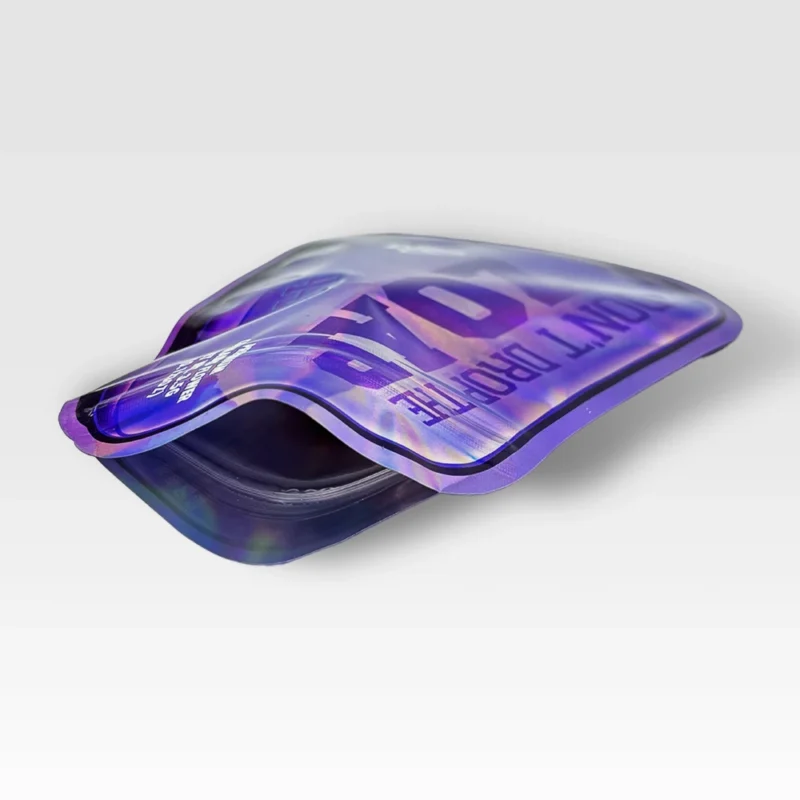
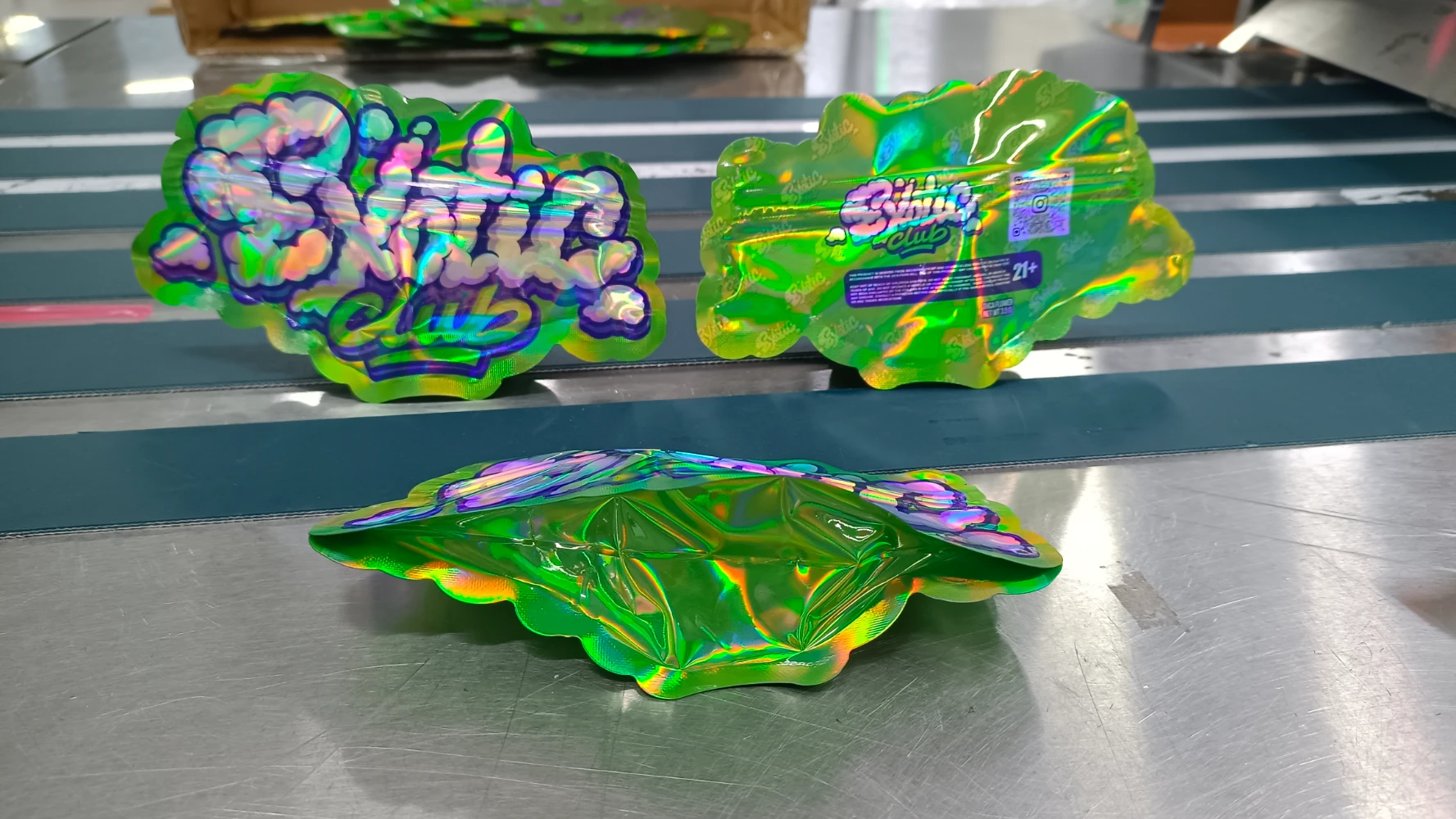
Die-cut shaped pouches from the side — holographic surface catches light at every angle.
Pouch Format
Best Paired With
Positioning Signal
Standard stand-up pouch
Self-standing background box
Premium, brand-forward, retail-ready
Die-cut shaped pouch
Clear window box or background display
Collectible, statement, maximum shelf impact
Tip: If you are ordering a die-cut pouch for the first time, have your dieline confirmed before finalising the window cut on your display box. The window aperture needs to be sized to the exact pouch silhouette — an error here is expensive to correct after production has begun.
Special Effect Films and Surface Finishes: Matte + Spot UV vs Holographic
Surface finish is where a retail packaging set either earns its shelf presence or loses it. The finish strategy you choose communicates your brand’s positioning, price point, and consumer target before a single word is read — and in a competitive retail environment, it is one of the few decisions entirely within your control.
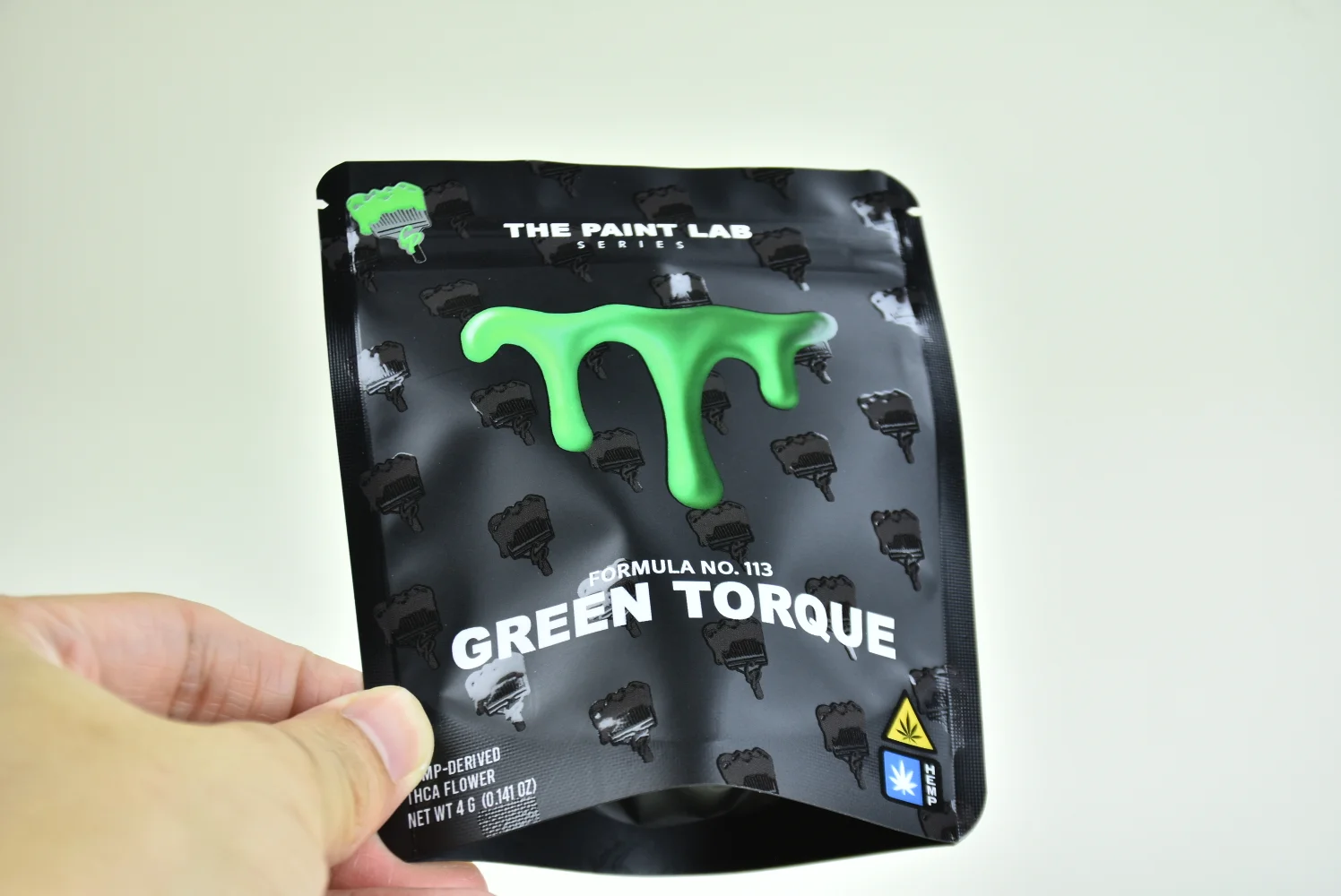
Green Torque variant in hand — showing the matte finish and spot UV contrast up close.
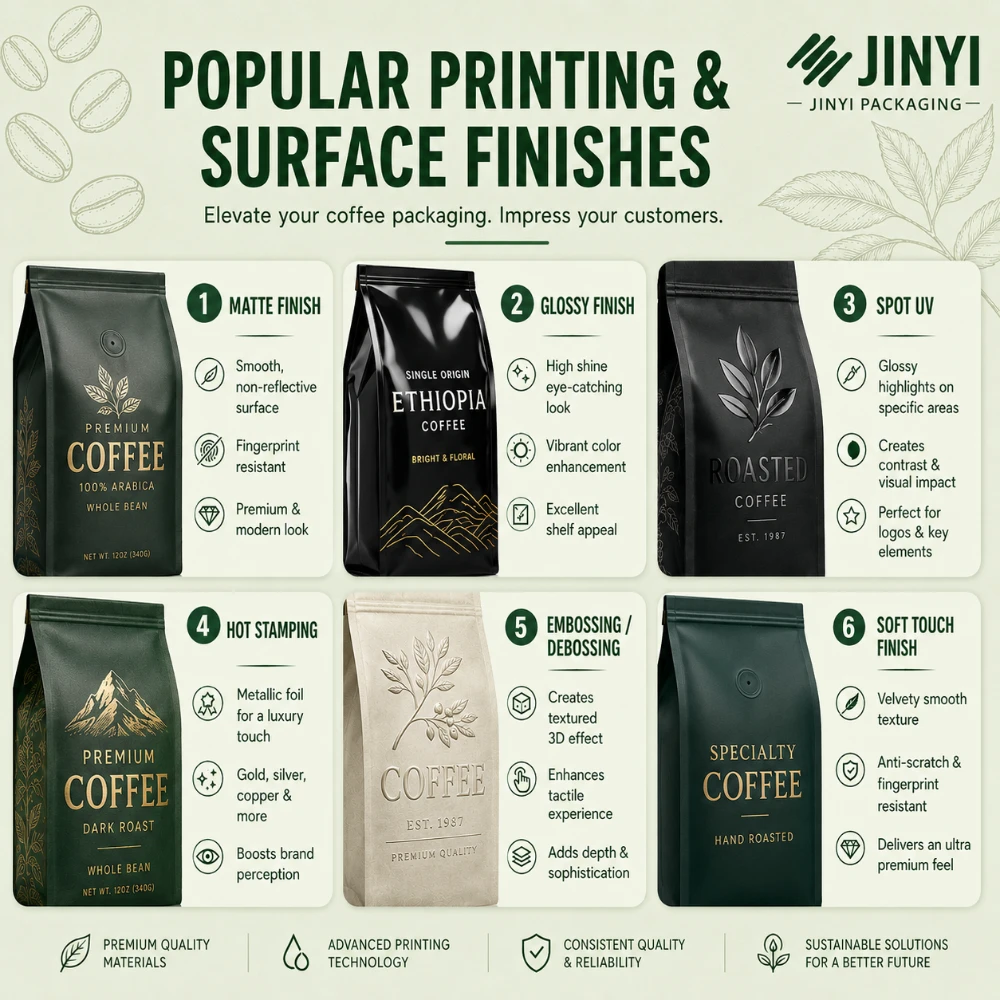
Matte lamination + spot UV is the finish combination of choice for brands that want to communicate premium quality, craft, and intentionality. The matte base layer — applied at 1.5–2.0 microns — creates a flat, non-reflective surface with an optical density (OD) ≥1.8, making colours read as deeper and more saturated than they do under gloss. The spot UV layer applies a high-gloss varnish at ≥85 GU (gloss units) to specific areas of the design — the logo, a key graphic element, a brand symbol — creating a tactile and visual contrast between the matte background and the glossy accent. In a dark or moody design, this contrast is dramatic: the matte field recedes, the UV-coated element catches the light and jumps forward. On a supermarket shelf where dozens of competing products sit side by side, this contrast is visible from 2–3 metres — significantly beyond the reach of flat finishes. The result is a bag that feels expensive before it is opened, and a display set where every surface — pouch and box — carries the same premium signal consistently.
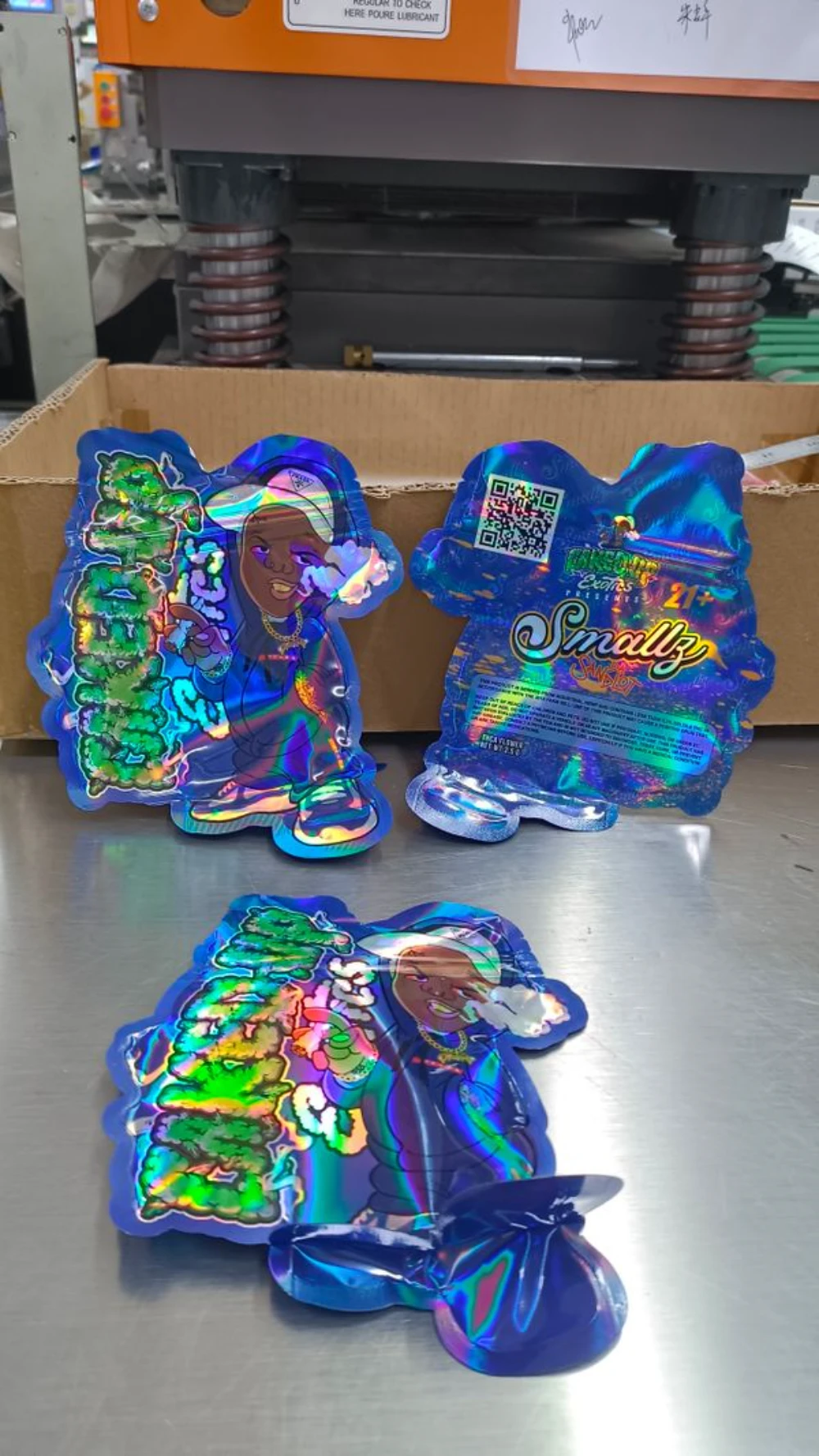
Fresh off the line — custom die-cut cannabis bags produced at JINYI’s flexible packaging facility.
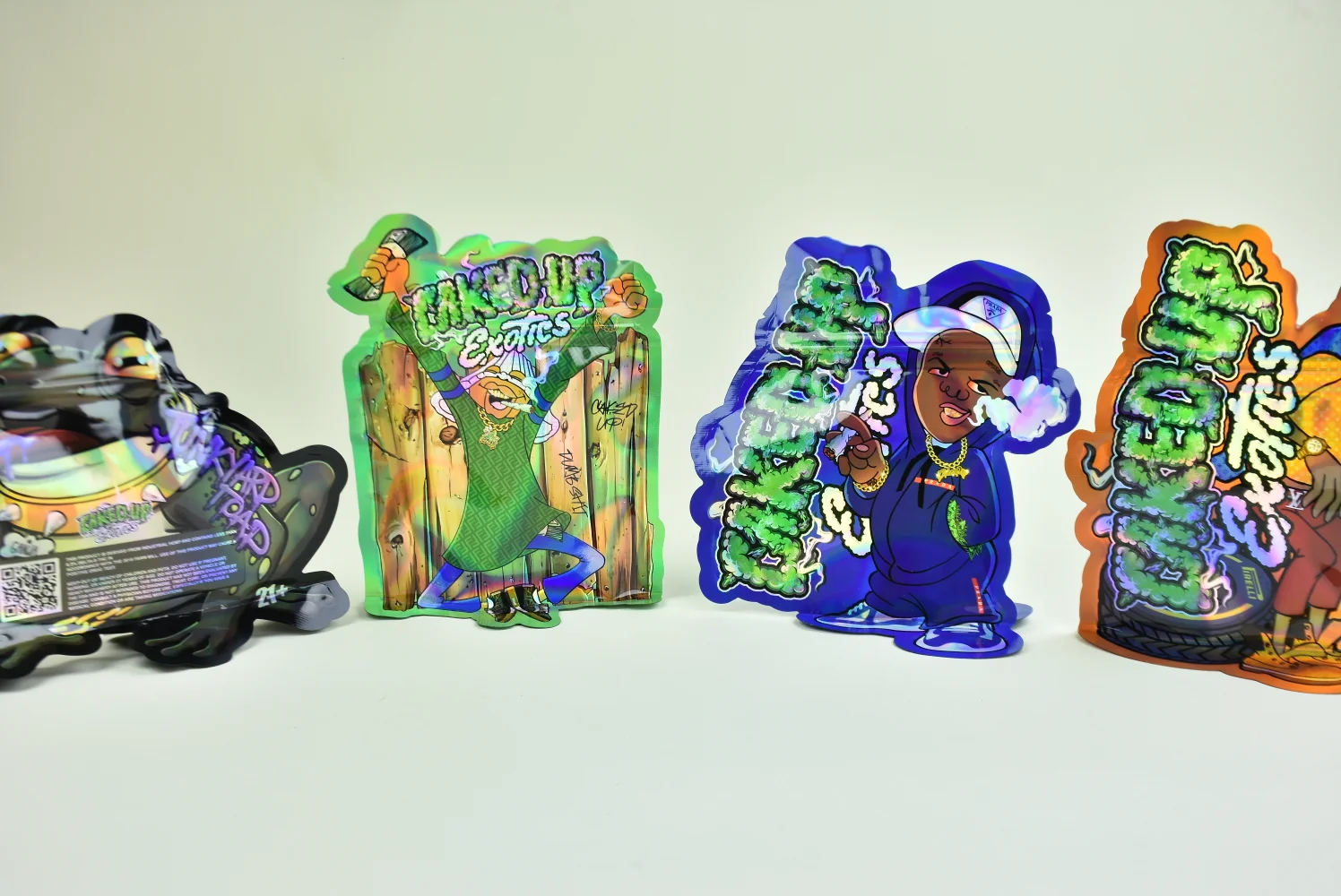
Holographic film operates on a completely different logic. Rather than communicating restraint, holographic packaging communicates spectacle. The film shifts colour as the viewing angle changes — shifting across the full visible spectrum at angles of 15°–45° — creating a visual that is impossible to ignore and extremely difficult to photograph accurately, which paradoxically makes it even more compelling on social media where every angle tells a different story. For brands targeting a younger, trend-driven, or collector-oriented consumer, holographic packaging is not a gimmick. It is a strategic decision to make the packaging an object of desire in its own right. Combined with a die-cut silhouette, holographic film makes the shaped outline even more dynamic: the character or form catches light differently at every angle, creating movement and depth that a flat pouch simply cannot match.
Finish Strategy
Brand Signal
Consumer Profile
Best Combined With
Matte + spot UV
Premium, considered, brand-mature
Quality-conscious, brand-loyal, retail-savvy
Standard stand-up pouch + background display box
Holographic film
Statement, collectible, social-first
Trend-driven, younger, collector-oriented
Die-cut shaped pouch + clear window box
Note: Matte lamination and spot UV need to be applied to both the pouch and the display box to maintain visual consistency across the set. If the pouch has a matte + UV finish and the display box does not, the mismatch is immediately obvious at retail — and it undermines the premium positioning the finish is meant to create. Always specify finish requirements for both components when briefing your supplier.
Other Surface Finish Options for Retail Packaging Sets
Beyond matte + spot UV and holographic, several additional finish options are available for both pouches and display boxes — and each serves a specific brand positioning or retail context.
Finish
Effect
Best For
Soft-touch matte
Velvet-like tactile surface — luxury feel at the point of touch
Ultra-premium brands where the unboxing and handling experience matters
Hot stamping (gold / silver)
Metallic foil accent on logo or key elements — lifts perceived prestige significantly
Limited editions, gift sets, boutique retail, award-winning products
Embossing / debossing
Raised or recessed tactile texture — adds dimensional depth to logo or pattern
Premium boxes and rigid packaging where tactile differentiation reinforces quality
Tip: When combining multiple finish techniques — for example, matte lamination + spot UV + hot stamping — confirm the application sequence with your supplier before production. Each process layer has to be applied in the correct order to achieve the intended visual result, and the wrong sequence can compromise both finish quality and production timeline.
Digital Print vs Gravure: Choosing the Right Method for Multi-SKU Sets
The printing method you choose for a multi-SKU retail set has a direct impact on your unit cost, your minimum order commitment, and how quickly your set can go from approved artwork to dispatched production. For brands running several SKU variants simultaneously — different flavours, different characters, different colourways — this decision is more consequential than it is for a single-SKU order.
Clear window boxes stacked for retail — each box frames the holographic die-cut pouch inside.
Gravure printing is the right choice when your order volume is high and your SKU count is low. The process requires a set of engraved cylinders — one per colour — which carry a significant upfront plate-making cost but deliver exceptional colour consistency (ΔE ≤1.0 across a full production run), fine detail reproduction, and a substantially lower per-unit cost at scale. At JINYI, gravure printing is managed via ESKO Automation Engine with a registration accuracy of ±0.1mm — the industry benchmark for precise multi-colour alignment. For a brand running one or two designs at high volume — tens of thousands of units per SKU — gravure is the economically correct choice.
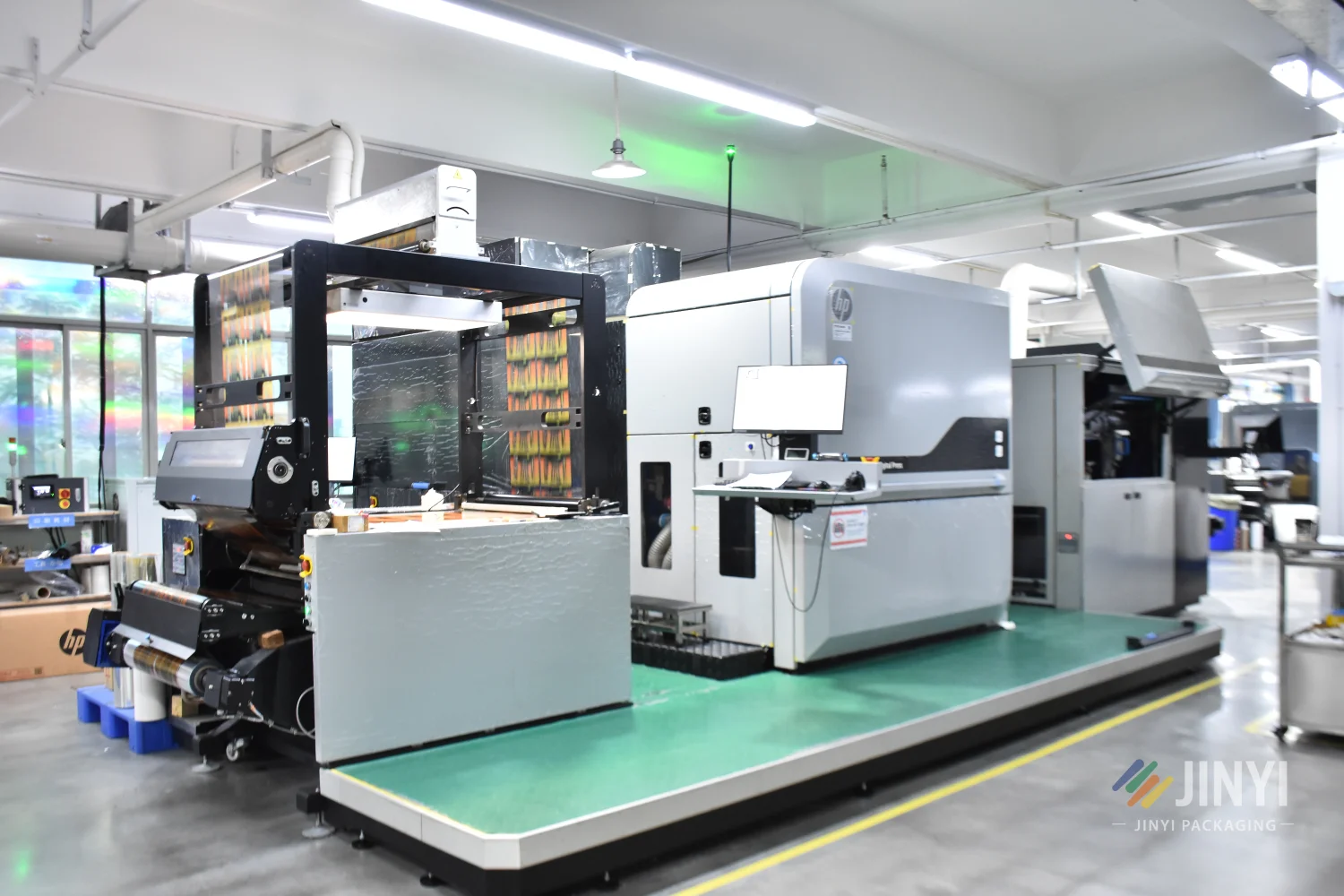
Digital printing via HP Indigo 25K and HP Indigo 6K is the right choice when your SKU count is high and your per-SKU volume is moderate. There are no plate fees, no cylinder costs, and no minimum commitment beyond 500 units per SKU. Colour output is controlled to ΔE ≤1.5 — imperceptible to the average consumer under retail lighting conditions. For a brand launching five, eight, or twelve variants simultaneously — each with distinct artwork, distinct characters, or distinct colourways — digital printing makes the full range commercially viable at volumes that would be financially prohibitive with gravure. You can launch the complete set, validate which SKUs perform, and transition the bestsellers to gravure in subsequent orders as volume justifies it.
Factor
Digital Print
Gravure Print
Setup cost
No plate fee
Significant plate-making cost per design
MOQ per SKU
From 500 units
3,000 – 5,000 units
Per-unit cost at scale
Higher
Significantly lower
Colour consistency
Excellent for most designs
Superior — industry benchmark
Multi-SKU flexibility
Ideal — each SKU is independent
Costly per additional design
Best for
Launch phase, multi-SKU range, market validation
Established SKUs with confirmed high volume
Tip: For a multi-SKU retail set launch, start with digital print across the full range at 500 units per SKU. Launch the complete set, identify your top two or three performers, and transition those to gravure in your second order. This approach lets you present a full branded range to retail buyers from day one — without betting your entire budget on predicting which variants will sell.
Managing Multiple SKUs: Colour Consistency and Artwork Coordination
A multi-SKU retail set lives or dies by its colour discipline. The individual variants need to be distinct enough that a consumer can immediately tell them apart — different colourways, different characters, different flavour cues — but unified enough that the range reads as a coherent brand family on shelf. Getting this balance right in the artwork is the designer’s job. Maintaining it in production is the supplier’s job. Your job is to specify it clearly upfront.
The most common multi-SKU colour management approach is a shared structural design with variant-specific colour fills. The logo position, typography layout, background pattern, and compositional structure are identical across all variants. The accent colour — the element that differentiates each SKU — is changed per variant. This approach creates instant range recognition: a consumer who buys one variant can immediately identify the others in the range, and the display set reads as a purposefully designed collection rather than a random assortment of products.
For artwork files, submit all SKU variants simultaneously rather than sequentially. When files arrive one at a time across multiple days, each file is processed independently — which makes it harder to cross-reference colour consistency across the range and adds revision rounds that could have been caught in a single consolidated review. A single brief with all variants attached is significantly more efficient than a rolling submission.
Note: Specify all colours in CMYK — not RGB or Pantone references alone. RGB values vary by screen calibration and are not production-ready. If Pantone matching is required for specific brand colours, confirm with your supplier whether their print process supports Pantone-to-CMYK conversion at the accuracy you need, and request a printed colour proof before approving the full production run.
MOQ, Pricing, and How to Order a Matched Set
Ordering a matched retail set involves two separate MOQ calculations — one for the pouches, one for the display boxes — and they are not always proportional. The pouch MOQ is driven by print method and SKU count. The display box MOQ is driven by the box structure, the print complexity, and any die-cut or special finish requirements.
Component
Method
Typical MOQ
Stand-up pouch
Digital print
500 pcs per SKU
Stand-up pouch
Gravure print
3,000 – 5,000 pcs per SKU
Die-cut shaped pouch
Digital print
500 pcs per SKU
Display box (background type)
Full colour print + die-cut
300 – 500 pcs per design
Clear window box
Full colour print + window
300 – 500 pcs per design
When briefing your supplier for a matched set, submit the pouch spec and the display box spec together — not separately. A supplier who receives both specs simultaneously can plan production scheduling to align dispatch dates, identify any structural conflicts between the pouch dimensions and the box aperture or tray size, and flag finish inconsistencies before production begins. Submitting them separately and hoping for coordination after the fact is a common and avoidable source of delays.
Tip: Always order a pre-production sample of both the pouch and the display box together before committing to a full run. Fit the actual pouch into the actual box. Check that the dimensions work, that the finish reads consistently across both surfaces, and that the assembled display looks exactly as intended. This single step prevents the most expensive mistakes in retail packaging set production.
Lead Times and Production Planning for Retail Sets
A retail packaging set involves two production streams — pouches and boxes — that need to arrive at your facility at the same time to be useful. Planning the lead time for a matched set therefore means planning to the slower of the two components, not the faster.
At JINYI, pouch orders without a sample requirement are dispatched within 7–15 days from artwork approval. For multi-SKU orders, all variants are produced concurrently — a five-SKU order does not take five times as long as a single-SKU order. Display box production runs on a similar timeline. For a matched set ordered simultaneously, both components can typically be dispatched within the same production window, arriving together and ready to assemble.
Stage
Without Sample
With Sample
Brief, spec, and artwork confirmation
3 – 7 days
3 – 7 days
Sample production (pouch + box)
Not required
10 – 14 days
Production and dispatch
7 – 15 days
7 – 15 days
Total to dispatch
10 – 22 days
20 – 36 days
Tip: The most common source of delay on retail set orders is not production — it is artwork revision loops on multiple SKUs. Getting all variant artwork finalised and submitted simultaneously, rather than sequentially, is the single most effective way to keep a multi-SKU set on schedule. If artwork for some variants is still in progress, do not submit partial files — wait until all variants are ready and submit together.
JINYI Client Case Study: The Paint Lab — Matte + Spot UV Multi-SKU Display Set
The Paint Lab is a premium lifestyle brand from the United States with a bold, graphic-intensive visual identity built around a paint drip motif and a dark, high-contrast colour palette. Their retail packaging brief was unambiguous: a multi-SKU range of stand-up pouches with matching display boxes, executed with a finish that would make the set stand out in a competitive retail environment without compromising the brand’s premium positioning.
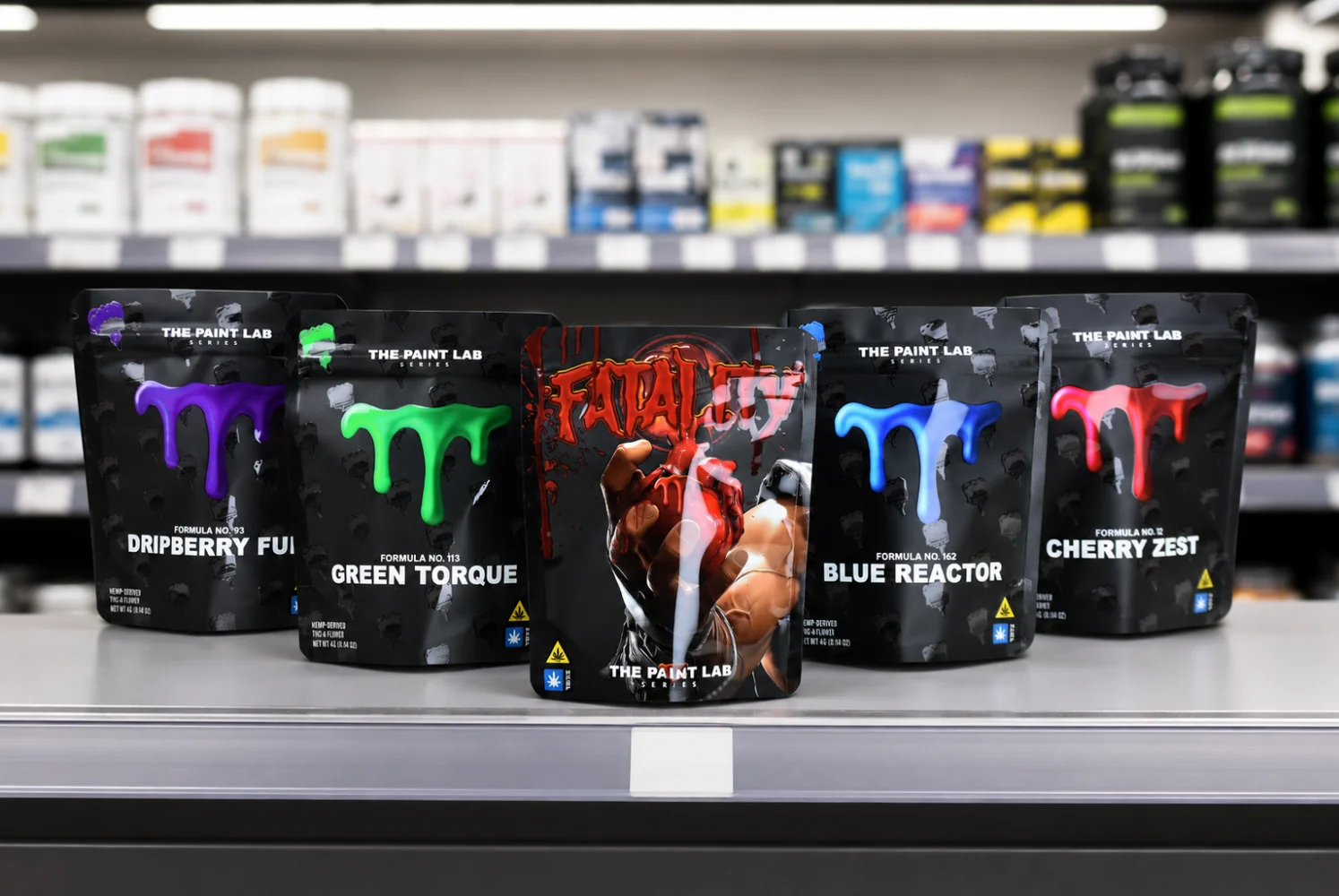
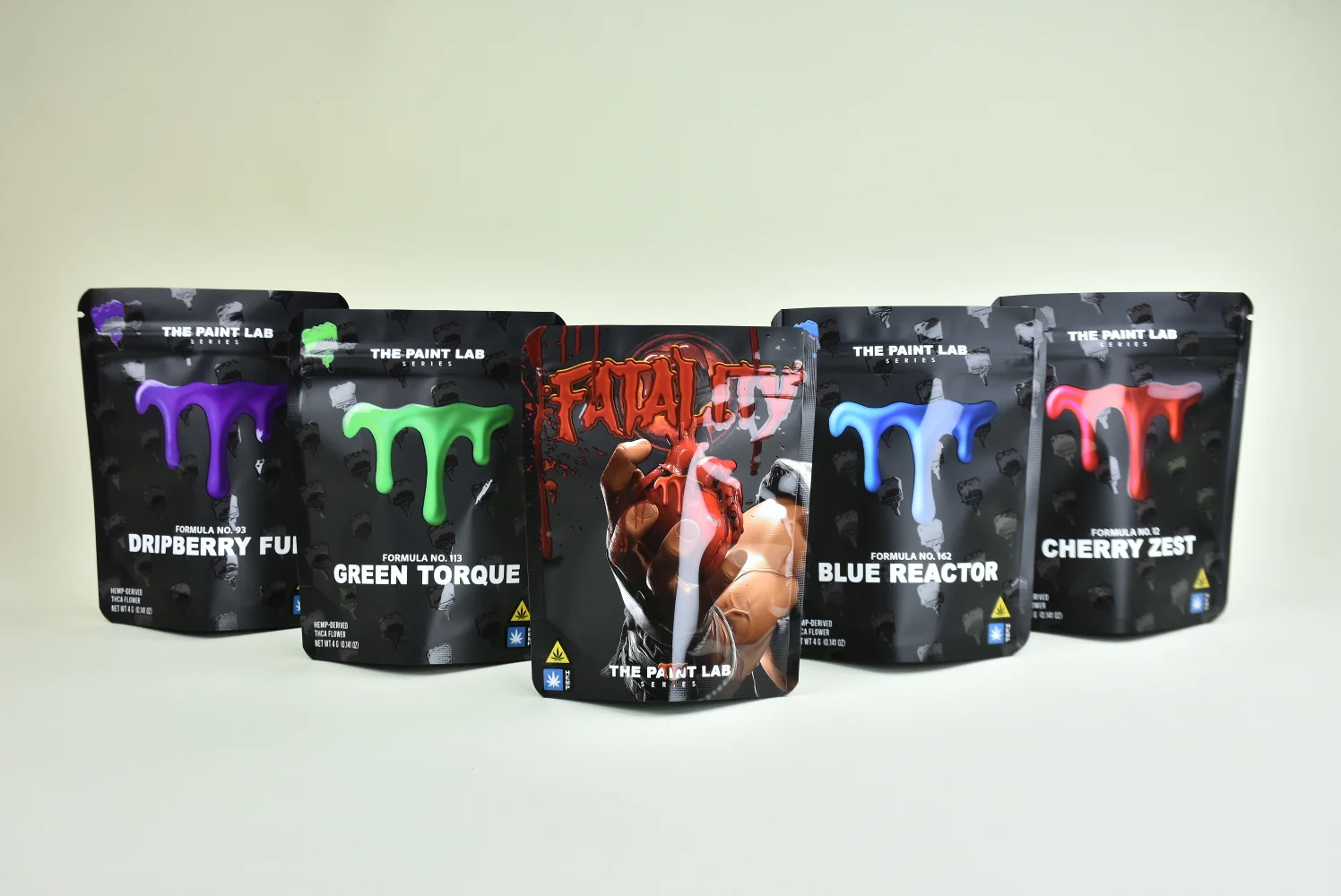
Full SKU range of The Paint Lab stand-up pouches, produced at JINYI factory.
The solution was a matte black lamination base across all pouches and display box surfaces, with spot UV applied to the drip logo element on each piece. The matte field makes the deep blacks and saturated colours in the artwork read with exceptional richness. The spot UV on the drip motif creates a tactile and visual contrast — the logo catches the light while everything around it recedes — that works as a focal point both when the display is assembled on a counter and when the consumer picks up an individual pouch. The finish is consistent across every surface of both components: the same matte, the same UV placement, the same visual logic.
Pouches loaded into the display box — the complete retail set as it ships to the client.
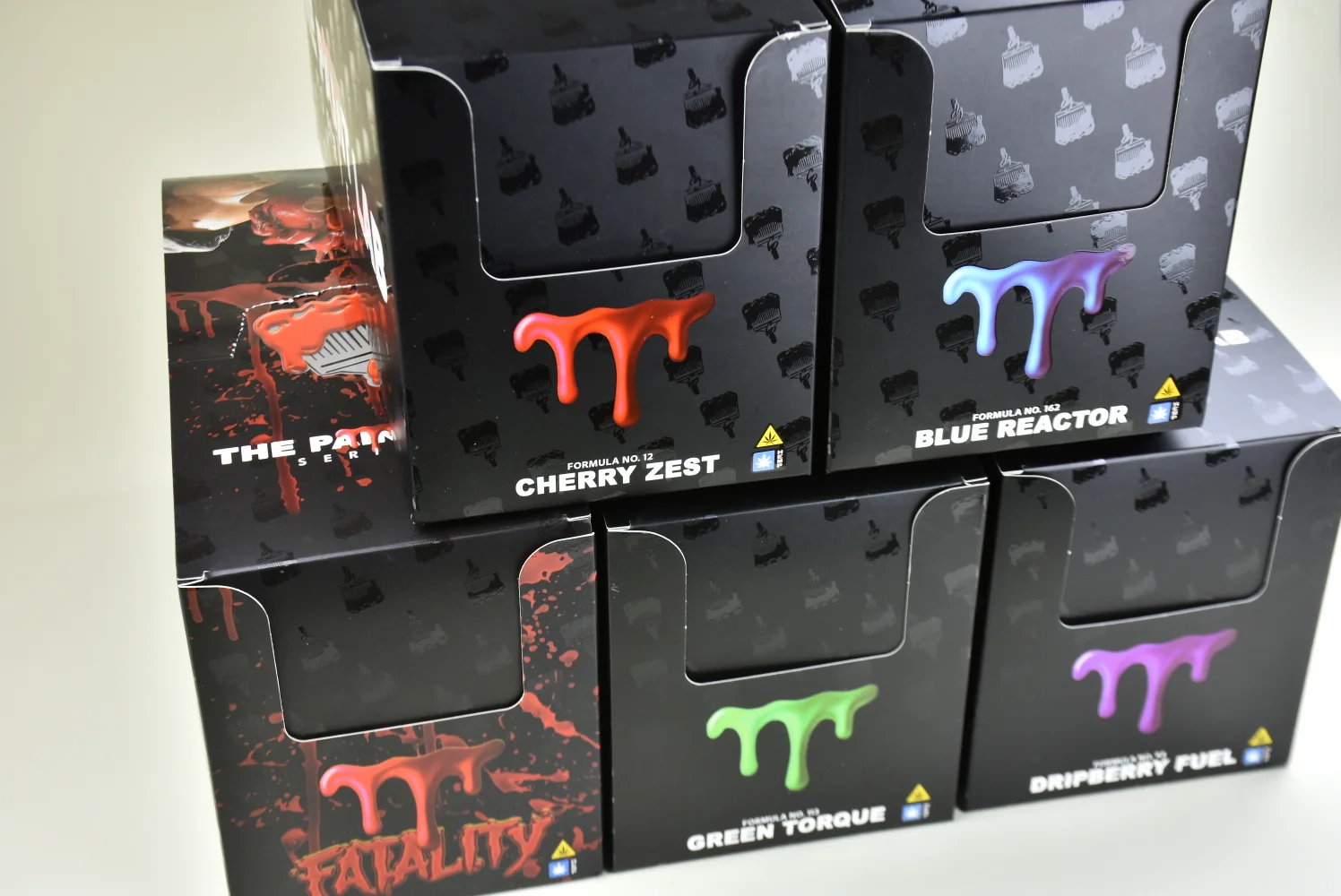
The Paint Lab’s full SKU range — custom stand-up pouches and self-standing background display box produced at JINYI’s factory with matte lamination and spot UV finish.
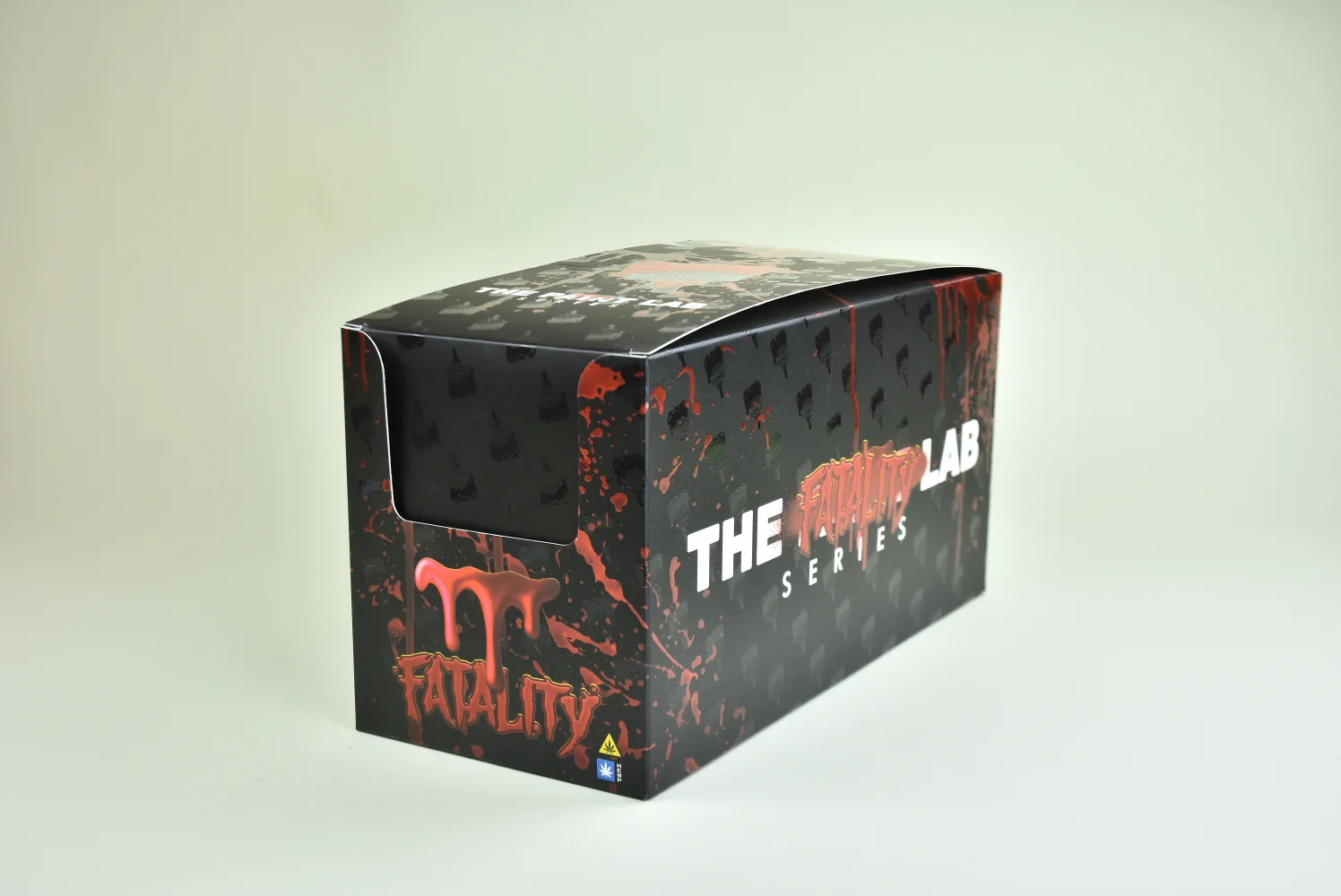
The display box uses a self-standing background structure with a die-cut back panel in the shape of the brand’s paint brush icon — when assembled on a counter, the shaped backdrop creates an immediate brand environment that frames the product range rather than just holding it. The open front means all SKU variants — each with its own colour accent within the shared matte black structure — are visible simultaneously, making the range easy to browse and encouraging multi-unit purchase.
The Paint Lab display box — matte black finish with spot UV logo detail.
The entire set was produced via digital print at JINYI’s factory, enabling the full multi-SKU range to be launched simultaneously at commercially viable volumes without the per-design plate cost of gravure. For a brand launching a complete range to retail accounts, this was the economically correct decision — it allowed The Paint Lab to present the full collection to buyers from day one, rather than launching a reduced range and retrofitting additional variants later.
JINYI Client Case Study: Premium Lifestyle Brand — Holographic Die-Cut Pouches + Clear Window Box Set
The second set represents a completely different visual strategy — one built not on restraint and premium finish, but on maximum visual impact and collectibility. This US-based premium lifestyle brand commissioned a range of die-cut shaped pouches in holographic film, each cut to follow the outline of a distinct illustrated character, packaged individually in clear window boxes that frame the pouch like a display piece.
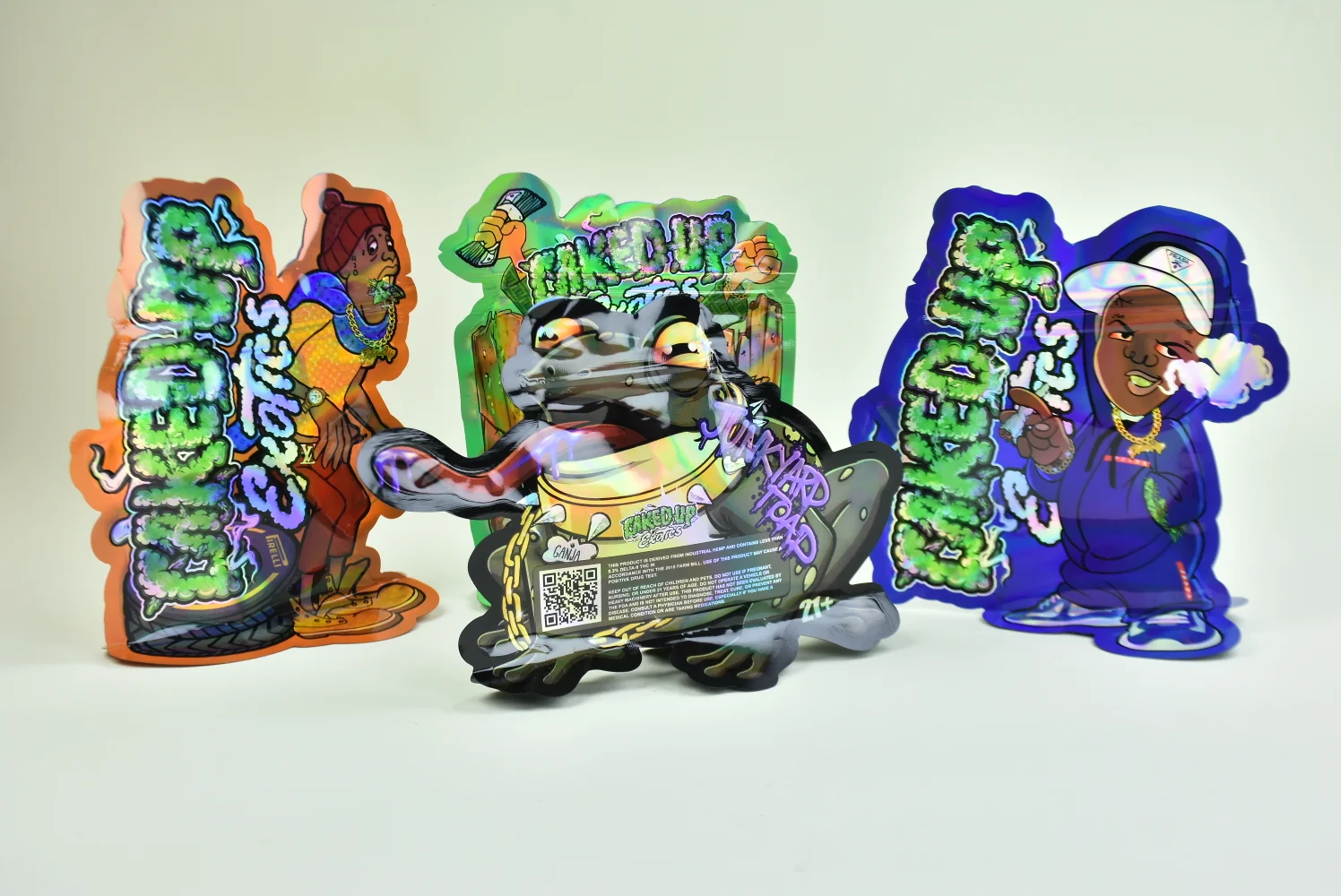
Holographic die-cut pouches — each cut to the character’s silhouette, full spectrum colour shift.
The holographic film is the defining material choice. Under retail lighting, the surface shifts across the full colour spectrum as the viewing angle changes — the same pouch that reads green from one side reads purple from another and gold from a third. When multiple variants are displayed together, the collective effect is a moving, dynamic wall of colour that is impossible to walk past without stopping. This is not accidental. For a brand targeting a consumer who discovers products through social media and makes purchase decisions based on visual desire, the packaging’s social shareability is a core part of the product strategy.
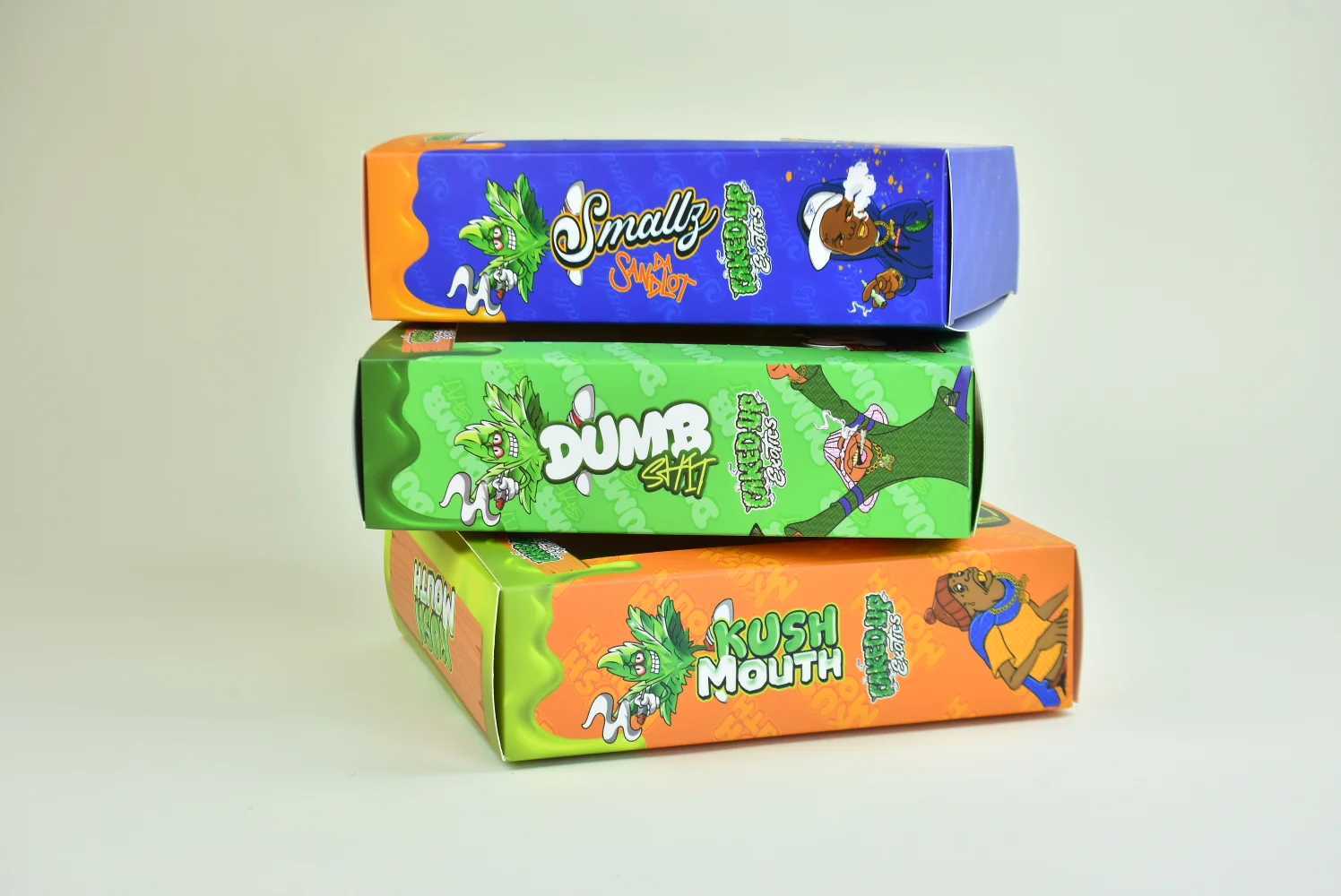
Three SKU variants in clear window boxes — the holographic pouch is fully visible through the panel.
Custom holographic die-cut shaped pouches in clear window boxes — produced at JINYI’s factory for a US-based premium lifestyle brand.
The die-cut silhouette amplifies the holographic effect. Because the bag has no straight edges — the outline follows the character’s form — the holographic surface has no rectangular boundary to contain it. The shaped silhouette and the shifting surface work together: the character appears to move and glow, and the clear window box frames it without competing with it. The box itself is fully printed in the brand’s colour palette, creating a packaging experience that is complete whether the box is open or closed.
Straight from production: full-color custom cannabis pouches printed and finished at the JINYI factory.
Like The Paint Lab set, this range was produced via digital print — enabling the full character roster to launch simultaneously at 500 units per SKU, without committing to high-volume runs on every variant before market performance was known. JINYI produced all variants concurrently, dispatching the complete set within the standard 7–15 day production window from artwork approval.
What You Get When You Order a Retail Set with JINYI
Every retail packaging set order at JINYI includes three complimentary services that help your packaging work beyond the production floor.
Service
What You Receive
How It Helps
① Free 3D Sample Rendering
Photorealistic 3D mockup of both pouch and display box with your artwork applied — available before production begins
Confirm exactly how the assembled set looks before committing to production — share with retail buyers or investors for pre-launch sign-off
② Production Progress Updates
Photos and video at each production stage — printing, lamination, and bag-making — sent directly to you
Full production transparency — use for brand storytelling, retail pitch decks, or customer trust content on your website and social media
③ Free E-commerce Photography
Professional product photos of your finished set — ready to use immediately upon delivery
Deploy directly to your e-commerce product pages, retail pitch materials, and social media — no photoshoot required on your end
A retail packaging set is one of the highest-leverage investments a product brand can make. The right combination of display structure, pouch format, surface finish, and print method does not just make your product look good — it makes your product sell itself. It gives a retailer a reason to carry you, a consumer a reason to pick you up, and a social media audience a reason to share you.
At JINYI, we produce matched retail packaging sets from 500 units per SKU via HP Indigo digital print, with 7–15 day dispatch from artwork approval, full finish consistency across every surface, and three standard-included services — free 3D rendering, production progress updates, and free e-commerce photography — with every order. From film to finished — done right.
Get a Quote for Your Custom Retail Packaging Set
Tell us your pouch format, display box type, number of SKUs, surface finish, and volume. We will come back with a full spec recommendation, 3D rendering, and a factory-direct quote — within 24 hours.
JINYI is a source factory for custom flexible packaging with 15+ years of production experience, serving food, supplement, coffee, pet food, and consumer goods brands across 70+ countries. We produce stand-up pouches, flat-bottom bags, pillow bags, and side gusset bags in PET/AL/PE, PET/VMPET/PE, and other barrier specifications — via HP Indigo digital print from 500 units and gravure printing at volume — with full material documentation included as standard with every order.
That is what From Film to Finished — Done Right means in practice.
Mark
Head of Production Management · JINYI Packaging
Mark leads production scheduling and order coordination at JINYI. With a Business Administration background and hands-on manufacturing exposure, he focuses on keeping quality, lead time, and execution stable across custom packaging orders.
Production planning On-time delivery Cross-team coordination
A retail display packaging set is a coordinated production order combining individual product pouches with a display box designed to hold and present them together. The pouch and box share the same brand artwork, surface finish, and print production run — ensuring complete visual consistency across every surface from day one.
What is the difference between a self-standing background display box and a clear window box?
A self-standing background display box is an open-front counter display with a structural back panel that folds up to create a branded backdrop behind the products — all pouches are fully exposed and immediately accessible. A clear window box is an enclosed box with a transparent front panel that allows the product inside to be seen without opening — best when the pouch design itself is the hero.
What is the minimum order quantity for a custom retail packaging set?
Via JINYI’s digital print, stand-up pouches and die-cut shaped pouches start from 500 units per SKU with no plate fee. Display boxes typically start from 300–500 units per design. Contact us with your full spec — pouch format, box type, SKU count, and finish requirements — for a confirmed quote.
Should I use digital printing or gravure printing for a multi-SKU set?
For a multi-SKU launch, digital printing is almost always the right starting point — no plate fees, 500 units per SKU minimum, and all variants produced concurrently. Once you have identified your bestselling SKUs and volume justifies it, transition those designs to gravure for lower per-unit cost and superior colour consistency at scale.
How long does a custom retail packaging set take to produce?
At JINYI, matched sets without a sample requirement are dispatched within 7–15 days from artwork approval — for both the pouches and the display boxes, produced concurrently. Including a sample round for both components adds 10–14 days. Total time from first contact to dispatch is typically 10–36 days depending on whether samples are requested.
What is spot UV and why is it used on retail packaging?
Spot UV is a high-gloss varnish applied to specific areas of a printed surface — typically a logo, brand symbol, or key graphic element. When applied over a matte lamination base, it creates a tactile and visual contrast between the flat matte background and the glossy accent — making the highlighted element catch light and stand forward. The result is a bag that feels premium at the point of touch and draws the eye to the brand’s most important visual element at the point of sale.
Does JINYI produce both the pouches and the display boxes?
Yes. JINYI produces both the flexible pouches and the display boxes as a matched set from a single production facility — which means colour profiles, finish specifications, and production timelines are coordinated across both components without the supplier handoff risk that comes from ordering them separately. Contact us with your full spec to discuss your set requirements.