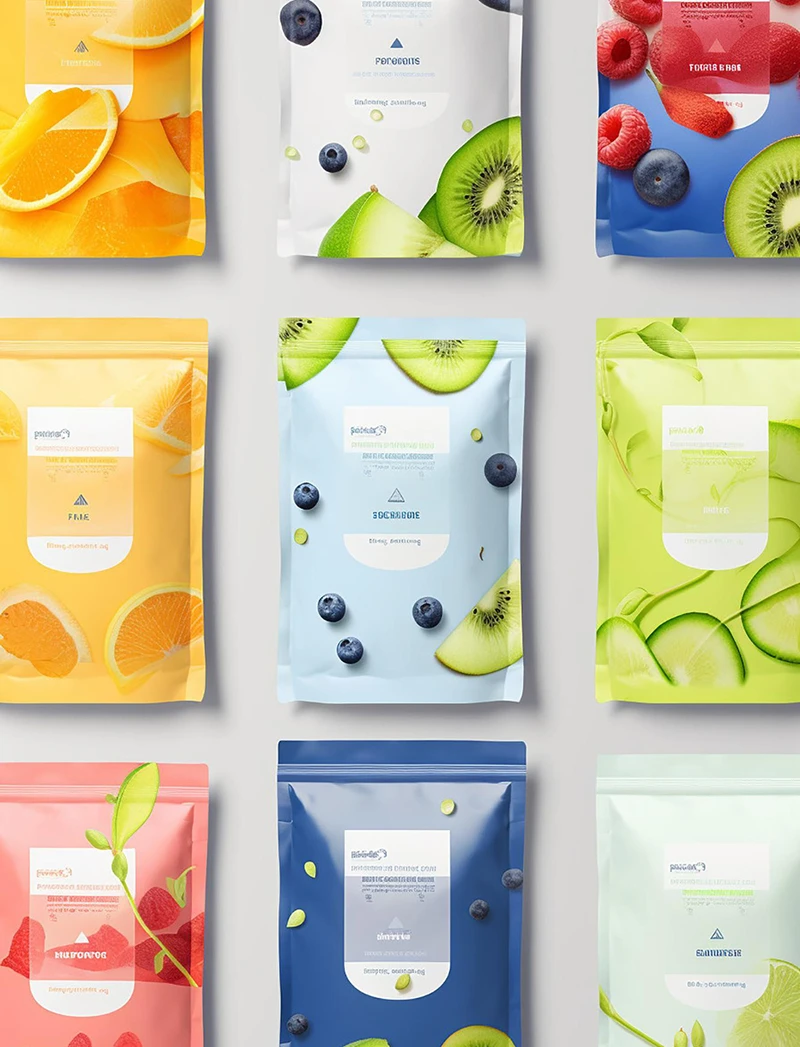
JINYI shares practical packaging guidance for your decisions.
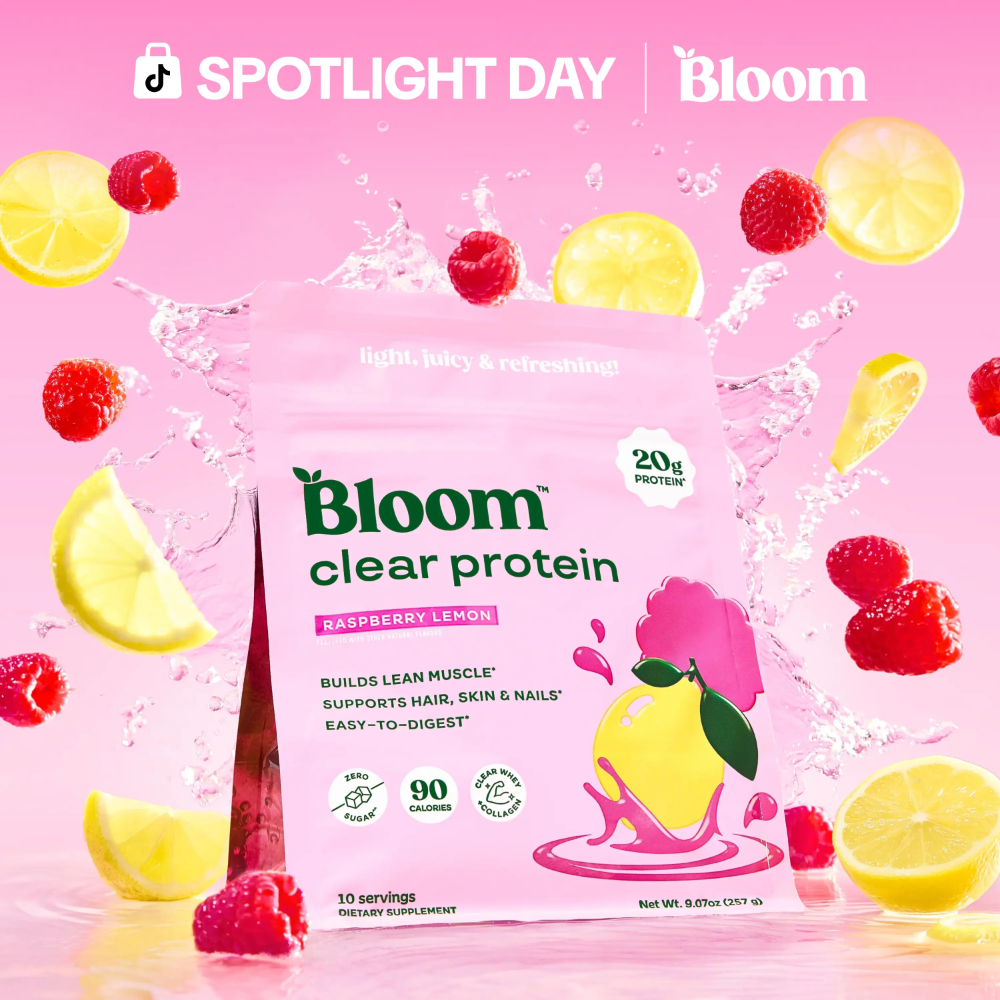
Bloom Nutrition did not grow through traditional retail placement or a heavyweight marketing budget. It grew through TikTok — and the pink stand-up pouch sitting on a countertop, held in a gym bag, or half-emptied on a bathroom shelf is as much a content asset as it is a packaging format. What looks like a colour choice is actually a complete packaging strategy: one that simultaneously protects a moisture-sensitive, probiotic-containing supplement formula, signals brand identity at a glance on any screen size, and generates organic brand exposure every time a consumer posts an unboxing or a morning routine video. This breakdown covers exactly what Bloom Nutrition packaging is made of — the formats, the film structures, and the design logic — and what those choices mean for any supplement brand sourcing comparable packaging factory-direct.
How a TikTok-Born Brand Built a Packaging Identity Around Pink
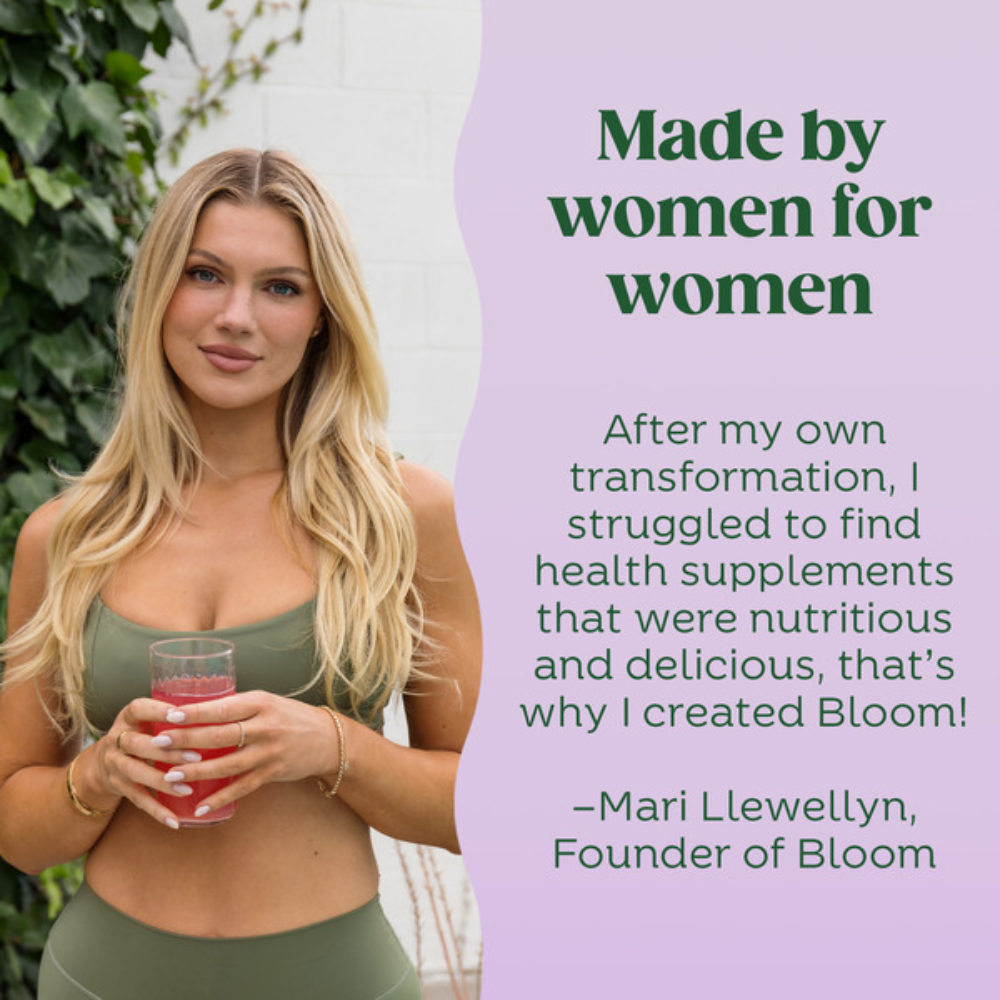
Bloom Nutrition was founded in 2020 by Mari Llewellyn, who built a significant fitness and wellness following on TikTok and Instagram before launching the brand. The growth model was direct: Mari’s personal content — documenting her fitness transformation, her daily routines, her product recommendations — generated an audience that trusted her judgement before Bloom existed as a product. When the brand launched, the audience was already there. The pink pouch was not an afterthought. It was the first visual decision the brand made — and it has been the single most consistent brand asset through every product line expansion since.
Pink is not an obvious choice for a supplement brand. The category default is clinical white, dark professional black, or natural green — colours that signal scientific credibility, performance, or organic wellness. Bloom chose pink because their target consumer is not primarily motivated by clinical authority or performance data. She is motivated by a brand she feels personally connected to, products that fit seamlessly into her lifestyle aesthetic, and packaging she is comfortable displaying publicly — on her counter, in her gym bag, in her social media content. Pink delivers all three simultaneously. It is a functional packaging colour decision, not a cosmetic one.
The brand’s product line has expanded significantly from the original Greens & Superfoods powder — now covering collagen, creatine, energy sticks, protein powder, and immunity blends — and every product maintains the pink colour family. Different product lines use different shades within the pink-to-rose spectrum, creating a colour-coded family system that allows consumers to identify which product they are looking at before reading the label, and allows the brand’s visual library on social media to be immediately recognisable as Bloom regardless of which product is being featured. This is brand architecture embedded in packaging colour — the kind of systematic visual thinking that most supplement startups do not build in until they have ten or more SKUs and realise retrofitting it is expensive.
The result of this consistency is that Bloom’s packaging functions as a passive distribution channel for the brand. Every time a consumer places a Bloom pouch on their counter, films a morning routine, or photographs their supplement stack, the pink bag is in the frame — recognisable, shareable, and attached to the Bloom brand identity without requiring any additional paid media. In the DTC supplement market, where customer acquisition costs through paid digital advertising have risen significantly, packaging-as-content is not a nice-to-have. It is a competitive advantage.
Note: Bloom Nutrition’s pink packaging strategy is now widely replicated in the women’s wellness supplement space — dozens of brands have launched with pink-dominant packaging since Bloom’s growth became visible. The lesson is not “use pink.” The lesson is that packaging colour needs to be chosen for your specific target consumer’s identity and content behaviour, not for what looks professional in a vacuum. For Bloom’s audience, pink signals community membership. For a different audience, the same colour could signal the wrong thing entirely.
What Bag Formats Does Bloom Nutrition Use?
Bloom Nutrition’s packaging portfolio covers two primary formats, each serving a distinct consumer occasion and purchase behaviour. Understanding the strategic logic behind each format choice — and how they work together — gives supplement brands a practical model for structuring their own product line packaging architecture.
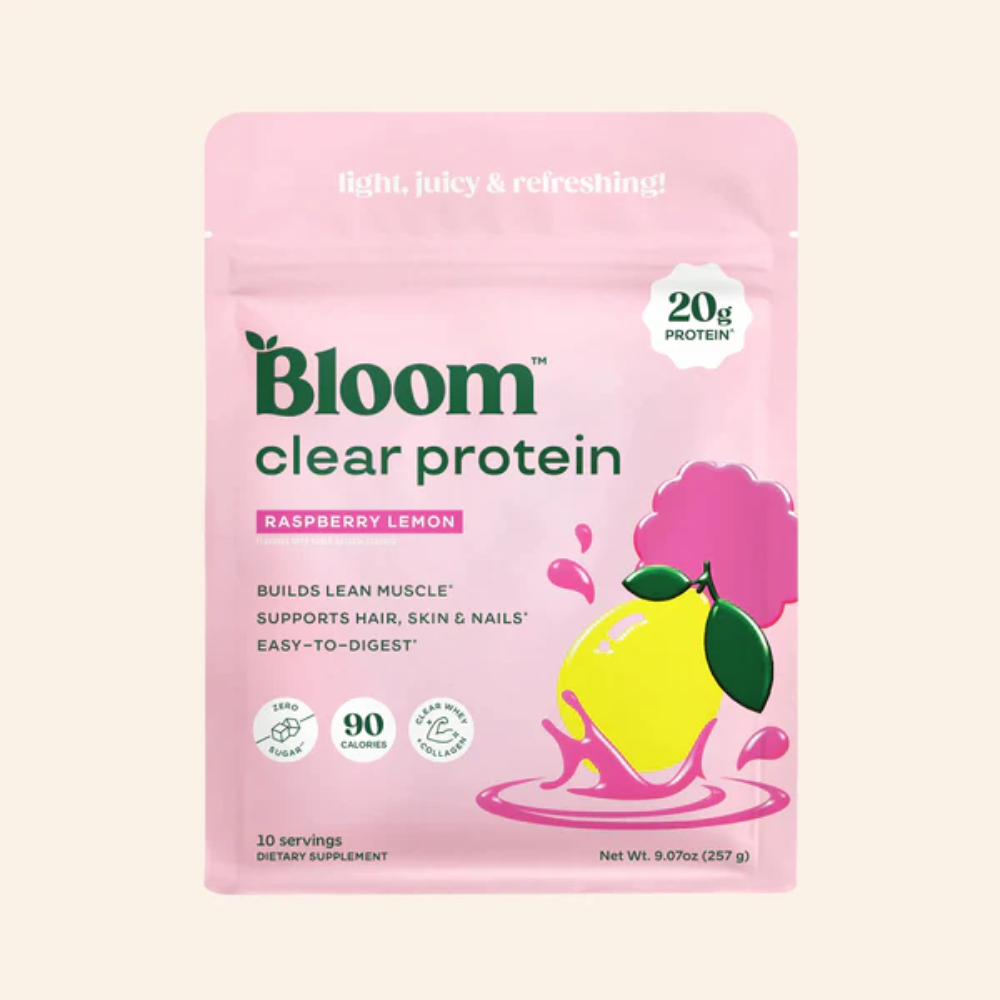
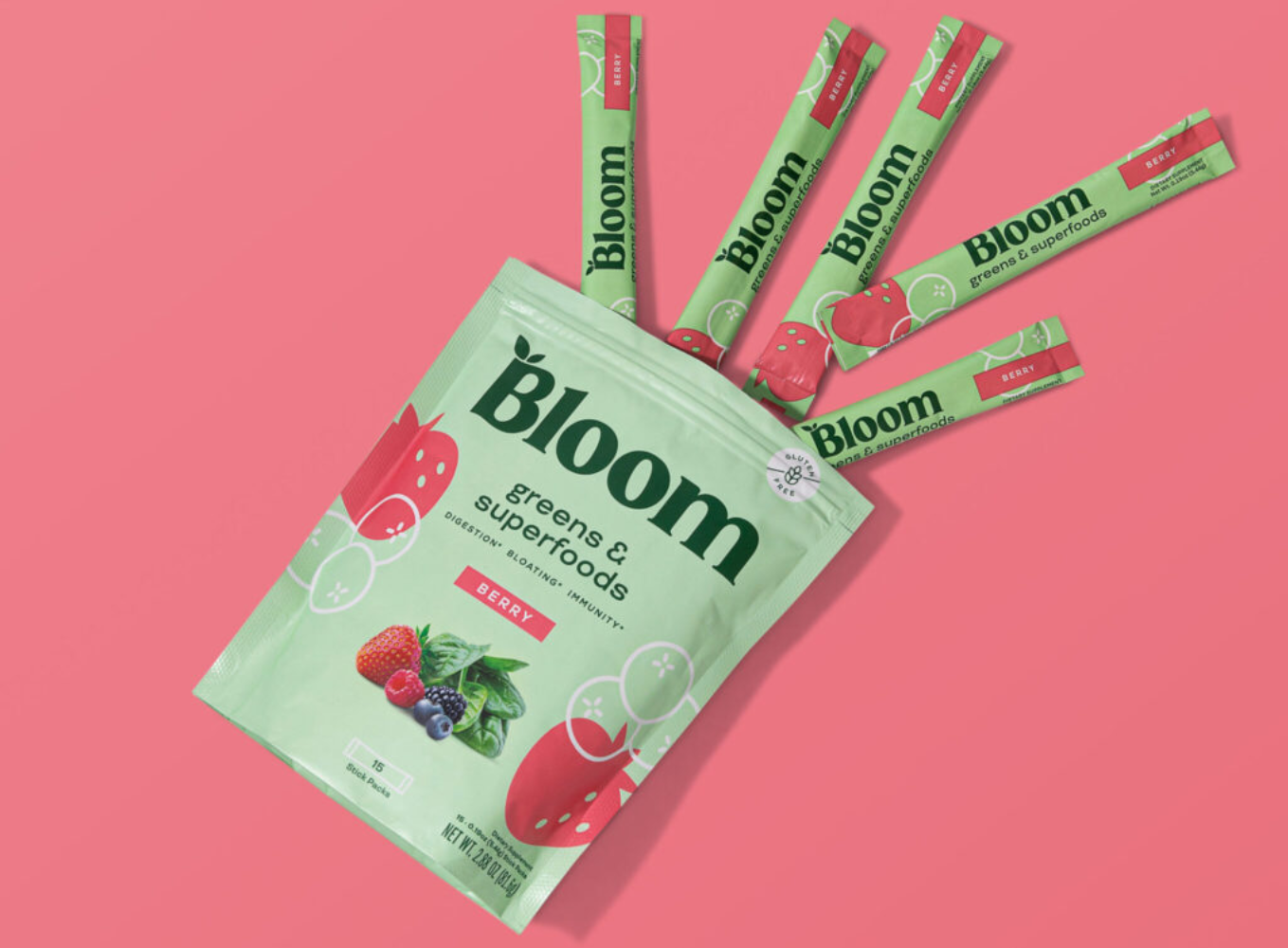
The stand-up pouch is Bloom’s entry-level and most widely distributed format, used for their Greens & Superfoods powder, collagen, creatine, and protein lines. Available in 30-serving, 48-serving, and 60-serving sizes across multiple flavours, the stand-up pouch format provides the wide front panel that Bloom’s bold colour and minimal typography design requires. The resealable zipper is standard across all sizes — a non-negotiable functional requirement for a powder supplement that a consumer opens and closes daily for 30 to 60 days. Bloom’s stand-up pouches use a matte lamination finish, which gives the packaging its signature soft, velvety surface that reads consistently across both retail shelf and social media content. The stand-up format ships efficiently flat and expands on fill — keeping logistics costs lower than rigid containers, which matters for a brand whose primary channel is DTC e-commerce.
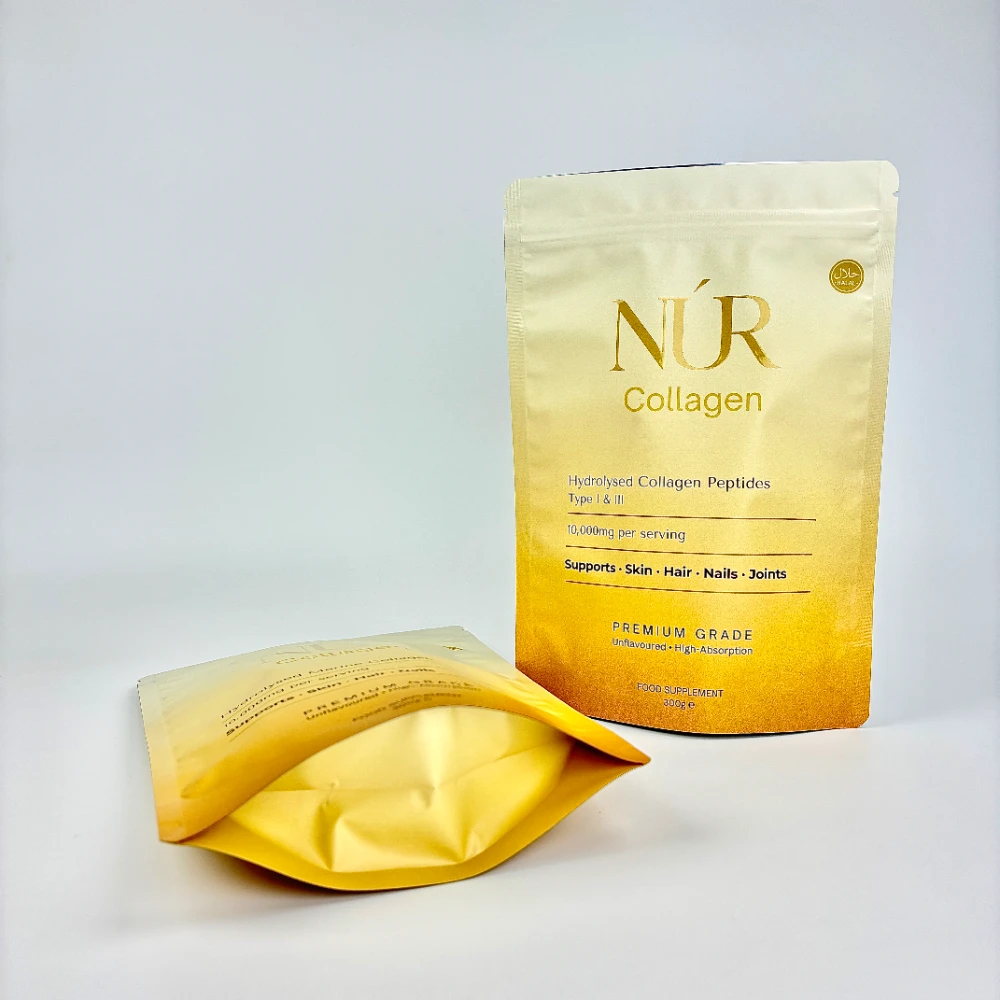
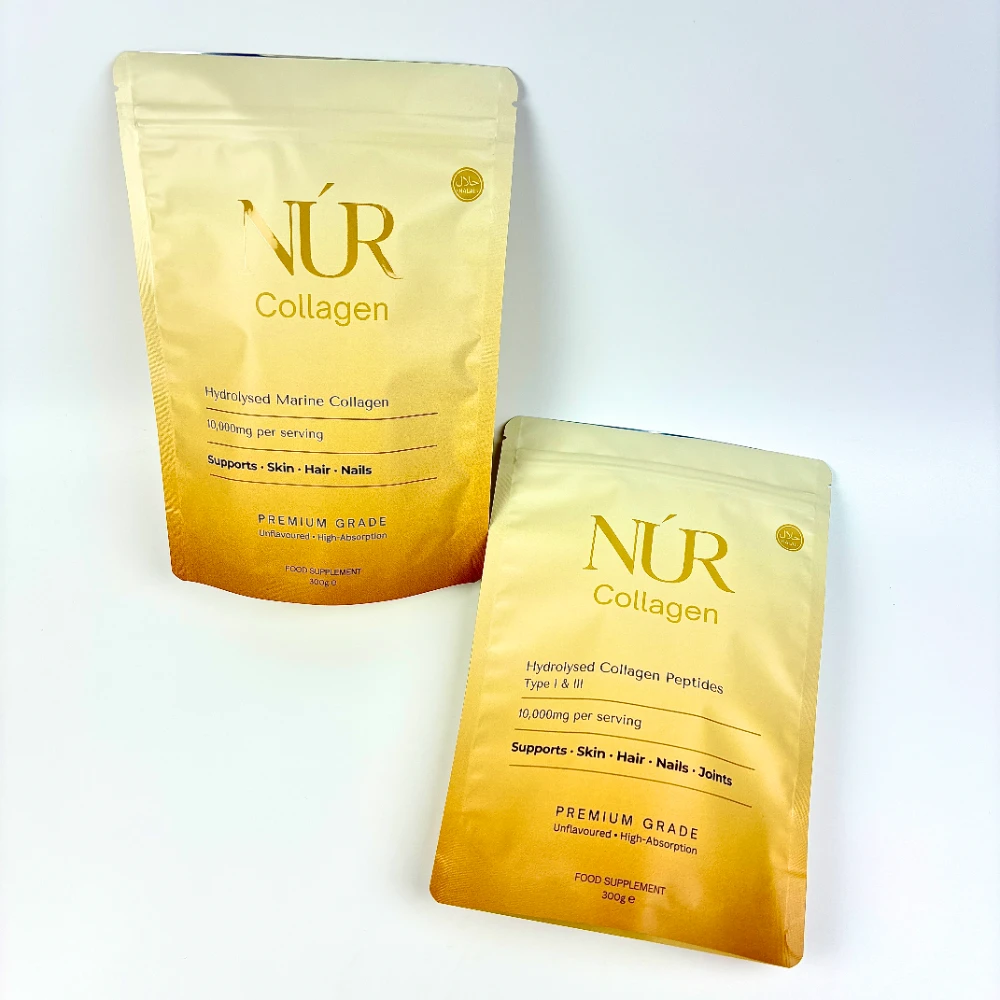
Custom supplement stand-up pouches produced at JINYI for NUR Collagen — gold gradient print with structured base, showing front display and bottom gusset detail, factory-direct from 500 units with no plate fee
For their larger-capacity SKUs, Bloom also uses a flat-bottom bag format — the format that steps in where the stand-up pouch begins to lose structural stability at higher fill weights. The flat-bottom bag has a structured, sealed base that allows it to stand upright with greater stability than a stand-up pouch at equivalent volume, and a wider front panel that gives the brand even more surface area for design expression. A notable distinction on Bloom’s flat-bottom bags is the finish: where the stand-up pouches use matte lamination, the flat-bottom bags use a gloss finish — a deliberate differentiation that signals the larger format as a premium or value-size tier rather than a direct equivalent of the entry format. Gloss finish on the flat-bottom bag produces richer colour saturation and a more striking shelf presence at larger physical dimensions, where the matte finish’s social-media-optimised subtlety would be less impactful.
The pillow bag (back-seal pouch) — also called a fin-seal or centre-seal bag — is Bloom’s format for their single-serve product lines, including Bloom Energy Sticks. The pillow bag is a flat, elongated format produced by sealing a single film layer along the back centre seam and heat-sealing both ends. It is structurally simpler than a stand-up pouch — no bottom gusset, no zipper, no side gussets — which makes it the most cost-efficient format for single-serve applications and the fastest to produce on high-speed vertical form-fill-seal (VFFS) automated lines. A well-set-up VFFS line can produce pillow bags at several hundred units per minute, making this format ideal for products like energy sticks where the volume per order is high and the fill weight per unit is small.
Factor
Stand-Up Pouch (Entry / Mid)
Flat-Bottom Bag (Large Capacity)
Pillow Bag (Single-Serve Sticks)
Structure
Bottom gusset, side seals, zipper
Flat structured base, four panels, zipper
Back centre seal, two end seals
Surface finish
Matte lamination
Gloss lamination
Matte or gloss
Fill weight
30–60 serving sizes
Large capacity / value size
Single-serve — 3g to 15g
Consumer use case
Daily home use, primary DTC SKU
Value purchase, bulk repeat buyer
Travel, gym, trial / subscription entry
Social media value
High — matte surface ideal for phone camera
High — wider panel, strong shelf presence
Medium — portable lifestyle content
Tip: The stand-up pouch plus pillow bag dual-format architecture is the most effective product line structure for DTC supplement brands today. The stand-up pouch captures high-value repeat purchases — the customer who commits to a 30 or 60 serving tub. The pillow bag single-serve format captures first-time buyers and subscription upsells at lower entry cost and risk. If you are launching a supplement brand with a single format, build the dual-format architecture into your roadmap from the start — retrofitting it later, when you already have an established SKU range, is significantly more disruptive.
Film Structure — What’s Actually Inside the Pink Bag
The film structure behind Bloom Nutrition’s pink surface is determined by the demands of the active ingredients inside — and those demands are significantly more stringent than many supplement brands realise at the packaging brief stage. Bloom’s Greens & Superfoods formula contains three categories of ingredient that each have distinct packaging sensitivity profiles: probiotic cultures, organic plant-based superfoods including spirulina and chlorella, and digestive enzymes. Each of these ingredient types degrades through a different environmental exposure pathway — and the packaging must protect against all three simultaneously.
Probiotic cultures are moisture-sensitive above all. Live bacteria strains lose viability — their ability to survive and function in the gut — when exposed to ambient humidity, even at levels that seem mild. A bag that allows moisture vapour transmission above a critical threshold will produce a product that meets its label claim at manufacture but fails to deliver the live CFU (colony forming unit) count at the point of consumption, months later. Spirulina and chlorella are both light-sensitive and oxygen-sensitive: these dark green pigments oxidise on exposure to oxygen and UV light, which is exactly what produces the yellow-brown discolouration and off-taste that consumers associate with low-quality greens supplements. Digestive enzymes denature — lose their catalytic activity — at elevated temperature and humidity. The packaging that protects all three simultaneously is a high-barrier opaque structure that blocks oxygen, moisture, and UV light.
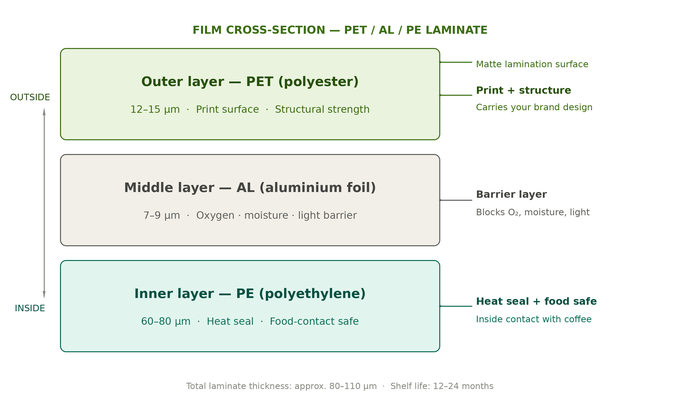
Bloom’s stand-up pouches use a standard high-barrier multi-layer laminate: PET / AL / PE. The outer polyester layer provides the print substrate for the pink base coat and the minimal product typography. The middle aluminium foil layer delivers near-zero oxygen transmission (OTR approximately 0.01 cc/m²/day) and complete UV blocking — the two most critical barrier properties for the active ingredients in the formula. The inner polyethylene layer provides the heat-seal surface, food-contact safety, and the substrate for the resealable zipper that is press-fitted into the bag opening before the top seal is applied. For a complete understanding of how these film structures are produced — from raw material through lamination, bag forming, and zipper installation — our guide to how custom stand-up pouches are made covers the full manufacturing process in detail.
The pink surface colour of Bloom’s bags is produced by a full-coverage pink ink base coat applied to the inner surface of the PET outer layer before lamination. The aluminium foil beneath reflects the pink colour back through the transparent PET, producing the saturated, consistent surface colour that reads identically across every bag in the production run. This is why Bloom’s packaging colour is so consistent — the reflection technique produces more even colour than surface printing on the outside of the film, where handling and transit can cause surface abrasion. For a comparable example of how high-barrier PET/AL/PE film structure is applied across premium supplement brands, our breakdown of AG1’s packaging covers an equivalent functional nutrition brand’s film and format decisions in detail.
Layer
Material
Function
Outer
PET (Polyester)
Pink base coat substrate · structural rigidity · scratch resistance
Probiotics, greens powder, live enzymes — maximum protection
PET / VMPET / PE
0.5–1.5 cc/m²/day
Good MVTR
Protein powder, collagen — fast turnover, lower sensitivity
Kraft / PE
50–200 cc/m²/day
Insufficient
Not suitable for probiotic or live enzyme supplements
Note: Probiotic supplements are one of the most packaging-demanding categories in the supplement market. Live bacteria strains begin losing viability the moment moisture penetrates the seal — and the degradation is silent. There is no colour change, no odour, no visible sign that the probiotic count has dropped below the label claim. The only protection is a film structure with sufficient moisture barrier performance maintained through a properly sealed, high-integrity zipper. If you are formulating a probiotic supplement, the packaging specification is part of the product efficacy claim — not a separate decision.
The Social Media Packaging Strategy — Why Bloom’s Design Is Built for TikTok
Bloom’s packaging design decisions only make complete sense when you evaluate them against two simultaneous audiences: the consumer standing in front of a physical shelf, and the consumer scrolling through TikTok at the speed of a swipe. Most packaging design briefs are written for the first audience. Bloom’s brief was written for both — and that dual-audience thinking is visible in every design decision they made.
On the front panel, Bloom uses minimal information density: brand name, product name, flavour, and one or two primary benefit claims. There is no ingredient list, no dense nutritional panel, no secondary claim text layered over the design. This is not a limitation of regulatory labelling — all the required information is on the back panel. It is a deliberate front-panel design decision that serves the screen audience: at thumbnail size on a phone screen, a cluttered front panel collapses into visual noise. A clean front panel with a dominant colour and a clear product name reads identically at 3 inches on a phone as it does at 12 inches on a shelf. Bloom’s front panel design is optimised for the smallest screen it will ever appear on — which is also the screen most of their consumers use to discover and purchase the product.
The matte finish on Bloom’s stand-up pouches is equally deliberate. Matte lamination eliminates the specular highlights that gloss finishes produce under photographic lighting — the bright white hotspots that appear on glossy packaging in any photo taken without professional lighting control. Every consumer who films a morning routine video on their phone, photographs their supplement stack for Instagram, or holds a Bloom pouch up to camera while reviewing it on TikTok is photographing the packaging under variable, uncontrolled lighting. Matte finish ensures the bag looks the same shade of pink in every photo, regardless of light source angle or intensity. This is why the stand-up pouch — the format most likely to appear in consumer-generated social content — uses matte. The flat-bottom bag, which carries the gloss finish, serves a different audience: the bulk buyer making a considered repeat purchase at value-size pricing, where premium shelf presence and vibrant colour saturation are the primary packaging signals. Gloss on the larger format reads as richness and impact. Matte on the everyday format reads as quality and consistency. The two finishes are not interchangeable — they are matched to their respective consumer occasions.
Design Decision
Shelf Audience Benefit
Screen Audience Benefit
Pink dominant colour
Instant category differentiation from white/black competitors
Recognisable brand signal in any video frame or thumbnail
Consistent colour in consumer-photographed content under any light
Colour-family SKU system
Easy navigation across product range on shelf
Branded visual library — any product = Bloom brand recognition
Tip: If your supplement brand sells primarily through DTC and social media channels, add a fifth evaluation criterion to your packaging design review: how does this look in a phone camera frame, under natural light, held at arm’s length? Most packaging briefs are evaluated on hi-res print proofs viewed in ideal lighting. The consumer’s phone camera is not ideal lighting. Design for the worst-case photographic scenario your packaging will appear in — and you will have designed for all the better scenarios simultaneously.
Pillow Bag Format — The Single-Serve Supplement Packaging Solution
Bloom’s Energy Sticks use the pillow bag (back-seal pouch) format — a flat, elongated single-serve package produced by folding a single film web, sealing the back centre seam, and heat-sealing both ends. The format is also called a fin-seal bag or centre-seal bag. It is structurally the simplest flexible packaging format available — which is precisely why it is the standard production format for single-serve supplement sticks, stick packs, and single-dose sachets across the nutrition and wellness category.
The production economics of the pillow bag are significantly more favourable than any other flexible bag format at high single-serve volumes. A vertical form-fill-seal (VFFS) machine producing pillow bags operates continuously — the film web feeds from a roll, forms over a collar, is filled, and sealed in a single uninterrupted motion at speeds that can reach several hundred units per minute. There is no separate pre-made bag to load, no zipper to install, no gusset to form. The result is the lowest per-unit packaging cost available for a single-serve application, which matters enormously for a product line like Bloom’s Energy Sticks where the per-serve retail price is lower than the main powder pouches and the volume per order is higher.
The film structure for pillow bag single-serve supplements is typically a thinner gauge version of the same PET/AL/PE or PET/VMPET/PE structures used in stand-up pouches. The aluminium foil or metallised layer provides barrier protection against oxygen and moisture — particularly important for single-serve energy and supplement powders that may sit in a gym bag, car, or travel bag for weeks before use. The outer PET layer carries the brand colour and product information. Because the pillow bag format has two narrow panels rather than one wide front panel, the design brief is different: the brand name and product name need to read clearly in a vertical orientation on a narrow surface, and the colour coding carries even more brand identification weight than it does on the wider stand-up pouch format.
Format
Structure
Fill Range
Best Application
Pillow bag (back-seal)
Back centre seam + two end seals
2g – 15g
Energy sticks, electrolytes, collagen sticks, single-serve greens
Three-side seal sachet
Three perimeter seals, no back seam
1g – 10g
Sample sachets, single-dose capsule packs
Stand-up pouch
Bottom gusset + side seals + zipper
100g – 600g
Multi-serve powder tubs, primary DTC SKU
Note: Pillow bags and three-side seal sachets are often confused in supplement packaging briefs. The pillow bag has a visible back seam running down the centre of the reverse — which is the production seam from the film folding process. The three-side seal sachet has seals on all three open edges with no back seam, producing a cleaner reverse panel appearance but at slightly higher material cost. For branded single-serve supplement sticks where the back panel carries additional product information, the three-side seal’s cleaner reverse is worth considering. For high-volume commodity applications where cost per unit is the priority, the pillow bag’s production efficiency advantage is more significant.
How to Source the Same Supplement Packaging Structure Factory-Direct
The pink stand-up pouch in PET/AL/PE with a resealable zipper and matte lamination, and the pillow bag format for single-serve supplement sticks, are both standard flexible packaging production specifications. Neither is proprietary to Bloom Nutrition, and you do not need their volume to access either. At JINYI, both structures are available factory-direct from 500 units via HP digital print — no plate fee, full material specification documentation included with every order, and resealable zipper installation as standard on stand-up pouch orders.
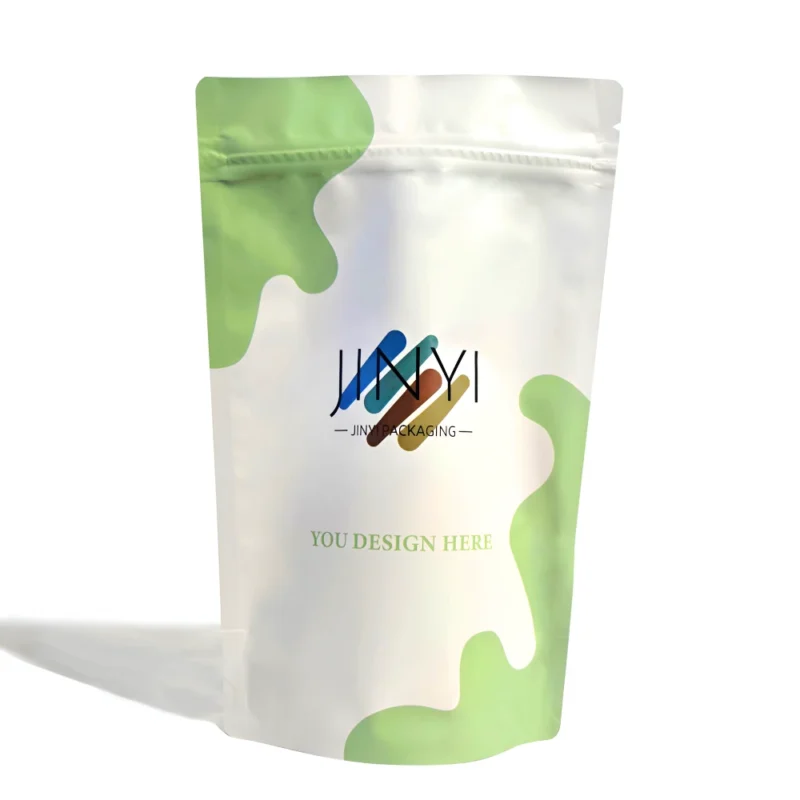
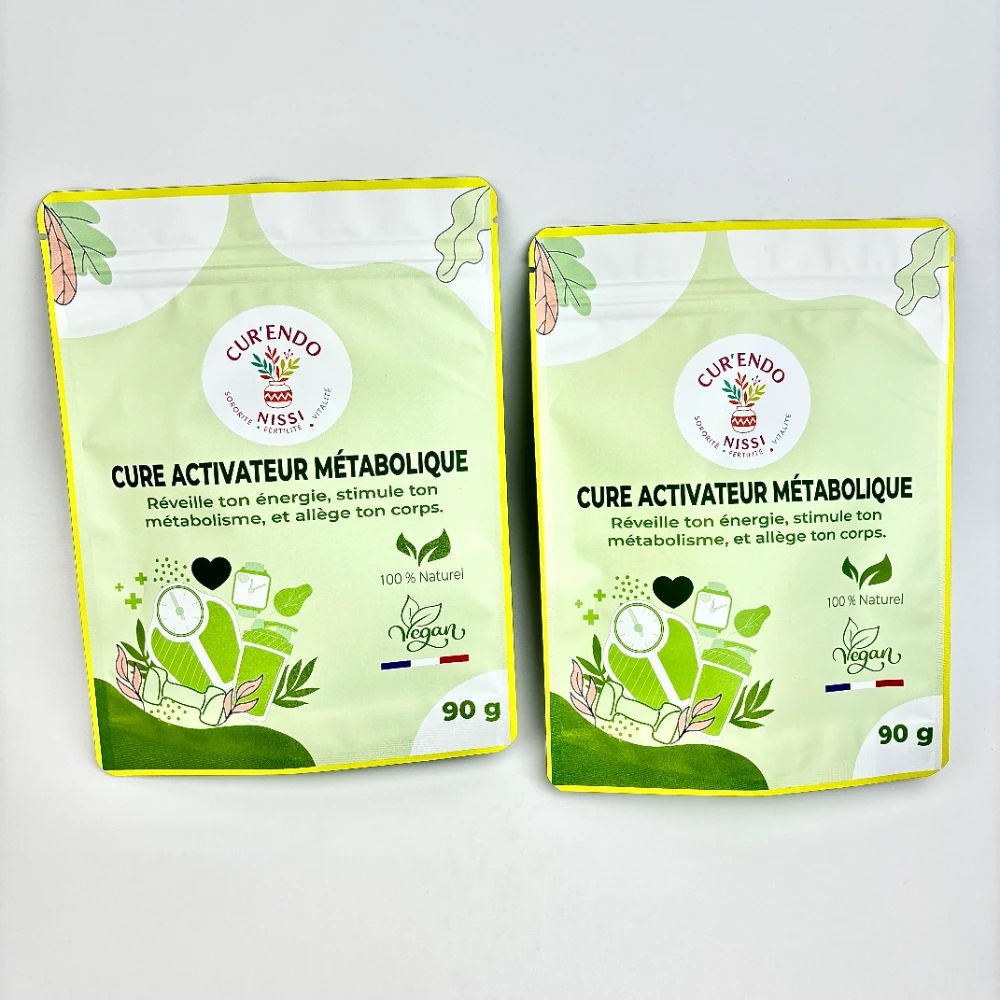
Custom supplement stand-up pouches in green natural colourway produced at JINYI — high-barrier flexible packaging suitable for greens powder, plant-based supplement, and wellness brands, factory-direct from 500 units
For supplement brands building a pink or vibrant-colour packaging identity, colour accuracy management is a critical production variable — not a nice-to-have. The pink base coat needs to be reproduced at consistent ink density across every production batch, because even subtle shade variation between a first order and a repeat order is visible when bags from different batches are placed together on a shelf or in a social media flat-lay. At JINYI, colour density is managed through calibrated ICC profiles across our HP Indigo press fleet via the ESKO Automation Engine, with density verification at multiple intervals during each production run. A physical colour proof on your actual film specification is available before production confirmation — which is the only way to verify exactly how your brand’s pink will render on the real substrate before committing to a full run.
Custom supplement stand-up pouches produced at JINYI — vibrant gradient colour print on high-barrier PET/AL/PE structure with resealable zipper, available factory-direct from 500 units
Spec
Platform / Intermediary
JINYI Direct Factory
MOQ
500–3,000 units typical
From 500 units (digital print)
Plate / setup fee
Often included in unit price
None for digital print
Resealable zipper
Optional add-on
Standard on supplement stand-up pouches
Colour proof on actual film
Varies by supplier
Available before production confirmation
Material spec document
Rarely provided as standard
Included with every order
Pillow bag (single-serve)
Confirm per supplier
Available from 500 units alongside stand-up pouch
Get a Factory-Direct Quote for Your Supplement Packaging
Tell us your format, fill weight, active ingredients, and colour direction. We will come back within 24 hours with a full specification recommendation — film structure, barrier spec, zipper, colour proof availability, and material documentation — at factory-direct pricing.
JINYI is a source factory for custom flexible packaging with 15+ years of production experience, serving food, supplement, coffee, pet food, and consumer goods brands across 150+ countries. We produce stand-up pouches, pillow bags, flat-bottom bags, and side gusset bags in PET/AL/PE, PET/VMPET/PE, and other barrier specifications — via HP Indigo digital print from 500 units and gravure printing at volume — with full material documentation and complimentary commercial photography included as standard.
That is what From Film to Finished — Done Right means in practice.
Elsa
Business Development Manager · JINYI Packaging
Elsa leads business development and customer order management at JINYI. With 8 years in foreign trade across Yiwu and Dongguan, she has a sharp understanding of market demand and what buyers actually need — turning real customer insight into the right packaging decisions.
Customer needs Order management Business development
What packaging does Bloom Nutrition use for their greens powder?
Bloom Nutrition uses a pink stand-up pouch with a resealable zipper and matte lamination finish as their primary format for Greens & Superfoods powder, available in 30-serving, 48-serving, and 60-serving sizes. The film structure is a PET/AL/PE high-barrier laminate — providing near-zero oxygen and moisture transmission to protect the probiotic cultures, spirulina, chlorella, and digestive enzymes in the formula through the full shelf life window.
Why is Bloom Nutrition packaging pink?
Bloom’s pink packaging is a deliberate brand positioning decision targeting their core audience of women aged 18 to 35 in the wellness and fitness space. Pink differentiates Bloom from the white, black, and green colour palettes that dominate the supplement category. The colour also functions as a content marketing tool: the pink pouch is immediately recognisable in any TikTok or Instagram content where it appears, generating brand exposure through consumer-created content without requiring paid media.
What film material is Bloom Nutrition packaging made from?
Bloom Nutrition stand-up pouches use a PET/AL/PE multi-layer laminate — a polyester outer layer for the pink base coat and typography, an aluminium foil middle layer providing near-zero OTR (~0.01 cc/m²/day) and complete UV blocking, and a polyethylene inner layer for heat sealing and food contact. The pink surface colour is produced by a full-coverage pink ink base coat on the inner surface of the PET, reflected back through the transparent PET by the aluminium foil beneath.
What format are Bloom Nutrition Energy Sticks packaged in?
Bloom Energy Sticks use a pillow bag (back-seal pouch) format — a flat, elongated single-serve package produced by sealing a back centre seam and heat-sealing both ends. This format is produced on high-speed VFFS automated lines at lower per-unit cost than stand-up pouches, making it the standard format for single-serve supplement sticks. The pillow bag carries the same brand colour and design as the main stand-up pouch range, maintaining visual consistency across the product line.
Can I get the same pink supplement pouch as Bloom Nutrition factory-direct with low MOQ?
Yes. The pink stand-up pouch in PET/AL/PE with a resealable zipper and matte lamination is a standard production specification available at JINYI from 500 units via HP digital print with no plate fee. Pillow bags for single-serve applications are available alongside stand-up pouches from the same factory. Full material specification documentation — OTR, MVTR, film layer breakdown, and food-contact certifications — is included with every order. A physical colour proof on your actual film specification is available before production confirmation to verify your brand’s pink shade on the real substrate.