JINYI shares practical packaging guidance for your decisions.
Huel stands for Human Fuel — and the brand has built its global reputation on a proposition that is as functional as the name: complete nutrition in the fastest, most convenient format available. Founded in the UK in 2015 by Julian Hearn, Huel has grown into Europe’s largest meal replacement brand, selling over 50 million meals and generating revenue of over £200 million. Their packaging decisions are as deliberate and data-driven as their nutritional formulas — and in at least one case, those decisions generated significant public debate. When Huel’s founder publicly defended the use of non-recyclable foil-lined pouches as a more environmentally responsible choice than biodegradable alternatives, it set off a conversation about what “sustainable packaging” actually means for a product where the food waste from packaging failure far outweighs the packaging material itself. This breakdown covers what Huel packaging is made of, how the format decisions connect to the product and distribution model, and how Huel ultimately resolved the recyclability challenge — and what all of this means for supplement and nutrition brands sourcing comparable flexible packaging today.
Why Huel’s Packaging Is a Product Decision, Not Just a Branding One
Most packaging decisions are made with the product already designed — the formula is fixed, the fill weight is known, and the packaging brief is written around protecting and presenting what already exists. Huel’s approach is different. Their packaging decisions are embedded in the product logic from the start, because the product’s core value proposition — nutritionally complete food in a format that replaces conventional meals — only holds up if the packaging delivers the contents intact, at full nutritional potency, to the consumer. A bag that fails in transit does not just produce a packaging defect. It produces 1.75 kilograms of wasted food, representing 14 meals’ worth of nutritional value that cannot be recovered.
This is the context in which Julian Hearn made his most controversial packaging statement: that Huel’s non-recyclable foil-lined pouches were a deliberate design choice, not an oversight. Speaking at the Forbes Under 30 Summit Europe, Hearn explained that Huel had tested biodegradable packaging and found it too structurally weak to survive the delivery network. Bags that split open in transit produce food waste on a scale that far exceeds the environmental cost of the non-recyclable foil material they replace. The founder’s position was that optimising for packaging recyclability at the cost of product integrity was not actually a sustainability win — it was a greenwashing trade-off that looked good on a label and failed in practice.
This position generated debate in Huel’s active community forum, where recyclability had been raised as a concern since 2015. But it also established a clear framework for how Huel makes packaging decisions: product protection and integrity first, sustainability improvements second — and only when those improvements genuinely reduce total environmental impact rather than shifting it from one category to another. That framework eventually led Huel to invest in the technical development required to produce a monomaterial recyclable pouch that actually meets the structural performance requirements of their distribution network — a journey that took years and was completed in 2025.
For supplement and nutrition brands navigating similar packaging decisions, Huel’s approach offers a useful decision model: define what your packaging must achieve for the product first, then optimise for everything else within those constraints. A packaging brief that starts with sustainability as the primary requirement and retrofits product protection around it is working in the wrong order — and the results, as Huel’s testing confirmed, are predictable.
Note: Huel’s product is sold primarily through their own DTC channel and ships via courier networks across Europe, North America, and beyond. The structural demands placed on their packaging — drop resistance, compression resistance through courier sorting facilities, temperature variation across transit — are significantly more severe than retail shelf packaging that goes from a pallet to a shelf and stays there. Packaging that performs in a retail context does not automatically perform in a DTC courier context, and the specification must reflect the actual distribution journey the package takes.
What Bag Format Does Huel Use?
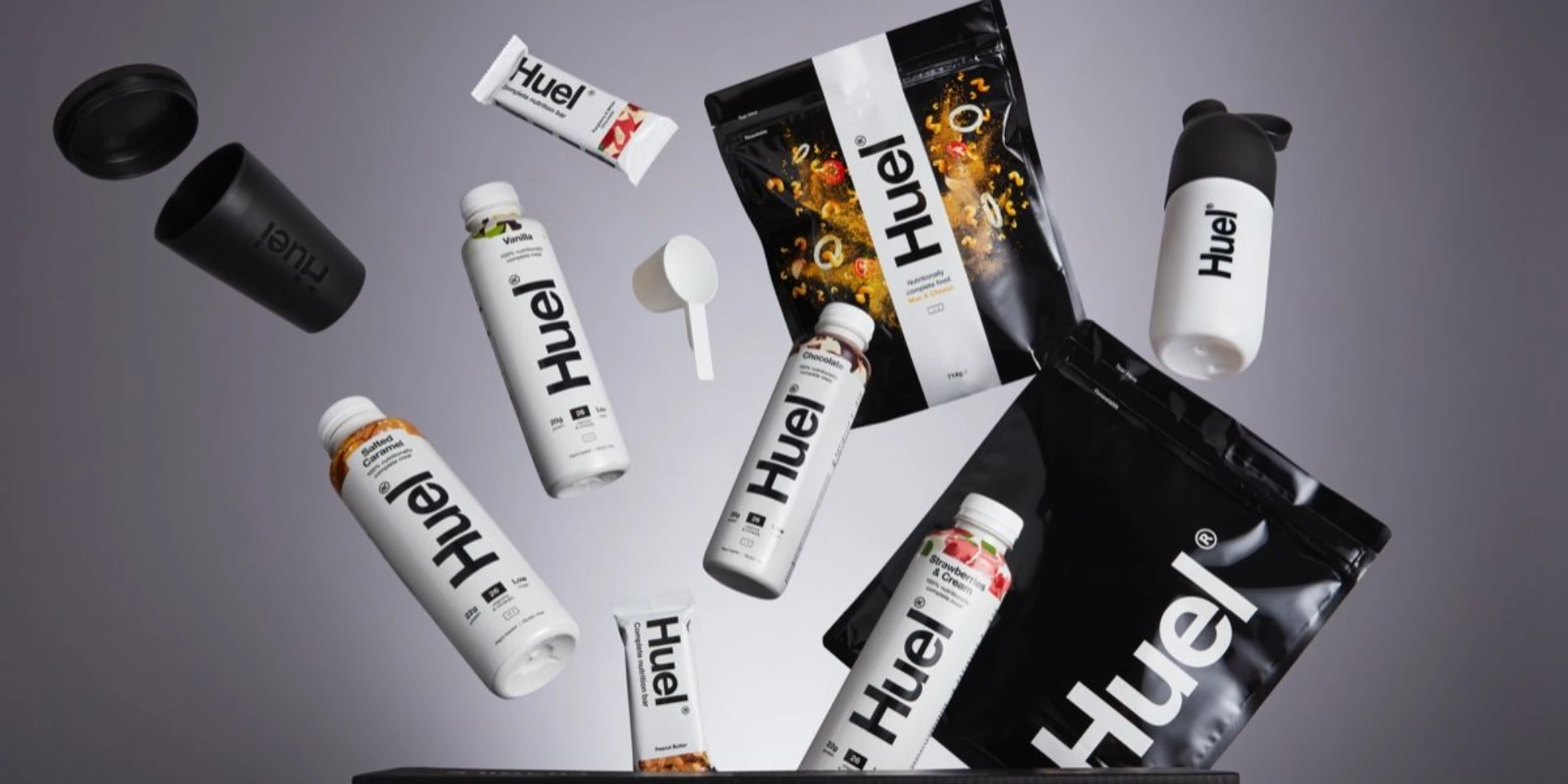
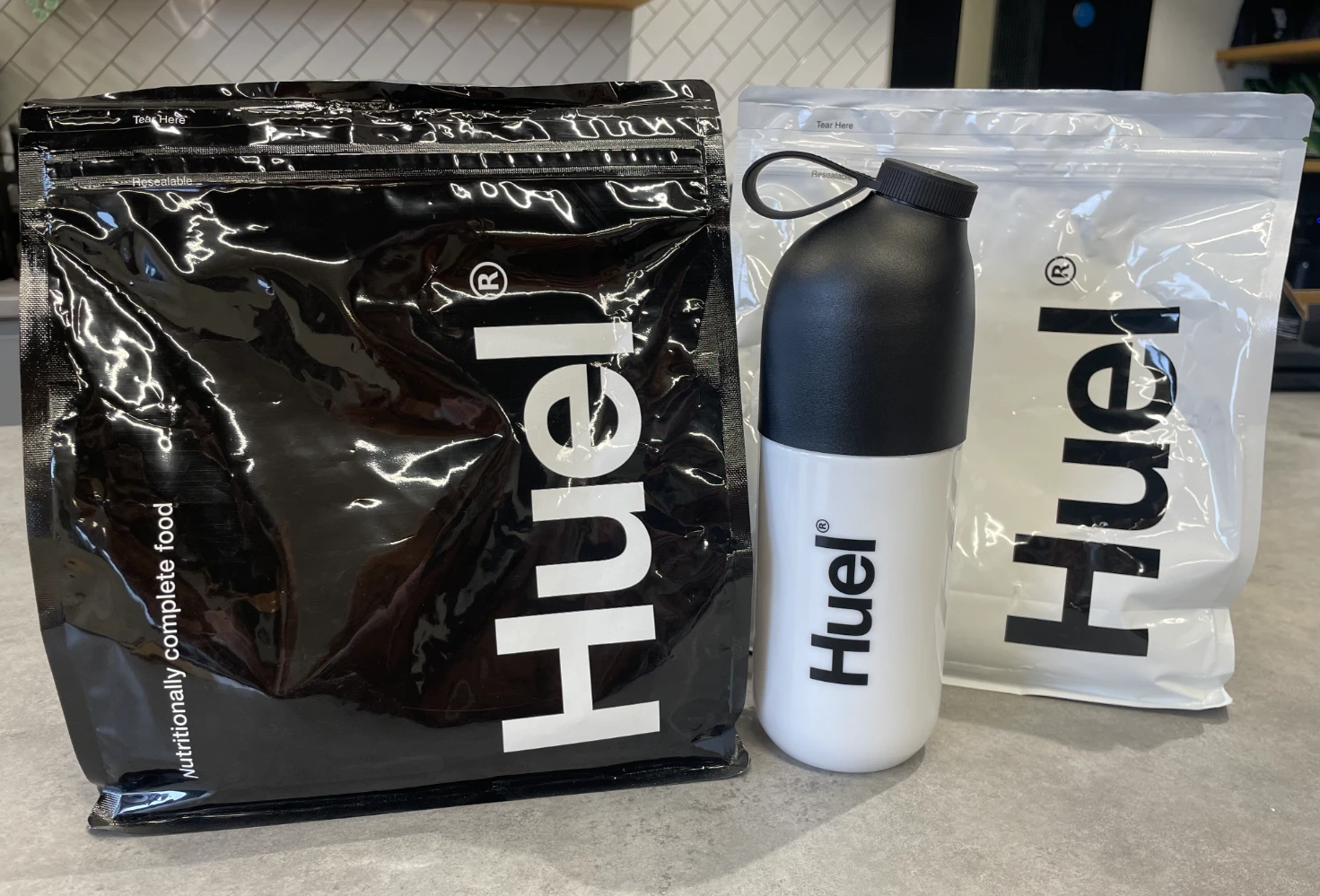
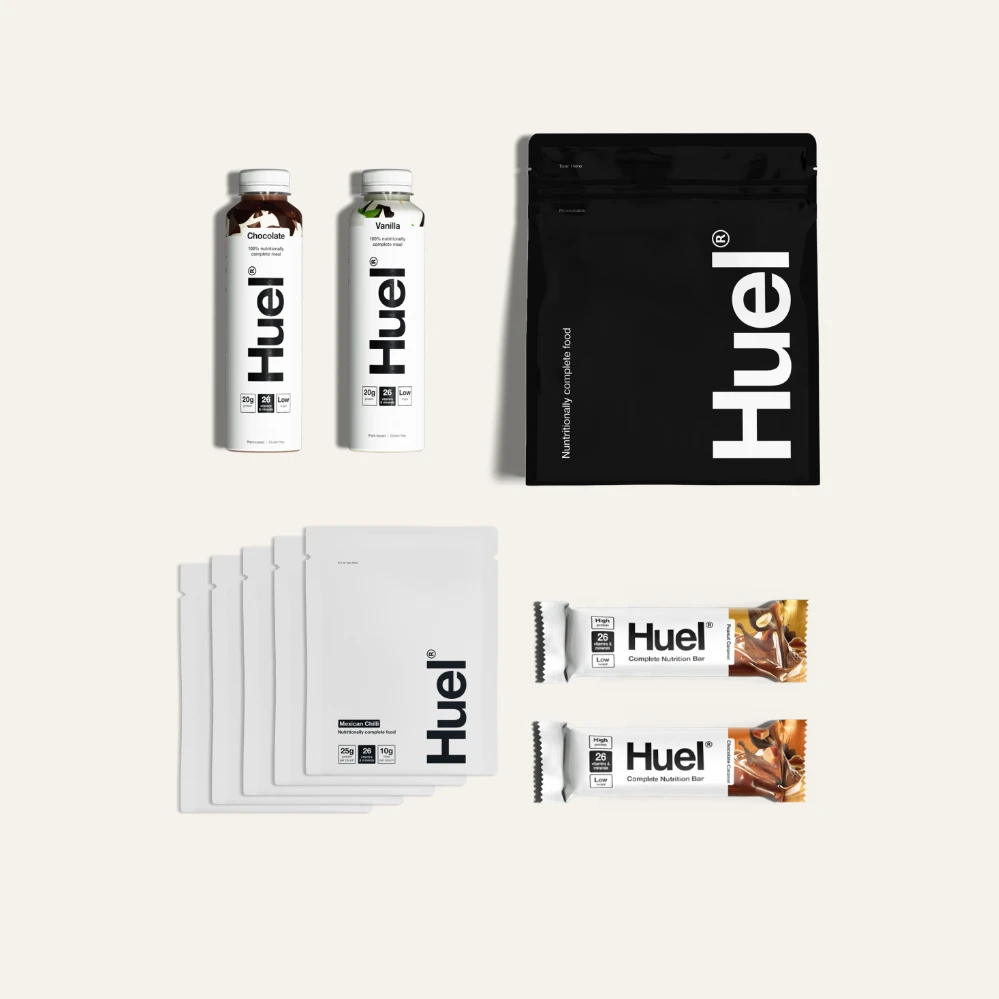
Huel’s primary packaging format for their powder range is a large-format stand-up pouch — significantly larger than the typical supplement brand’s primary SKU. Where Bloom Nutrition’s primary stand-up pouch covers 30 to 60 servings of a single-scoop supplement, Huel’s standard pouch contains enough powder for approximately 17 meals at the recommended serving size, with their Essential line available in a 2.25 kg format. This scale reflects a fundamental difference in the product category: Huel is not a supplement that supplements a normal diet. It is a meal replacement that replaces meals — and the purchase frequency, serving size, and total volume per order reflect that.
The large format pouch also reflects Huel’s sustainability positioning on packaging volume. A single 2.25 kg Huel pouch contains enough food to replace 14 or more conventional meals — meaning the packaging material per meal is significantly lower than if those same meals were purchased individually packaged. This is part of how Huel frames the environmental argument for their product: the packaging-to-food ratio is one of the lowest in the food industry, even when the individual pouch is made from a non-recyclable laminate. The sustainability case is built around the efficiency of the format, not just the material.
The stand-up pouch format is specified with a resealable zipper as standard — a critical functional requirement for a product that a consumer uses daily over two to three weeks per pouch. Huel’s community forum shows that zipper performance has been a consistent consumer feedback topic since the brand’s early days, with consumers reporting powder contamination in the zipper channel making reseal difficult after extended use. This is a known failure mode in supplement pouches across the category: fine powders — particularly at the granularity of oat flour and protein powder — migrate into the zipper channel during handling, reducing the zipper’s grip and airtightness over time. Huel’s response has been iterative zipper specification improvements across successive product versions.
Product Line
Format
Size
Packaging Colour
Huel Powder v3.1
Stand-up pouch
17 servings
White bag, black “Huel” logotype
Huel Black Edition
Stand-up pouch
17 servings
Black bag, white “Huel” logotype
Huel Essential
Stand-up pouch
2.25 kg
White bag, black “Huel” logotype
Huel Hot & Savoury
Stand-up pouch
7 servings
White bag, black “Huel” logotype
Tip: For nutrition and meal replacement brands choosing a primary format, the large stand-up pouch — 500g to 2.5kg fill weight — is the format that delivers the best packaging-to-food ratio and the lowest per-serving packaging material cost. It is also the format that places the highest demands on zipper performance, because the consumer will open and close it daily for two to four weeks. Specify your zipper type and closure force based on your product’s particle size — fine powders require tighter-profile zippers than coarser granule products.
Film Structure — The Foil-Lined Bag and What It Protects
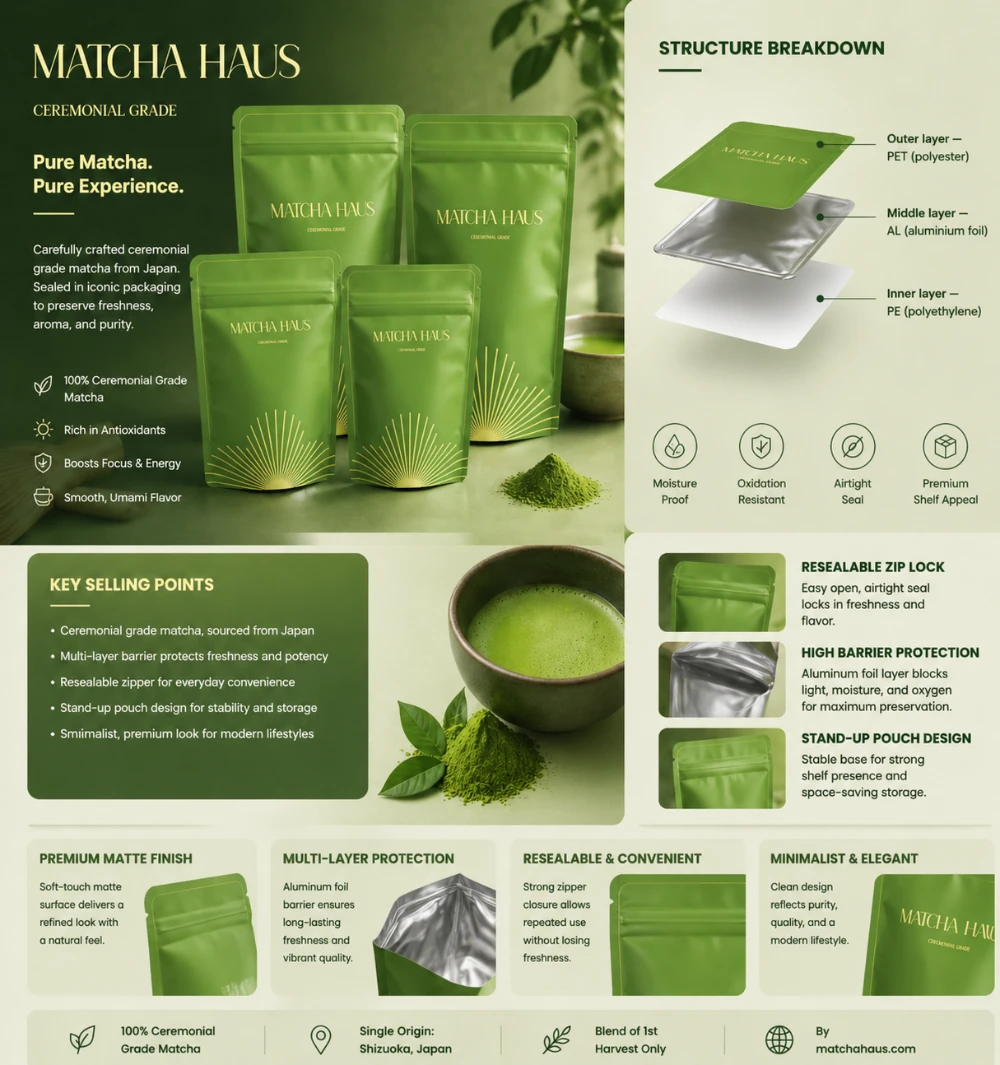
Huel’s powder pouches are foil-lined — a term that refers to the aluminium foil middle layer in a standard PET/AL/PE three-layer laminate. This is the same high-barrier film structure used across premium coffee packaging, matcha powder, and probiotic supplements — and for exactly the same reason: the product inside is sensitive to oxygen, moisture, and light, and the packaging must maintain near-zero transmission of all three through the full shelf life window.
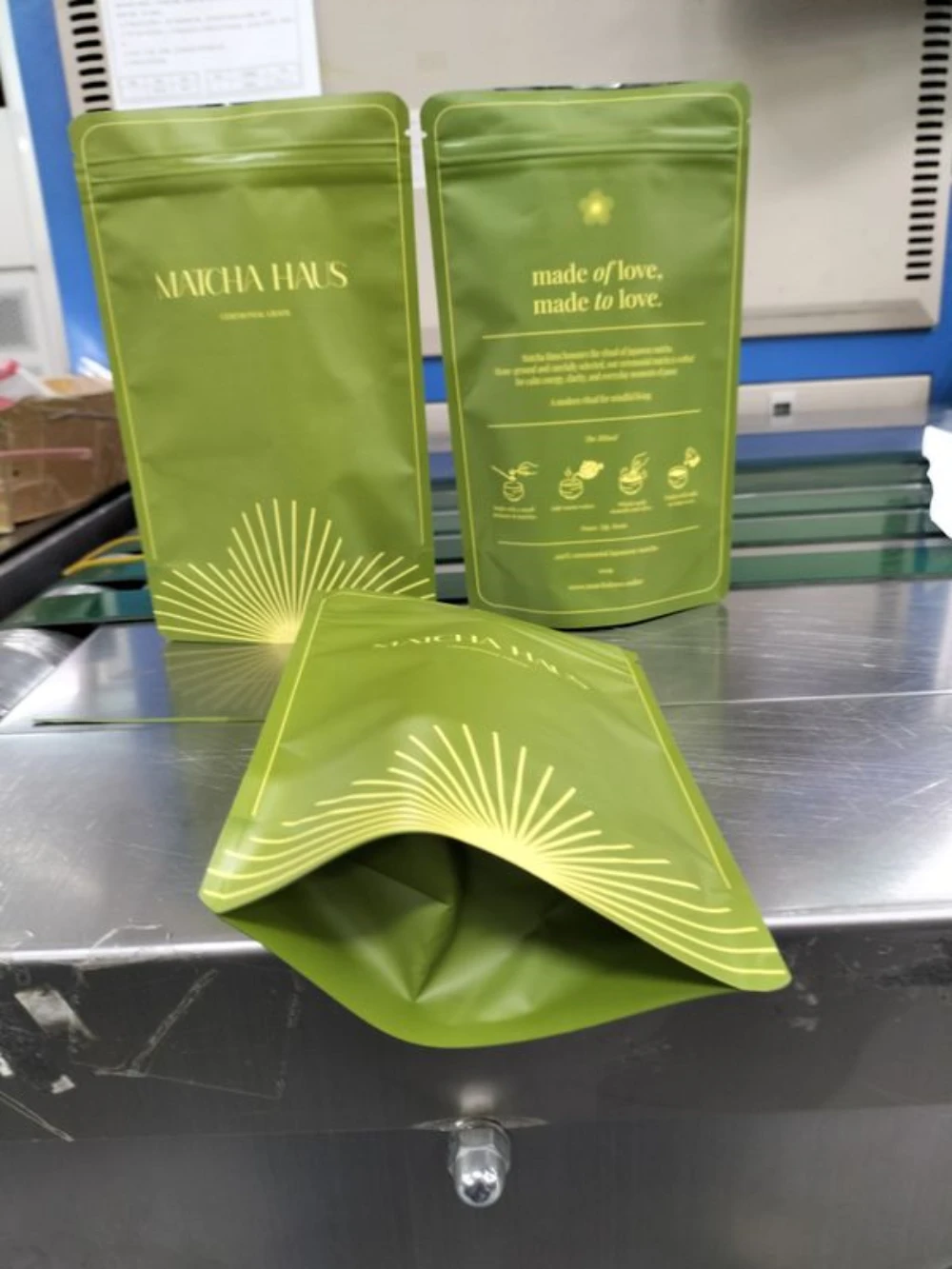
Green matcha packaging pouches freshly produced at the Jinyi factory.
Huel’s nutritionally complete formula contains fat-soluble vitamins (A, D, E, and K) that degrade on exposure to oxygen and UV light — the same degradation pathway that affects spirulina and chlorella in greens supplements. It contains polyunsaturated fats — from flaxseed and MCT sources — that oxidise and go rancid on oxygen exposure. It contains probiotic cultures in select formulations that lose viability on moisture exposure. And it contains 26 essential vitamins and minerals whose potency must be maintained through the full shelf life to deliver the nutritional completeness the product claims. Any film structure with insufficient barrier performance does not just shorten shelf life. It produces a product that fails to meet its label claim — which for a meal replacement brand whose entire value proposition is nutritional completeness, is a product failure, not just a quality issue. For a deeper understanding of how these high-barrier film structures are manufactured — from raw PET and aluminium foil through lamination and bag forming — our guide to how custom stand-up pouches are made covers the full production sequence in detail.
Film structure breakdown for JINYI custom matcha powder stand-up pouch — high-barrier laminate with matte finish, resealable zipper, and degassing valve options, designed to protect sensitive powder products through the full shelf life window
The structural performance requirement — the reason Huel’s founder cited when defending the foil laminate against biodegradable alternatives — is equally important. The PET outer layer provides the tensile strength and puncture resistance that allows the bag to survive the mechanical stresses of a courier sort facility: drops, compression under other packages, edge impacts, and the vibration of extended transit. A biodegradable PLA or compostable kraft laminate at equivalent gauge has significantly lower puncture resistance and tensile strength than PET — which is why Huel’s testing found these alternatives failed in the delivery network. The foil laminate’s structural performance is not a coincidental benefit. It is a designed property of the film specification that directly determines whether the product reaches the consumer intact.
Note: For nutrition brands selling through DTC courier channels rather than retail, the structural performance specification of the film is as important as the barrier specification. Retail packaging is handled by humans on a shelf. Courier packaging is handled by automated sorting equipment that applies mechanical stresses no retail environment produces. If your primary channel is DTC e-commerce, specify your film structure against the mechanical demands of your courier network — not just the barrier demands of your product’s shelf life.
The Recyclability Journey — From Deliberate Foil Choice to Fully Recyclable
Huel’s journey from non-recyclable foil laminates to fully recyclable packaging is one of the most instructive case studies in the flexible packaging industry — not because the outcome was exceptional, but because the process was honest. Rather than switching to a nominally “eco-friendly” material that failed in practice, Huel invested in the technical development required to produce a monomaterial recyclable pouch that genuinely met their structural and barrier performance requirements. The journey took approximately five years from the first public commitment to full completion.
The core technical challenge was replacing the aluminium foil barrier layer with a monomaterial alternative that could achieve comparable oxygen and moisture transmission performance while remaining processable in standard PE recycling streams. This is exactly the same challenge Lavazza faced in their coffee packaging sustainability transition — and the solution path was similar: advanced PE film engineering, EVOH barrier layers within an all-polyolefin structure, and precise lamination parameters that close the barrier performance gap to an acceptable level for the product’s specific shelf life requirement. By 2025, Huel completed the full-range transition to recyclable packaging — fulfilling a commitment that had been publicly tracked by their community since it was announced.
Dimension
Multi-Layer PET/AL/PE
Monomaterial PE (Recyclable)
Barrier performance
Maximum — OTR ~0.01 cc/m²/day
Very good — advanced engineering PE
Structural strength
Very high — PET outer layer
Good — high-density PE engineering
Recyclability
Requires specialist stream
Standard PE recycling stream
DTC courier performance
Proven — decades of use
Validated — Huel tested extensively before launch
Best application
Long shelf life, global retail, maximum barrier requirement
DTC channels, sustainability-positioned brands, shorter distribution chains
Note: Both PET/AL/PE and monomaterial PE structures have legitimate applications in supplement and nutrition packaging. The multi-layer laminate remains the correct specification wherever maximum barrier performance, long shelf life, or extreme structural demands apply. Monomaterial structures are the right choice where the product’s distribution timeline and barrier requirements are met by the achievable performance of advanced PE engineering. The decision is technical, not ideological — and it should be made against your product’s actual specification requirements, not a general sustainability preference.
Design Language — Function-First Minimalism as Brand Identity
Huel’s packaging design is among the most minimal in the supplement and nutrition category — and it is minimal in a very specific, intentional way. The front panel carries the brand name in large, bold typography, the product name, and a handful of key nutritional claims. There is no lifestyle imagery, no ingredient photography, no pattern or illustration. The design communicates exactly what the brand is: efficient, functional, and unambiguous. Huel is not trying to convince the consumer to buy through packaging aesthetics. Their consumer has already done their research, made their decision, and placed their order. The packaging confirms they received the right product and tells them what they need to know to use it correctly.
The black-and-white colour system carries the product line differentiation. Standard Huel Powder v3.1 and Essential use a white pouch with a black “Huel” logotype — communicating accessibility and the standard-tier positioning. Huel Black Edition uses a black pouch with a white “Huel” logotype. This colour inversion is not arbitrary: Black Edition contains 33% more protein and 50% fewer carbohydrates than the standard formula — it is the higher-performance, lower-carb product, and the black packaging communicates that premium, performance-oriented positioning without requiring any additional design elements. The colour does the segmentation work that other brands accomplish with product photography, ingredient icons, or category labels.
The contrast between Huel’s design approach and the highly visual, social media-optimised packaging of brands like Bloom Nutrition or the brand-story-driven designs of AG1 reveals the full spectrum of packaging design strategy in the DTC supplement market. All three brands sell primarily online, to consumers who have researched their purchase before buying. But each brand’s audience has a fundamentally different relationship with the product: Bloom’s consumer wants a product that fits into her lifestyle aesthetic and content. AG1’s consumer wants scientific credibility and daily ritual reinforcement. Huel’s consumer wants maximum nutritional efficiency with minimum decision friction. The packaging design serves each of these relationships appropriately — none is objectively better, each is correct for its audience.
Tip: Before finalising your supplement packaging design brief, write a single sentence describing the relationship your target consumer has with your product — not the product’s features, but the consumer’s emotional and functional orientation toward it. That sentence should determine your colour, your design density, your imagery choice, and your finish. Huel’s sentence might be: “I want complete nutrition with zero decision overhead.” Bloom’s might be: “I want a supplement that feels like it belongs in my life.” Both are legitimate packaging briefs. They produce very different bags.
How to Source the Same Packaging Structure Factory-Direct
The large-format stand-up pouch in PET/AL/PE high-barrier laminate with a resealable zipper — the structure that has protected Huel’s formulas since the brand launched — is a standard flexible packaging production specification. Understanding Huel packaging material choices helps any nutrition brand make informed decisions: the PET/AL/PE structure delivers the near-zero OTR and structural durability that both the nutritional formula and the DTC distribution channel require. At JINYI, the same large format supplement stand-up pouch structure is available factory-direct from 500 units via HP digital print with no plate fee. Full material specification documentation is included with every order — OTR, MVTR, film layer breakdown, food-contact certifications, and tensile strength data — which provides the verification your retail buyers, compliance teams, and regulatory requirements need.
For nutrition and meal replacement brands building a DTC channel where courier durability is as important as barrier performance, JINYI can provide material specification data that covers both dimensions — barrier performance at the film level and structural performance at the bag level. This dual specification is what allows you to make an informed decision about which film structure genuinely meets your product’s requirements, rather than defaulting to the most familiar option or the most sustainable-sounding one.
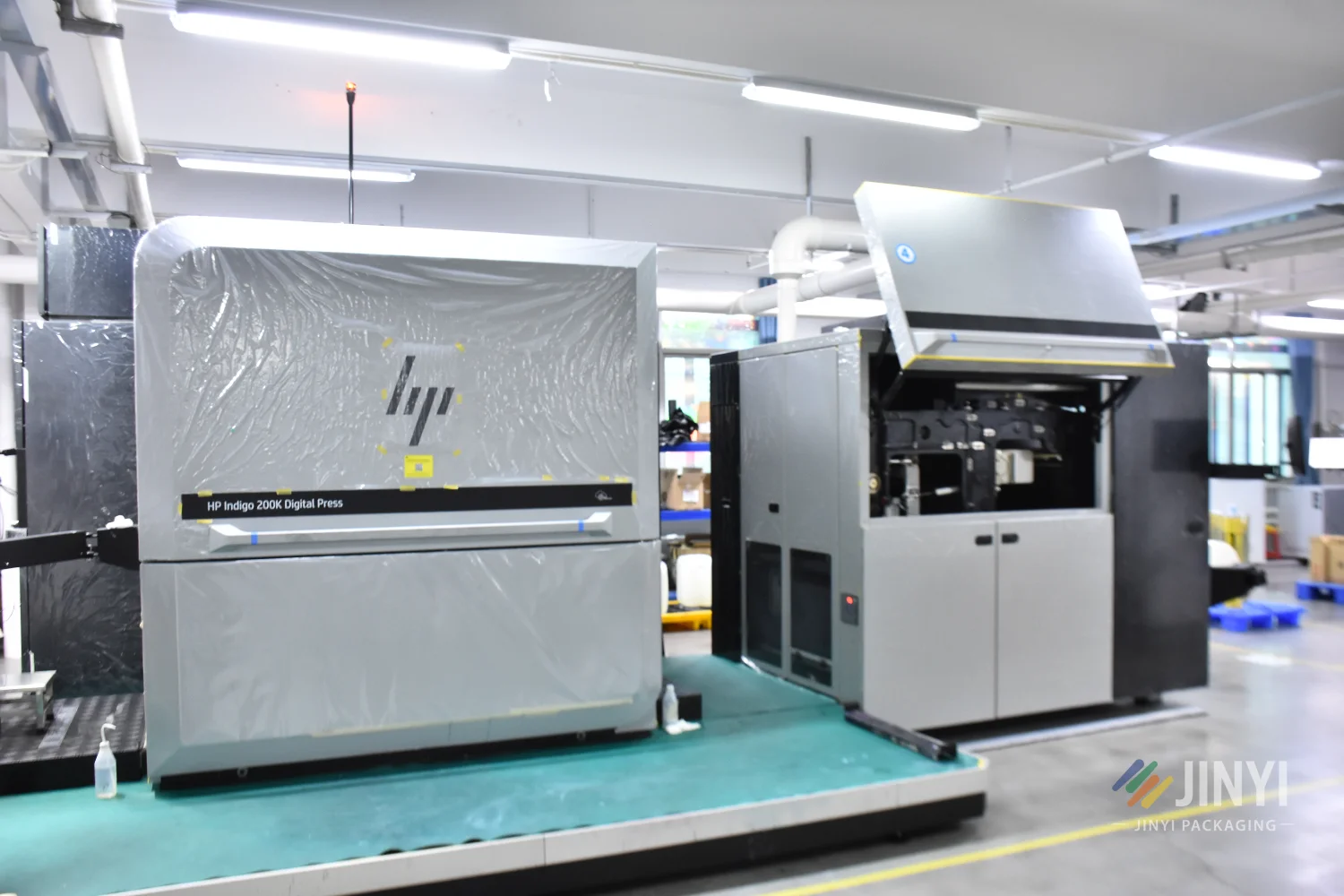
HP Indigo 200K — JINYI’s newest press, commissioned in 2025, expanding digital print capacity and reducing lead times
Spec
Platform / Intermediary
JINYI Direct Factory
MOQ
500–3,000 units typical
From 500 units (digital print)
Resealable zipper
Optional add-on
Standard on nutrition stand-up pouches
Material spec document
Rarely provided as standard
Included — barrier + structural data
Large format availability
Confirm per supplier
Available — 500g to 2.5kg+ fill weights
Scale path
Platform pricing, limited flexibility
Digital → gravure at volume, unit cost drops
Get a Factory-Direct Quote for Your Nutrition Packaging
Tell us your fill weight, active ingredients, distribution channel, and quantity. We will come back within 24 hours with a full specification recommendation — film structure, barrier data, zipper spec, and material documentation — at factory-direct pricing.
JINYI is a source factory for custom flexible packaging with 15+ years of production experience, serving food, supplement, nutrition, coffee, and consumer goods brands across 150+ countries. We produce stand-up pouches, flat-bottom bags, pillow bags, and side gusset bags in PET/AL/PE, PET/VMPET/PE, and other barrier specifications — via HP Indigo digital print from 500 units and gravure printing at volume — with full material and structural specification documentation included as standard with every order.
That is what From Film to Finished — Done Right means in practice.
Elsa
Business Development Manager · JINYI Packaging
Elsa leads business development and customer order management at JINYI. With 8 years in foreign trade across Yiwu and Dongguan, she has a sharp understanding of market demand and what buyers actually need — turning real customer insight into the right packaging decisions.
Customer needs Order management Business development
What packaging format does Huel use for their powder products?
Huel uses large-format stand-up pouches with resealable zippers for their powder range — Huel Powder v3.1, Black Edition, Essential, and Hot & Savoury. The Essential line is available in a 2.25 kg pouch. The large format reflects the product’s meal replacement positioning: a single pouch contains enough powder for 14 or more complete meals, making the packaging-to-food ratio among the lowest in the food industry regardless of the bag’s material specification.
Why did Huel use non-recyclable foil packaging for so long?
Huel’s founder publicly explained that the foil-lined packaging was a deliberate design choice after testing found biodegradable alternatives too structurally weak to survive courier delivery networks. Bags that split in transit waste 1.75 kg of food — significantly greater environmental impact than the packaging material itself. Huel invested in developing monomaterial recyclable structures that genuinely met their structural and barrier requirements, completing the full-range transition to recyclable packaging by 2025.
What film material is Huel packaging made from?
Huel’s foil-lined powder pouches use a PET/AL/PE multi-layer laminate — a polyester outer layer for print quality and structural strength, an aluminium foil middle layer providing near-zero OTR and complete UV blocking, and a polyethylene inner layer for heat sealing and food contact. This structure protects the fat-soluble vitamins, polyunsaturated fats, and probiotic cultures in Huel’s formula through the full shelf life and DTC courier distribution cycle. Huel has since transitioned to recyclable monomaterial structures across their full range.
What is the difference between Huel Black Edition and standard Huel Powder packaging?
Huel Black Edition uses a black pouch with white “Huel” typography. Standard Huel Powder uses a white pouch with black “Huel” typography. The colour inversion reflects the product differentiation: Black Edition contains 33% more protein and 50% fewer carbohydrates than the standard formula, positioned as a higher-performance, lower-carb option. The black packaging communicates that premium, performance-oriented positioning through colour alone — without requiring additional design elements or product photography.
Can I get the same large-format nutrition pouch as Huel factory-direct with low MOQ?
Yes. Large-format stand-up pouches in PET/AL/PE high-barrier laminate with resealable zippers are available at JINYI from 500 units via HP digital print with no plate fee. Fill weights from 500g to 2.5kg and above are supported. Full material specification documentation — OTR, MVTR, film layer breakdown, food-contact certifications, and structural performance data — is included with every order as standard.