JINYI shares practical packaging guidance for your decisions.
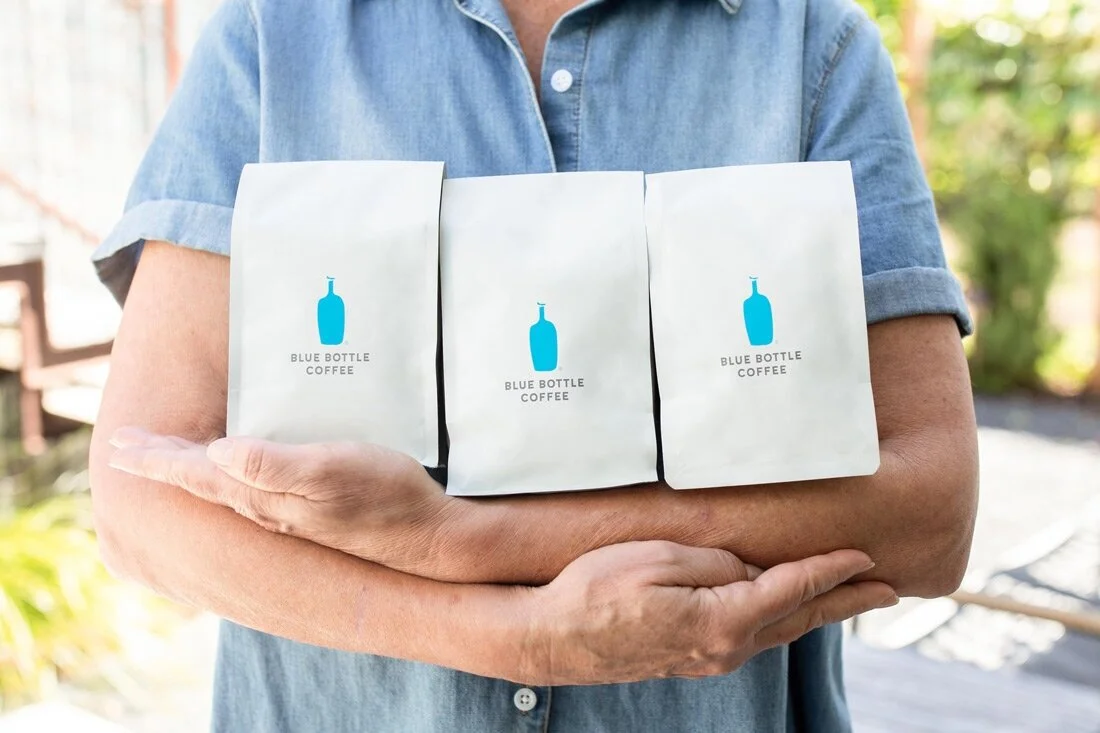
Blue Bottle Coffee is one of the most recognisable names in third wave specialty coffee. Founded in Oakland in 2002, the brand built its reputation on a simple proposition: coffee roasted to order, served with precision, with no compromise on freshness. That same philosophy runs through every packaging decision they make. Where Starbucks uses illustrated artwork and Bulletproof uses dramatic black matte, Blue Bottle uses almost nothing — a white or off-white bag, clean black typography, and a format chosen for maximum freshness and shelf performance. This breakdown covers exactly what Blue Bottle Coffee packaging is made of, why those choices were made, and how to source the same structure factory-direct for your own coffee brand.
What Makes Blue Bottle Coffee’s Packaging Philosophy Unique
Blue Bottle Coffee occupies a specific position in the specialty coffee market — one that most brands aspire to but few achieve. They are not a mass-market brand competing on price. They are not a luxury brand competing on exclusivity. They are a precision brand competing on quality — and their packaging reflects that positioning with unusual consistency. Where most coffee brands use packaging as a vehicle for brand storytelling through illustration, colour, and graphic complexity, Blue Bottle uses packaging as a vehicle for restraint. The bag communicates one thing: the coffee inside is the point.
This is a deliberate strategic choice, not a budget constraint. Blue Bottle has the resources — and has had since their 2017 Nestlé acquisition — to produce elaborate packaging at scale. The minimalism is intentional. It positions the brand alongside high-end Japanese consumer goods and Scandinavian design sensibility rather than alongside the saturated graphics of conventional grocery coffee. In a retail environment where most bags shout for attention, a bag that says almost nothing stands out precisely because it says almost nothing.
Understanding why Blue Bottle made the packaging choices they did — format, film, finish, and design density — gives any specialty coffee brand a useful framework for their own packaging brief. The choices are not arbitrary. Each one solves a specific problem: freshness, shelf performance, brand differentiation, or distribution logistics. This breakdown covers all of them, in the order they matter.
Note: Blue Bottle Coffee operates cafés across the US, Japan, South Korea, Hong Kong, Singapore, and China — and their retail bags are sold both through their own cafés and DTC channel and through grocery retailers including Whole Foods. The packaging spec needs to perform across all of these channels simultaneously, which is one reason their choices lean toward proven high-barrier formats rather than experimental sustainable alternatives.
What Bag Format Does Blue Bottle Coffee Use?
Blue Bottle Coffee’s primary retail format is the flat-bottom bag — also called a box pouch or quad-seal bag. At their standard 12 oz retail size, the flat-bottom format provides four sealed corner edges, a structured flat base that stands without support, and a wide, flat front panel that gives the brand a significantly larger print canvas than a standard stand-up pouch. It is the dominant format in the specialty coffee segment precisely because it combines shelf stability at retail weight with a visual footprint that communicates premium positioning.
The flat-bottom bag’s four-sided structure — front, back, left gusset, right gusset — gives Blue Bottle four separate printable panels. For a brand whose entire design language is built around minimal typography, that front panel is doing a significant amount of work. The wide, flat surface allows the brand name, roast origin, tasting notes, and certification marks to be laid out with genuine breathing room — something that is simply not possible on the narrower, more tapered front panel of a standard stand-up pouch.
Blue Bottle also operates a subscription line — beans roasted to order and delivered directly to the consumer’s door. For this channel, they use a foil soft bag in an off-white colourway, distinguishing subscription packaging from the café retail line. The subscription bag serves a different functional requirement: it needs to travel well through postal and courier networks, arrive without crush damage, and maintain freshness through a delivery window that may be several days longer than café retail. The foil structure provides the barrier performance; the soft format provides the crush-resistance that rigid-based bags cannot match in transit.
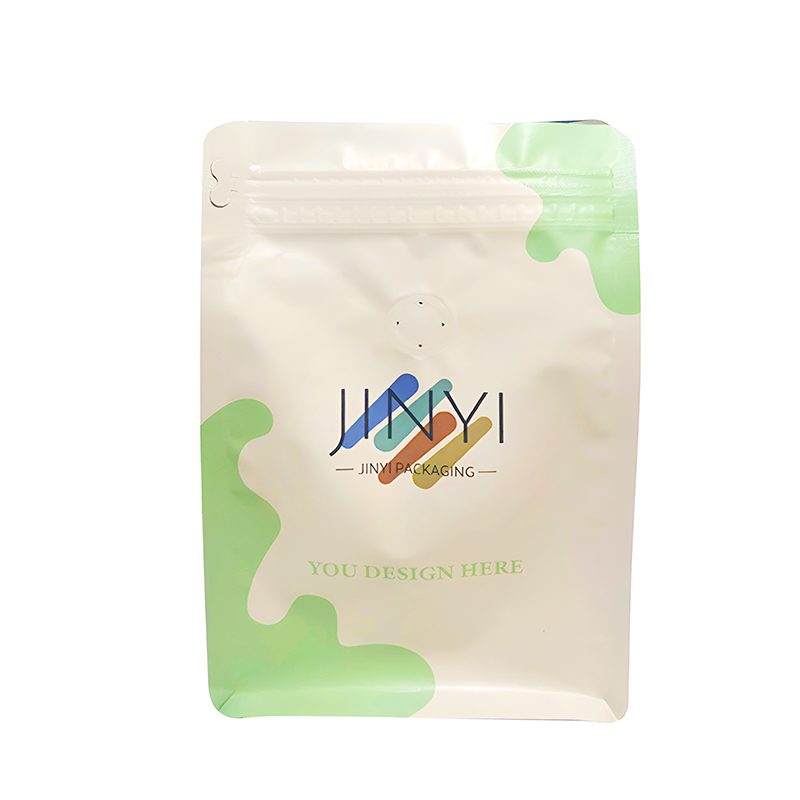
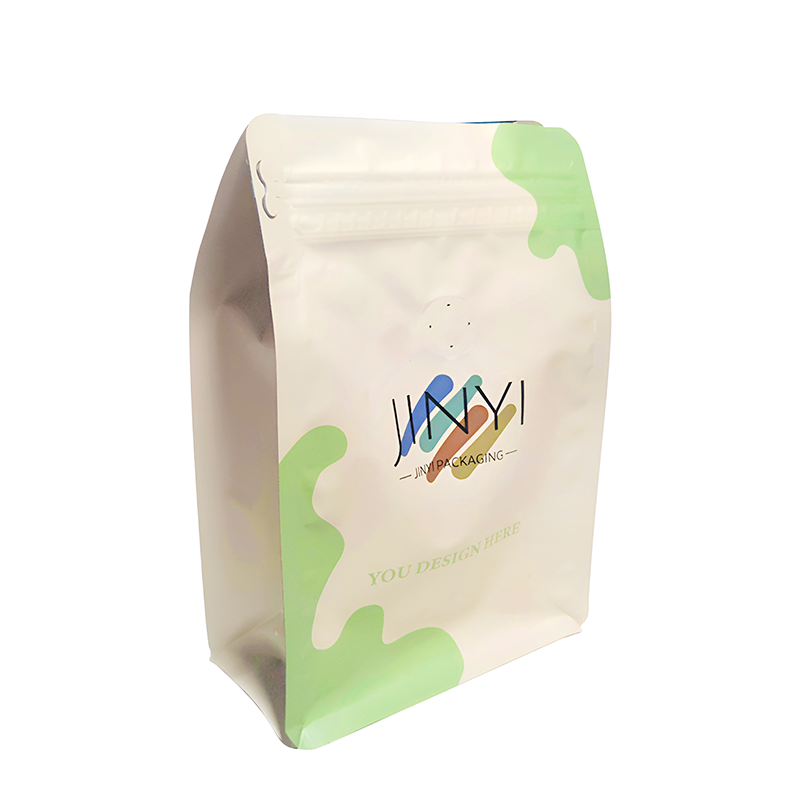
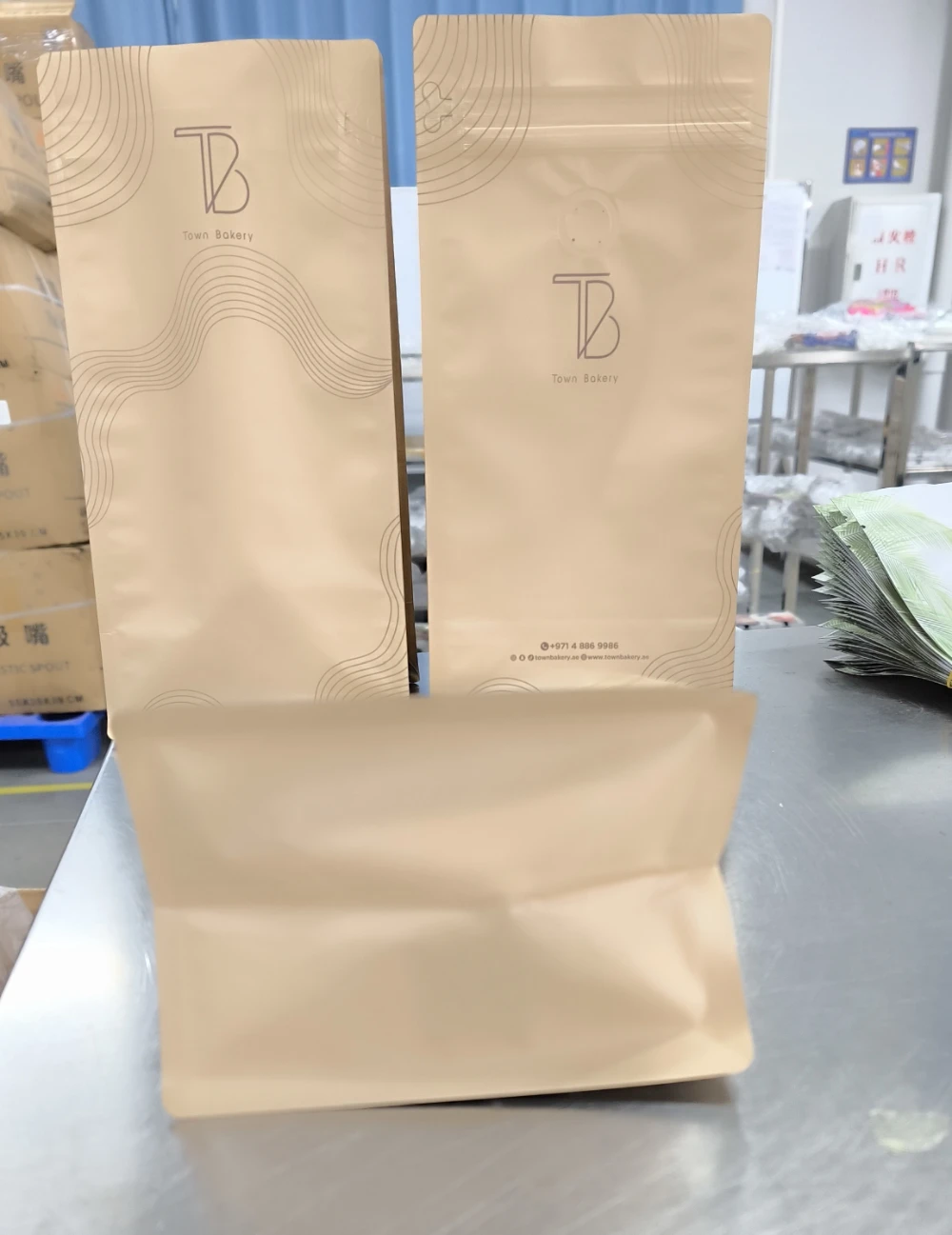
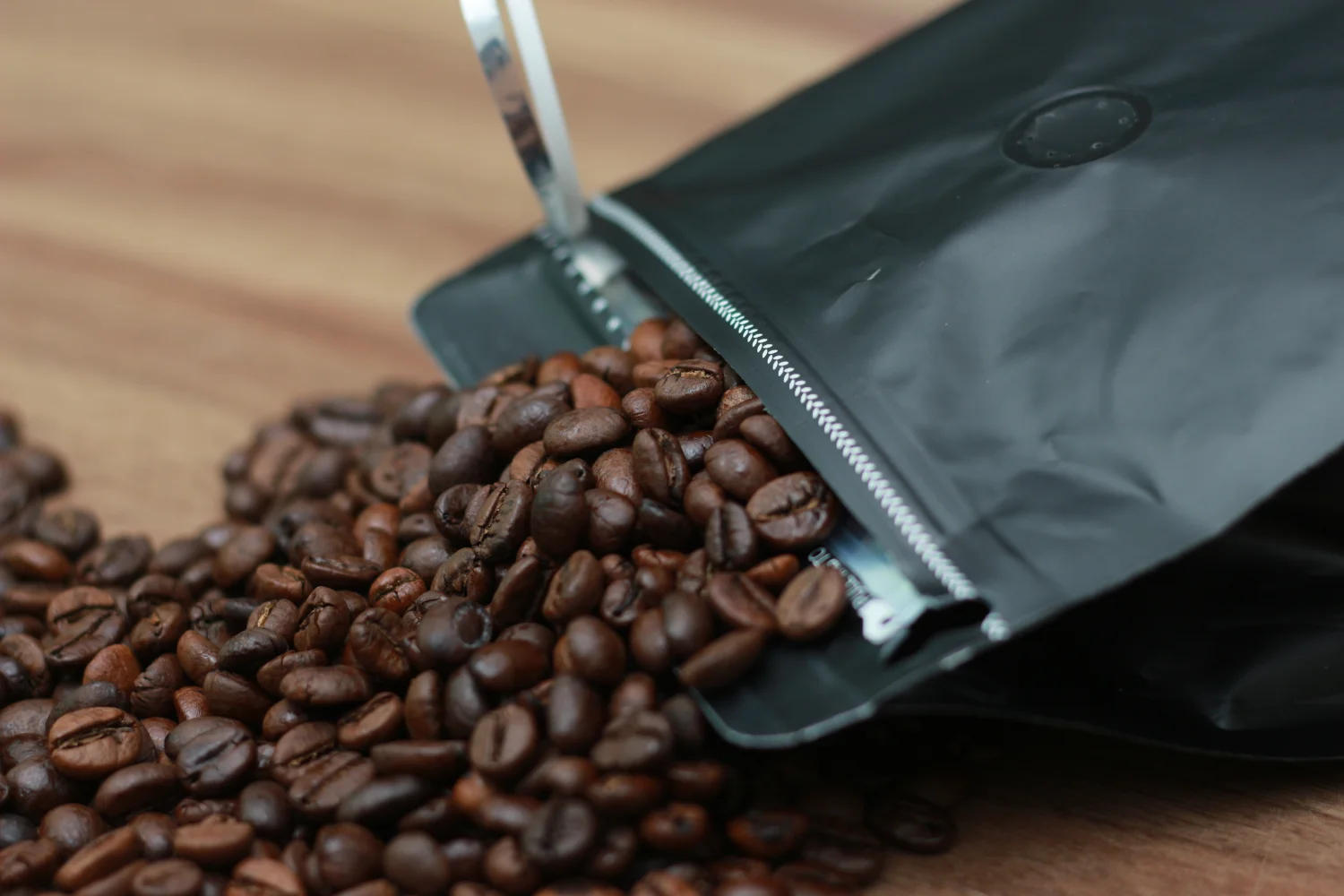
These are custom flat bottom coffee bags freshly off the production line at JINYI’s factory — each batch enters our quality inspection process before packing and shipment.
Format
Shelf Stability
Print Area
Best For
Flat-bottom bag
Excellent — structured base
4 panels, wide front
Premium retail, specialty coffee, DTC
Stand-up pouch
Good — bottom gusset
2 panels, tapered front
Retail launch, small batch, cost-first
Side gusset bag
Good — wide base when filled
2 panels, traditional format
Large volume, commercial, bulk supply
Tip: The flat-bottom bag carries a small unit cost premium over a standard stand-up pouch — typically 8 to 15% depending on film spec and print complexity. For a specialty coffee brand where the bag is part of the premium positioning, that premium is almost always worth paying. For a brand launching at the lowest possible cost point, a stand-up pouch in the same film spec achieves comparable freshness performance at lower cost per unit.
Film Structure — What’s Actually Inside the White Bag
Blue Bottle Coffee’s retail bags are opaque — no window, no transparency. Combined with their subscription line’s explicit use of a foil bag for maximum freshness protection, the film structure across their packaging range is a standard high-barrier laminate: PET / AL / PE. The outer PET layer provides the print substrate and structural rigidity. The middle aluminium foil layer provides the barrier performance — near-zero oxygen and moisture transmission. The inner PE layer provides the heat-seal surface and food-contact safety.
The white appearance of Blue Bottle’s bags is not produced by a white film — it is produced by white printing ink applied to the outer PET surface. This is reverse printing: the white ink is applied to the inner face of the PET outer layer before lamination, and the aluminium foil middle layer reflects that white back through the PET, producing the clean, bright white surface you see on the finished bag. This is why the white appears consistent and bright across the full bag surface, including in areas with no additional colour printing — it is the foil reflecting the white base coat.
The PET/AL/PE structure delivers an oxygen transmission rate (OTR) of approximately 0.01 cc/m²/day and a moisture vapour transmission rate (MVTR) of approximately 0.01 g/m²/day — both near zero. For specialty coffee, which depends on the volatile aromatic compounds developed during roasting to deliver its flavour profile, this level of barrier performance is what maintains product quality through the full retail distribution cycle from roaster to consumer.
Layer
Material
Function
Outer
PET (Polyester)
Print substrate · white base coat · structural rigidity
Middle
AL (Aluminium Foil)
Near-zero OTR · UV block · moisture barrier · reflects white base coat
Inner
PE (Polyethylene)
Heat seal layer · food-contact safe · product protection
Note: The white-on-foil print technique requires precise ink adhesion management during production. White ink needs a higher surface energy on the PET substrate than black or colour inks — if surface tension is insufficient, the white base coat will appear patchy or uneven on the finished bag. This is one reason white coffee bags are slightly more demanding to produce consistently than black ones, and why print quality checks are critical at the proofing stage for any white-based design.
The Minimalist Design Strategy — And What It Tells You About Print
Blue Bottle’s packaging design is among the most minimal in the specialty coffee category — and arguably in mainstream consumer food and beverage retail. The retail bag carries the brand name, the blend name, the roast origin, tasting notes, and certification marks. That is almost everything. There is no illustration, no background pattern, no decorative element. The white surface is the design. The typography is the brand.
This is a harder packaging brief to execute well than it appears. Complex illustrated packaging is forgiving — a slight colour shift, a minor registration error, a small ink inconsistency — these disappear into the complexity of the artwork. Minimal packaging is unforgiving. On a white bag with only black typography, any deviation in print registration, ink density, or colour accuracy is immediately visible. The typography must be sharp, the black must be consistent, and the white base coat must be even across the full bag surface. The simplicity of the design demands a higher standard of print precision, not a lower one.
Blue Bottle’s bags use a matte lamination finish across the full bag surface. Matte is the standard finish choice for premium specialty coffee — it reduces glare under retail lighting, creates a tactile quality that signals premium before the consumer reads a single word, and pairs naturally with the restrained design language. A gloss finish on the same design would read as clinical rather than premium. The matte finish is not incidental — it is doing half the design work.
Brand
Design Approach
Finish
Brand Signal
Blue Bottle
Minimal — typography only
Matte white
Precision, restraint, quality-first
Starbucks
Illustrated — full artwork per SKU
Matte + spot foil (Reserve)
Scale, heritage, recognisability
Bulletproof
Bold — black bag, white logo only
Matte black
Performance, functional, clean claims
Tip: If you are building a specialty coffee brand and considering a minimal white design, request a physical colour proof on your actual film specification before confirming the production run. What looks clean and precise on screen can show ink inconsistency or surface variation on the actual substrate — especially on white bags where there is nothing in the design to mask those variations. A proof on the real material is not optional for minimal designs.
The One-Way Degassing Valve
Every Blue Bottle Coffee retail bag includes a one-way degassing valve — positioned on the front or back panel, consistent across their entire retail range. For a brand whose entire positioning is built around freshness — coffee roasted to order, shipped within days of roasting — the degassing valve is not a standard feature. It is a prerequisite.
Freshly roasted coffee releases carbon dioxide for 7 to 14 days after roasting. This is a natural byproduct of the Maillard reaction during the roast — CO₂ is trapped in the bean structure and slowly releases as the beans outgas after roasting. If you seal freshly roasted coffee in a bag without a degassing valve, the accumulating CO₂ pressure will either inflate and eventually fail the bag seals, or the roaster must hold the coffee for a week or more before sealing — losing the freshness window that is the entire point of ordering from a specialty roaster in the first place.
The one-way degassing valve solves both problems simultaneously. It allows CO₂ to exit the sealed bag without allowing oxygen to enter — maintaining the near-zero oxygen environment created at sealing while managing the CO₂ pressure build-up. For Blue Bottle, whose roast-to-ship window is measured in hours rather than days, the valve is what makes their freshness model operationally possible. Without it, the coffee they are most proud of — the freshest beans, roasted closest to dispatch — would be the most difficult to package safely. For a complete explanation of how the manufacturing process produces bags with valves and other functional components, our guide to how custom stand-up pouches are made covers the full production sequence in detail.
Note: Not all degassing valves are equal. The valve body, rubber disc, and oil seal specification affect how reliably the valve maintains a one-way gas flow over the bag’s shelf life. Valves that degrade over time — particularly in humid storage environments — can begin allowing oxygen ingress before the product is consumed. At JINYI, degassing valve installation is included as standard on all coffee bag orders, with valve integrity verified as part of the outgoing quality inspection on every production batch.
How to Source the Same Packaging Structure Factory-Direct
The white matte flat-bottom bag in PET/AL/PE with a one-way degassing valve is a standard production spec. It is not proprietary to Blue Bottle, and you do not need their scale to access it. At JINYI, the same structure is available from 500 units via HP digital print — no plate fee, white base coat applied as standard, degassing valve included, and a full material specification document provided with every order.
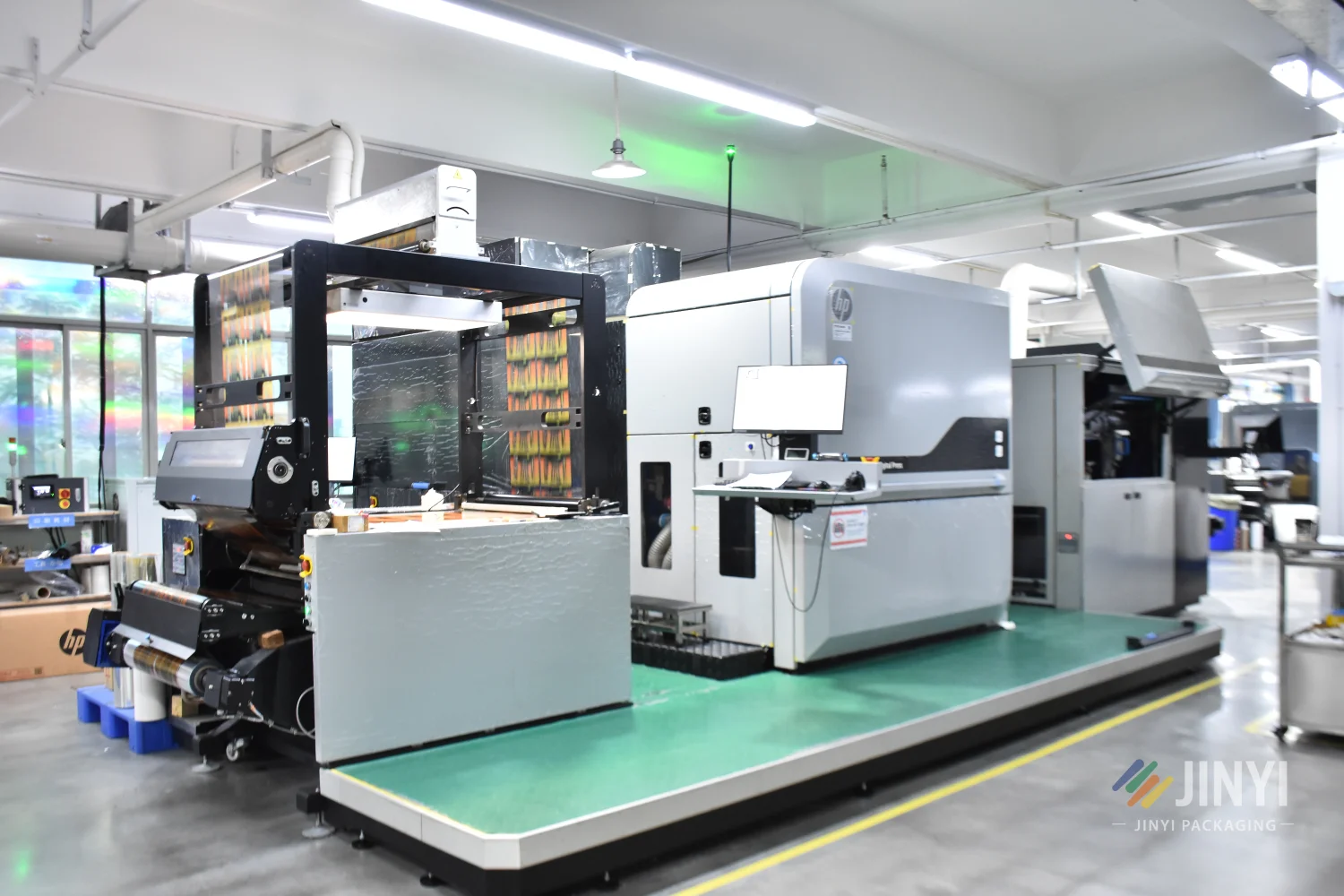
For brands producing a minimal design — clean typography on a white or off-white background — the HP Indigo digital print process managed through our ESKO Automation Engine delivers the print precision that minimal packaging demands. Colour consistency is managed across press runs through calibrated ICC colour profiles, and every job goes through a preflight check before reaching the press to catch registration or resolution issues before production begins. A physical colour proof on your actual film specification is available before production confirmation — which, as outlined above, is not optional for white-based minimal designs.
If you are building a coffee brand and want to understand how other brands in the specialty segment have approached comparable packaging decisions, our breakdown of Starbucks coffee packaging covers the flat-bottom format and PET/AL/PE film structure from a different brand angle — illustrated artwork versus minimal typography, the same underlying spec. Our breakdown of Bulletproof Coffee’s packaging covers the black matte stand-up pouch approach for functional coffee brands, which is the closest direct contrast to Blue Bottle’s white minimal strategy.
Spec
Platform / Intermediary
JINYI Direct Factory
MOQ
500–3,000 units typical
From 500 units (digital print)
Plate / setup fee
Often included in unit price
None for digital print
White base coat
Confirm per supplier
Standard — applied before lamination
Degassing valve
Optional add-on
Standard on all coffee bag orders
Material spec document
Rarely provided as standard
Included with every order
Physical colour proof
Varies by supplier
Available before production confirmation
Get the Same Structure for Your Coffee Brand
Tell us your bag format, target shelf life, and design approach. We will come back within 24 hours with a full spec recommendation, physical proof availability, material documentation, and a factory-direct price.
JINYI is a source factory for custom flexible packaging with 15+ years of production experience, serving food, supplement, coffee, and consumer goods brands across 150+ countries. We produce flat-bottom bags, stand-up pouches, and side gusset bags in PET/AL/PE and other high-barrier structures, via HP Indigo digital print from 500 units and gravure printing at volume — with full material specification documentation included as standard with every order.
That is what From Film to Finished — Done Right means in practice.
Elsa
Business Development Manager · JINYI Packaging
Elsa leads business development and customer order management at JINYI. With 8 years in foreign trade across Yiwu and Dongguan, she has a sharp understanding of market demand and what buyers actually need — turning real customer insight into the right packaging decisions.
Customer needs Order management Business development
What bag format does Blue Bottle Coffee use for retail?
Blue Bottle Coffee uses a flat-bottom bag (also called a box pouch or quad-seal bag) as their primary retail format at 12 oz. The flat-bottom format provides a structured base that stands upright without support, four sealed corner edges, and a wide front panel for their minimal typography design. For their subscription line, they use a foil soft bag in an off-white colourway, differentiated from the retail packaging to signal the premium freshness focus of the subscription channel.
What film material is Blue Bottle Coffee packaging made from?
Blue Bottle Coffee bags use a PET/AL/PE high-barrier laminate — a polyester outer layer for print quality and structure, an aluminium foil middle layer for near-zero oxygen and moisture transmission, and a polyethylene inner layer for heat sealing and food contact. The white appearance of the bag is produced by a white ink base coat applied to the inner face of the PET outer layer before lamination, with the aluminium foil reflecting the white back through the PET to produce the clean surface finish.
Why does Blue Bottle Coffee use such minimal packaging design?
Blue Bottle’s minimal packaging design is a deliberate brand positioning strategy, not a production constraint. By using only typography — no illustration, no graphic complexity — the packaging communicates that the coffee itself is the entire point. In a retail environment where most bags compete through visual complexity, a bag that says almost nothing stands out precisely because of its restraint. The design also demands a higher standard of print precision than complex illustrated packaging, because there is nothing in the design to mask any variation in colour, registration, or surface quality.
Does Blue Bottle Coffee packaging have a degassing valve?
Yes. Every Blue Bottle Coffee retail bag includes a one-way degassing valve. Freshly roasted coffee releases CO₂ for 7 to 14 days after roasting, and the valve allows that gas to exit the sealed bag without allowing oxygen to enter. For a brand whose entire positioning is built around freshness — coffee roasted to order and shipped within hours — the degassing valve is what makes that freshness model operationally possible.
Can I get the same white flat-bottom coffee bag as Blue Bottle factory-direct with low MOQ?
Yes. The white matte flat-bottom bag in PET/AL/PE with a one-way degassing valve is a standard production spec available at JINYI from 500 units via HP digital print with no plate fee. White base coat is applied as standard, degassing valve is included, and a full material specification document — OTR, MVTR, film layer breakdown, food-contact certifications — is included with every order. A physical colour proof on your actual film specification is available before production confirmation.