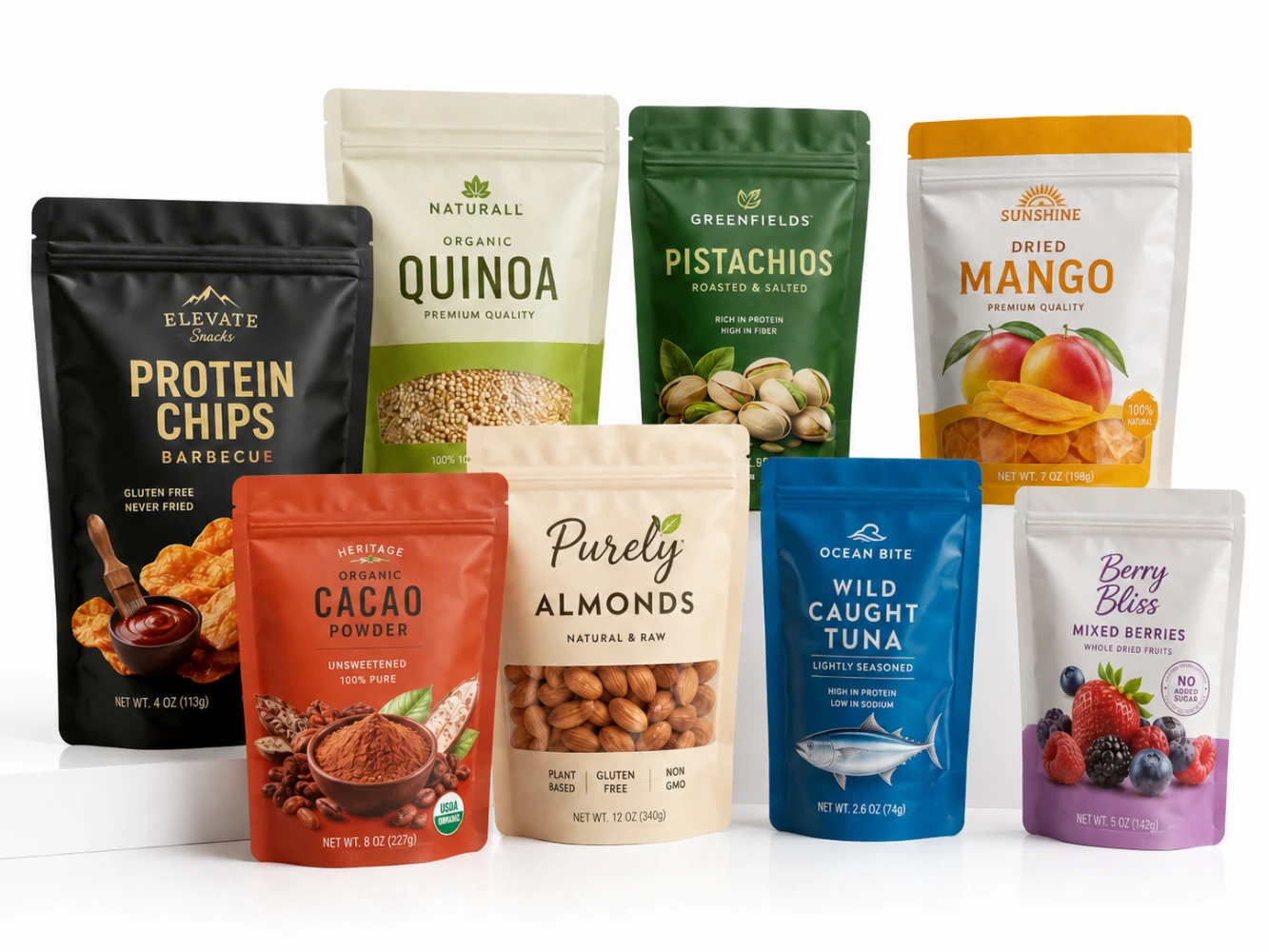
Custom Snack Packaging: A Buying Guide to Barrier Materials, Pouch Formats, and MOQ

A technical buying guide for snack brands — barrier requirements by product category, pouch formats,...
Read More

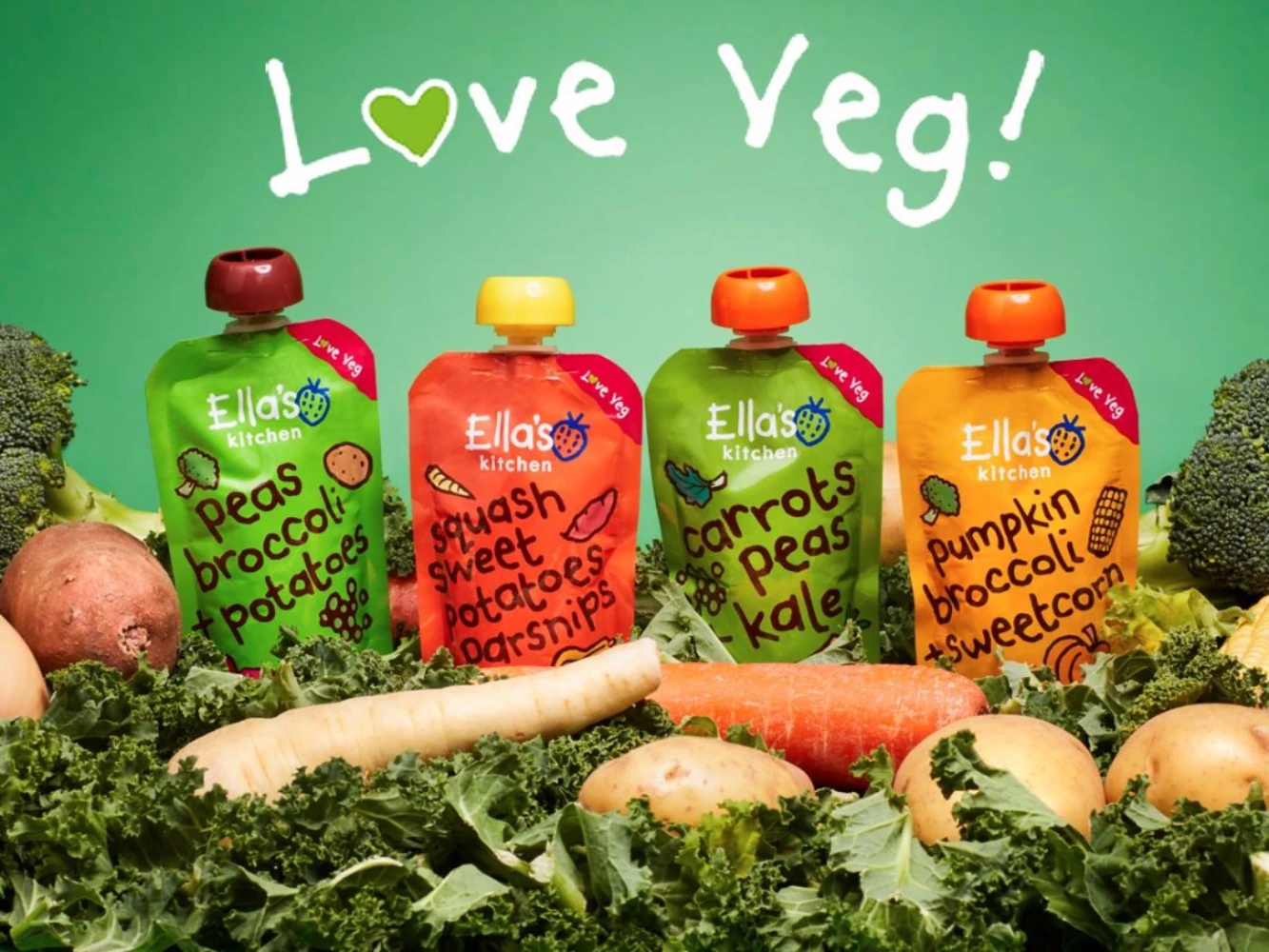
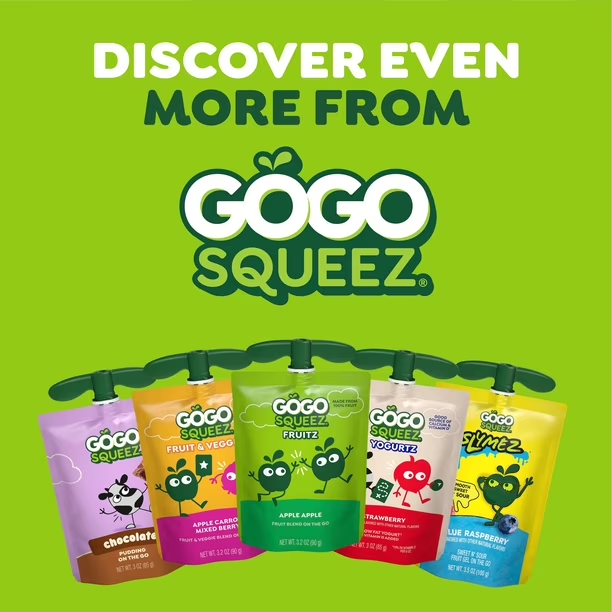
The Pouch That Changed How Kids Snack: GoGo squeeZ and the Engineering Behind the Squeeze

GoGo squeeZ sells 1.5 billion fruit pouches a year — no preservatives, no refrigeration, 12...

Read More

The Bag That Has to Be the Rainbow: How Skittles Packages Its Most Valuable Asset

Skittles has been asking you to taste the rainbow since 1974. But the bag holding...

Read More

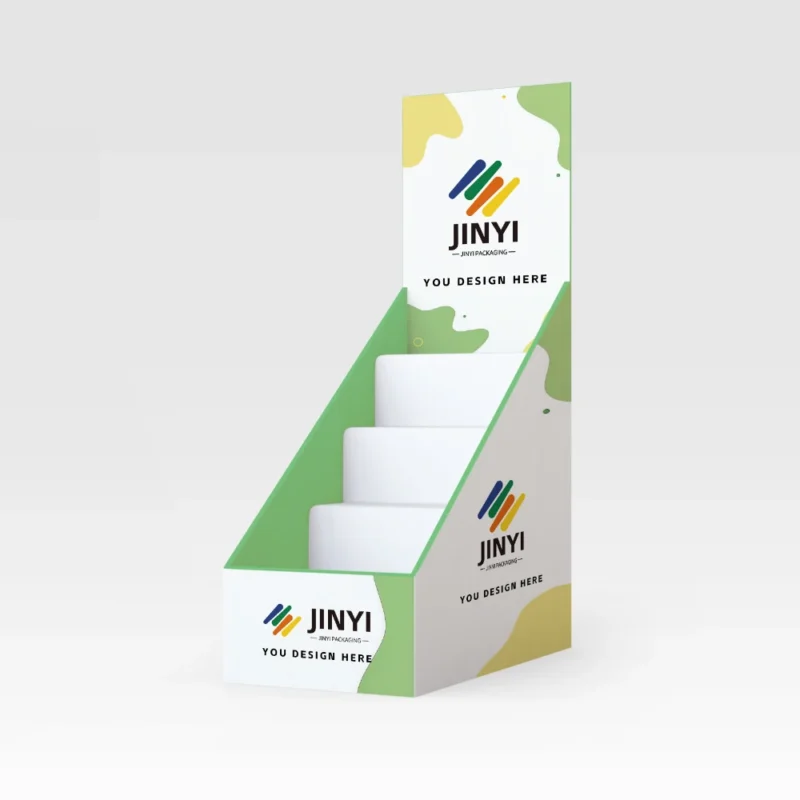
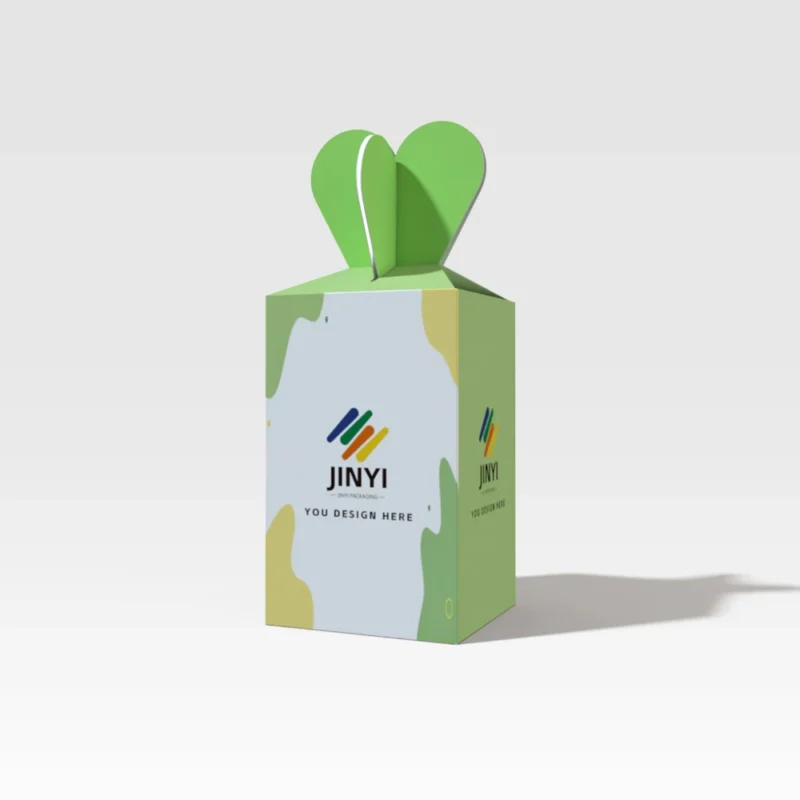
Custom Packaging Sets for Retail: Pouches, Display Boxes, Die-Cut Bags, and How to Order Them Together

A complete guide to custom retail packaging sets — display box structures, die-cut pouches, matte...

Read More

Built in a Blender, Scaled to 30,000 Stores: How Orgain’s Packaging Kept Up

Orgain started with a blender in a doctor's kitchen and grew into the #1 plant...

Read More

From Mars Men to Sour Patch Kids: How the Bag Kept Up With the Brand

Sour Patch Kids started life as Mars Men in the 1970s and became one of...

Read More

Haribo Uses a Simpler Bag Than You Think — And a More Complicated One Than You’d Expect

Haribo bags look like any other snack bag — but the engineering brief is completely...

Read More

What Packaging Does Jack Link’s Use? A Manufacturer’s Breakdown

Jack Link's is the world's best-selling beef jerky brand — and its packaging is significantly...

Read More

Oils and Nuts Shelf Life: What Drives Rancidity Faster—Oxygen, Light, or Trace Metals?

Rancid returns can feel random. A product smells fine in the lab, then fails fast...

Water Activity vs Moisture Content: Why “Dry” Foods Still Mold in Real Warehouses?

Products look dry, buyers relax, and then mold appears in storage. Returns happen fast, and...

MAP vs Vacuum vs Standard Packs: Which Atmosphere Strategy Actually Slows Flavor Loss for Foods?

Many foods taste “flat” long before they look spoiled, and teams often blame recipes instead...

Sugar, Salt, and Acid: Which One Controls Shelf Life Most—and When Does Each Stop Working?

Shelf life fails in different ways, but many teams pick one “preservative lever” and expect...

Frozen vs Shelf-Stable Foods: Which Is Expanding Faster, and What Does That Mean for Packaging and Logistics?

Frozen growth looks exciting, until cold-chain gaps create hidden shrink, returns, and brand damage. Shelf-stable...

Why Are “High-Protein” Foods Growing Faster: Price, Label Claims, or Convenience—and How Can Brands Verify?

High-protein is “winning,” but many brands cannot explain why. When the driver is misread, budgets...

Global Snack Demand in 2025: What Market Reports Say—and What Brands Should Watch Next?

Snack costs rise, channels shift, and forecasts conflict. When brands guess “demand,” they misread growth...

Chocolate Bars vs Filled Chocolates: Which Fails First Under Heat Cycling and Why?

Chocolate can look perfect at packing, then arrive dull, gray, or oily. Heat cycling often...

Flow Wrap vs Resealable Pouch for Cookies: What Actually Reduces Staling and Flavor Loss?

Cookies can taste “old” fast. They lose crunch. They lose aroma. The worst part is...

Gummy vs Hard Candy vs Chewy Candy: Does Water Activity Explain Shelf Life Better Than “Thicker Bags”?

Sticky, clumped candy can wreck reviews fast, and many teams blame the film first. That...