JINYI shares practical packaging guidance for your decisions.
Hill’s Science Diet is the number one veterinarian recommended pet food brand in the United States. Founded by Dr. Mark Morris and now owned by Colgate-Palmolive, the brand has built its reputation on science-based nutrition developed in collaboration with veterinarians and PhD-level animal nutritionists. With over 2,000 SKUs spanning dry food, wet food, and veterinary prescription diets for dogs and cats across every life stage and health condition, Hill’s manages one of the most complex packaging portfolios in the pet food industry. This breakdown covers what Hill’s Science Diet packaging is actually made of — their bag formats, film structures, design system, and how the brand’s recent packaging redesign reflects broader shifts in how science-based pet food brands communicate to consumers — and what those choices tell any pet food brand sourcing comparable packaging factory-direct.
What Makes Hill’s Science Diet’s Packaging Strategy Unique
Hill’s Science Diet and Royal Canin are frequently mentioned in the same breath — both are science-based nutrition brands, both distribute primarily through veterinary clinics and specialist pet retailers, and both use white as the dominant packaging colour to signal clinical precision. But their packaging strategies have diverged meaningfully in recent years, and understanding why illuminates a broader question about how science-based pet food brands should communicate to their audience.
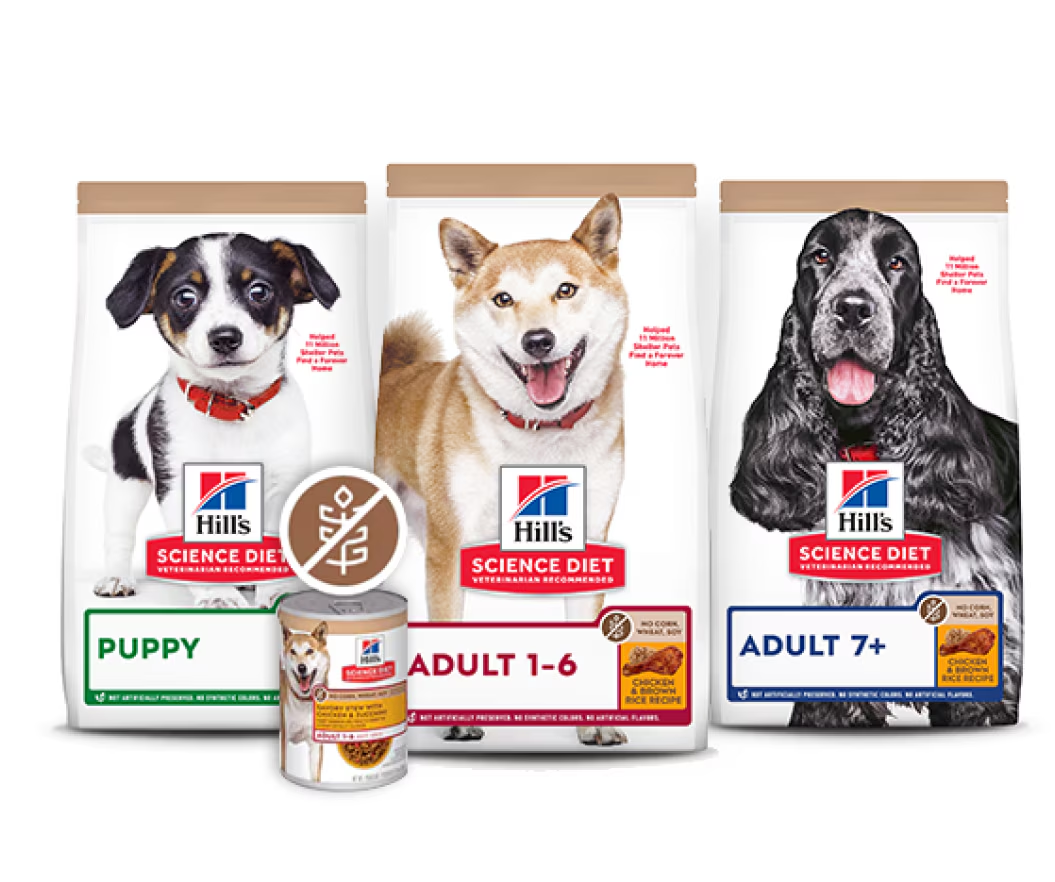
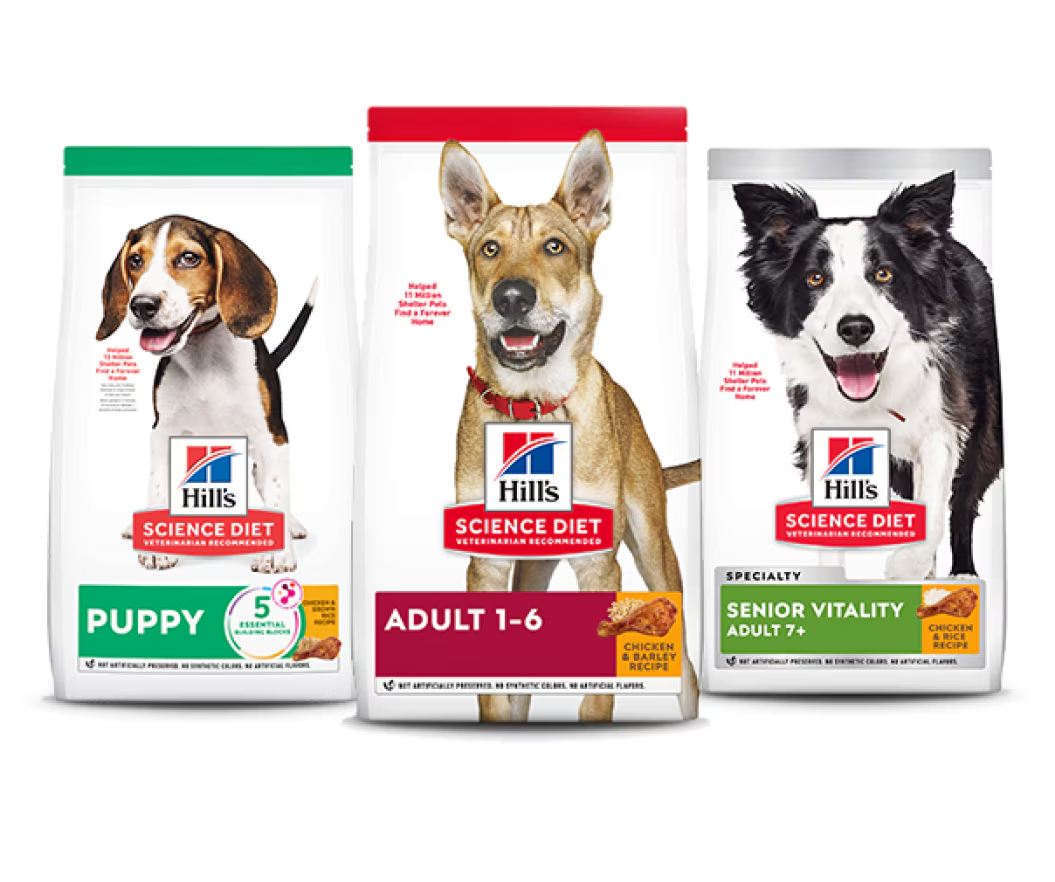
Royal Canin maintains an almost entirely typographic white design — minimal imagery, clinical restraint, the brand communicates authority through what it does not say as much as what it does. Hill’s Science Diet has moved in a different direction. Their recent packaging redesign — executed with branding agency Beardwood&Co and affecting over 2,000 SKUs simultaneously — retained the white background but layered in high-quality pet photography, real ingredient imagery, and a structured colour-coding system across their product range. The result is a packaging system that signals scientific authority through the white base while creating emotional connection through photography and colour — a deliberate decision to serve both the veterinarian who recommends the product and the pet owner who purchases it. For a complete comparison of how these two brands approach the same white-background positioning from different design angles, our breakdown of Royal Canin’s packaging strategy covers their approach in detail.
The Hill’s redesign also added a front-panel statement that had not appeared on their packaging before: “Helped 9 Million Shelter Pets Find a Forever Home.” This reflects a growing understanding in pet food marketing that science-based positioning alone is no longer sufficient differentiation in a crowded premium market. Emotional resonance — the brand’s values, its community commitments, its relationship with the pet owner beyond the product itself — is becoming a packaging communication requirement, not just a brand communications nice-to-have.
Note: Hill’s Science Diet is sold exclusively through above-average pet retail stores — Petco, PetSmart, specialty independents — and veterinary offices. They are not in mass grocery retail in the way that Blue Buffalo or Purina Pro Plan are. This distribution model shapes every packaging decision: the bag needs to perform in a specialist environment where the purchase is often vet-recommended, not impulse-driven.
The Colour-Coding System — How Hill’s Organises 2,000+ SKUs
One of the most distinctive features of Hill’s Science Diet’s packaging redesign is their structured colour-coding system — applied as a colour strip at the top of every bag to identify product subcategories at a glance. The system uses three colours across the retail range: red signals everyday wellness recipes covering life stages, silver signals specialty products for pets with specific conditions such as urinary health, mobility, or sensitive stomach, and pink signals the Small Paws line with nutrition specifically developed for small-breed dogs.
This colour-coding system solves a real operational problem that any brand with a large SKU range eventually faces: how do you help a pet owner standing in a pet specialty store or scrolling through an online catalogue find the right product among dozens of nearly identical white bags? A consistent visual cue — colour at the top of the bag — allows retailers to organise the brand on shelf by subcategory, and gives online shoppers an immediate visual filter that works even at thumbnail size. For a brand managing over 2,000 SKUs, the colour system is not a design feature. It is a navigation architecture that directly affects product findability and therefore sales conversion.
Colour Strip
Product Category
Target Consumer
Red
Everyday wellness — life stage formulas
General health-conscious pet owners
Silver
Specialty — urinary, mobility, sensitive stomach
Pets with specific health conditions
Pink
Small Paws — small breed specific nutrition
Small dog owners
The colour strip system also extends to Hill’s wet food cans — red for everyday wellness, silver for special conditions — creating a unified visual language across their entire format range. This cross-format consistency is a significant brand architecture investment: it means every touchpoint where a consumer encounters Hill’s Science Diet, regardless of whether they are looking at a dry food bag, a wet food can, or a prescription diet package, they see the same colour cue system. For brands building a multi-format product portfolio, this level of visual consistency across formats is worth planning from the outset rather than retrofitting later.
Tip: If your pet food brand has more than 6 to 8 SKUs, a colour-coding system for product subcategories is worth building into your packaging brief from the start. The cost of implementing colour coding at the design stage is minimal. The cost of retrofitting it across an existing range — new artwork, new proofs, new production runs — is significant. Plan the architecture before you produce the first bag.
Dog Food Bag Formats — Weight-Based Format Logic
Hill’s Science Diet’s dry dog food range follows the same weight-based format logic that governs premium pet food packaging across the category — stand-up pouches at small retail weights, flat-bottom bags at mid-range, and large-format bags at high volume. Their specific weight breakpoints are consistent with the category standard, shaped by the same considerations of shelf stability, logistics performance, and consumer usage patterns that drive format selection at Purina Pro Plan, Royal Canin, and Blue Buffalo. For a detailed breakdown of how Purina Pro Plan applies the same format logic across a comparable product range, our analysis of Purina Pro Plan’s packaging covers their approach in comparable detail.
At the small end — 4 lb to 8 lb — Hill’s uses a stand-up pouch. These are the trial, introductory, and e-commerce sizes. The stand-up format at these weights delivers good shelf presence, ships efficiently via courier for e-commerce orders, and provides enough front panel space for Hill’s colour-coded top strip, pet photography, and the essential claims text their science-based positioning requires. Their recent packaging redesign specifically streamlined bag heights across sizes to improve on-shelf visual cohesion — a detail that reflects how seriously Hill’s approaches the shelf management dimension of packaging design.
In the mid-range — 15.5 lb to 17.5 lb — Hill’s transitions to a flat-bottom bag. This is their primary repeat purchase size — the format most loyal Hill’s buyers purchase on a recurring basis through pet specialty retail or subscription channels. The flat-bottom format maintains structural integrity through the full consumption cycle, provides four printable panels for their ingredient photography and compliance text load, and signals premium positioning through its structured base — consistent with Hill’s positioning as a veterinarian-recommended, science-forward brand.
For their larger sizes — 30 lb and 35 lb — Hill’s uses a large-format side gusset or quad-seal bag structure. At these fill weights, packaging requirements shift toward logistics performance: the bag must handle high-speed filling, resist puncture during pallet transit, and stack efficiently in distribution cartons. These sizes are primarily sold through Amazon, Chewy, and large-format pet specialty retailers where bulk purchase is the primary buying behaviour.
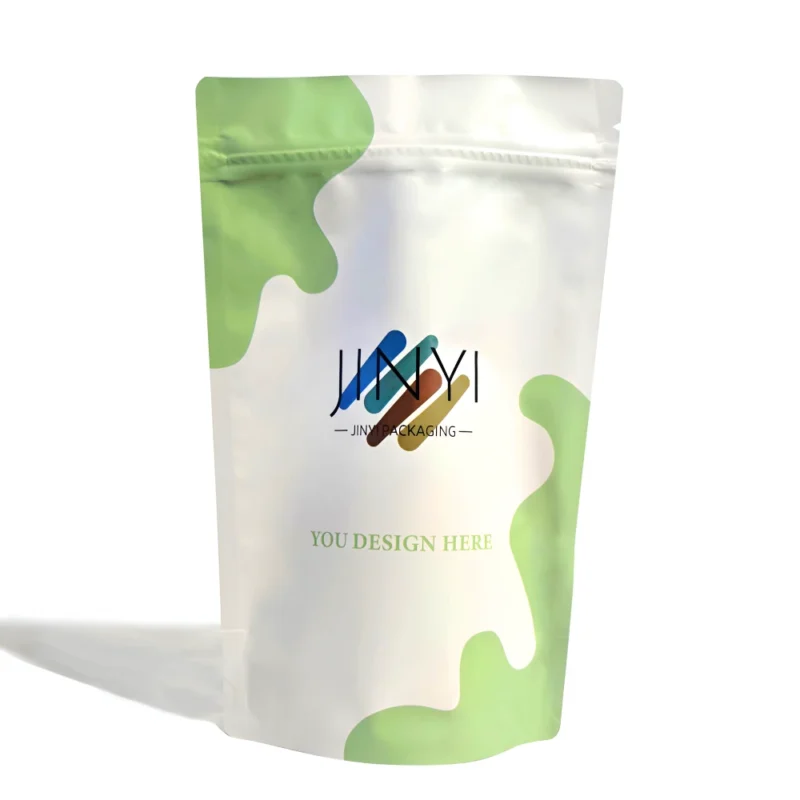
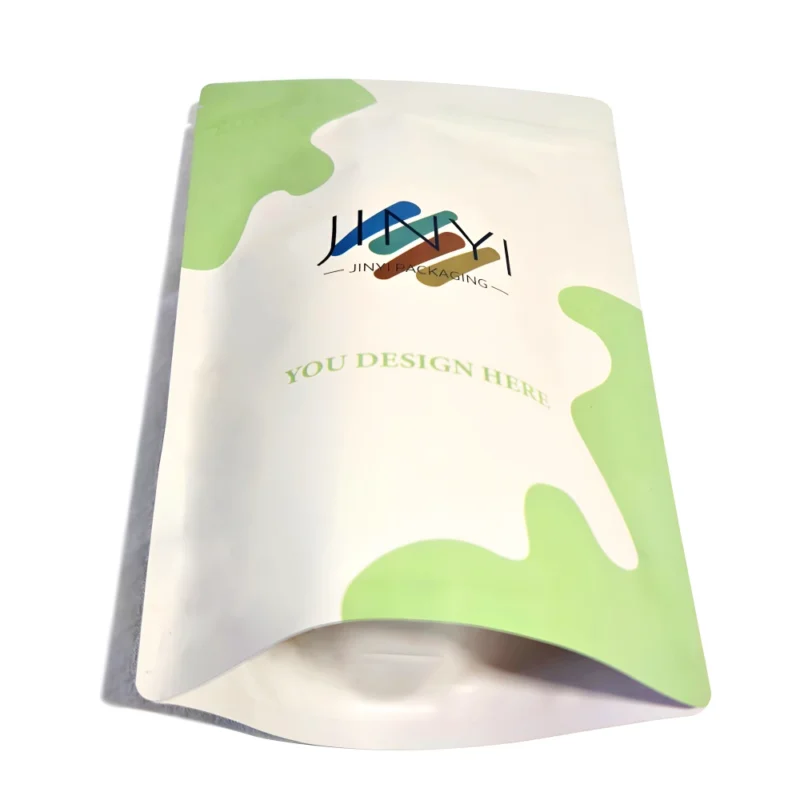
Custom pet food stand-up pouch produced at JINYI factory — white matte finish with full-colour artwork and resealable zipper
Hill’s Science Diet’s cat food packaging portfolio covers three distinct format categories, each with its own technical requirements and consumer experience brief. Understanding the difference between these three categories is important for any pet food brand building a multi-format product line, because the packaging specifications — and therefore the sourcing decisions — are fundamentally different for each.
Dry cat food bags follow the same weight-based format logic as the dog food range — stand-up pouches at 3.5 lb to 7 lb, flat-bottom bags at the 15.5 lb mid-range size. The primary difference from dog food is that cat food SKUs top out at a lower maximum weight, reflecting lower per-household consumption volumes. The same PET/VMPET/PE film structure, the same colour-coded top strip, the same white base design system applies across both species lines.
Wet cat food pouches are a distinct format altogether. Hill’s Science Diet single-serve wet cat food comes in 2.8 oz flexible pouches — easy-open, single-meal portions sold in multi-packs of 12 or 24. These are not dry food bags. They are small retort-compatible pouches designed for single-serve convenience, with a tear-open seal rather than a resealable zipper. The film specification for these pouches includes a nylon layer for heat resistance — these bags must withstand the high-temperature sterilisation process used to achieve ambient shelf stability for wet food. This is a fundamentally different production process from dry food bag manufacturing, and requires a specialist retort pouch specification rather than a standard flexible packaging structure.
Hill’s Prescription Diet — their veterinary-exclusive therapeutic nutrition line — uses the same white packaging base but with a distinctly different design language. Prescription Diet bags carry more medical compliance text, more specific condition-targeted claims, and are sold exclusively through veterinary clinics. The film specification for Prescription Diet may include an aluminium foil barrier layer rather than metallised film for high-fat therapeutic formulas, providing the near-zero OTR required for products where oxidation risk is higher and shelf life requirements are more stringent. Prescription Diet packaging also carries additional regulatory language required for veterinary diet products — feeding guidelines, veterinary recommendation statements, and condition-specific health claims that standard retail packaging does not carry.
Format Category
Film Structure
Key Requirement
Distribution
Dry food bag
PET / VMPET / PE
Barrier, shelf life, resealable zipper
Pet specialty, vet clinics, e-commerce
Wet food single-serve pouch
Retort-compatible laminate + NY layer
High-temp sterilisation resistance
Pet specialty, e-commerce
Prescription Diet bag
PET / AL / PE (high-fat formulas)
Higher barrier, medical compliance text
Veterinary clinics only
Note: If your pet food brand is planning a veterinary diet or prescription diet product line, your packaging specification — film structure, barrier level, and compliance text load — needs to be confirmed with your veterinary distribution partner before you brief your packaging supplier. Prescription diet packaging carries regulatory requirements that vary by market and may affect what claims you can make on-pack, what text you must include, and what certifications your packaging materials must carry.
Film Structure — The White Bag and What’s Inside
Hill’s Science Diet’s dry food bags use the same film structure as the other major pet food brands in the premium segment: a PET / VMPET / PE multi-layer laminate. The outer PET layer provides the white print substrate — the white colour is a full-coverage ink base coat applied to the inner surface of the PET before lamination, not a white film. The metallised PET middle layer provides barrier performance against oxygen, moisture, and UV light, delivering an OTR of approximately 0.5 to 1.5 cc/m²/day — sufficient for Hill’s standard 18-month shelf life at retail. The inner PE layer provides the heat-seal surface and food-contact safety.
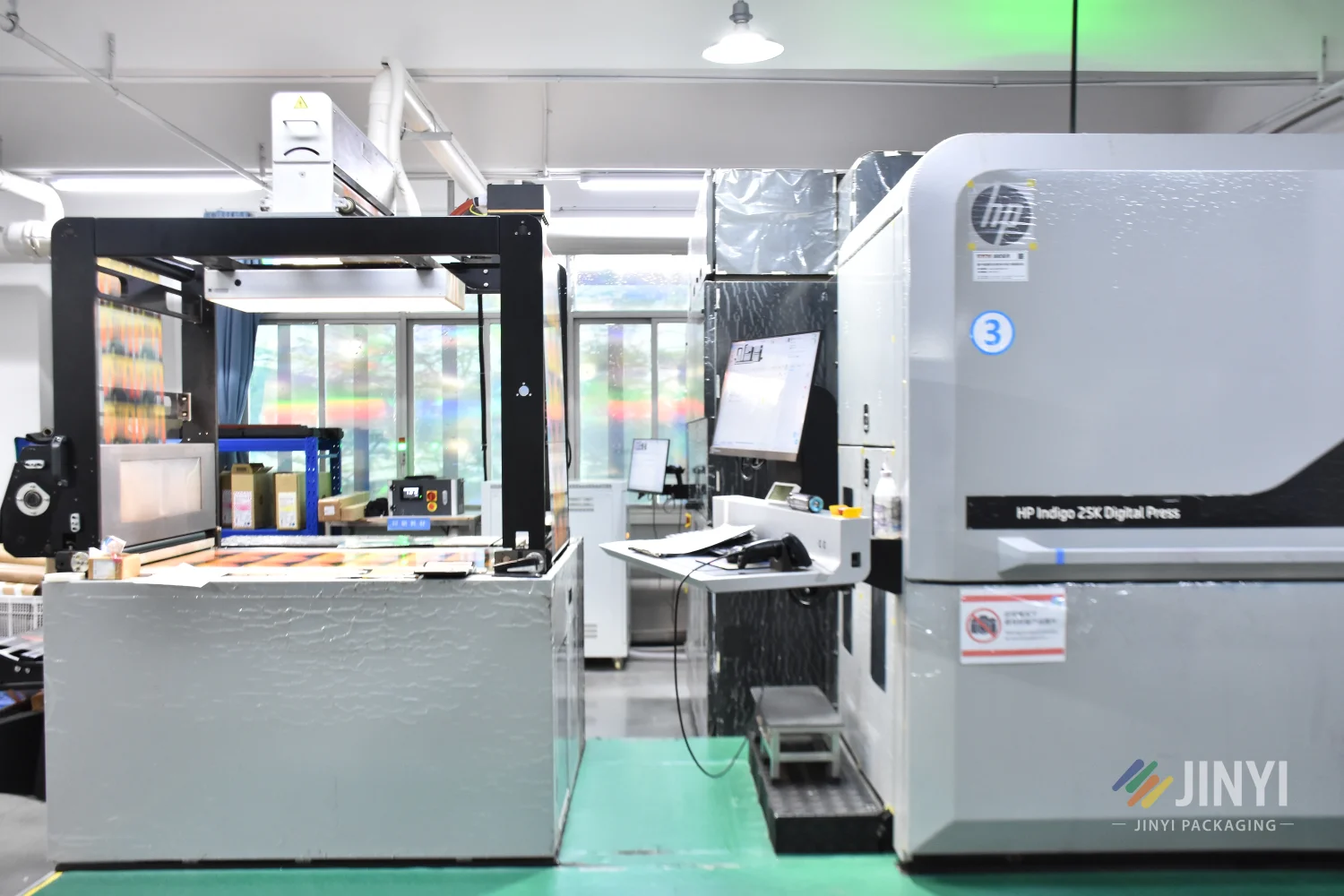
Hill’s recent packaging redesign added high-quality pet photography as a primary design element — a real dog or cat of the appropriate breed and life stage on every bag. This is a demanding print requirement. Accurate photographic reproduction on a flexible packaging substrate requires precise colour management at the press — skin tones, coat colours, and the subtle gradations in pet photography that make the images feel real rather than graphic. A shift in press conditions, a change in ink density, or a surface tension issue on the PET substrate can produce photographic output that reads as flat or colour-shifted, which undermines the premium positioning the photography is meant to reinforce. For an understanding of how JINYI manages colour accuracy across our HP Indigo digital press fleet for photographic pet food packaging designs, our guide to how custom stand-up pouches are made covers the print process and colour management system in detail.
HP Indigo 25K at JINYI — consistent colour output across all press systems via ESKO Automation Engine
Film Structure
OTR
Shelf Life
Best For
PET / VMPET / PE
0.5–1.5 cc/m²/day
12–18 months
Standard dry kibble — most pet food brands
PET / AL / PE
~0.01 cc/m²/day
18–24 months
High-fat vet / prescription diets
Retort laminate + NY
Variable
12–24 months (sterilised)
Wet food single-serve pouches
Tip: If your packaging design uses photographic elements — pet photography, ingredient photography, or lifestyle imagery — require a physical colour proof on your actual film specification before confirming the production run. Photographic images on flexible packaging substrates behave differently from screen renders. The metallic reflectivity of the VMPET middle layer can affect how photographic colours appear through the PET outer layer, and a proof on the real substrate is the only reliable way to confirm the output before committing to a full production run.
What Hill’s Science Diet’s Packaging Redesign Tells Pet Food Brands
Hill’s Science Diet’s decision to redesign over 2,000 SKUs simultaneously — adding pet photography, real ingredient imagery, a structured colour-coding system, and a shelter pet commitment statement — is one of the most significant packaging strategy moves in the premium pet food category in recent years. The message it sends to the broader market is worth understanding: science-based positioning and emotional packaging communication are not mutually exclusive. A white bag does not have to be cold and clinical. It can be warm, photographically rich, and values-driven while still signalling scientific authority through its design architecture.
For pet food brands building their packaging brief, the Hill’s redesign offers a useful framework: identify what your brand needs to communicate at the functional level (nutritional credentials, ingredient quality, life stage specificity) and at the emotional level (brand values, consumer connection, community commitment) — and design a packaging system that carries both simultaneously rather than prioritising one at the expense of the other. The packaging formats and film structures used to deliver that communication are standard and available to any brand. The differentiation is in the design architecture and the decision about what the bag needs to say.
At JINYI, the full range of pet food packaging formats used by Hill’s Science Diet — stand-up pouches, flat-bottom bags, and side gusset bags in PET/VMPET/PE or PET/AL/PE — is available factory-direct from 500 units via HP digital print with no plate fee. White base coat printing is applied as standard. Colour-coded design elements, pet photography, and multi-element design layouts are all achievable within our HP Indigo digital print system. Every order includes a full material specification document — OTR, MVTR, film layer breakdown, and food-contact certifications. For a comprehensive overview of our pet food packaging range by format, material, and application, our pet food packaging solutions page covers the full range.
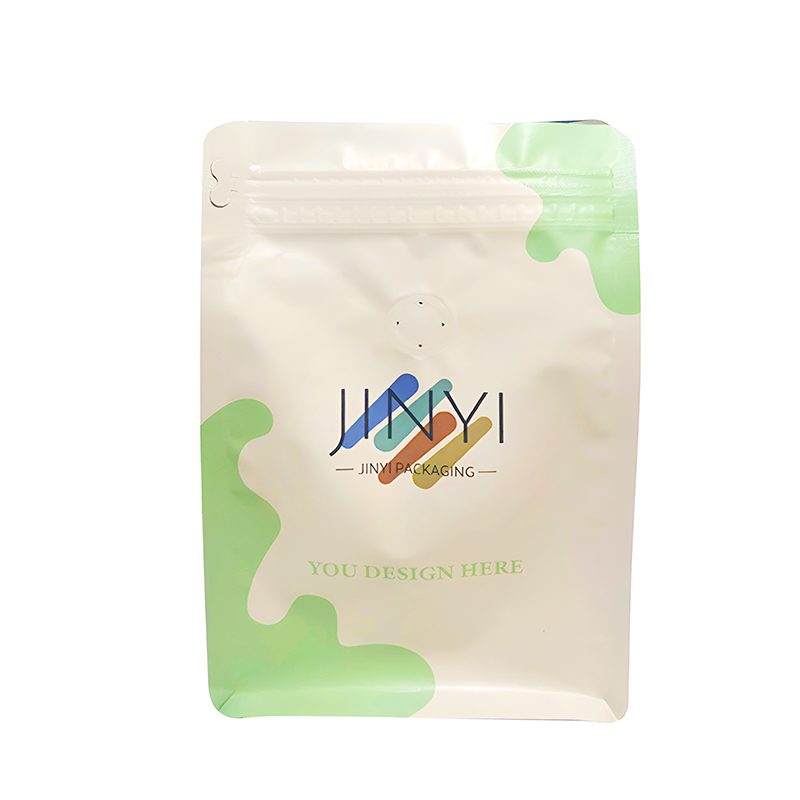
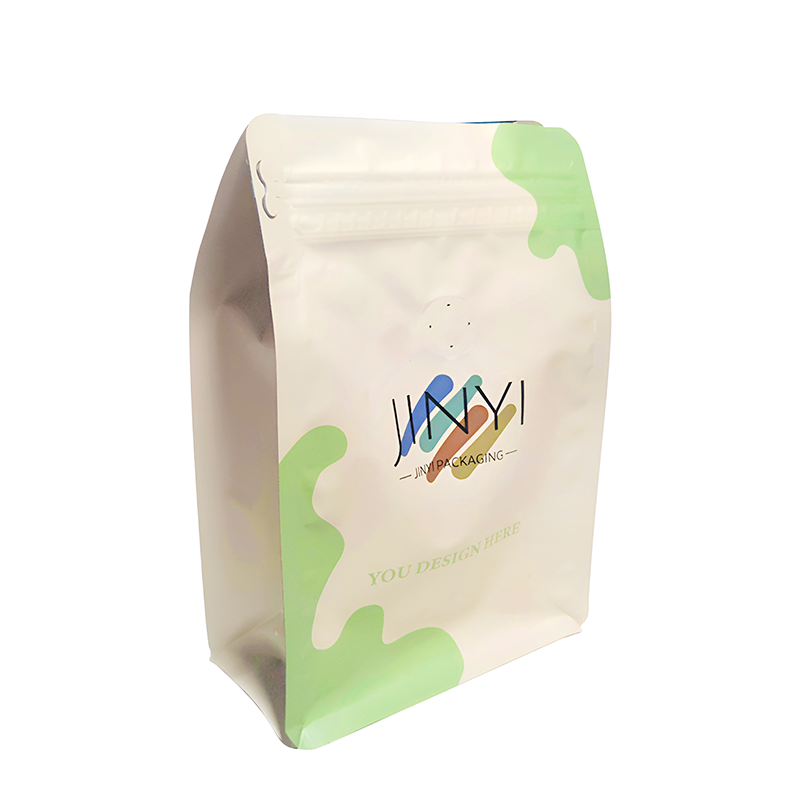
Custom pet food flat-bottom bags produced at JINYI for a Netherlands-based pet food brand — structured base format with colour-coded design system, factory-direct from 500 units
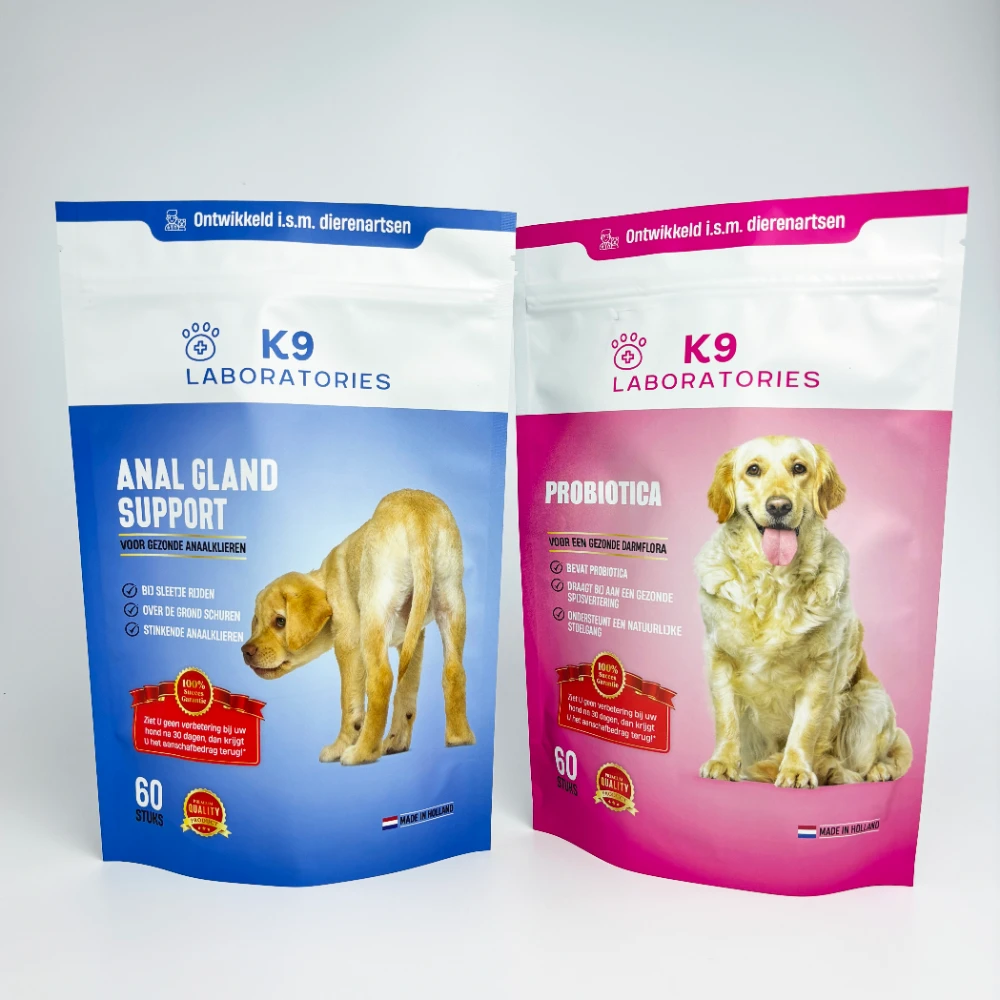
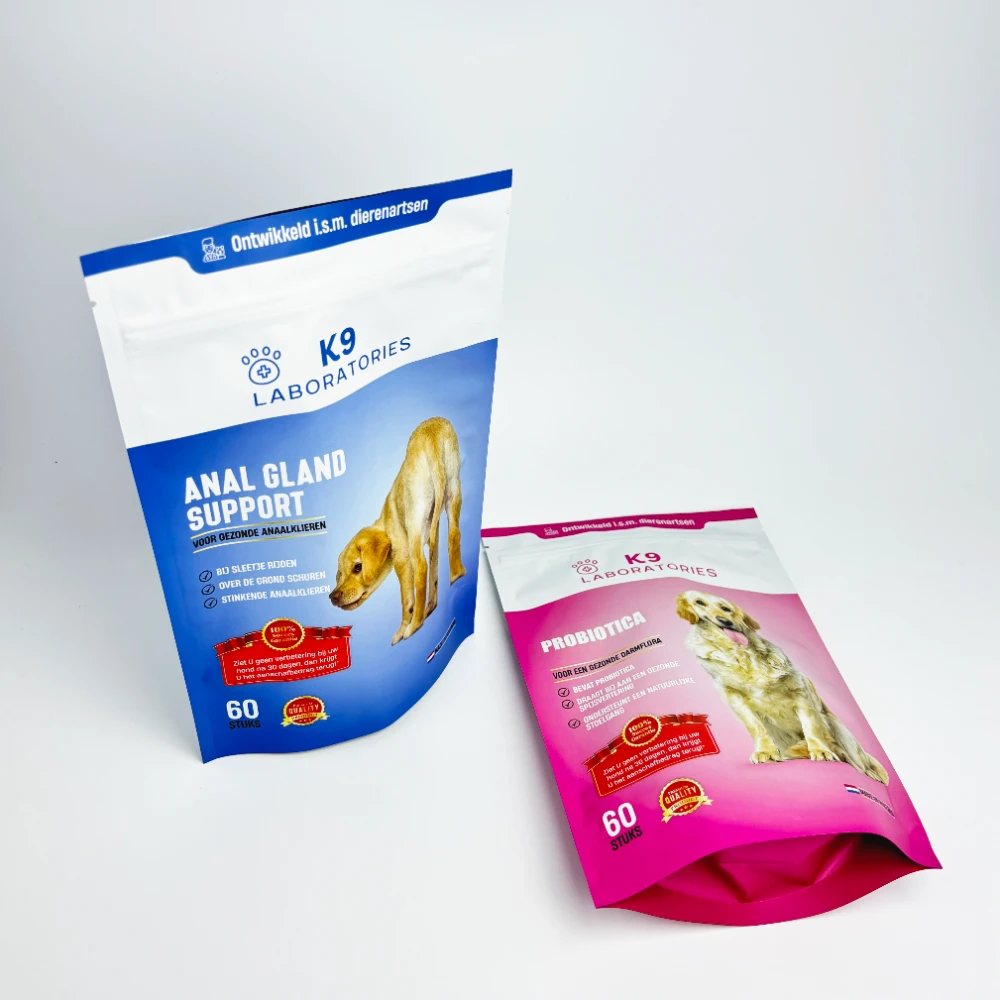
A recent example: a Netherlands-based pet food brand came to JINYI needing stand-up pouches and flat-bottom bags with a colour-coded design system across multiple SKUs — a brief structurally similar to what Hill’s Science Diet operates at scale. We produced both formats in PET/VMPET/PE with white base coat, full-colour print, and resealable zippers, delivered with complete material documentation. The same production capability — format flexibility, colour accuracy, and documentation standard — is available to any brand sourcing factory-direct from 500 units.
Custom pet food stand-up pouches produced at JINYI for a Netherlands-based pet food brand — high-barrier flexible packaging with full-colour print, available factory-direct from 500 units
For brands in the pet food category looking to understand how different brand positioning strategies translate into packaging decisions, our breakdowns of Blue Buffalo’s packaging and Purina Pro Plan’s packaging cover two other major brands in the same category with different design approaches — Blue Buffalo’s high-saturation natural ingredient photography and Purina’s extensive multi-formula colour system both offer instructive contrasts to Hill’s approach. For brands supplying Asian markets, our guide to custom pet food packaging for the Japanese market covers the specific format and compliance requirements that apply in that market.
Spec
Platform / Intermediary
JINYI Direct Factory
MOQ
1,000–3,000 units typical
From 500 units (digital print)
White base coat
Confirm per supplier
Standard — applied before lamination
Colour proof on actual film
Varies by supplier
Available before production confirmation
Material spec document
Rarely provided as standard
Included with every order
Scale path
Platform pricing, limited flexibility
Digital → gravure at volume, unit cost drops
Get a Factory-Direct Quote for Your Pet Food Packaging
Tell us your bag format, fill weight, design approach, and quantity. We will come back within 24 hours with a full specification recommendation, material documentation, and factory-direct pricing.
JINYI is a source factory for custom flexible packaging with 15+ years of production experience, serving food, supplement, coffee, pet food, and consumer goods brands across 150+ countries. We produce stand-up pouches, flat-bottom bags, and side gusset bags in PET/VMPET/PE, PET/AL/PE, and other barrier specifications — via HP Indigo digital print from 500 units and gravure printing at volume.
Every client receives full material specification documentation with their order as standard. That is what From Film to Finished — Done Right means in practice.
Elsa
Business Development Manager · JINYI Packaging
Elsa leads business development and customer order management at JINYI. With 8 years in foreign trade across Yiwu and Dongguan, she has a sharp understanding of market demand and what buyers actually need — turning real customer insight into the right packaging decisions.
Customer needs Order management Business development
What bag format does Hill’s Science Diet use for dry dog food?
Hill’s Science Diet uses stand-up pouches for their smaller retail SKUs (4 lb to 8 lb), flat-bottom bags for their primary repeat purchase SKUs (15.5 lb to 17.5 lb), and large side gusset or quad-seal bags for their bulk sizes (30 lb to 35 lb). Their recent packaging redesign also streamlined bag heights across sizes to improve on-shelf visual cohesion — a detail that reflects the brand’s serious approach to retail shelf management.
What do the colour strips on Hill’s Science Diet packaging mean?
Hill’s Science Diet uses a three-colour strip system at the top of every bag to identify product subcategories. Red signals everyday wellness recipes covering life stages. Silver signals specialty products for pets with specific conditions such as urinary health, mobility, or sensitive stomach. Pink signals the Small Paws line for small-breed dogs. The same colour system extends to their wet food cans, creating a unified visual language across their entire product range.
What film material is Hill’s Science Diet packaging made from?
Hill’s Science Diet dry food bags use a PET/VMPET/PE multi-layer laminate — a polyester outer layer for print quality, a metallised polyester middle layer for barrier performance against oxygen and moisture, and a polyethylene inner layer for heat sealing and food contact. The white surface is produced by a white ink base coat on the inner face of the PET before lamination. High-fat veterinary and prescription diet formulas may use PET/AL/PE with aluminium foil for higher barrier performance.
How does Hill’s Science Diet packaging compare to Royal Canin and Blue Buffalo?
All three brands use comparable flexible packaging formats and PET/VMPET/PE film structures for dry food. The key difference is in design language and brand positioning. Hill’s uses white with colour-coded strips and pet photography to balance scientific authority with emotional appeal. Royal Canin maintains a more purely clinical white minimalism focused on breed and condition specificity. Blue Buffalo uses high-saturation ingredient photography on a colourful base to signal natural quality and ingredient transparency.
Can I get the same white pet food bag with colour coding as Hill’s Science Diet factory-direct?
Yes. The white stand-up pouch, flat-bottom bag, and side gusset bag formats that Hill’s Science Diet uses are standard flexible packaging specs available at JINYI from 500 units via HP digital print with no plate fee. White base coat printing, colour-coded design elements, and photographic print quality are all available as standard. Full material specification documentation is included with every order, and a physical colour proof on your actual film specification is available before production confirmation.