The 2026 FIFA World Cup opens on June 11 and runs through July 19 — 39 days, 104 matches, 16 cities across the United States, Mexico, and Canada. It is the largest World Cup in history, and by most projections, the largest food and beverage consumption event North America has seen in decades. Food and beverage represents approximately 50 percent of all event-related visitor spending, with the accommodation and food sector projected to receive up to $2.4 billion in the US alone.
For food and beverage brands, the question is not whether this creates a packaging opportunity — it clearly does. The question is what kind of opportunity is still available at this point in the calendar, and what packaging ideas actually work in a World Cup context versus what looks good on a mood board but does not translate into consumer purchase behavior.
This article covers both. What the official sponsors have done and what their activations reveal about what works. What non-sponsor brands can do without a FIFA license. Five specific packaging ideas that still have room to run. The formats that match each activation type. And how to get a limited-edition run produced before the final whistle.

Why the World Cup Is the Biggest Packaging Opportunity in the 2026 Calendar
No other event in 2026 concentrates food and beverage consumption across this many cities, over this sustained a period, with this level of consumer emotional investment. The World Cup is not a one-day event — it is a 39-day cultural moment that moves through the calendar in waves: group stage drama, knockout upsets, semi-finals, and a final that draws viewers who do not follow football the rest of the year.
The three-country hosting arrangement creates a packaging opportunity that previous World Cups did not. The US, Mexico, and Canada bring three distinct food and beverage cultures into a single tournament — and the 150 million-plus North Americans who will follow the tournament bring their own consumption habits with them. A brand that activates in Dallas for a Mexico group-stage match is reaching a different consumer than one activating in Toronto for Canada’s opener. The geographic spread is both a challenge and an opportunity: there are 16 distinct host city markets, each with its own food culture, each hosting a different set of matches, and each creating a window for locally relevant packaging that a single-city event cannot.
The comparison with the Olympics is instructive. The Olympics generates significant hospitality and F&B spending, but it concentrates in one city over two weeks. The World Cup’s 16-city, 39-day footprint distributes the opportunity more broadly — and the passion intensity around football, particularly in Latin American and European fan communities, translates into higher per-fan F&B spend than most comparable events. At the Qatar 2022 World Cup, food and beverages accounted for 36 percent of all purchases at official venues — second only to merchandise. For a full breakdown of the scale and consumption data behind the 2026 tournament, the World Cup 2026 packaging demand overview covers the numbers in detail.
The key distinction for brands entering this space now is between two very different strategies. Official FIFA sponsors — Coca-Cola, Lay’s, Budweiser, McDonald’s, Powerade — have been planning their World Cup packaging activations for 12 to 18 months. Their campaigns are in market. Their packaging is on shelves. Their licensed designs carry the FIFA World Cup 2026 trademark. Brands that are not official sponsors cannot replicate that — but they do not need to. The non-sponsor activation space has its own logic, and in some cases, non-sponsor ideas are outperforming official ones in consumer testing.
The opportunity framing: Official sponsors own the FIFA marks. Non-sponsors own the cultural moment — the colors, the rivalries, the city energy, the emotional arc of the tournament. Both are packaging opportunities. Only one requires a licensing agreement.
What Official Sponsors Are Doing — and What Non-Sponsors Can Learn From It
The official sponsor activations already in market reveal a clear pattern: the packaging ideas that work best are not just branded with the tournament logo — they have a concept that justifies the limited edition beyond the logo itself. The logo is a permission slip. The concept is what drives purchase.
Budweiser — the collector series logic. Budweiser is marking its 40th consecutive year as FIFA’s official beer sponsor with 11 limited-edition commemorative can and bottle designs, each referencing a different World Cup from Mexico 1986 through 2026. The designs were developed with global branding agency JKR and include QR codes linking to digital content for each era. The concept is not “we sponsor the World Cup” — it is “here is 40 years of football history in 11 collectible designs.” That concept works without FIFA marks. Any brand with a heritage story can build a collector series around a major cultural event. The QR code mechanic that links packaging to digital content is replicable by any brand with a smartphone-compatible campaign.
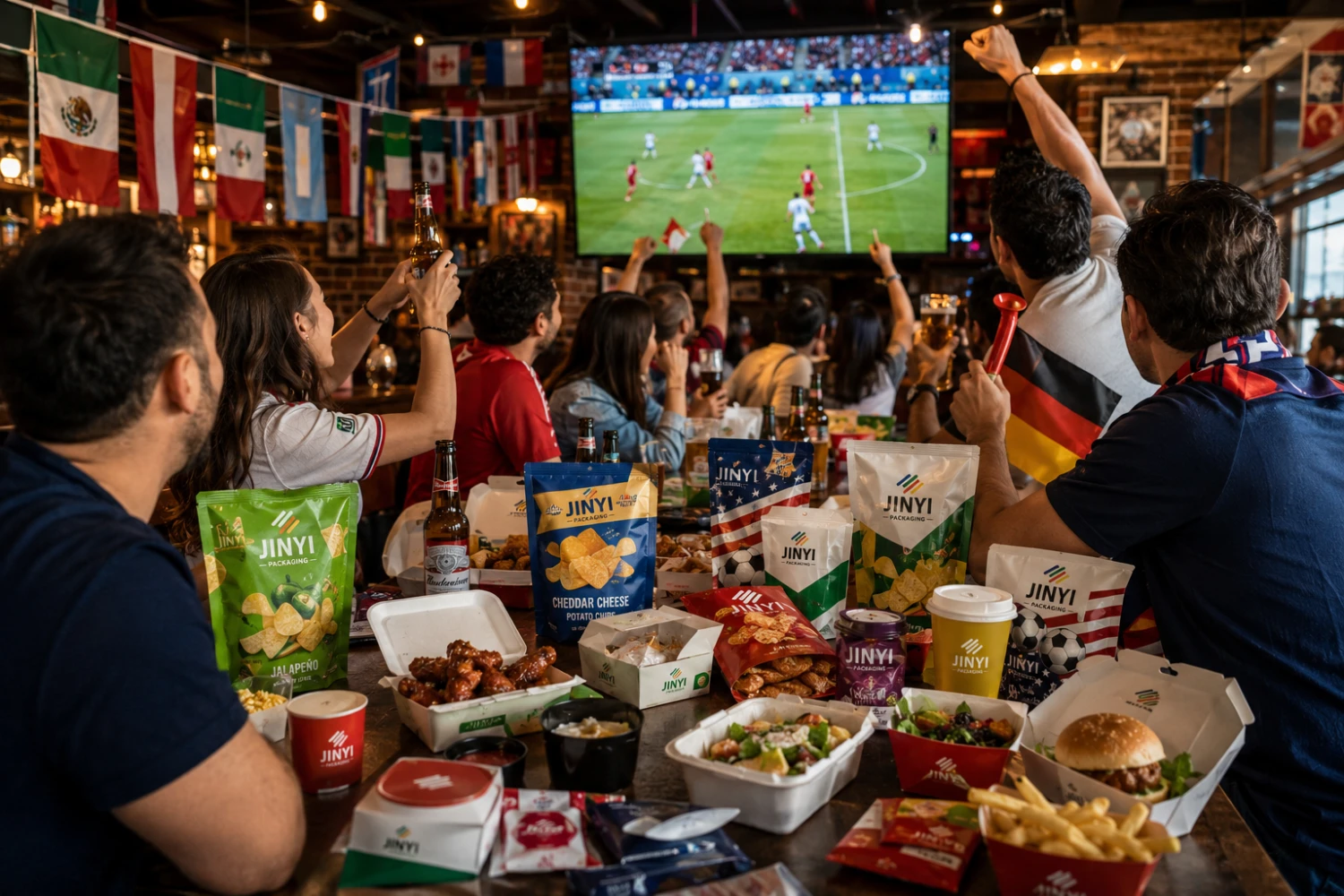
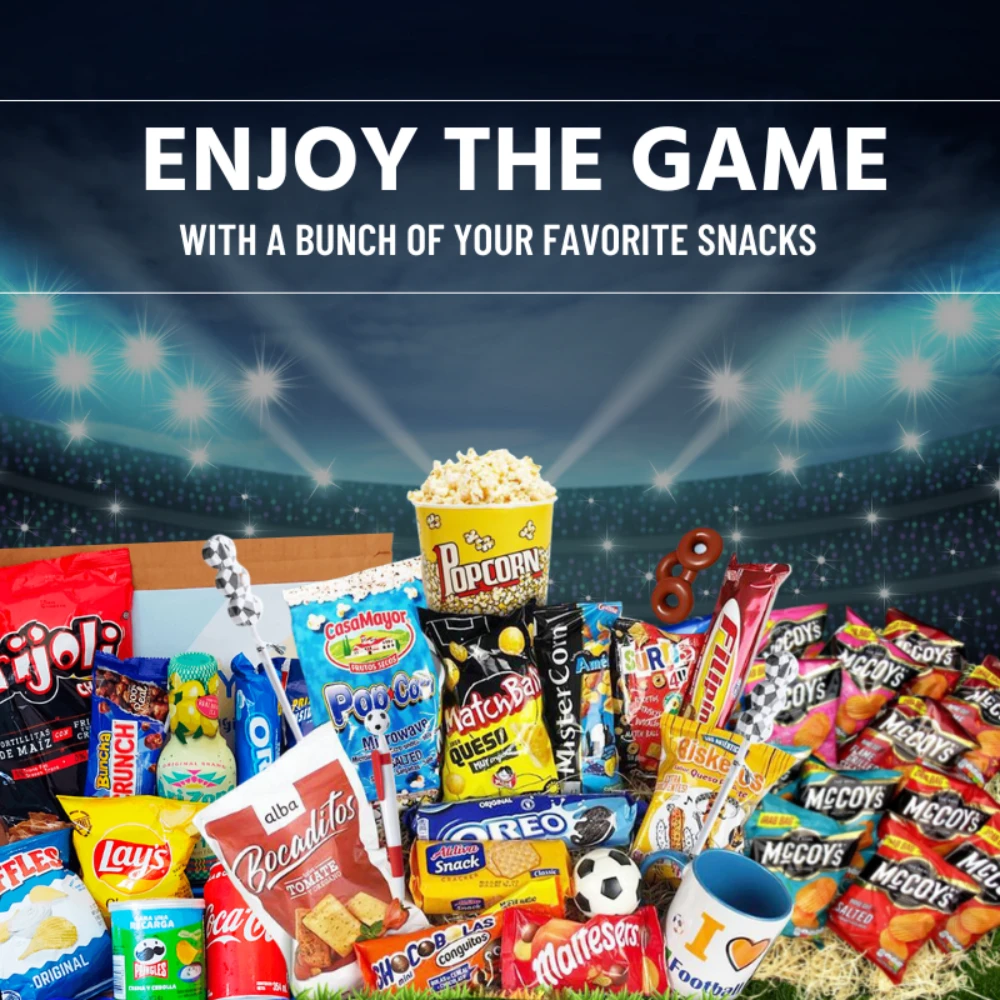
Lay’s — the celebrity co-sign logic. As the Official Snack of FIFA World Cup 2026, Lay’s is running “No Lay’s, No Game” with Messi, Beckham, and others. The packaging carries the FIFA mark and the campaign imagery. The concept — that watching football requires snacks, and this snack is the one — is culturally legible and not dependent on official marks. Any snack brand can build a “watch party essential” positioning around the tournament without needing FIFA authorization. The celebrity element is Lay’s to keep; the viewing occasion positioning is available to everyone.
Michelob ULTRA — the national team identity logic. Michelob ULTRA’s US Soccer Jersey Pack mirrors the USMNT kit colors and aesthetic. The concept connects the brand to American national sporting identity rather than to the tournament broadly — and national identity activation does not require FIFA licensing. Any brand can use national colors, national team visual language, and host country identity to participate in the World Cup cultural moment. The 16 host cities across three countries give non-sponsor brands 16 different national identity angles to work with.
BuzzBallz — the concept-first non-sponsor logic. BuzzBallz, with no official FIFA sponsorship, launched “SoccerBallz” — eight flavors, six inspired by participating countries, in their signature ball-shaped packaging. In consumer distinctiveness testing, this activation scored higher than several official sponsors. The reason is simple: the concept was good enough to not need the FIFA logo. The ball-shaped format was the idea. The country-flavor mapping did the cultural work. The lesson for every non-sponsor brand: a strong packaging concept that connects to the cultural energy of the tournament will outperform a weak concept that has the FIFA marks attached to it.

Five Packaging Ideas That Still Have Room to Run in 2026
These are not concepts that require FIFA licensing, celebrity endorsements, or 18-month planning cycles. They are executable within the current production window — and most of the competitive space in each idea is still open.
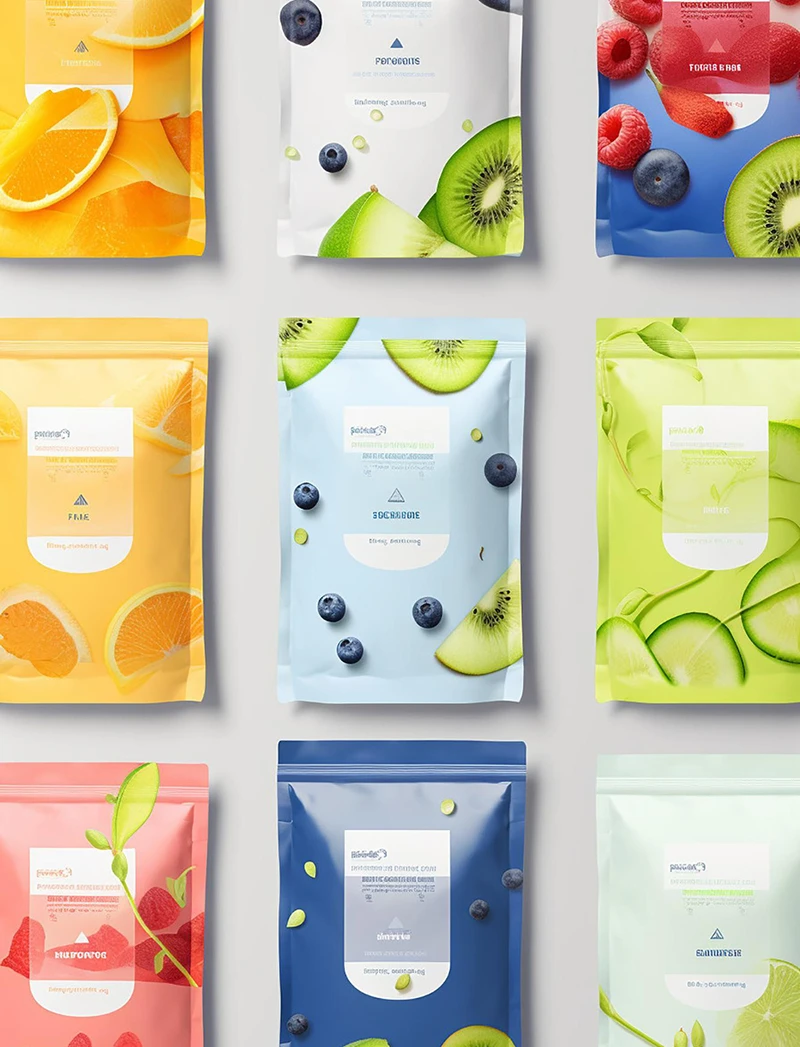
Idea one — national team color series. Forty-eight countries are competing. Every one of them has a national flag, a team kit color scheme, and millions of fans in North America who identify with that team. A food or beverage brand that produces a series of pouches or cups in the colors of key competing nations — Brazil yellow-green, Argentina light blue-white, Mexico green-white-red, France blue-white-red — gives fans a reason to choose their packaging the same way they choose their jersey. No FIFA authorization required. National colors are not trademarkable by FIFA. The concept works for snacks, beverages, coffee, supplements — any product in flexible packaging format. The stand-up pouch’s large front panel gives maximum space for national color expression, and HP Indigo digital printing allows multiple designs to be run in a single production job — 10 country designs at 200 units each, for example, is a single order rather than ten separate ones.
Idea two — host city limited editions. The 16 host cities are not interchangeable — each has a distinct food identity, a specific fan culture, and a set of matches that will draw particular national communities. A Dallas limited edition for the Mexico-adjacent Central American fan base is different from a Boston limited edition for the European expatriate community. Local bakeries, craft beverage brands, specialty food producers, and restaurant chains in host cities have an opportunity to produce city-specific packaging that their customers will buy as a local artifact of the tournament. A flat-bottom bag with a city skyline graphic and the host city’s name carries a sense of place that a generic football design cannot match — and it works as a retail souvenir as well as a food package.
Idea three — functional beverage and supplement game-day formats. The performance associations of football — endurance, hydration, recovery — are directly aligned with what electrolyte, protein, and functional beverage brands already sell. A World Cup limited edition for a hydration brand is not a stretch: it is the same product, in packaging that acknowledges the consumption occasion. The stick pack and single-serve sachet format is the natural World Cup format for this category — portable, single-dose, easy to consume during a match viewing session, and easy to share with other fans. A 10-pack game-day bundle with a football graphic and a “fuel your watch party” message requires no licensing and fits exactly the occasion the consumer is already in.

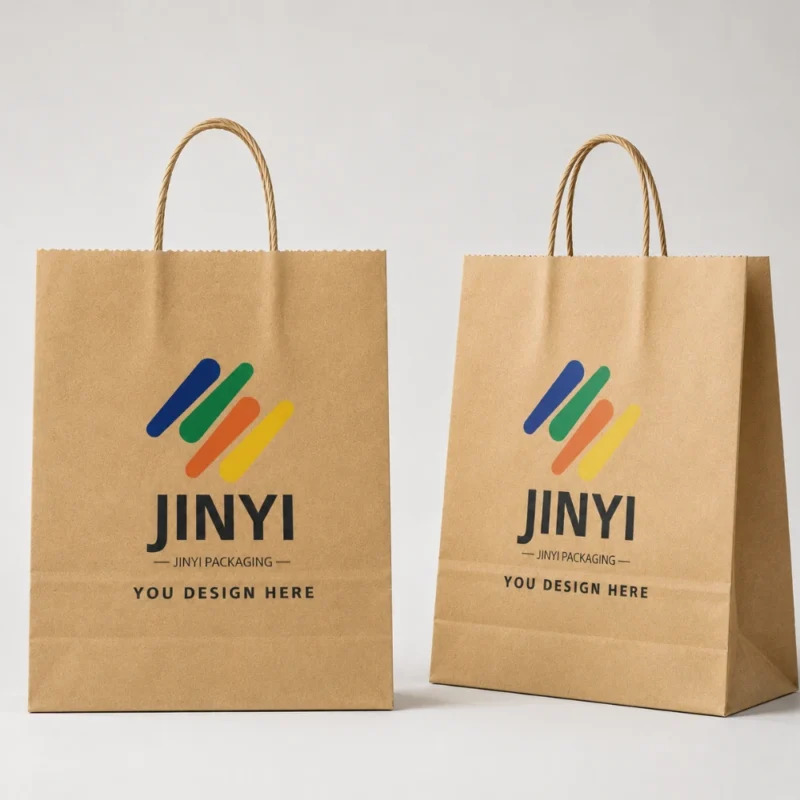
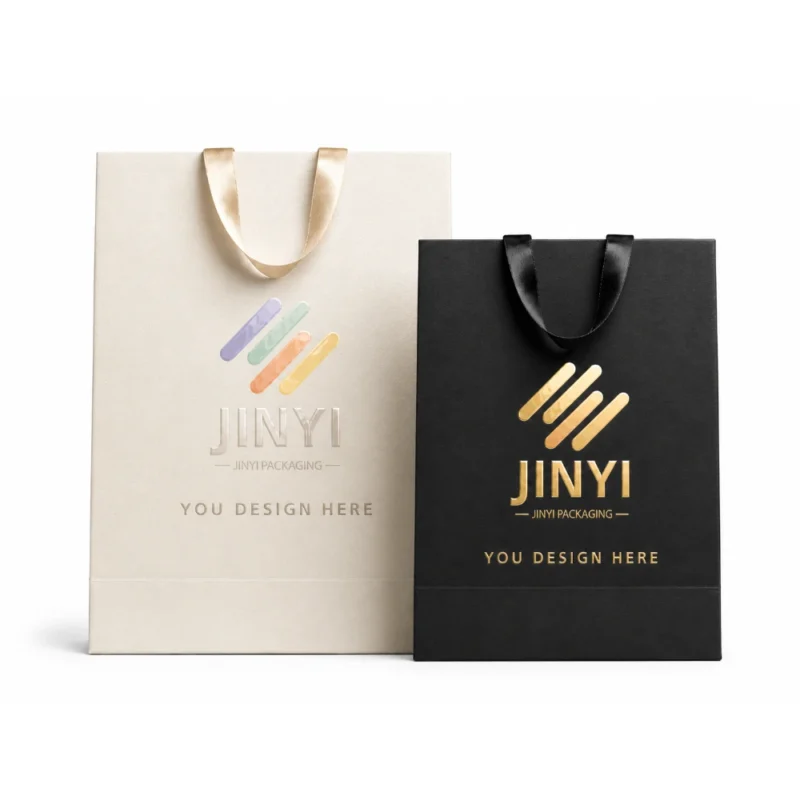
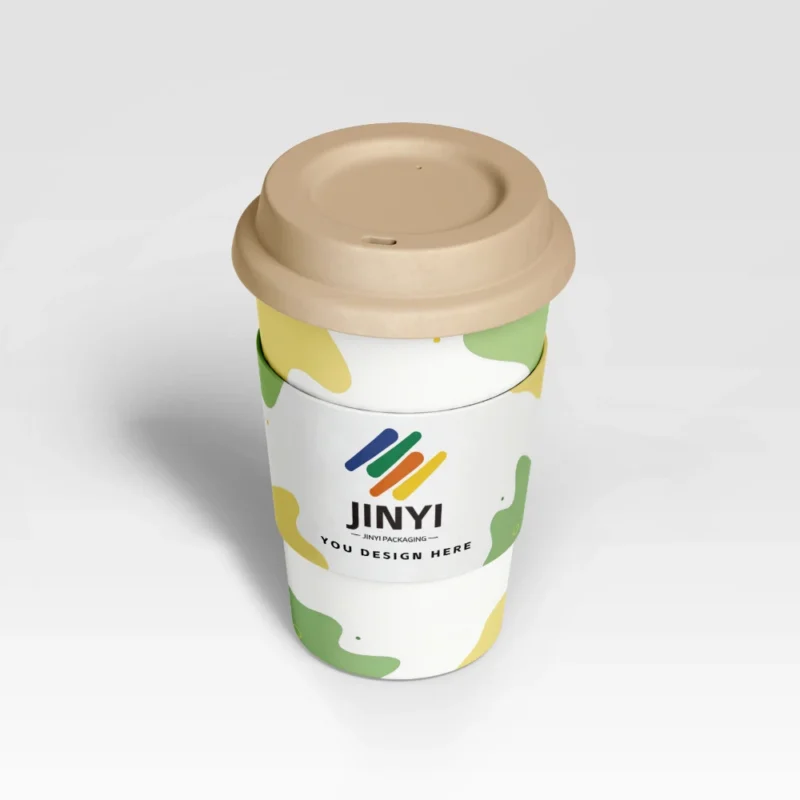
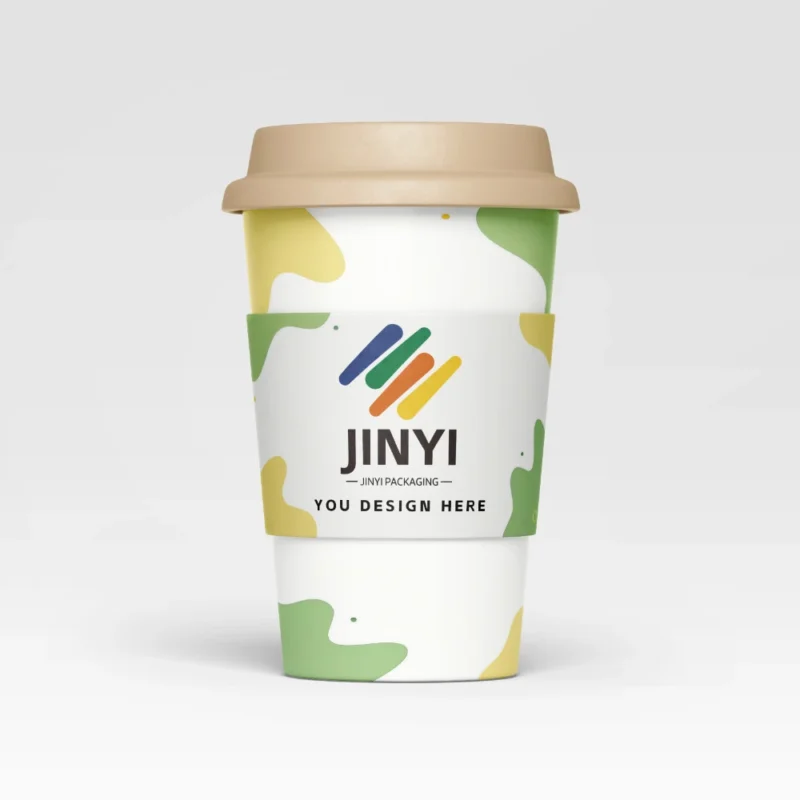
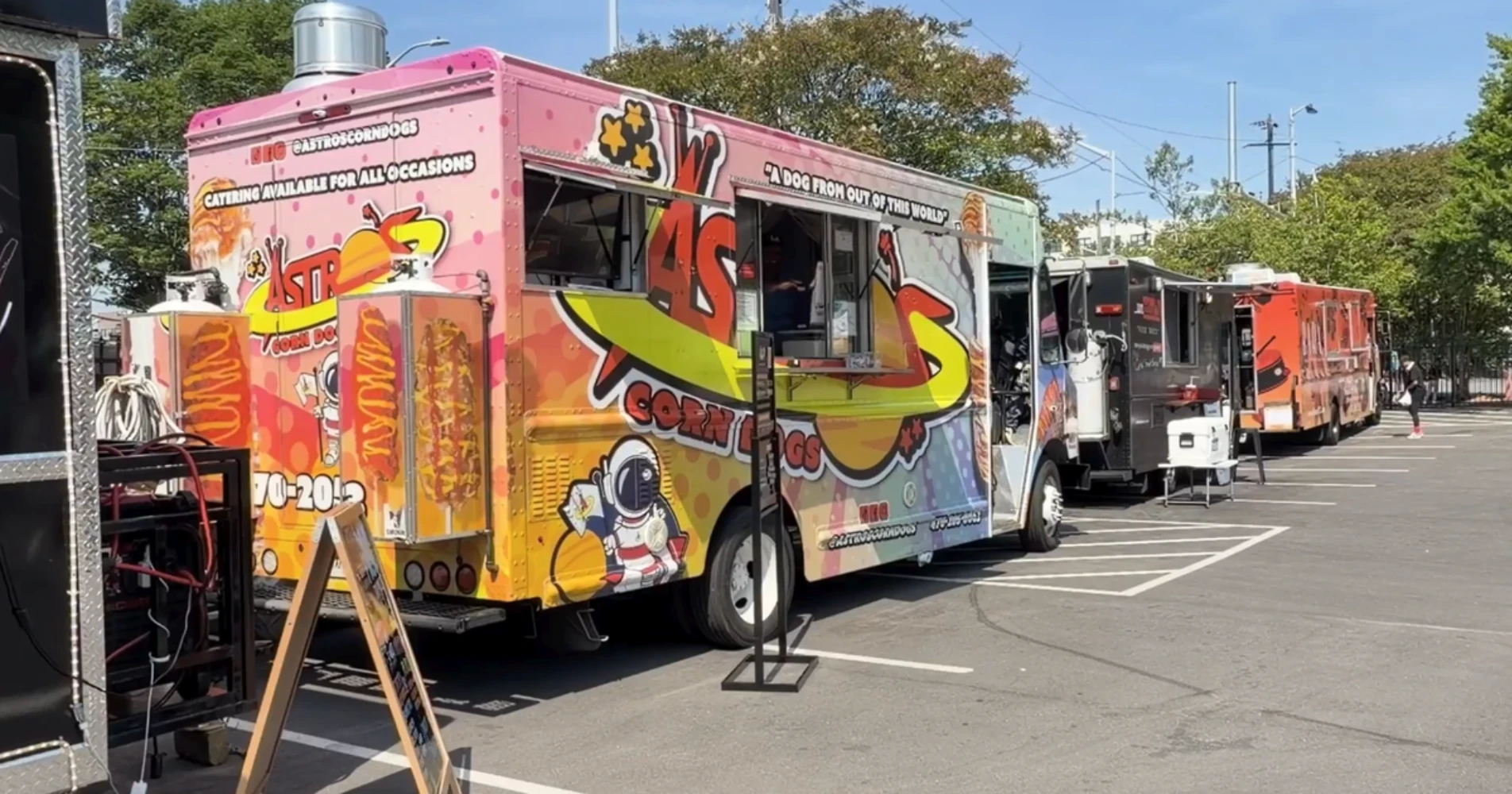
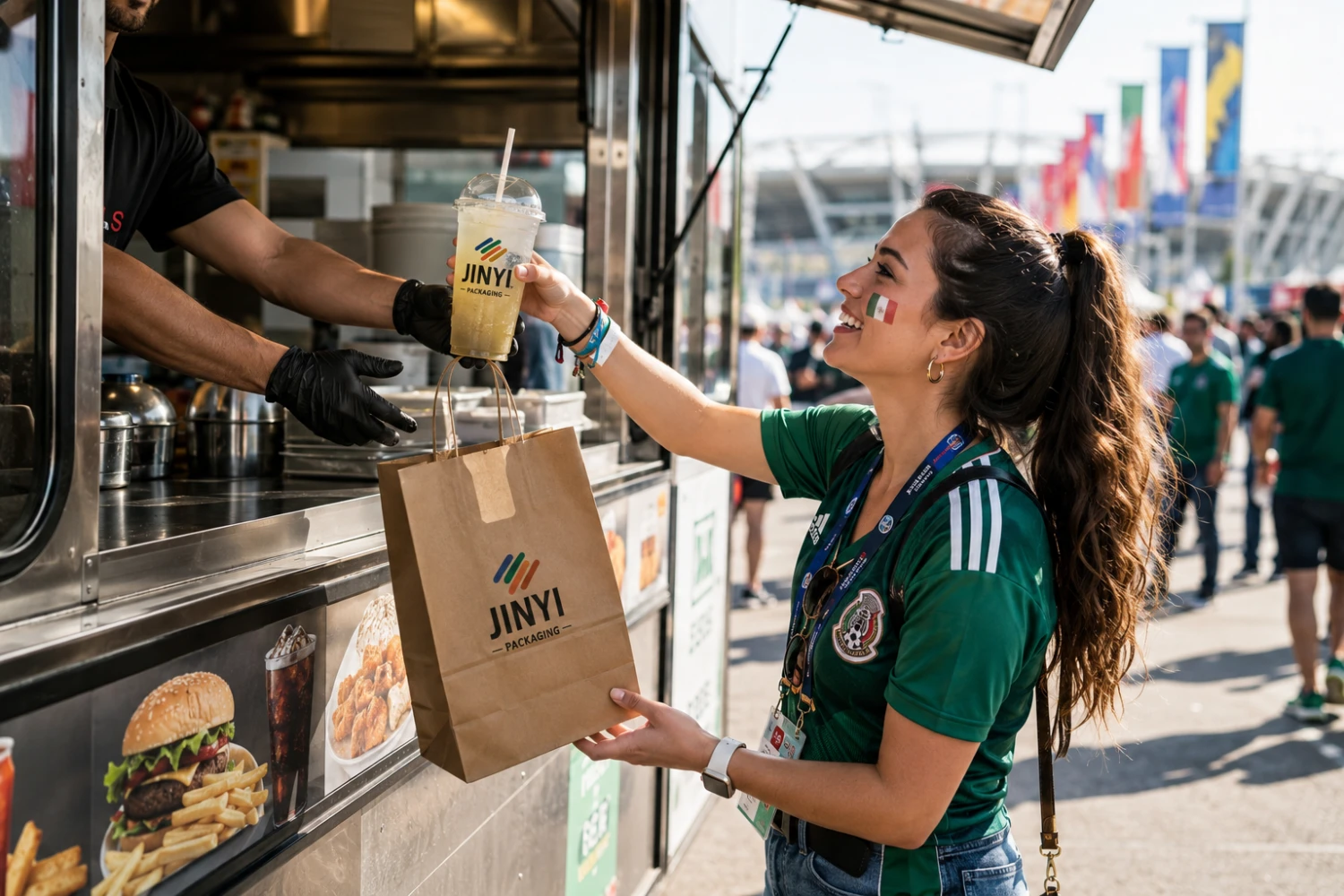
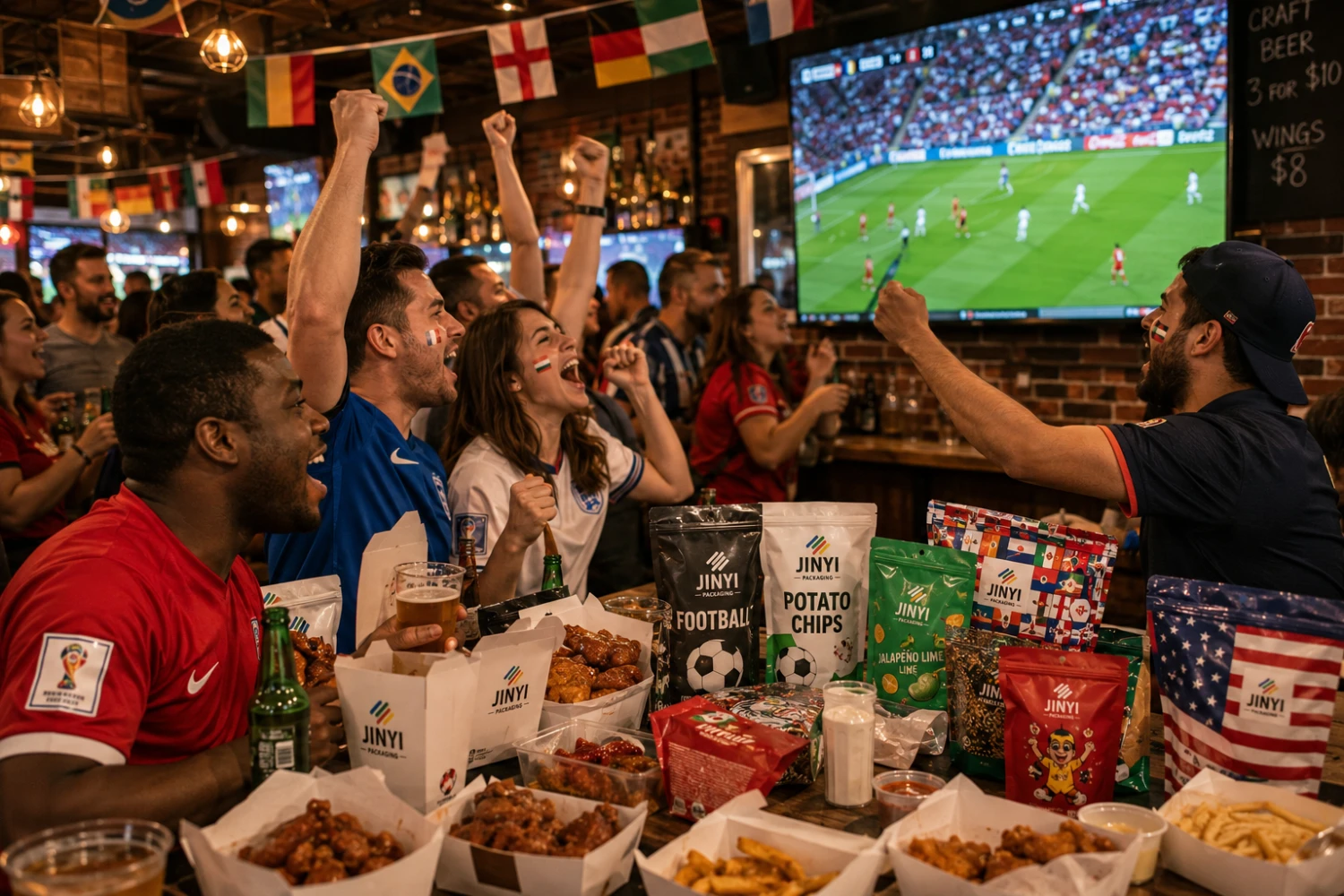
Idea four — fast food and street food takeaway packaging. The millions of fans gathering in fan zones, watching in bars, and ordering delivery for home viewing parties all interact with takeaway packaging — bags, cups, boxes. For restaurants, fast food operators, and street food vendors in host cities, a custom printed takeaway bag in World Cup colors is a high-frequency touchpoint that puts the brand in the fan’s hands for the duration of the tournament. A custom kraft paper bag with a city-specific football design serves double duty: it carries the food and carries the brand into the fan zone, the bar, and the living room viewing party. For cold drink cups, a custom printed design turns every beverage served during a match into a branded moment — one that fans hold in their hands for 90 minutes of football.
Idea five — knockout stage collector series. The tournament’s knockout structure creates a natural content calendar: round of 32, round of 16, quarter-finals, semi-finals, final. A brand that releases a new design at each stage — tied to the surviving teams, the hosting city, or the match storyline — gives fans a reason to buy at each stage and creates a collectible series that rewards continued purchase. This works best for brands with a strong DTC or direct-to-consumer presence, where the new design can be announced and shipped within the production window for each stage. A brand that can produce and ship 500 custom pouches in 15 days can keep pace with the knockout calendar — releasing a new design for the semi-finals, then the final, without overproducing inventory that becomes irrelevant after the match.
| Packaging Idea |
Best Format |
Why |
| National team color series |
Stand-up pouch |
Large front panel for color expression; multiple designs in one digital print run |
| Host city limited editions |
Flat-bottom bag |
Premium shelf presence; city skyline graphic works best on five-panel format |
| Functional beverage game-day format |
Stick pack / sachet |
Portable, single-dose; shareable in group viewing context |
| Fast food / street food takeaway |
Kraft paper bag + cold cup |
High-frequency touchpoint; fan holds cup/bag for duration of match |
| Knockout stage collector series |
Flat-bottom bag |
Structural presence for collectible; digital print allows stage-by-stage design release |
The Formats That Work Best for Each Activation Type — and Why It Matters
Packaging format is not a neutral decision — it determines how much print surface the brand has to work with, how the package sits on a shelf or in a consumer’s hand, and whether the packaging can serve the consumption occasion it is designed for. Choosing the wrong format for a World Cup activation does not just look wrong — it underperforms in the moment that matters.
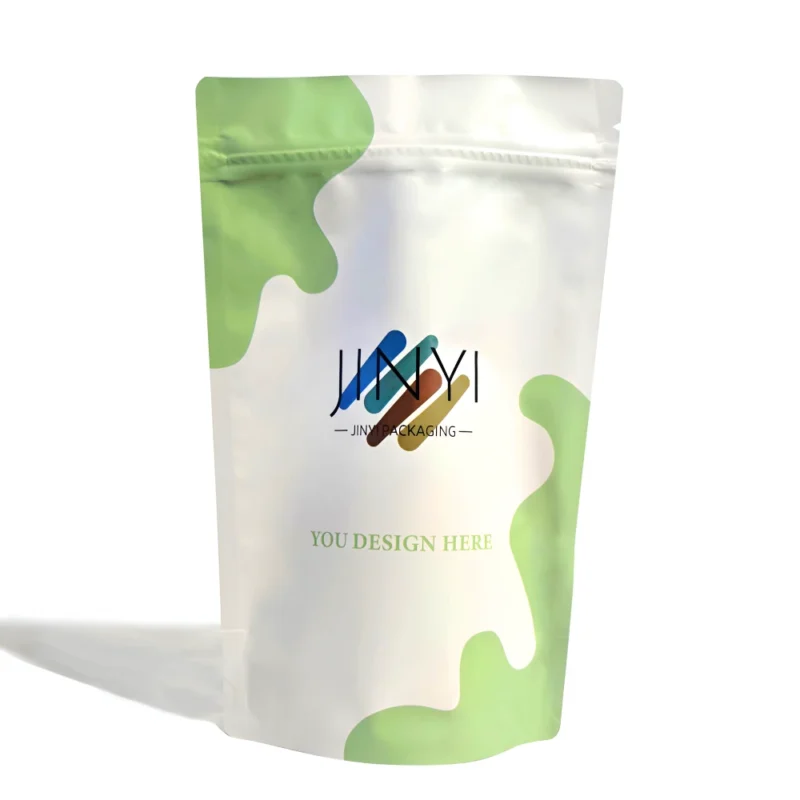
Social media-driven limited editions need a large, flat, photographable surface. The brands that perform best on social media with limited-edition packaging are the ones whose packaging photographs well — strong colors, clean graphic fields, a design that reads clearly in a phone camera image taken in variable lighting conditions. The stand-up pouch’s large front panel is the natural format for this: it gives the brand a broad canvas that reads as designed rather than generic, and it stands on its own when photographed against a flat surface. Bloom Nutrition’s social-media-forward packaging system is a useful reference for what a highly photographable pouch design looks like — strong color field, clear typographic hierarchy, designed to be shared.
On-the-go and viewing occasion formats need to be portable and instantly accessible. The stick pack and single-serve sachet are the correct format for consumption during a match — whether at a stadium, a bar, or a living room viewing party. The format that Liquid IV and LMNT have built their portability proposition around — tear open, pour in water, done — is exactly the right interaction model for a consumer who is watching a match and does not want to think about their hydration. A World Cup branded stick pack in a 10-pack game-day bundle is a product that sells itself through the occasion it serves.
Fast food and street food formats need to carry the brand into the fan environment. The fan zone, the bar, and the home viewing party are all environments where the packaging is visible to multiple people simultaneously. A custom printed kraft paper takeaway bag with a World Cup design is a moving brand impression — it travels from the counter to the fan’s seat to the recycling bin, visible the entire time. A custom printed cold cup is held in the consumer’s hand for the entire duration of the match — 90 minutes of brand exposure per cup, at every viewing occasion across the tournament. For restaurants and food service operators in host cities, these are the highest-frequency packaging touchpoints available.
Collector and gifting formats need structural presence. A collectible packaging design needs to be worth keeping — which means the bag or container needs to look good when it is empty and sitting on a shelf. The flat-bottom bag’s squared-off, stable structure reads as a display object in a way that a standard stand-up pouch does not. For brands producing a collector series or targeting the gift purchase occasion, the flat-bottom bag’s five printable panels — front, back, two sides, and bottom — give the most complete canvas for a design that works as an object rather than just a package.
How to Get Limited Edition World Cup Packaging Produced Before the Final Whistle
The tournament is already running. The group stage is underway. But the window is not closed — it has shifted to the knockout stages, which generate the highest individual match viewership of the tournament, and to the post-tournament cultural window in late July and August where the conversation continues without the competition.
The knockout stage timeline from here: round of 32 runs June 28 through July 3, round of 16 July 5-9, quarter-finals July 11-12, semi-finals July 14-15, final July 19. A brand with production-ready artwork today can reach market for the semi-finals and final — the two highest-viewership match days of the tournament — within a standard 15 to 25 business day production window from a factory with digital print capability.
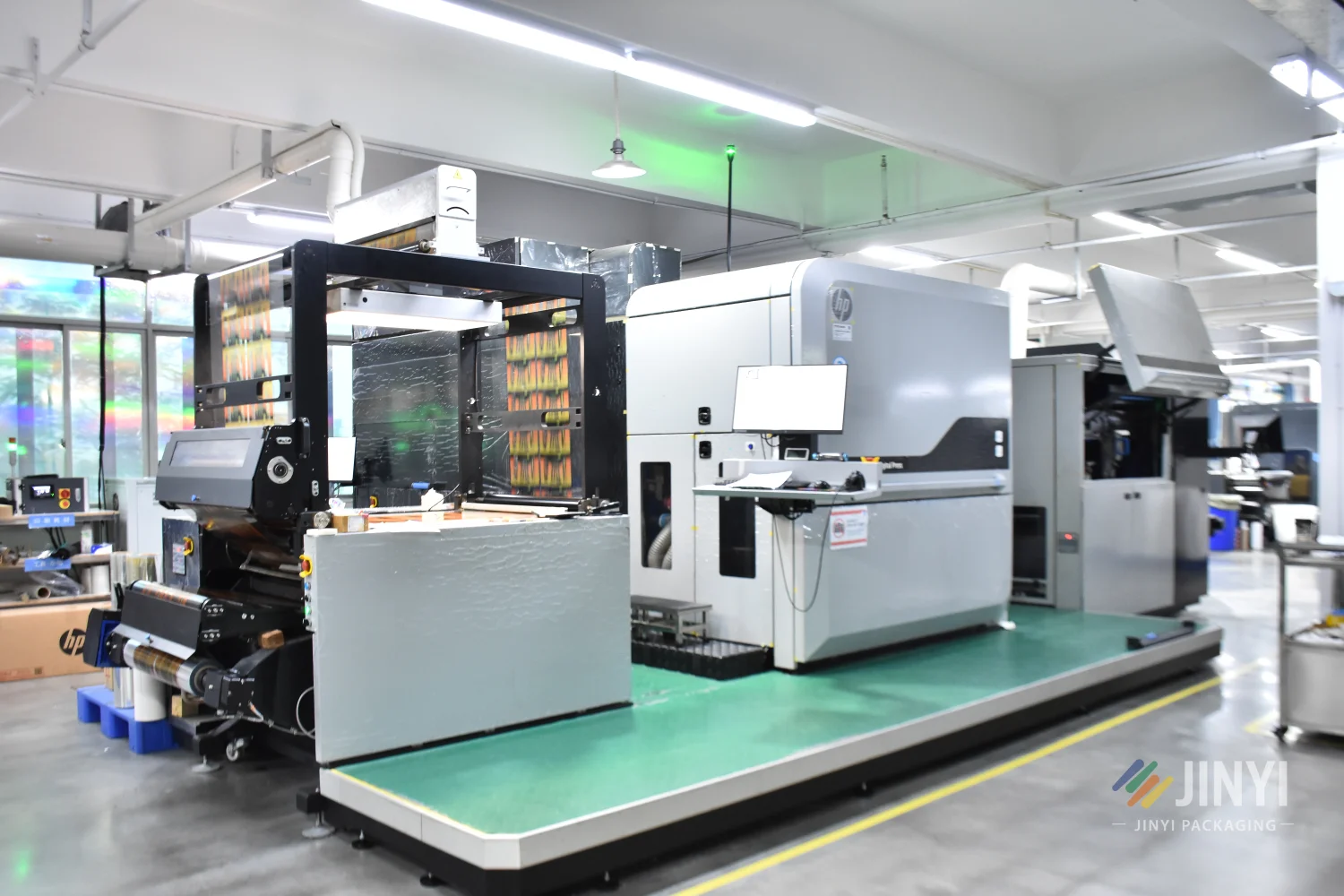
The production model that makes this possible is HP Indigo digital print at low minimum order quantities. Where gravure printing — the standard process for high-volume flexible packaging — requires engraved cylinders, minimum runs of tens of thousands, and setup costs that make short-run production uneconomical, digital print eliminates the plate cost entirely. A design change is a file update. Multiple designs — ten country color variants, for example — can be produced in a single job at the same unit cost as a single design. Minimum orders start from 500 units. A brand can produce 500 custom stand-up pouches with a semi-final design and have them shipped within three weeks, without committing to inventory that becomes irrelevant after the match.
Platform-based packaging services — print-on-demand platforms that offer fixed templates and standard formats — cannot serve this use case. They offer fixed format options, no physical pre-production sample, limited material specifications, and pricing structures that do not improve at the volumes relevant to a limited edition run. For a brand that needs a specific barrier laminate, a custom pouch format, a physical sample to approve before production, and delivery within three weeks, the platform model cannot execute. For a detailed comparison of what platform services provide versus direct factory production, the Sticker Mule vs direct factory breakdown covers the structural limitations of the platform approach.
The fastest path to production-ready packaging from this point is: finalize the format and quantity first, develop the artwork within the confirmed dieline, request a physical pre-production sample to confirm color and structure, approve and release to production. At JINYI, this process is managed as a standard production workflow — physical samples are a default step, not a special request, and the full process from artwork to shipped order is documented in the guide to custom pouch production. The constraint is not the factory — it is the brand’s internal approval process. A design that requires three rounds of stakeholder review will miss the window that a design approved in one round will hit.
The post-tournament window: The World Cup final is July 19. The cultural conversation does not end there — it continues through August as fans process the result, replay the highlights, and look for ways to extend the experience. A brand that can produce and ship a “2026 World Cup Champion” or host country celebration design in late July is entering a window where the big sponsors have moved on to their next campaign and the packaging competition is almost zero. This is the most underserved window in the entire World Cup packaging calendar.
Ready to Activate Your Brand for the World Cup?
JINYI produces custom flexible packaging, kraft bags, and cold cups from 500 units via HP Indigo digital print — with physical pre-production samples and 15 to 25 business day production timelines. Whether you are targeting the knockout stages or the post-tournament window, the conversation starts with your format and your deadline.
Talk to JINYI About Your World Cup Packaging →
About JINYI
JINYI is a source factory for custom flexible packaging with 15+ years of production experience, serving food, supplement, coffee, pet food, and consumer goods brands across 150+ countries. We produce stand-up pouches, flat-bottom bags, pillow bags, and side gusset bags in PET/AL/PE, PET/VMPET/PE, and other barrier specifications — via HP Indigo digital print from 500 units and gravure printing at volume — with full material documentation included as standard with every order.
That is what From Film to Finished — Done Right means in practice.

Elsa
Business Development Manager · JINYI Packaging
Elsa leads business development and customer order management at JINYI. With 8 years in foreign trade across Yiwu and Dongguan, she has a sharp understanding of market demand and what buyers actually need — turning real customer insight into the right packaging decisions.
Customer needs
Order management
Business development
Frequently Asked Questions
Do brands need official FIFA licensing to produce World Cup themed packaging?
No. Official FIFA licensing is required only to use the FIFA World Cup trademark, official marks, and licensed imagery. National colors, football visual language, host city references, and sporting event themes are all available without licensing. BuzzBallz produced one of the highest-scoring World Cup packaging activations in consumer testing without any official FIFA authorization — the concept was strong enough to not need the marks. Non-sponsor brands have full access to the cultural energy of the tournament through design, concept, and timing.
What packaging formats work best for World Cup limited edition activations?
The format depends on the activation type. Stand-up pouches work best for social media-driven limited editions that need a large, photographable print surface. Flat-bottom bags are best for collector and gifting formats that need structural presence. Stick packs and single-serve sachets are best for on-the-go and viewing occasion products. Custom kraft paper bags and cold cups are best for food service and restaurant brands that want high-frequency touchpoints during match viewing occasions.
Is it too late to produce World Cup packaging for the 2026 tournament?
The group stage has passed, but the knockout stages — round of 16, quarter-finals, semi-finals, and the July 19 final — represent the highest-viewership matches of the tournament. A brand with production-ready artwork can reach market for the semi-finals and final within a 15 to 25 business day production window from a factory with digital print capability. The post-tournament window through August is also a real opportunity with almost no packaging competition.
What is the minimum order quantity for a World Cup limited edition flexible packaging run?
At JINYI, custom flexible packaging via HP Indigo digital print is available from 500 units. Multiple designs can be produced in a single job — a 10-country color series at 200 units each, for example, runs as one order. This makes limited edition activations economically viable without requiring the minimum run sizes of gravure printing, which typically starts at tens of thousands of units.
What did non-sponsor BuzzBallz do that outperformed official sponsors in consumer testing?
BuzzBallz launched “SoccerBallz” — eight flavors, six inspired by participating countries, in their signature ball-shaped packaging. The concept worked because it was intrinsically connected to football (the ball shape) and offered country-specific cultural relevance (the flavor-to-nation mapping) without needing official authorization. Consumer distinctiveness testing placed it above several official sponsor activations. The lesson: a packaging concept that earns its connection to the event through design and product concept will outperform a weak concept that relies on official marks to establish relevance.
Why is the post-tournament window an opportunity for packaging brands?
After the July 19 final, official sponsors move on to their next campaigns. But consumer interest in the tournament — the winning team, the standout moments, the host city experiences — continues through August. A brand that activates in late July or August with a champion celebration design or a host nation tribute is entering a window with almost no packaging competition, while the cultural conversation is still running. This requires a production partner that can move at event speed — 500 units, 15-25 business days from artwork to delivery.
What is the best packaging idea for a food service or restaurant brand in a World Cup host city?
Custom printed takeaway bags and cold cups are the highest-frequency touchpoint available to food service brands during the tournament. A custom kraft paper bag with a host city and World Cup design travels from the counter into the fan zone, the bar, and the home viewing party — visible to multiple people for the duration of the match. A custom cold cup is held in the consumer’s hand for 90 minutes of football. Both formats are available in short runs with digital print, and both serve as moving brand impressions across the entire tournament period.